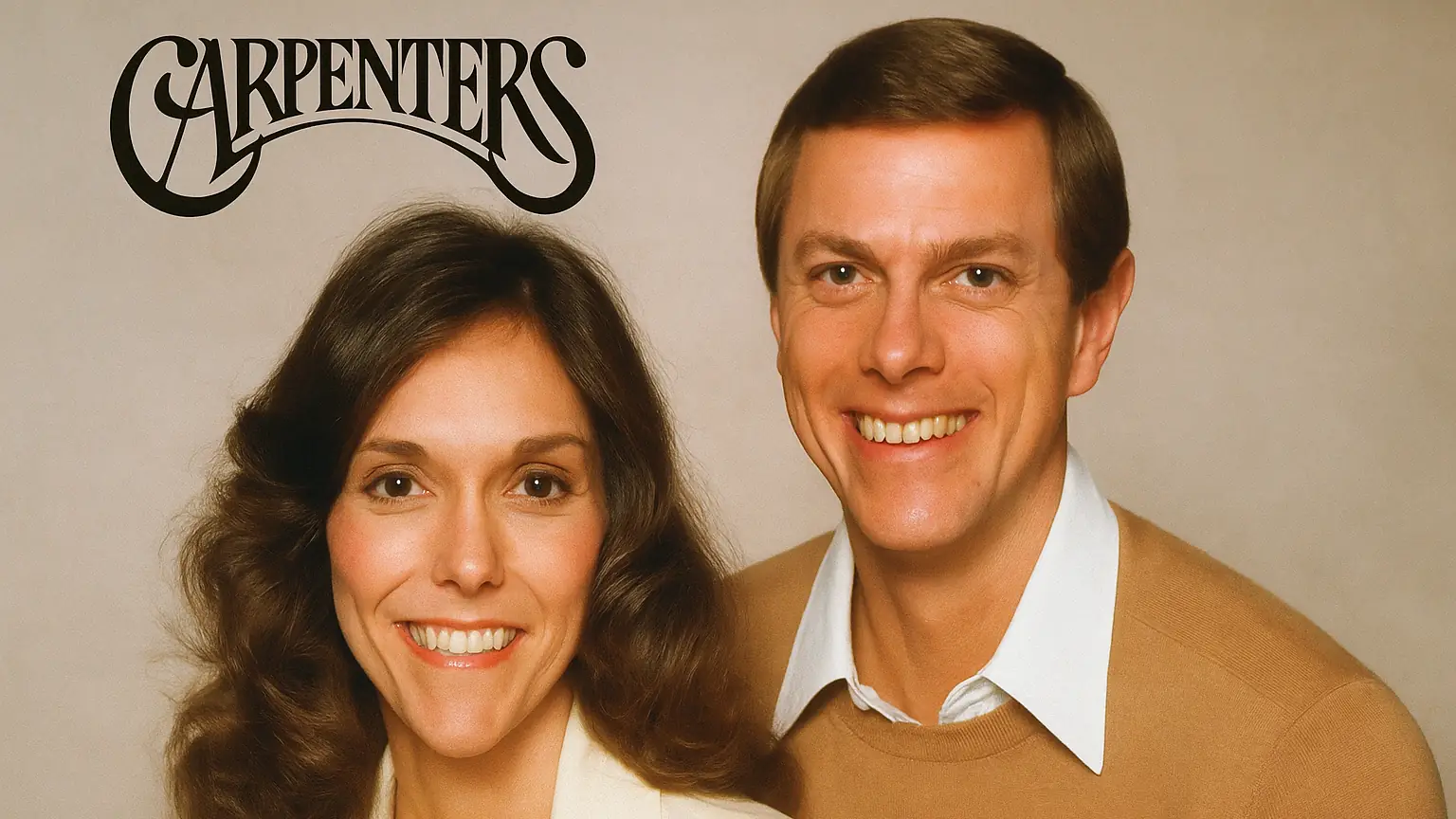
■For more details about [The Carpenters]…
➡🌈 The Siblings Who Changed the World with Gentleness — The Miracle of the Carpenters 💛
🎧 Enjoy This Article in Audio
You can quickly grasp the main points of this article through narration.
Recommended for those who want to catch the vibe of the music and the flow of the article before reading.
🎶 English Narration
An English audio introduction to the contents of this article.
⌛ Duration: Approx. 2.5 mins
🎵 Japanese Narration
A Japanese audio introduction to the contents of this article.
⌛ Duration: Approx. 2 mins
Listening to the audio before reading helps you better understand the world of the music and the main points of the article.
🎸 [Carpenters Edition] #8: “Please Mr. Postman”
Coming in at #8 is “Please Mr. Postman.”
“Waiting for a letter from a lover”… This mixture of anxiety and heartache might be a feeling that today’s youth find hard to truly grasp, don’t you think?
Similarly, back in the day, calling the person you liked carried an immense amount of pressure—constantly worrying, “What if their parents answer?!” It was through these very hurdles that the scenery of romance was shaped. In our era, “love” and “romance” always came as a package deal with these kinds of bittersweet elements.
Now, while this track stands as a prime symbol of the “breezy popness” displayed by the Carpenters in the 1970s, the addition of Karen’s vocals infuses it with a strange, almost urgent charm that feels deeply earnest.
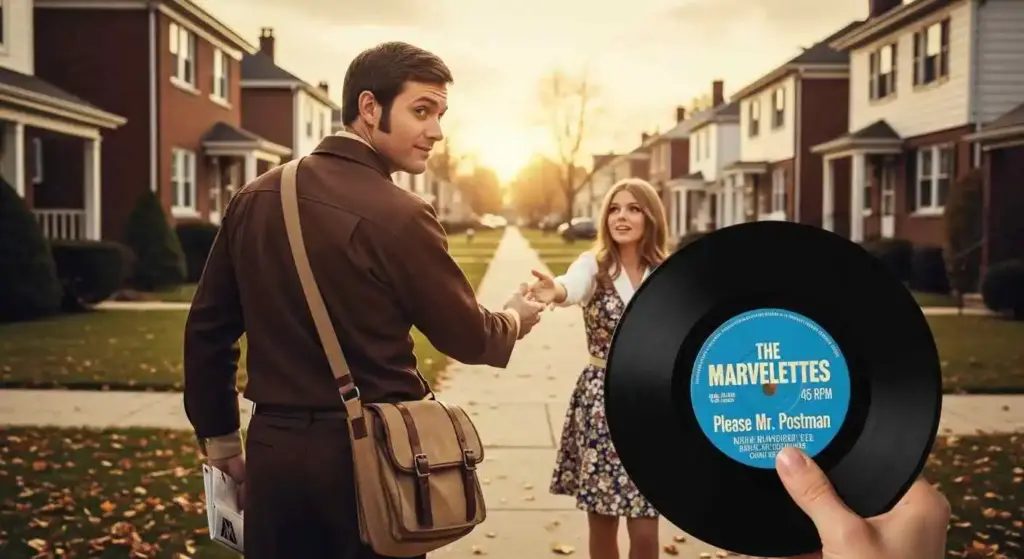
The original was a 1961 Motown track, but once it passed through their hands, it was transformed into a highly unique pop song where nostalgia and sophistication beautifully coexist.
Summary Strategy
In this song, the protagonist keeps waiting for word from a lover who is far away, repeatedly checking with the mail carrier to see if a letter has arrived.
Amidst days filled with a mix of anticipation and impatience, she ponders the reasons behind the lack of a reply and begs the postman, clinging to a sliver of hope. The narrative moves forward by focusing entirely on a single question: Will her wish "reach them" or not?
🎬 As always, let’s start by checking out the official YouTube video.
🎬 Official Video Credits (Official Audio)
"Please Mr. Postman" – Carpenters
Provided to YouTube by Universal Music Group
From the album "Horizon" (1975)
© 1975 A&M Records
🎵Two-Line Commentary
A massive hit featured on the Carpenters' 1975 album "Horizon."
It is a brilliant cover that reimagines the original Motown number through Karen's deep low tones and a breezy arrangement.
Basic Song Information
Release / Featured Album
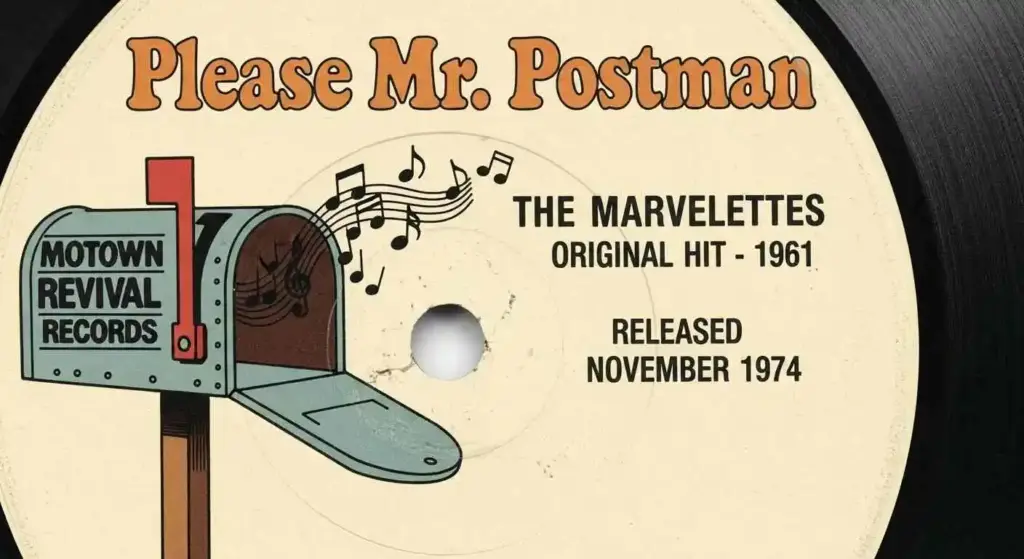
The Carpenters’ version of “Please Mr. Postman” was released as a single in November 1974 and was subsequently included in their album “Horizon” (1975) the following year.
It marked the return of a Motown classic, updated with the distinct texture of 1970s pop.
The original song was released by The Marvelettes in 1961 and is widely celebrated as a definitive track from the early Motown era. The Carpenters boldly modernized this masterpiece using the cutting-edge recording techniques of the time coupled with their ultimate weapon: Karen’s remarkably deep, rich lower register.
Charts and Historical Context
The Carpenters’ rendition reached #1 on the US Billboard Hot 100 in January 1975, earning them their third No.1 single overall.
The mid-70s was a period in America that saw the rise of disco, R&B, and singer-songwriters, making it an era where the reinterpretation of 60s pop was highly fashionable.
Within this musical climate, the Carpenters’ cover was embraced by countless listeners as a track that felt beautifully nostalgic yet entirely timeless.
During this time, the duo was at the absolute peak of their career—navigating an intense, overlapping schedule of television appearances, touring, and recording—exerting an overwhelming presence in the world of pop music.
Theme and Worldview
The Protagonist’s Background
The protagonist of this song is depicted as a young woman eagerly awaiting contact from her lover.
While the core situation of “not receiving any mail” is simple, it encapsulates universal emotions such as physical distance, anxiety, anticipation, and missed connections.
Particularly in the Carpenters’ version, Karen’s voice elevates the character beyond someone who is merely “waiting,” painting a vivid picture of a person whose growing longing leaves her feeling slightly restless and unsettled.
Introduction to the Story
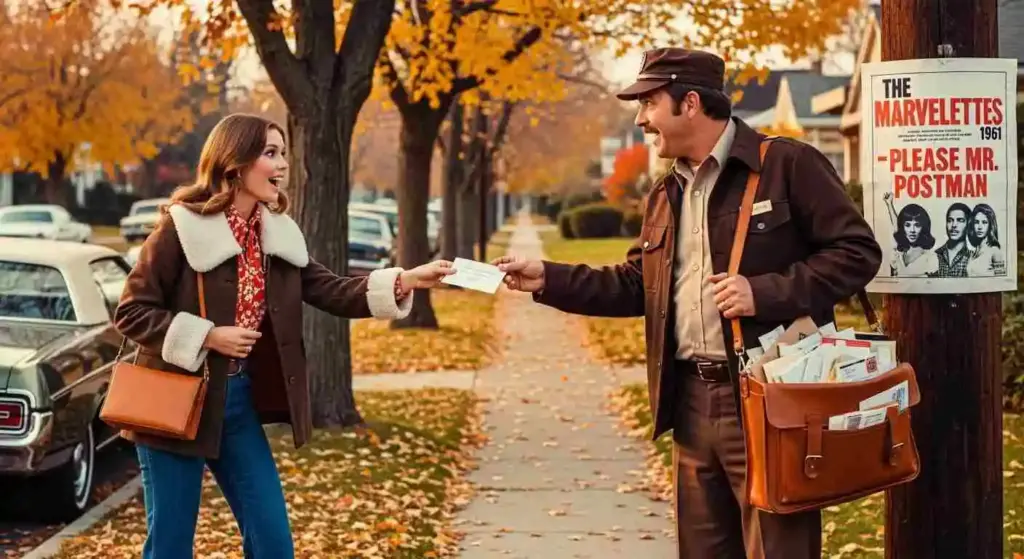
Right from the opening of the track, the protagonist is frantically pleading with the mail carrier to find out if a letter has arrived for her.
The phrase “Wait a minute, Mr. Postman” can be considered the definitive, minimalist line that symbolizes the entire song.
Despite being a brief exclamation, it stands as a powerful expression that instantly conveys three distinct layers of information:
・Her mind is racing with impatience
・She is repeating the exact same action over and over
・Her anticipation has yet to fade away
In the Carpenters’ version, this opening is executed in an incredibly catchy manner, establishing a brilliant dynamic where the protagonist’s “inability to keep waiting” subtly seeps through the bright, upbeat rhythm.
Core Lyrics and Interpretation
Iconic Phrases
At the heart of “Please Mr. Postman” is the brief, recurring plea uttered by the protagonist.
The phrase “Look and see” perfectly captures this sentiment, serving as a symbolic expression that plainly demonstrates the protagonist’s state of mind.
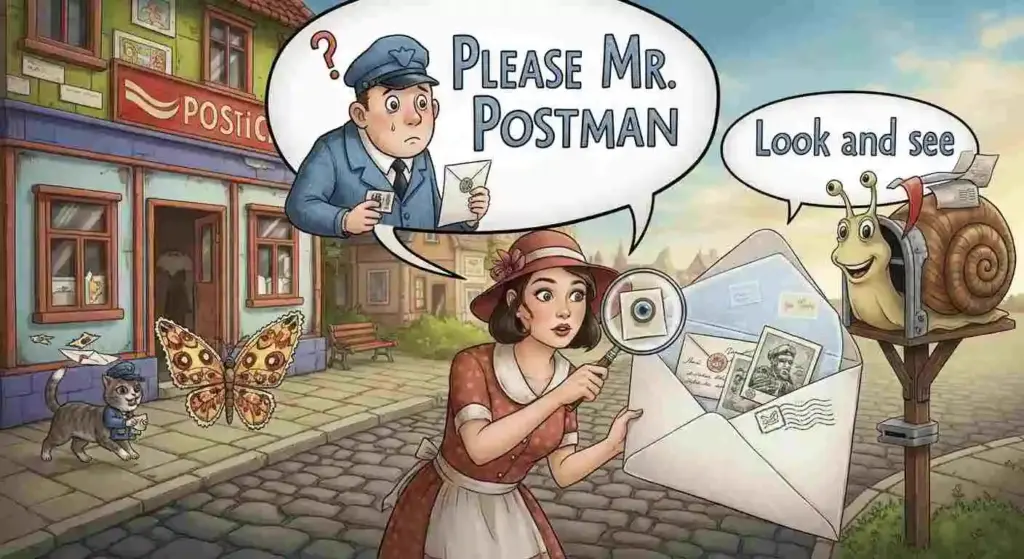
Rather than a simple demand, it oozes a desperate desire to “confirm a tiny shred of hope,” hinting at the restless, uneasy days that wobble right beneath the bright melody.
The Protagonist’s Psychological Shift
As the narrative progresses, the protagonist’s focus shifts from “myself waiting for contact from my lover” to “a situation where I have no choice but to entrust my wishes to the postman.”
Moments where expectation swells, followed immediately by the crushing disappointment of learning nothing has arrived.
Through this repetition, the tension of the song steadily evolves; by the middle of the track, the soaring clarity in her vocals makes it evident that her impatience and desire are intensifying simultaneously.
Moving toward the finale, the backing vocals expand, bringing a sense of brightness and the feeling that “something might just happen” to the absolute forefront, rather than dwelling on seriousness.
This is precisely the element that dictates the unique atmosphere of the Carpenters’ version.
★ Capturing the “Shared Sensibility” of a Generation
Listening to the song fresh today brings back powerful memories of how the simple act of “waiting for contact” carried a completely different weight compared to the present day. In an era devoid of mobile phones or emails, the answer could only be discovered the exact moment you opened the mailbox—it was a daily reality where anticipation and anxiety arrived riding on a single sheet of paper.
Furthermore, simply placing a call to the person you liked was an ordeal in itself; the sheer tension of knowing their family might pick up the phone is something that feels incredibly difficult to explain now. Yet, this accumulation of small hesitations and bursts of courage served as an invaluable process that gradually carved out the very contours of romance.
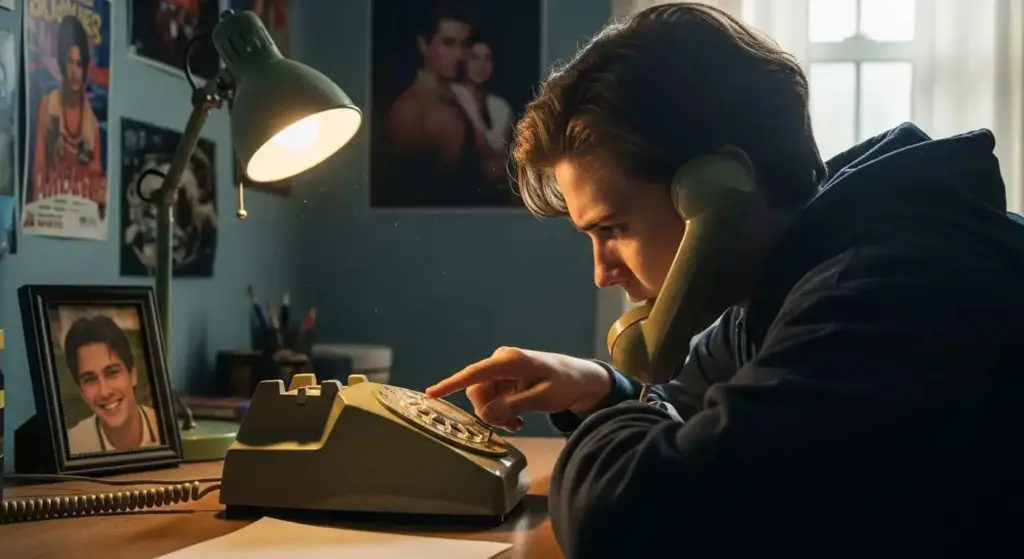
Because of this, the “restless energy” carried by the song’s protagonist speaks directly to our generation, entering our hearts with the familiar warmth of a cherished memory.
Even if the times have changed, listening to it instantly resurrects the exact atmosphere of those days—a sense of universality that continues to sustain the value of this song today.
The Magic of Sound and Vocalization
Characteristics of the Arrangement
The defining trait of the Carpenters’ version lies in how they chose not to replicate the raw Motown beat of the original, but instead boldly optimized it for the pop sensibilities of the mid-1970s.
The tempo is kept slightly brisk, with Richard’s piano weaving in bright, vibrant colors while a straightforward drum track and light percussion inject a refreshing, rhythmic bounce.
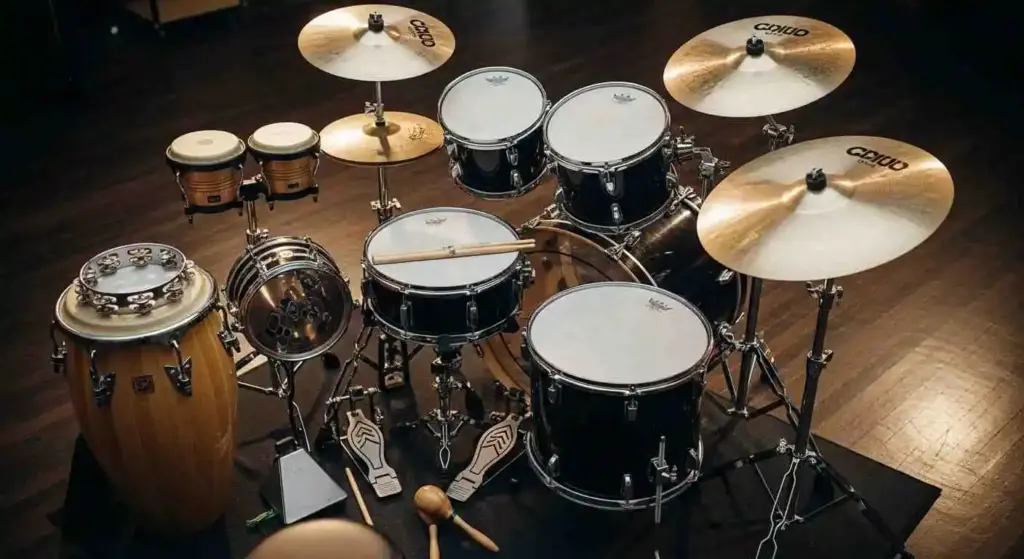
By stripping away the “earthiness” of the original and reconstructing it into the squeaky-clean sonic signature characteristic of the Carpenters, this Motown classic was made to shine from a completely fresh angle.
The Allure Created by Karen’s Voice
Even in an up-tempo track such as this, Karen’s inherently grounded vocal quality melts beautifully into the composition, allowing her foundational low tones to project a massive presence amidst the breezy instrumentation.
Even when she pushes her voice, she avoids excessive ornamentation, singing through the track with a natural flow that never disrupts the rhythm. As a result, the momentum of the music and the depth of Karen’s vocals coexist in perfect harmony.

Reasons for Entering the Best 8
Differentiation from Other Tracks
The reason “Please Mr. Postman” was selected for the Best 8 cannot be summarized merely by its status as a commercial hit.
① It brilliantly highlights the ultra-pop side of the Carpenters.
② The innate brightness of the original track coupled with the depth of Karen's voice creates a highly distinct contrast.
③ It holds immense value as an incredibly successful reinterpretation within 1970s pop music.
These three elements align perfectly,
resulting in a track that commands a powerful, standalone presence within the album “Horizon.”
A Final Word to Make Readers Listen Anew
For those listening to it again after a long time, I invite you to pay close attention to that snappy opening exclamation.
It stands completely apart from both the Motown original by The Marvelettes and the subsequent version by The Beatles; the moment Karen’s voice cuts in, a highly specific pop flavor that could only be born through her presence materializes instantly.
Wonderfully nostalgic, yet failing to feel dated even when consumed today.
The definitive reason for this lies squarely within the absolute certainty of the Carpenters’ expressive power and arranging prowess.


音楽ファン同士の交流・リクエストはこちら / Connect & Request Songs Here