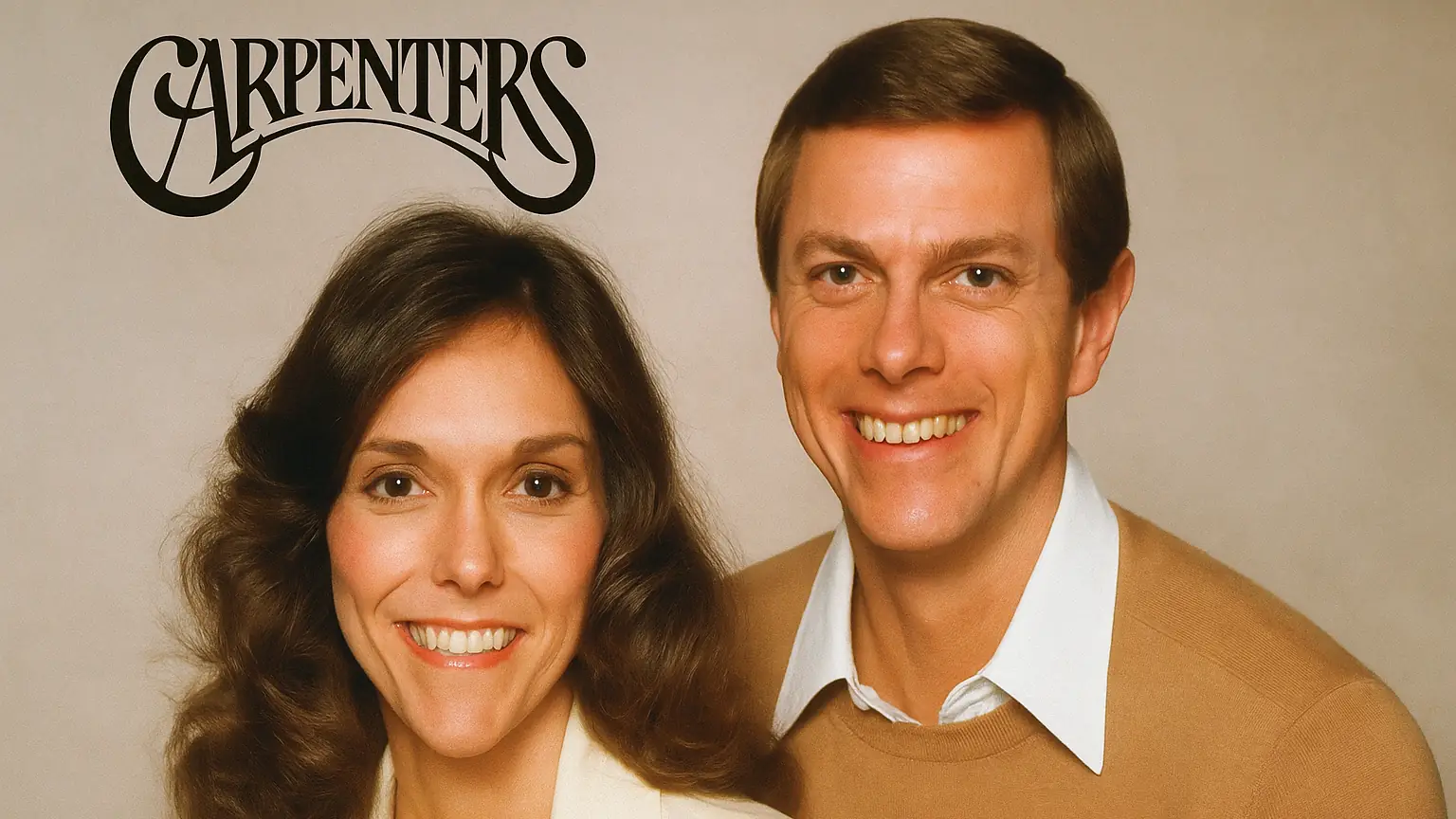
■For more details about [The Carpenters]…
➡🌈 The Siblings Who Changed the World with Gentleness — The Miracle of the Carpenters 💛
- 🎧 Enjoy This Article in Audio
- 🎸 [Carpenters Edition] No. 9: “Ticket To Ride”
- Basic Song Information
- Song Theme and Worldview
- Lyrics Portraying a “Quiet Emotional Resolution”
- The “Emotional Distance” and Definitive Disparity Displayed by the Lyrics
- The “Scenery of Parting” Crafted by the Arrangement
- Karen’s Vocals Defining the “Heart’s Anchor”
- The “Starting Point of the Narrative” for the Carpenters
- Reasons for Choosing it as No. 9
🎧 Enjoy This Article in Audio
You can quickly grasp the main points of this article through narration.
Recommended for those who want to catch the vibe of the music and the flow of the article before reading.
🎶 English Narration
An English audio introduction to the contents of this article.
⌛ Duration: Approx. 3 mins 30 secs
🎵 Japanese Narration
A Japanese audio introduction to the contents of this article.
⌛ Duration: Approx. 3 mins 30 secs
* Listening to the audio before reading helps you better understand the world of the music and the main points of the article.
🎸 [Carpenters Edition] No. 9: “Ticket To Ride”
Coming in at number 9 is “Ticket To Ride.”
In 1969, when the Carpenters had just debuted, this song became their very first signature track to introduce their presence to the world. Originally a masterpiece by The Beatles, it is widely known that Karen’s vocals and Richard’s arrangement dramatically transformed the emotional temperature of the song.
With a quiet, spacious resonance, the track evokes the perspective of a protagonist suppressing their emotions, making it a pivotal song that defined the direction of the early Carpenters.
The Essence
The protagonist of this song is depicted as someone who understands that their lover has resolved to leave, yet cannot fully accept the situation. The background reveals that the partner harbored a deep desire to "be free," and that the protagonist's very presence had become a burden.
Unable to find an outlet for their emotions, the protagonist attempts to maintain composure while facing the stark reality of the partner's retreating back—an objective portrayal of a fragile psychological state.
🎥 First, as always, please watch the official YouTube video below.
🎬 Official Video Credits (Official Audio)
Video Title: Carpenters – Ticket To Ride (Lyric Video)
Artist: Carpenters
Producer: Richard Carpenter
Album: Carpenters With The Royal Philharmonic Orchestra (Universal / A&M)
🎼 2-Line Commentary
This lyric video was created for their 1969 debut track "Ticket To Ride," set to a later remastered audio track. It is an early masterpiece ripe for re-evaluation, highlighting the youthful clarity of Karen's voice and the delicate beauty of Richard's orchestration.
Basic Song Information
Release / Contained Album
The Carpenters’ version of “Ticket To Ride” is featured on their 1969 debut album, Offering (later retitled Ticket To Ride).
While The Beatles’ version was a global smash hit single in 1965, the Carpenters recorded it just four years later with their entirely unique interpretation.

At the time of recording, Karen was just 19 years old.
Yet, her vocals already possessed a distinctive depth, and its mature, serene resonance shaped the entire atmosphere of the track.
This specific arrangement laid the foundation for the Carpenters to later be hailed as “masters of the slow tempo.”
Charts and Historical Context
Although the debut album itself was not an immediate commercial blockbuster, the song has since been re-evaluated as a definitive example that encapsulates their early charm.
Particularly during an era when FM radio culture was expanding in America, the restrained vocals and minimalist orchestration drew attention as a sound that felt perfectly tailored and soothing to radio audiences.
Unlike The Beatles’ version, which relied on momentum, the Carpenters captured the stillness of the exact “moment of detachment,” offering a fresh and modern approach that resonated with the zeitgeist of the era.
Song Theme and Worldview
The Protagonist’s Background
From the very beginning of the narrative, the protagonist is already facing an “unavoidable separation.”
The story unfolds on the premise that the lover has made a definitive choice, and the protagonist knows they lack the power to stop it.
While the protagonist lingers in deep regret, the partner has severed all doubts, and this stark emotional disparity defines the landscape of the song.
There are no dramatic confrontations or loud outbursts of feeling here; instead, it quietly depicts someone facing a reality they can do nothing but accept.
This very element forms the core of the Carpenters’ signature tone.
Introduction to the Narrative
Where The Beatles left an impression with an upbeat, driving rhythm, the Carpenters drastically slowed the tempo to emphasize the heavy stillness hanging over a parting scene.
The structure allows the protagonist’s confusion and helplessness to bleed through a detached, matter-of-fact narration.
The lyrics reveal that the partner is seeking freedom, and while the protagonist intellectually understands the reason, their emotions cannot keep pace.
Karen’s composed delivery never exaggerates the grief; instead, it serves to present the cold, heavy weight of reality just as it is, echoing deep within the heart.
This introductory section is the primary reason the Carpenters’ version of “Ticket To Ride” is so captivating.
The more you listen, the more it feels less like a simple cover and more like a narrative completely reconstructed through a fresh lens.
Lyrics Portraying a “Quiet Emotional Resolution”
“I think I’m gonna be sad”
This opening line signals that the protagonist has not yet finished processing their emotions.
Rather than stating that the breakup is happening right this second, it expresses a premonition of the sorrow that will inevitably follow, setting the quiet tone for the entire piece.

When this line is paired with the calm vocal delivery later in the song, the listener can feel the passage of time as the protagonist slowly accepts reality in the deepest corners of their heart.
“He’s got a ticket to ride”
Placed at the center of the chorus, this phrase flatly announces that the departure is already a done deal.
The protagonist delivers this line not as an explanation to someone else, but like a internal monologue meant to force themselves to accept the truth.
In the slowed-down Carpenters version, the weight of these words multiplies, meticulously illustrating the time it takes for the protagonist to swallow the facts.
There is no room for optimism—only a quiet, sobering understanding remains.
“And he don’t care”
This is perhaps the most striking line of all.
The definitive statement that “he doesn’t care” underscores the profound emotional distance the protagonist feels from the partner.

Karen’s delivery does not channel anger or sorrow directly; instead, it is expressed with a serene nuance, as if she is merely describing a world where the outcome is already set. It possesses a strength that refuses to rely on cheap sentimentality.
By placing this phrase so quietly, the dynamic of “Protagonist = Regret / Partner = Decided” becomes unmistakably clear.
“She would never be free / When I was around”
*Note: Though the genders are inverted in the original lyric context, it should be viewed as part of the song’s narrative framing.
The protagonist displays an awareness that their own presence might have been robbing the partner of freedom, offering no blame, but simply accepting it as fact.
With this phrase, the story gains immense depth, transforming from a simple tale of heartbreak into a narrative that quietly charts the maturity of a protagonist who accepts parting for the sake of the other person’s life.

Unresolved Emotions Amid an Understanding of Departure
As the narrative moves into its second half, the protagonist tries intellectually to comprehend the reasons behind the lover’s departure. However, complex, conflicting feelings still linger deep inside, and this gap further accentuates the silence within the lyrics. In a situation stripped of detailed explanations, the protagonist chooses their words carefully as if verifying their own feelings, preparing themselves to face reality.
The “Emotional Distance” and Definitive Disparity Displayed by the Lyrics
The Process of Accepting Fact Embedded in the Chorus
The phrase “He’s got a ticket to ride” serves as an announcement that the journey has already been decided, appearing repeatedly as if the protagonist is constantly chewing it over in their mind. This repetition symbolizes the process where intellectual comprehension moves forward as an absolute fact, even while emotional processing lags behind. The story progresses without any raised voices, built purely on the quiet accumulation of reality.

The Slowness and Depth of Time Created by the Bridge
In the latter half of the song, one gets the impression that time is moving sluggishly, rendering the shifting emotional landscape even more vivid. It depicts the gradual narrowing of the distance between emotion and reality, showing the protagonist’s quiet, internal work to properly anchor these facts within their heart.
The “Scenery of Parting” Crafted by the Arrangement
Chords with Shadows that Reflect the Narrative’s Tone
In the Carpenters’ version, the chord progressions are designed with slightly darker shading than The Beatles’ original, reflecting the heavy heart of the one left behind rather than the lightness of the departure. Subtle nuances in the key changes serve to deepen the stillness of the later sections.
Rhythm Creating Space and Quiet Tension
The drums are minimalist, maintaining a sparse presence and striking only when absolutely necessary. This understated rhythm work creates a breathing space within the overall track, allowing the protagonist’s emotional vacillation to float naturally to the surface without disruption.
Strings Supporting Layers of Emotion
The strings, subtly arranged in the background, swell ever so slightly during the chorus and the latter half to add depth to the scenery, softly supporting the unspoken feelings. Because they never overpower the track, the emotional resonance expands quietly throughout the piece.
The Distance of the Backing Vocals Symbolizing “The Gap Between Two People”
Richard’s backing vocals intentionally do not step forward, mixed instead to sound as if they are echoing from a slight distance. This sense of “distance” symbolizes the psychological rift that has opened up between the protagonist and their lover, acting as a crucial element that brings unity to the entire arrangement.
Karen’s Vocals Defining the “Heart’s Anchor”
A Solid Resonance Crafted by Restrained Breath Control
By avoiding excessive breathiness in her vocal delivery, Karen achieves a steady, unyielding, and quiet resonance. Because her voice never spills over unnecessarily, it gives the listener the sense that the protagonist’s composed perspective has been translated directly into sound.
Consistency in Phrasing Maintaining a Stable Horizon
Every phrase extends straight forward, possessing a stability that remains unaffected by fluctuations in pitch or emotional waves. This steady phrasing supports the subtle tension and quietude inside the protagonist’s heart, tightening the overall impression of the track.

Minimal Vibrato Yielding Raw, Unadorned Strength
By using almost no vibrato at the end of her words, Karen strips away unnecessary ornamentation, avoiding any expression that would outwardly manipulate or amplify the sentiment. As a result, the temperature of the words themselves is communicated directly, allowing the core of the narrative to slowly soak into the mind.
The “Starting Point of the Narrative” for the Carpenters
The Song That Defined the Early Carpenters’ Direction
“Ticket To Ride” can be positioned as the very first track where the Carpenters’ musical identity—built upon stillness and negative space—took clear shape. The vocals and arrangement complement one another effortlessly, establishing an essential template that would carry over into their subsequent works.
An Expressive Method Passed Down to Later Masterpieces
The approach forged in this song was naturally inherited by their later signature tracks. In masterpieces like “Rainy Days And Mondays,” “Superstar,” and “We’ve Only Just Begun,” which build from a quiet introduction into deep emotional landscapes, the expressive techniques cultivated in “Ticket To Ride” can be felt everywhere.
Reasons for Choosing it as No. 9
“Ticket To Ride” holds immense value for the way it reconstructed a Beatles classic into a story entirely their own. Karen’s voice shows a level of perfection hard to imagine from a 19-year-old, meticulously tracing the complex emotions found within the quietness. Arrangement-wise, the techniques that would come to symbolize the Carpenters’ legacy were already firmly established here, giving this single more than enough depth and significance to hold a top spot in this series.

音楽ファン同士の交流・リクエストはこちら / Connect & Request Songs Here