
■For more detailed information about 【Led Zeppelin】, click here・・・・➡ 🎈(Zeppelin)
- 🎧 Listen in Audio
- 🎸My Personal Best 25【Led Zeppelin Edition】– No.18 is…
- 🎥As usual, please start by watching the official YouTube video.
- Establishing the Song as a Fact
- A Structure Where “Nothing Happens”
- Why the Sound Does Not Speak for Emotion
- Why This Song Belongs in the Best 25
- Why the Lyrics Remain Unclosed
- When the Listener’s Time Enters the Song
- Why This Song Never Becomes “Strong”
- In Place of a Conclusion
🎧 Listen in Audio
This article is also available as an audio narration of about three minutes.
Following the flow of the text, it traces how “Thank You,” ranked at number 18,
quietly places ordinary, uneventful time without giving it meaning.
Please enjoy listening before reading, or after you’ve finished.
🇺🇸 English Narration
🇯🇵 Japanese Narration
🎸My Personal Best 25【Led Zeppelin Edition】– No.18 is…
No.18 is “Thank You.”
Some people may find this ranking surprising, and that wouldn’t be strange at all.
“Thank You” is a song written at a relatively early stage in Led Zeppelin’s career, and at the same time, it clearly carries a calm, quiet expression that differs from the band’s later work.
However, when considering the “flow” and “role” within the framework of a Best 25 list, this position feels very natural to me.
Ultra-Short Summary
In this song, the narrator does not describe any specific event.
Instead, we are repeatedly shown an ordinary situation: walking together with someone, holding hands, sharing the same time.
There is no claim that anxieties or problems have been resolved, nor is there any promise of the future.
Only the simple fact that the relationship continues is quietly reaffirmed.
🎥As usual, please start by watching the official YouTube video.
🎬 Official Video Credit (official audio)
Artist: Led Zeppelin
Official audio track “Thank You”
Album: “Led Zeppelin II”
Released on the official YouTube channel: July 31, 2020
🎼Two-line commentary
A love song released in 1969, and one of the representative tracks that showcases Led Zeppelin’s softer side.
Its relaxed performance and straightforward words of gratitude resonate gently with the listener.
Establishing the Song as a Fact
Basic Data
- Artist: Led Zeppelin
- Song title: Thank You
- Album: Led Zeppelin II
- Release year: 1969
The Atmosphere Within the Album
As a whole, “Led Zeppelin II” leans forward.
As you follow the track order, there is a constant sense of motion, as if the sound is always pushing ahead.
Neither rhythm nor volume allows you to stand still.
Within that flow, “Thank You” feels different.
Rather than hitting the brakes, it straightens the direction of movement once more.
That is the role it plays.

A Structure Where “Nothing Happens”
The Choice to Reject Narrative
In many songs, something happens.
A meeting, a conflict, a farewell, a decision.
But in “Thank You,” these elements are deliberately excluded.
The only thing that happens in this song is a quiet reaffirmation of the fact that “we have been walking together.”

As a story, it has no peaks or valleys. Precisely because of that, the song is not bound to any specific moment.
The Position of the Narrator
The narrator makes no demands of the other person.
He neither vows the future nor settles accounts with the past.
Rather than throwing his emotions at the other person, he simply places them there, saying, “This is how I feel.”
This sense of distance is not a lack of passion;
it assumes that the relationship is already established.
Why the Sound Does Not Speak for Emotion
Distance in the Performance
In this song, no instrument carries too much emotion.
The guitar does not cry, and the rhythm does not assert itself.
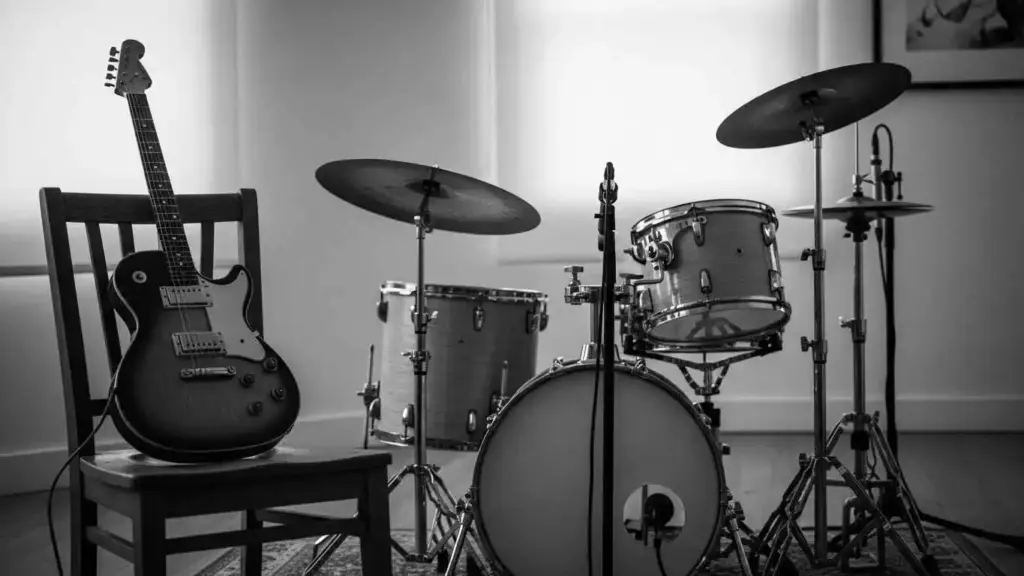
The performance consistently stays behind the vocal.
Rather than stepping forward to speak, it devotes itself to maintaining a state of simply “being there.”
Why It Never Feels Thin
Songs with fewer notes can sometimes leave a weak impression.
But “Thank You” does not.
That’s because it doesn’t lack sound; rather,
it refrains from adding unnecessary information.
Because the listener is not pulled along by the performance, they can bring their own time directly into the song.
Why This Song Belongs in the Best 25
Not to Adjust Intensity
This Best 25 includes many songs with strong intensity and clear individuality.
However, “Thank You” is not placed here to lower that intensity.
Rather than cooling things down, it feels more like a presence that gently reminds you of the distance from which you are currently listening to the band.
It neither pushes you forward nor makes you stop.
It simply straightens your listening posture once more.
That is the role this song plays.
Why No.18?
If this song were placed higher, the flow would become too calm.
If placed lower, its reason for being there would become harder to see.
After you’ve progressed far enough through the Best 25 to experience the band’s intensity and versatility—
when “Thank You” appears at that point, it naturally conveys that “this kind of time is born from the same place as that intensity.”

For that point, No.18 felt the most natural.
Why the Lyrics Remain Unclosed
An Emotional Design That Never “Completes”
The words of “Thank You” are clear.
Gratitude, trust, walking through the same time together.
None of these are vague.
Yet after listening, there is no sense that “the story has ended.”
This is because the song does not process emotion.
Rather than emotions that are released and resolved, it presents emotions that continue to exist quietly within everyday life.
Words That Never Finish Their Job
The gratitude expressed here is not a conclusion or a milestone.
It is neither a farewell nor a declaration of a turning point.
Instead, it is a set of words that remain within the relationship, assuming that the same time will continue from here on.
That is why this song never fully concludes in time, and rises from a different position each time you listen.

When the Listener’s Time Enters the Song
A Change That Happened Within Me
To be honest, when I was younger, “Thank You” was a slightly hard song for me to grasp.
I didn’t dislike it, but I wasn’t strongly drawn to it either.
It was something that simply passed by naturally within the album.
My impression changed when I began looking back on periods where “nothing happened.”
What Lasted Longer Than Any Incident
When you look back on life, the time that quietly continued outweighs major events by far.
Days that were neither clearly good nor clearly bad.
Time spent walking the same places and repeating the same conversations.
“Thank You” does not deny that time, nor does it assign meaning to it.
It doesn’t say “that’s fine,” nor does it define it as happiness.

It simply places it there as a fact that existed.
From a certain point on, that attitude began to feel very real to me.
The Lightness That Still Remains from Their Early Days
When you listen to this song, there is certainly a clear sense of Led Zeppelin’s identity.
However, its quality is slightly different from the heaviness they would take on in later years.
The contours of the sound are soft, and the performance feels almost like breathing.
There is no sense of forcing things through sheer power; an acoustic texture comes to the forefront.
This lightness feels less like immaturity and more like a state before carrying weight.
In later years, Led Zeppelin’s sound itself would come to carry meaning and gravity.
Each note would gain an inescapable density.

By comparison, “Thank You” allows the sound simply to exist.
It is playing, but it is not constrained.
If this song sounds gentle, it may not be because the emotions are calm, but because the band had not yet begun to treat their own sound as something heavy.
The coexistence of lightness and caution that is unique to their early period—
that, I feel, is one of the reasons this song invites repeated listening.
Why This Song Never Becomes “Strong”
The Choice Not to Manipulate Emotion
When this song is discussed as a rock ballad, words like “beautiful” or “gentle” are often used.
But when you actually listen, there are almost no devices designed to heighten emotion.
Neither the voice nor the performance tries to pull the listener along.

This is not restraint, but a deliberate choice not to manipulate emotion.
What Happens When the Sound Steps Back
When the sound does not step forward, the listener is not told how they should feel.
As a result, their own time and circumstances naturally enter the song.
How you feel when listening to this song depends greatly on your own state.
That is not a flaw, but the character this song has chosen.
In Place of a Conclusion
I believe “Thank You” is a song whose meaning changes many times over the course of a life.
When you’re young, it may feel too gentle.
During busy periods, it may simply pass you by.
But when you begin to value the time when “nothing happened,” this song starts to take on a clear outline.
That is why I placed this song at No.18.
Not to make it stand out, but to place it where it is needed.


コメント