
◆Click here for Yosui Inoue’s History!
- 🎧 Enjoy This Article in Audio
- No. 24: “Aozora Hitorikiri” (Alone Under the Blue Sky)
- First, Please Listen to the Tracks on YouTube
- A Breezy Rhythm Shrouding the “Absolute Rejection of Human Connection”
- The Perfection of a Dry Cynicism That Abandons Even “Lyricism”
- Watching “Boring Television” Together: The Ultimate Irony
- Conclusion: A Blue Sky That Serves as an Unescapable Cage
🎧 Enjoy This Article in Audio
You can quickly grasp the main points of this article through narration.
Recommended for those who want to catch the vibe of the music and the flow of the article before reading.
🎶 English Narration
An English audio introduction to the contents of this article.
⌛ Duration: Approx. 3 mins
🎵 Japanese Narration
A Japanese audio introduction to the contents of this article.
⌛ Duration: Approx. 3 mins
* Listening to the audio before reading helps you better understand the world of the music and the main points of the article.
No. 24: “Aozora Hitorikiri” (Alone Under the Blue Sky)
Released in 1975, this single marked a pivotal phase in Yosui’s career, coming right after his monumental album “Ice World” (Kori no Sekai) as he began steering toward a more diverse and eclectic sonic landscape. Breaking away from the conventional boundaries of acoustic folk, this track masterfully blends a crisp, funky groove with his signature pop sensibility and a dry, biting sense of humor.
The brilliance of this song lies in the exquisite tension between its uptempo, sophisticated urban instrumentation and the casually dismissive lyrics gliding effortlessly over the beat. Rendering profound detachment with the nonchalance of scenery passing outside a car window, these lingering phrases vividly foreshadow the sharp, cynical allure that would define Yosui’s later literary identity.
While on the surface it plays like a breezy, uplifting tune perfect for a drive, this article delves beneath the polished production to explore Yosui’s unwavering nihilism and distinct aesthetic, guided closely by factual context and the visceral texture of the music.
Deep Interpretation: The World of the Lyrics
I want to choose only the pleasant things and live without ever encountering sorrow.
Yet, the things I wish to cherish cannot be found within my body, my heart, or tomorrow.
Whether I am with someone or entirely by myself, everything feels fundamentally unreliable.
The blue sky, the floating clouds, and the starlit night—they all leave me utterly alone.
First, Please Listen to the Tracks on YouTube
*To ensure strict copyright compliance, videos are not embedded directly. Instead, custom images are provided below as external links to the source platform.
Please click the image below:
_202605201638-1024x572.webp)
Credits
Yosui Inoue - "Aozora, Hitorikiri"
Lyrics & Composition: Yosui Inoue
Arrangement: Katashi Mashi
Original Release: 1975 Single "Aozora, Hitorikiri" / Included in the album "Show with No Invitation" (Shotaijo no Nai Show)
Two-Line Commentary
This original studio recording serves as the definitive introduction to the track, where the crisp rhythm and bright vocal delivery ironically heighten the underlying isolation. Beneath the upbeat declaration of wanting to do "anything that brings joy," lies the profound solitude of a narrator unable to connect deeply with anyone.
Next is a live version. Please click the image below:
_202605201637-1024x572.webp)
Credits
Yosui Inoue - "Aozora Hitorikiri"
Lyrics & Composition: Yosui Inoue
Live Audio: Yosui Inoue Live in NHK Hall
Recording Date: March 7, 1982
Two-Line Commentary
Recorded live at NHK Hall in 1982, this performance pushes the energy of the vocals and the backing band to the forefront. Though the song centers on isolation, the raw intensity on stage gives the narrator's solitary state a remarkably vivid and immediate resonance.
Here is a tour live version. Please click the image below:
_202605201639-1024x572.webp)
Credits
Yosui Inoue - "Aozora, Hitorikiri"
Lyrics & Composition: Yosui Inoue
Live Audio: Blue Selection Tour 2002-2003
Two-Line Commentary
Hailing from the 2002-2003 tour, this rendition relies on a seasoned band arrangement that trades the original's light-footedness for an elegant maturity and subtle shading. Rather than the impulsive angst of youth, the performance feels like a calm, retrospective gaze into a long-endured solitude.
A Breezy Rhythm Shrouding the “Absolute Rejection of Human Connection”
The instant the intro of “Aozora Hitorikiri” hits, what immediately grabs our attention is the highly tight, funk-driven 16-beat guitar cutting. Arranged with sharp precision by Katashi Mashi, the sophisticated brass sections boast an urban elegance that completely distances itself from the unpolished sentimentality of the era’s mainstream folk movement and the heavy pathos typical of Japanese pop ballads.
_202605201836-1024x572.webp)
Yet, as you surrender your body to this infectious, danceable beat and begin to dissect the lyrics phrase by phrase, you run directly into a startling, icy dissonance. What Yosui is singing about with such casual grace is a radical drama of absolute detachment and self-serving convenience—a flat-out refusal to engage with the vulnerabilities and warmth of genuine human intimacy.
While many of Yosui’s early works hide a certain unyielding detachment beneath their surfaces, the sheer audacity of this song lies in how it completely bypasses wet, melancholy moping, elevating that cold perspective into an entirely dry, upbeat pop entertainment. Refusing to let the listener wallow in sentimentality, he takes brisk, light-footed steps while smilingly laying bare the absurdity of human relationships.
The Cultural Malady of Wanting Only “Pleasant Things”
Right from the opening, the narrator establishes a fiercely uncompromising stance: he has absolutely no use for anything outside of amusement and laughter. This intense egoism—an outright refusal to deal with the heavy baggage of another person’s reality or profound grief, and a desire to keep his pristine world untainted by the messy tears of others—is audaciously poured into a bright, major-key melody.
_文字不要_202605-1024x572.webp)
This attitude of calculated consumption—minimizing emotional exposure and cherry-picking only the most comfortable, effortless interactions—feels like an eerily accurate prophecy of our modern social media age, where people routinely curate highly sanitized, friction-free connections to avoid being hurt.
In life, we inevitably run into situations where we are forced to navigate the raw, complicated emotions and unreasonable sorrows of those around us. For a long time, dealing with those friction points was understood to be the very definition of life’s hassles, but conversely, it was also where the true weight of human connection resided. Yet, the voice in this song opts to shut down those human frictions from the very start.
- The Consumption of Joy: Escaping exclusively to spaces devoid of emotional risk.
- The Exclusion of Sorrow: An egoism that aggressively blocks empathy and the burdens of others.
In 1975, right at the peak of the folk boom, Yosui had already diagnosed this hyper-individualistic mentality, which mirrors today’s transactional approach to emotions. Rather than offering a moral critique, he simply wrapped it in a flawless, cutting-edge contemporary groove, transforming chilling detachment into a first-rate pop masterpiece.
The Perfection of a Dry Cynicism That Abandons Even “Lyricism”
When all emotional friction is systematically removed, what remains is not a sense of liberating comfort, but a completely dry, stark void. In Yosui’s earlier works like “Kasas ga Nai” (No Umbrellas), the worlds he depicted still retained a youth-centric frustration toward societal absurdities, holding onto a faint, lingering lyricism. In “Aozora Hitorikiri,” however, even that residual folk-tinged dampness is thoroughly stripped away.
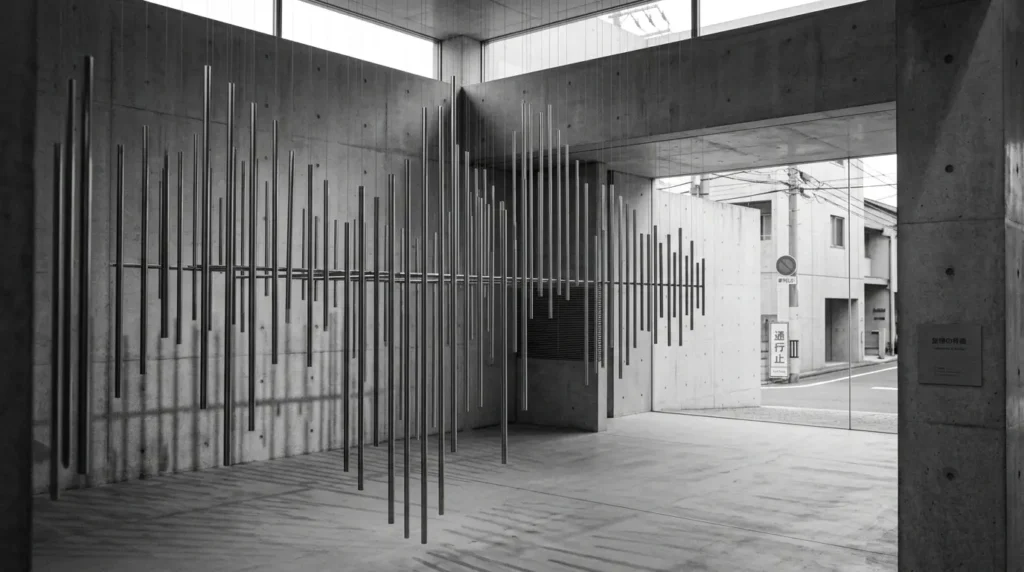
What unfolds here is the “exquisitely hollow isolation” of a human being who, out of a fear of vulnerability, has discarded human ties altogether. Moving with the brisk velocity of someone cutting through a dense urban crowd, Yosui effortlessly shatters the comforting illusions of human solidarity that most of us desperately try to believe in.
A Nihilism That Rigidly Rejects the Solace of the “Heart”
This is most vividly illustrated when the narrator voices a vague desire to hold something dear, only to sequentially eliminate his own physical form, his internal emotions, his gilded memories, and his future prospects as viable options. Normally, when confronted with loneliness, we look for an escape hatch—clinging to the idea that our spirits can connect, or finding strength in the radiant memories of the past.
Yet Yosui methodically demolishes these final sanctuaries, all while maintaining a jaunty, rhythmic stride.
- Rejection of the Past: Refusing any reliance on romanticized memories or nostalgia.
- Rejection of the Future: Denying any comforting expectations toward an unearned tomorrow.
This relentless cascade of negatives leaves listeners entirely exposed, casting them out into the harsh elements of reality rather than offering gentle comfort. It is precisely because this uncompromising worldview is housed in such a polished, vibrant pop arrangement that the song’s underlying nihilism cuts so incredibly deep.
Watching “Boring Television” Together: The Ultimate Irony
The song’s critical brilliance peaks in its later stages, turning its cold lens directly onto the domestic routine of relationships. Yosui casually dismisses seemingly wholesome companionship as inherently suspect, reframes twilight nostalgia as merely lonely, and culminates in a devastating contrast between the fragile dreams seen alone and the dull television watched side-by-side with another.
_2026-1024x572.webp)
The Paradox That Solitude Is Far Better
Countless pop tracks emphasize that being together beats being alone, urging us to find someone to bridge our inner chasms. In stark contrast, Yosui serves up a remarkably unvarnished, mundane truth: even in proximity, people often wind up sharing nothing more than a lifeless television screen, trapped in a profoundly cold state of co-existence.
If being with someone means enduring an unbridgeable boredom and shared loneliness, then standing entirely on your own beneath a vast, open sky is infinitely more authentic and dignified. This short, sharp phrase perfectly captures that subversive philosophy.
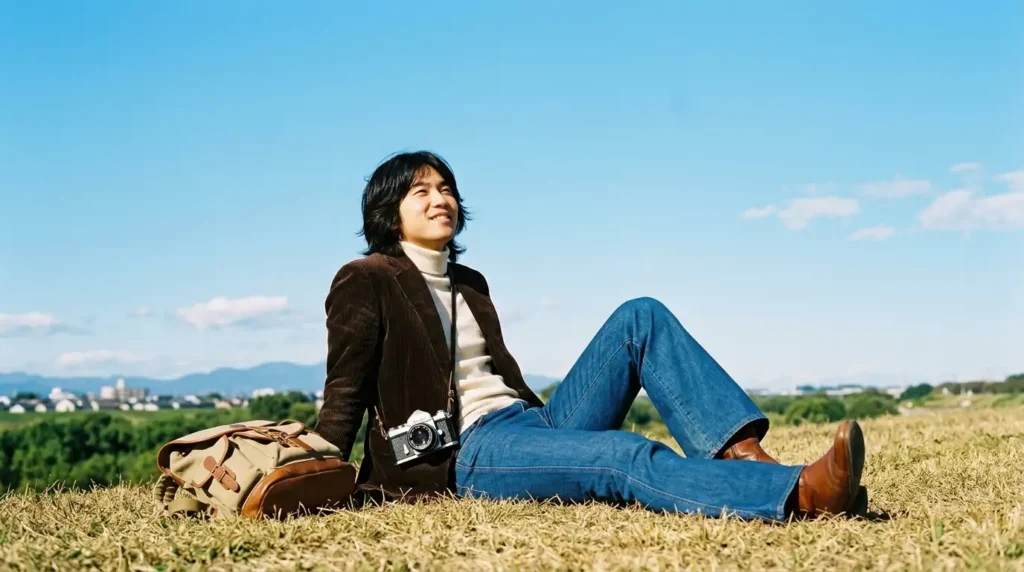
Having navigated varied interpersonal distances and witnessed the complex dualities of human networks over the years, the quiet resignation embedded in the phrase “boring television” resonates with an undeniable, grown-up realism.
Conclusion: A Blue Sky That Serves as an Unescapable Cage
On the surface, Yosui Inoue’s “Aozora Hitorikiri” remains an outstanding pioneer of the mid-70s Japanese city pop landscape, shimmering with an energy that easily coaxes the listener into a carefree frame of mind.
In truth, however, it stands as an uncompromising piece of social commentary, peeling back the self-serving conveniences we quietly harbor to expose the raw core of modern isolation. By successfully evading all emotional messiness and fleeing from sorrow, one is ultimately left standing entirely solitary under an immaculate, cloudless sky.
_2026052018-1024x572.webp)
That blue sky is boundlessly open, yet terrifyingly vacant. To this day, I find a strange sort of comfort in admitting defeat to Yosui’s immense artistry—his uncanny ability to deliver a completely inescapable, isolated world while riding a spectacular, infectious rhythm with a knowing smile.


音楽ファン同士の交流・リクエストはこちら / Connect & Request Songs Here