🌐 English|🌐 日本語
The Stylistics: Their Story and Musical Journey
- 🎧 Listen to This Article
- No. 3: “You Make Me Feel Brand New”
- First, Listen to the YouTube Video
- A Love Song Inspired by an Unexpected Person
- What Did the Narrator Regain When He Lost Confidence?
- The Difference Between the Japanese Title and the Original
- The Surprise of Hearing Airrion Love Sing First
- The Melody Thom Bell Struggled So Hard to Write
- The Song Considered Too Long That Reached No. 2
- Final Thoughts
🎧 Listen to This Article
Discover the key highlights of this article through a short audio narration.
Before reading, explore the story behind “You Make Me Feel Brand New” and the distinctive interplay between its two lead vocalists.
🎵 English Narration
Listen to an English-language overview of this article.
🎶 Japanese Narration
Listen to a Japanese-language overview of this article.
Listening before reading will help you appreciate the song’s fascinating history and the key insights explored in this article.
No. 3: “You Make Me Feel Brand New”
No. 3 in My Personal Best 10: The Stylistics is “You Make Me Feel Brand New.”
First released on the 1973 album Rockin’ Roll Baby, the song became a single in 1974. It also appeared on that year’s album Let’s Put It All Together and reached No. 2 on both the US Billboard Hot 100 and the UK Singles Chart.
With lyrics by Linda Creed and music, arrangement, and production by Thom Bell, it remains one of The Stylistics’ signature ballads, distinguished by its graceful melody and the interplay between two lead vocalists.
Yet there is an unexpected story behind this recording. Although the lyrics are widely understood as a declaration of love to a romantic partner, they were reportedly written as an expression of gratitude from Creed to her songwriting partner. Even more surprisingly, Bell initially objected to part of the lyric.

Behind this beautiful love song lies a fascinating account of its creation, along with some remarkable vocal decisions. There is much more to “You Make Me Feel Brand New” than the immediate pleasure of its melody.
A Personal Interpretation of the Lyrics
No matter how many words I search for, I can never fully express what you mean to me.
When I lost confidence in myself, you stood beside me and taught me how to embrace life again.
You believed in me through every difficult moment, and for that, I will always be grateful.
Knowing you has changed my life and made me feel like a new person.
So I offer you this song, filled with all the love and gratitude that words alone could never convey.
First, Listen to the YouTube Video
Credits
Song: "You Make Me Feel Brand New"
Artist: The Stylistics
Original Album: Rockin' Roll Baby (1973)
Subsequent Album: Let's Put It All Together (1974)
Single Release: 1974
Lyrics: Linda Creed
Music, Arrangement, and Production: Thom Bell
Lead Vocals: Airrion Love and Russell Thompkins Jr.
🎼 About the Song
A ballad expressing love and appreciation for someone who has provided strength and encouragement through life's difficulties. Airrion Love's warm lower register alternates with Russell Thompkins Jr.'s distinctive falsetto. Together with its elegant orchestral arrangement, the recording captures the sophistication of Philadelphia soul.
A Love Song Inspired by an Unexpected Person
The lyrics of “You Make Me Feel Brand New” address someone deeply cherished. The narrator struggles to find the right words for a person who has offered unwavering support and believed in him when he could no longer believe in himself.
Most listeners naturally interpret the song as an expression of gratitude to a romantic partner. But Linda Creed, who wrote the lyrics, reportedly had someone else in mind.
The Person Linda Creed Had in Mind
According to an account shared by Thom Bell, Creed wrote the lyrics as a personal expression of appreciation for him, her longtime songwriting collaborator. Together, they had created numerous successful recordings and developed a close professional partnership.
What makes the story particularly intriguing is that Bell initially disliked the religious language in the lyrics, especially the references to divine blessings. The two collaborators reportedly had established preferences about the language they used in their songs.
But when Creed explained that she had written the words with Bell himself in mind, he reconsidered. The religious references ultimately remained in the finished recording.
How the Song’s Background Changes Its Meaning
Before learning this story, I had always heard the song primarily as a declaration of romantic love. Knowing that its lyrics were inspired by gratitude toward a creative partner gives the words about trust and encouragement an entirely different dimension.
The experience of being supported by another person is hardly limited to romance. It might involve a colleague who stood beside us during a difficult project, a friend who helped us through a personal crisis, or a mentor who recognized our potential before we did.
Of course, the circumstances that inspired a lyric do not determine its only possible interpretation. A song rooted in one person’s experience can speak to many different relationships. That is part of what gives this recording its lasting appeal.
What Did the Narrator Regain When He Lost Confidence?
Later in the song, the narrator reflects on a period of insecurity. When his confidence faltered, the person he addresses offered encouragement and helped him recover his sense of pride.

One important distinction is that the lyrics do not suggest this person solved all his problems for him. Instead, the support he received helped restore his belief in himself.
There is a difference between comforting someone after a failure and helping that person believe they are still capable of succeeding. Comfort can ease immediate pain, while genuine confidence in another person may influence what they do next.
That distinction seems central to the narrator’s feelings. What he received was more than temporary reassurance. It was the confidence to face life again, knowing that someone believed in his worth.
The Difference Between the Japanese Title and the Original
In Japan, the song is known as Chikai, a title meaning “A Vow” or “A Promise.” The Japanese title suggests a commitment to loving someone in the future. Yet the original English title, “You Make Me Feel Brand New,” contains no explicit promise or vow.
Instead, it describes the feeling of being renewed through another person’s influence. Rather than promising what he will do tomorrow, the narrator reflects on how knowing this person has already changed his life.

Feeling Brand New Does Not Mean Erasing the Past
Literally, “brand new” describes something entirely new or unused. In this song, however, the narrator has not become a completely different person. He still carries his memories and experiences, including the difficult ones.
What has changed is his outlook. With the encouragement of someone important to him, he has rediscovered the ability to approach life with hope and confidence.
The Japanese title looks toward a future commitment, while the English title focuses on a transformation that has already taken place. The distinction may seem subtle, but it changes the emotional emphasis of the song.
There is no need to dismiss the Japanese title. Its simplicity has a certain elegance, and it suits a romantic ballad beautifully. Still, understanding the original title makes the narrator’s gratitude feel more closely connected to his personal experience.
The Surprise of Hearing Airrion Love Sing First
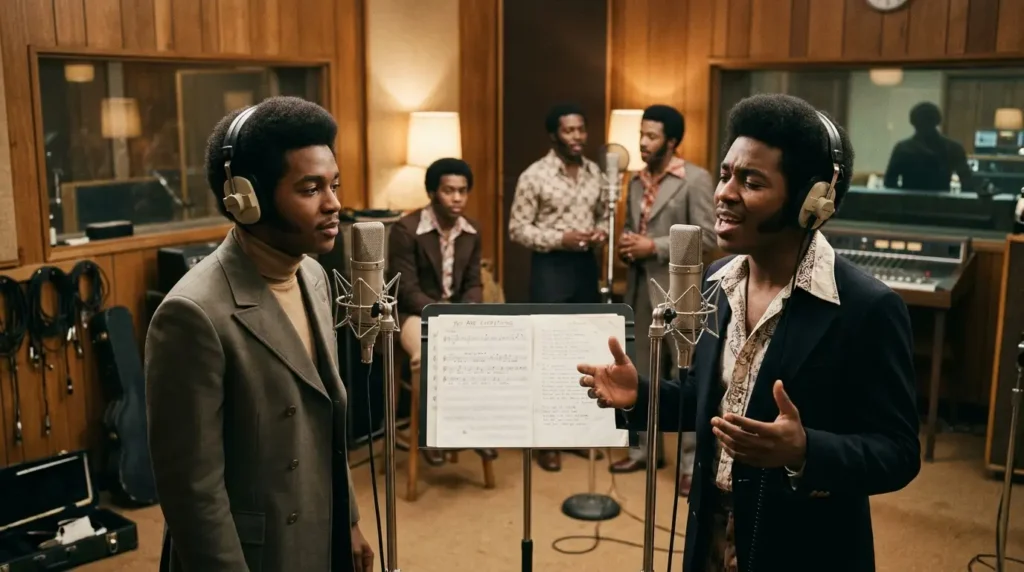
For many listeners, the unmistakable sound of The Stylistics is Russell Thompkins Jr.’s soaring falsetto. Yet “You Make Me Feel Brand New” begins with Airrion Love taking the lead.
In a 2024 interview, Love recalled that this was his first experience recording a lead vocal. He also remembered Linda Creed telling him that he would share the lead with Russell, a decision that helped give the recording its distinctive character.
The Moment the Music Moves from a Lower Voice to a Higher One
Love’s voice has a warm, resonant quality in its lower and middle registers. In the opening lines, he delivers the lyrics without exaggeration, almost as though he were speaking privately to someone he knows well.
When Russell’s falsetto enters, the emotional atmosphere changes. The melody rises into a higher register, and feelings that initially seemed restrained begin to emerge more openly.
The two singers do more than simply take turns. Love gives the words a grounded, conversational quality, while Russell’s extended high notes allow the melody to soar. Each voice serves a different musical purpose.
Are the Two Voices Having a Conversation?
Because the lead vocals alternate, it is possible to hear the recording almost as a dialogue between two people. However, the lyrics do not establish separate characters or assign different perspectives to the singers.

A more convincing interpretation is that the contrasting voices express different dimensions of the same emotion. Their differences in pitch, tone, and delivery create movement within a long ballad and prevent the performance from becoming predictable.
The Melody Thom Bell Struggled So Hard to Write
The melody of “You Make Me Feel Brand New” did not arrive effortlessly. In an interview with Pitchfork, Thom Bell described how difficult he found the process of composing this particular song.
According to Bell, he repeatedly revised the melody in his head because he could not immediately achieve the sound he wanted. He reportedly spent about a week working through the musical ideas before finding a satisfactory direction.
Why a Beautiful Melody Was Not Enough
Bell wanted the music to carry the emotional weight of the lyrics. A song about feeling transformed by another person’s love and encouragement required a melody capable of expressing something equally profound.
Listening to the finished recording, that struggle may be difficult to imagine. The melody flows so naturally that the complexity of its creation is almost invisible. But music that sounds effortless is not necessarily easy to compose.
Sometimes, the most memorable melodies are the result of countless small decisions that listeners never consciously notice.
How the Strings Support the Vocals
In Bell’s arrangement, the strings connect vocal phrases and change their texture as the melody develops. The orchestration is lush, but it rarely becomes so prominent that it distracts from the words.
The bass and drums maintain a steady rhythmic foundation beneath the unhurried tempo. Flowing orchestral passages combine with the rhythmic sensibility of soul music, producing the refined sound associated with Philadelphia soul.
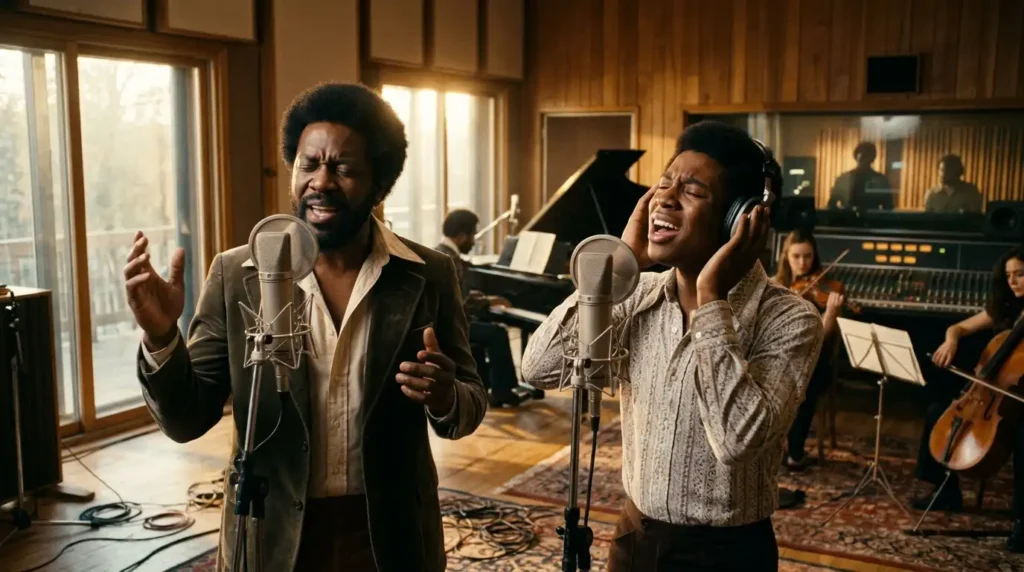
The approach to the chorus is particularly striking. As the vocal delivery changes and the arrangement expands, the music communicates feelings that the lyrics alone cannot fully express.
Perhaps this is where Bell’s determination to create a melody worthy of the words becomes most apparent.
The Song Considered Too Long That Reached No. 2
The original recording of “You Make Me Feel Brand New” runs for approximately five and a half minutes. Although it appeared on the 1973 album Rockin’ Roll Baby, it was not immediately released as a single.
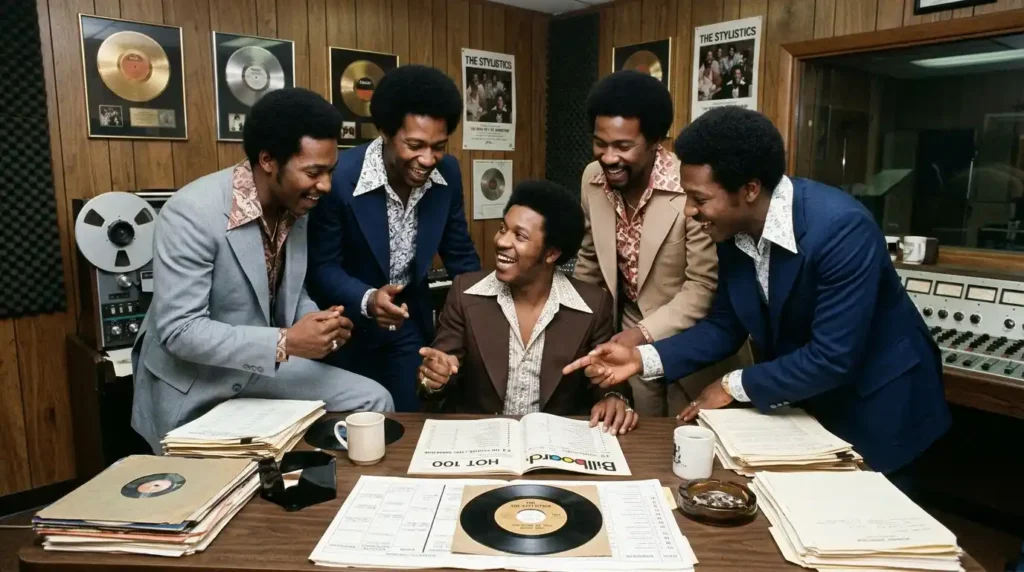
According to accounts from Airrion Love and others involved with the group, the record company considered the song too long for a conventional single. Radio programming at the time generally favored shorter recordings.
But when The Stylistics performed the song onstage, audiences responded enthusiastically. Eventually, a shorter edit was prepared for radio, and the single was released in 1974.
The Hit That Challenged the Record Company’s Judgment
Following its release, “You Make Me Feel Brand New” spent two weeks at No. 2 on the Billboard Hot 100. It also reached No. 2 in the United Kingdom, becoming one of the group’s most successful recordings.
There is an irony in the fact that the song’s length, initially seen as a commercial disadvantage, is also part of its artistic appeal. The alternating lead vocals, the gradual development of the melody, and the expanding orchestration all benefit from the extended running time.
The shorter edit made the recording more suitable for radio, but the full album version offers a different listening experience. Comparing the two reveals how much a song’s pacing and emotional progression can be affected by its length.
Final Thoughts
On a first listen, the beautiful melody and distinctive vocals of “You Make Me Feel Brand New” may be what leave the strongest impression. But learning how the recording came together reveals another side of its appeal.
There is Linda Creed’s expression of gratitude toward her songwriting partner, Thom Bell’s repeated attempts to find the right melody, and the unusual decision to share the lead vocals between Airrion Love and Russell Thompkins Jr. Each detail offers an insight that the finished recording alone cannot provide.
What stays with me most is the story of Bell struggling to create music that could do justice to the meaning of the lyrics. How do you write a melody that captures love powerful enough to change someone’s life? His determination to answer that question helped produce a song that continues to resonate with listeners.
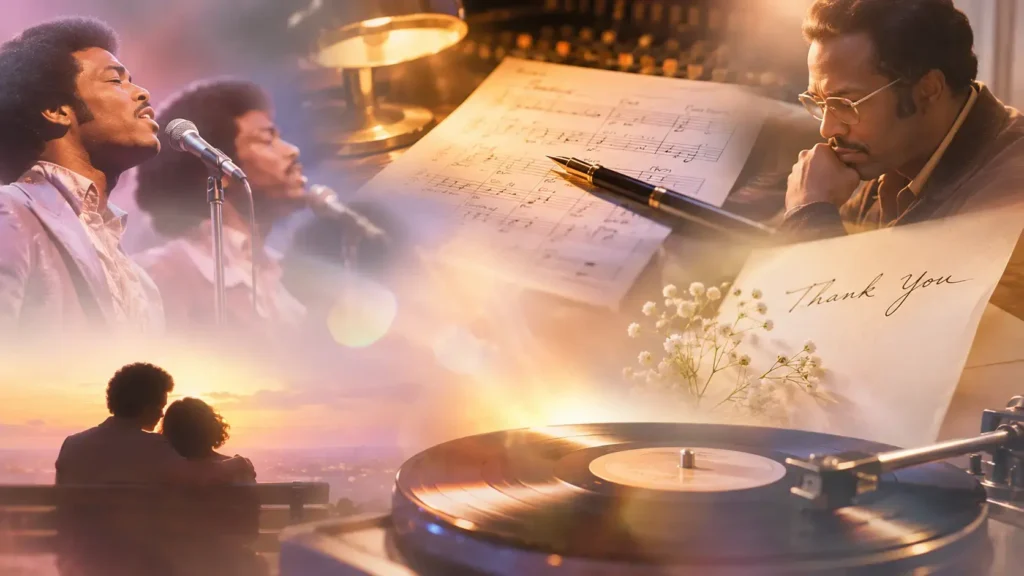
The Japanese title, Chikai (“A Vow”), has its own appeal. But listening with the original title, “You Make Me Feel Brand New,” in mind makes the connection between the words and the music even more meaningful.
Because you were there for me, I became someone I could never have been on my own.
To express that feeling, two gifted songwriters and The Stylistics created “You Make Me Feel Brand New.” Behind its magnificent sound lies a deeply human story of creativity, trust, and appreciation.
音楽ファン同士の交流・リクエストはこちら / Connect & Request Songs Here