
🎧 Enjoy This Article in Audio
You can quickly grasp the main points of this article through narration.
Recommended for those who want to catch the vibe of the music and the flow of the article before reading.
🎶 English Narration
An English audio introduction to the contents of this article.
⌛ Duration: Approx. 3 mins
🎵 Japanese Narration
A Japanese audio introduction to the contents of this article.
⌛ Duration: Approx. 3 mins
* Listening to the audio before reading helps you better understand the world of the music and the main points of the article.
🎤【May 12th】Celebrating Tamio Okuda’s Birthday
On May 12, 1965, a man who would decisively change the Japanese rock scene was born in Hiroshima City, Hiroshima Prefecture. That man is Tamio Okuda.
Emerging like a comet in the late 1980s as the frontman of the band “UNICORN,” he reached the pinnacle of the “band boom” era with his unconventional musicality and powerful vocals. However, at the height of their popularity in 1993, the band dissolved. After a one-year hiatus, he began his solo career, shedding the “rock star” persona to reveal his true self: a man who fundamentally enjoys music for what it is.

His solo career took off in earnest in 1994, producing masterpieces such as “And-I-Go Rider” (Eejyui ★ Rider) and “Sasurai“ (The Wanderer).
The single “Eejui ★ Rider,” released on June 21, 1996, is a defining track of this era. Without relying on heavy promotion or flashy gimmicks, it seeped into the daily lives of people across Japan through word-of-mouth, radio play, and its feature as the CM song for the Nissan “Wingroad.” Eventually becoming a long-term hit on the Oricon charts, it has established itself as a monumental “soundtrack for the road” in the history of Japanese pop music.
📺🎵 First, please watch the official YouTube video.
【Credits】
Tamio Okuda "Eejui ★ Rider" Official Music Video
Lyrics & Composition: Tamio Okuda / Artist: Tamio Okuda
Single released on June 21, 1996.
【Two-Line Summary】
Tamio Okuda's signature song "Eejui ★ Rider" is a rock number that captures the feeling of effortless freedom and the excitement of a journey. Its breezy sound and nonchalant vocals emphasize the mood of simply moving forward over reaching a specific destination.
When I first heard this song… ♫
| My Age | Elem. | Jr. High | High | Univ. | 20s | 30s | 40s | 50s | 60s+ |
| Release Year | 1996 | ||||||||
| When I Listened | ● |
I first encountered this song when I was 38 years old. It was just after I had completed a four-year stint at the headquarters and was reassigned to a local branch office.
The late 1990s was a time when Japan was dominated by the high-tempo digital beats produced by Tetsuya Komuro. Million-sellers were being churned out one after another, and music felt like it was accelerating at the speed of “consumption.” In the midst of those noisy days, a line from the TV—“I don’t care if you bring up such difficult matters”—struck me as incredibly fresh.
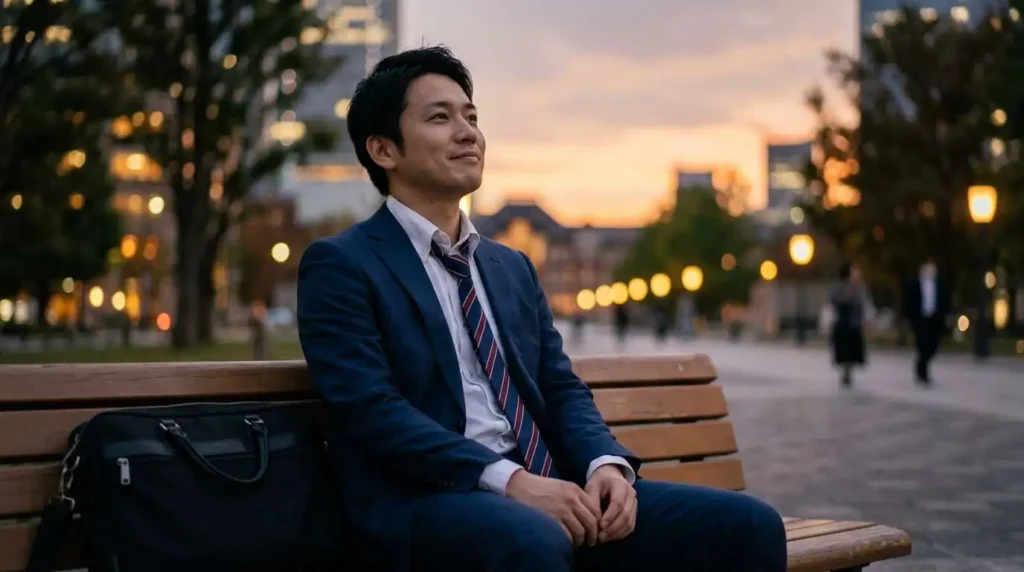
While the hits I had been listening to until then were often “cheer songs” that tapped you on the shoulder from some high-and-mighty place, Tamio Okuda’s voice was flat and grounded—like casual chatter coming from someone in the passenger seat.
The moment I heard the lyrics, I found myself nodding internally, thinking, “Exactly! It’s okay even if we have nothing.” It felt like a vivid, somewhat mischievous counter-punch to the values of the time, where recklessly aiming for a destination was considered the ultimate virtue.
1996: A Turning Point Where Digital and Analog Intersected
The year 1996, when “Eejui ★ Rider” was released, was a unique moment in the Japanese music scene.
As mentioned, the top of the charts was dominated by the meticulous structural beauty of synthesizers and sequencers. However, a quiet return to the “organic sound of live instruments” was beginning as a reaction. What Tamio Okuda achieved was a redefinition of the “warm distortion” found in the Beatles and 1970s British rock within the context of 90s J-POP.
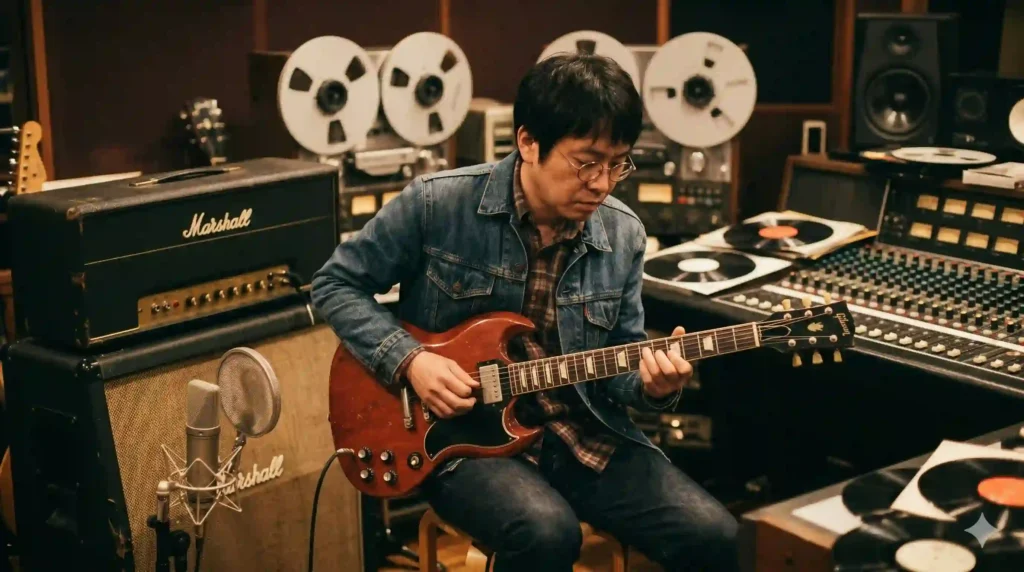
The lyrics feature the phrase “Recording masterpieces onto tape.”
In an era where the “effort” of recording was required—something unimaginable to modern listeners—one had to select favorite songs and calculate the remaining tape time down to the minute to create a personal playlist. Perhaps that is why the freedom felt when sliding that tape into the car stereo and driving off carried a weight far greater than it does today.
Mobile phones were not yet ubiquitous; by driving a car, you could easily create a situation where you were truly “alone and unreachable.” The sense of liberation in the lyrics—”We don’t need a calendar or a destination”—resonated perfectly with the deep psyche of Japanese people of that era who sought escape from mental constraints more than physical travel.
A Rebel Spirit for Adults Through Calculated “Relaxation”
A Meticulously Crafted “Loose” Sound
The first thing that catches the ear in “Eejui ★ Rider” is the slightly distorted electric guitar stroke in the intro. This recreates the thick, warm texture of tube amplifiers characteristic of 1970s British rock.

While the Japanese pop music of that time layered synthesizer sounds and dressed them up with extravagant decorations, this song remains extremely simple. Every snare hit and every bass line rumble feels raw and unpolished, like an unwashed pickup truck.
However, this “looseness” is by no means laziness. By deliberately thinning out the number of sounds and avoiding instrumental clutter, he highlights the flat texture of his vocals. This “subtraction” method represents the stoic musical peak reached by Tamio Okuda as an artist.
The Playfulness Hidden in the Word “Eejui”
The title “Eejui” (often stylized as “E-10”) is a play on words combining the industry slang for people in their 30s (“E-ju”) with the 1960s counter-culture iconic film, “Easy Rider.”
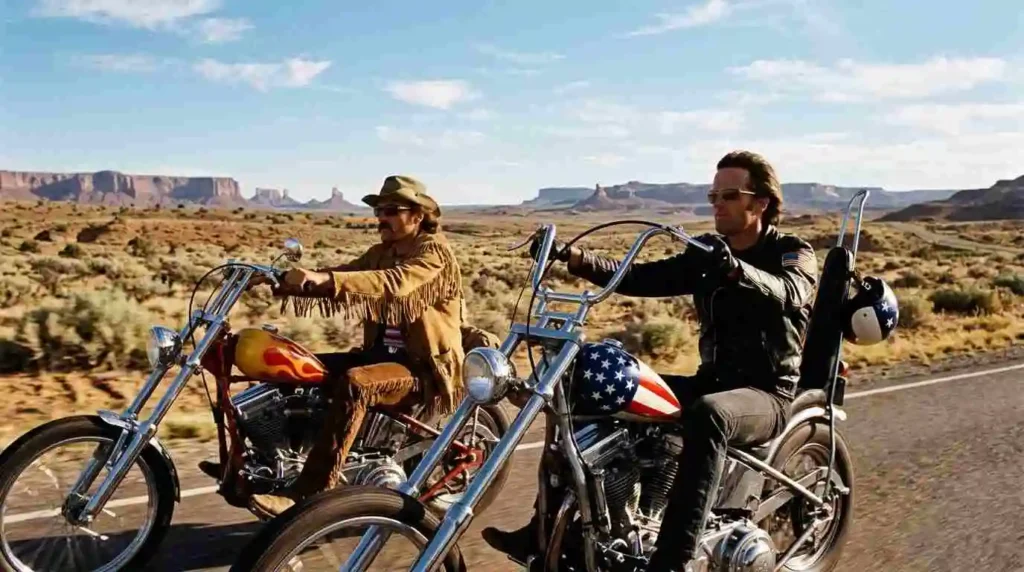
The 30s are an age where social responsibilities increase and one begins to feel the “gravity” of being unable to act as recklessly as in youth. Tamio Okuda dared to crown this age with the title of “Rider,” a symbol of freedom. This might have been a stroke of intellectual humor—a way to nimbly flip away from the “difficult matters” forced upon us as cogs in the machine or pillars of the family.
The declaration that one doesn’t need a calendar or a destination isn’t mere abandonment of responsibility. It preaches the value of taking the wheel with your own sensibilities, distancing yourself from the schedules set by others and the definitions of success imposed by society.
Deep Lyrics: Intelligence Born from Knowing Despair
Reading through the lyrics, it becomes clear that he isn’t just singing of optimistic ideals.
“If you let your guard down, the reality of tomorrow that peeks through… throw it into the thicket.”
This line contains a cold gaze toward the anxieties lurking behind daily life and the realities that don’t go as planned. However, he refuses to lament them dramatically. He tosses them “into the thicket,” says “I don’t know, let’s just go anyway,” and revs the engine. This overwhelming sense of affirmation is the true strength of this song.
“A broad mind, silly ideas, humor that can laugh lightly.”

What he sought wasn’t financial success or high status, but the “wisdom” to remain standing on his own two feet even after letting those things go. This stance took deep root in the hearts of many adults in Japan during the post-bubble stagnation as a new guide for living.
Finally: A Road Movie That Never Ends
More than a quarter-century after its release, the dry brilliance of “Eejui ★ Rider” has not faded in the slightest.
Cassette tapes have turned into streaming, and car VCRs have turned into smartphones, but the fact that we wander in search of “our own speed” remains unchanged. In days busy with work and social roles, when this song suddenly plays, it feels as though the view through the windshield unexpectedly opens up.
What Tamio Okuda presented in this song is not temporary escape, but a story of unshakable self-confidence: “No matter where I go, as long as I am myself, it’s fine.” On May 12th, as we listen to this masterpiece once again on his birthday, let us also drive through the road called tomorrow with pride.


音楽ファン同士の交流・リクエストはこちら / Connect & Request Songs Here