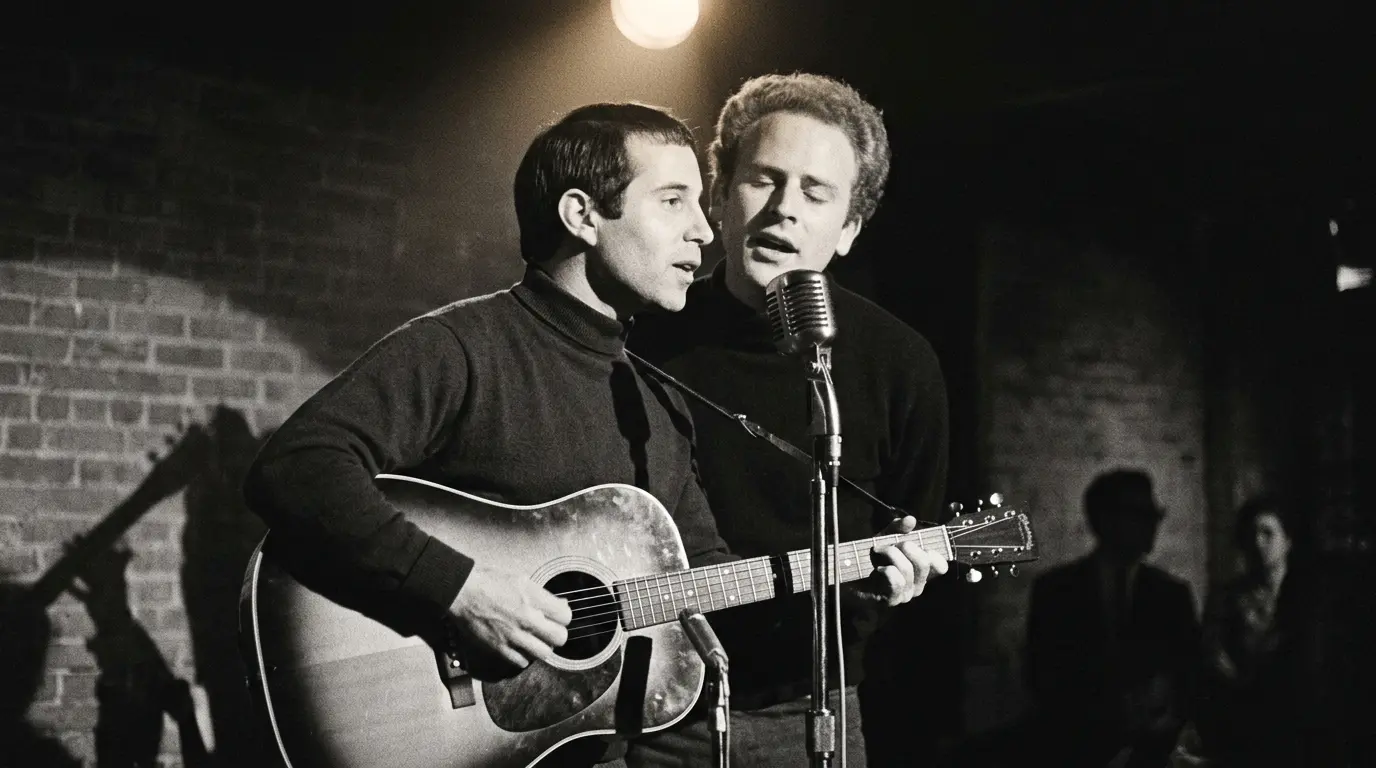
Simon & Garfunkel’s history is available here!
- 🎧 Listen to This Article
- No. 5: “El Condor Pasa (If I Could)”
- 🎥 As always, let us begin with the official YouTube videos.
- How “El Condor Pasa” Traveled from the Andes to the World
- Traditional Instruments and the Voices of the Duo
- A Different Song Emerged When I Understood the Lyrics
- Its Place on Bridge Over Troubled Water
- Comparing the Two Official Videos
- Why I Ranked It No. 5
- Closing Thoughts
🎧 Listen to This Article
Hear a concise narration of the article’s main points.
Recommended for listeners who would like to experience the atmosphere of “El Condor Pasa” and understand the article’s overall direction before reading.
🎶 English Narration
An English audio introduction to the content of this article.
🎵 Japanese Narration
A Japanese audio introduction to the content of this article.
Listening first will make it easier to grasp the world of “El Condor Pasa” and the key ideas explored in the article.
No. 5: “El Condor Pasa (If I Could)”
The song appears as the second track on Bridge Over Troubled Water, Simon & Garfunkel’s final studio album, released in 1970.
I believe I first heard this song when I was in my first or second year of junior high school. I understood almost none of the English lyrics simply by listening. Even so, the moment the flute began to play, I felt as though a vast landscape were quietly opening before my eyes.
A wind crossing dry earth. Mountains stretching into the distance. High above them, a bird gliding forward without beating its wings. Although I had never seen the Andes, their scenery seemed to emerge through sound alone.
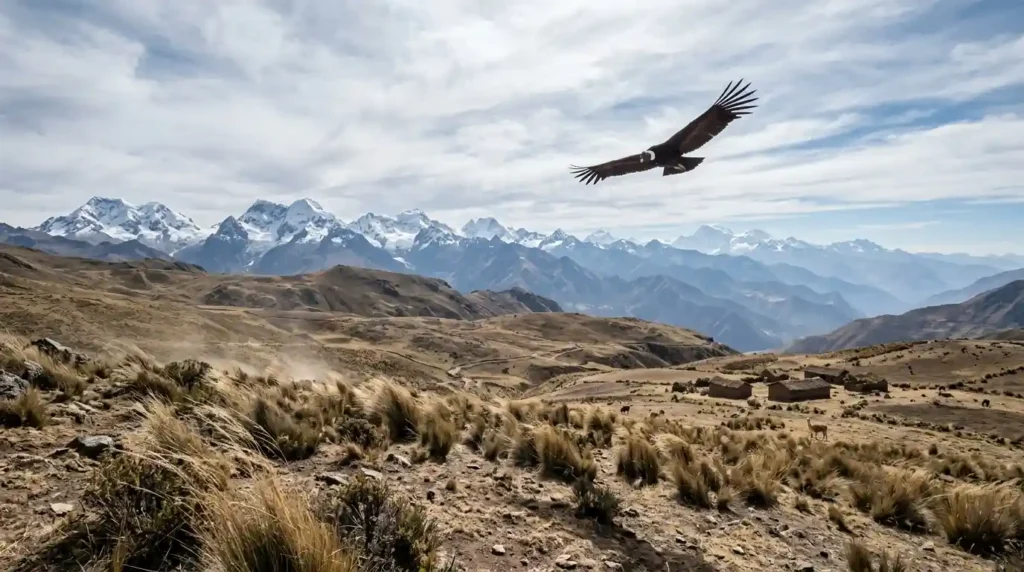
Many Simon & Garfunkel songs place the beauty of their harmonies at the center. In this recording, however, their voices do not claim the leading role. They become part of the traditional instrumental performance and blend naturally into a melody written more than half a century earlier.
Rather than attracting the listener through grandeur or sheer power, the song carries us far from everyday life. I chose it as my No. 5 because of the extraordinary afterglow it leaves behind.
A Poetic Interpretation
I would rather be a little sparrow and choose the sky than spend my life crawling below.
I would rather be the hammer that shapes my fate than the nail driven down by another hand.
I would rather vanish into the distance like a swan than remain bound to the earth, leaving only a sorrowful sound.
I would rather become a forest and feel the ground beneath me than be imprisoned within a pavement of stone.
🎥 As always, let us begin with the official YouTube videos.
Simon & Garfunkel “El Condor Pasa (If I Could)”
Song: El Condor Pasa (If I Could)
Artist: Simon & Garfunkel
Music: Daniel Alomía Robles
Arrangement: Jorge Milchberg
English Lyrics: Paul Simon
Instrumental Performance: Los Incas
Video Format: Official Audio
Published by: Simon & Garfunkel Official YouTube Channel
Two-Line Commentary
Paul Simon added English lyrics about choosing one’s own way of life to a melody born in Peru in 1913.
The restrained vocals and the earthy performance by Los Incas quietly express a longing to escape the forces that confine us.
Leo Rojas “El Condor Pasa”
Song: El Condor Pasa
Performer: Leo Rojas
Music: Daniel Alomía Robles
Principal Instrument: Pan Flute
Video Format: Official Music Video
Published by: LEO ROJAS - official
Copyright: © 2012 Sony Music Entertainment Germany GmbH
Two-Line Commentary
Leo Rojas’s pan flute vividly evokes the wind crossing the Andes and the soaring flight of the condor.
The sweeping natural scenery and melancholy tone communicate the power of the melody without relying on words.
How “El Condor Pasa” Traveled from the Andes to the World
Born from a Peruvian Stage Work in 1913
The original music of “El Condor Pasa” was written in 1913 by the Peruvian composer Daniel Alomía Robles.
It was originally part of the zarzuela El Cóndor Pasa, a stage work first performed in Lima that same year. It was not an anonymous folk song handed down unchanged through the generations. It was a composed work with a clearly identified author, although it drew deeply upon the traditional music of the Andes.
It Was Not Written by Simon & Garfunkel
Listening only to the Simon & Garfunkel recording, one might assume that Paul Simon composed the song after incorporating elements of South American music. In reality, the melody had existed for more than half a century before the duo recorded it.
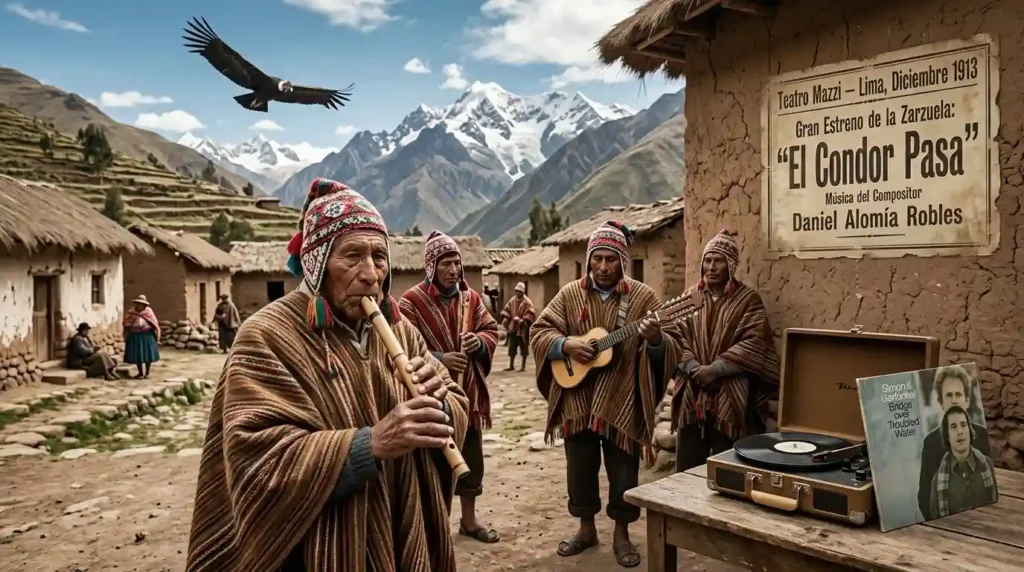
Nor was the original conceived as the pan-flute-led instrumental piece familiar to many listeners today. Music written for a theatrical production gradually changed through arrangements by different performers until it assumed the form now known around the world.
A single melody crossed borders and generations, acquiring a new expression at each stage of its journey. Seen in that light, the song is more than a cover version: it embodies the way music is inherited, reinterpreted, and transformed.
Paul Simon’s Encounter with Los Incas
Paul Simon discovered the melody through Los Incas, a South American music group based in France.
Drawn to their performance, Simon added his own English lyrics. The accompaniment for “El Condor Pasa (If I Could)” was not newly recorded from the ground up. Simon & Garfunkel placed their vocals over the instrumental track performed by Los Incas.
What is particularly striking is that they did not force the Andean music into the conventional shape of their own folk sound. By preserving the existing performance and adding words and voices above it, they created a recording that remained respectful of its musical foundation.
They brought music from another culture to a new audience without erasing its identity. I believe this careful balance is one reason the recording has retained its appeal across generations.
Traditional Instruments and the Voices of the Duo
The Soundscape Created by Flute and Strings
The flute heard at the beginning carries an atmosphere very different from the polished order of urban studio pop. Its breath-filled tone suggests an immense landscape extending beyond the sound itself.
Delicate string sounds then enter, supporting the principal melody with a steady pulse. The arrangement creates remarkable depth from only a few elements, without depending on overwhelming volume or dramatic shifts.
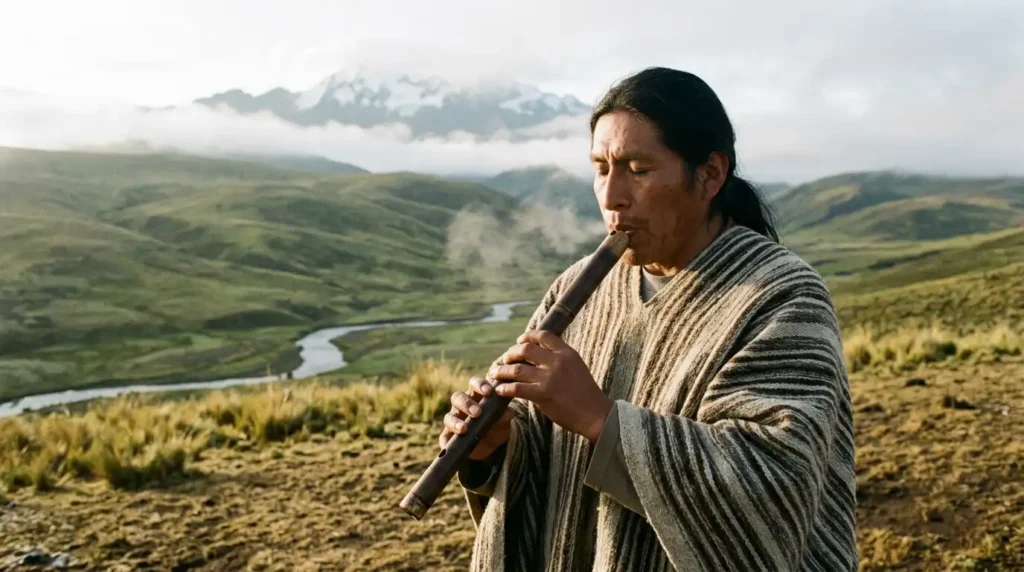
Gliding on the Air Rather Than Beating Its Wings
The condor I imagine while listening is not a bird struggling upward through rapid movements of its wings. It catches the rising currents from the valleys and gains altitude with almost no visible effort.
The melody moves in much the same way. It does not press forward through forceful declarations, but allows itself to be carried by a gentle current. The listener does not have to chase the music; by surrendering to its movement, we gradually leave familiar surroundings behind.
The Voices Never Overpower the Performance
When people speak of Simon & Garfunkel, their beautiful harmonies usually take center stage. In this song, however, the voices never attempt to overpower the traditional accompaniment.
They preserve the shape of the words while settling gently into the melody. Rather than intensifying the emotion, their singing seems to send a private thought outward into the distance.
Had they delivered the lyrics with greater force, the result might have become a more direct message song. Their restraint leaves space for listeners to place their own experiences within the music.
A Different Song Emerged When I Understood the Lyrics
A Sparrow and a Snail, a Hammer and a Nail
For many years, I heard the song as a portrait of the magnificent Andean landscape. Because I did not understand the words, I accepted the sound of the English lyrics as another part of the music.
Once I learned their meaning, however, I realized that the song contained a human drama that could not be explained by scenery alone.
The opening lines contrast a sparrow flying through the air with a snail moving along the ground, followed by a hammer and the nail it strikes. Later, a swan is set against a person tied to the earth, while a forest is contrasted with a street.
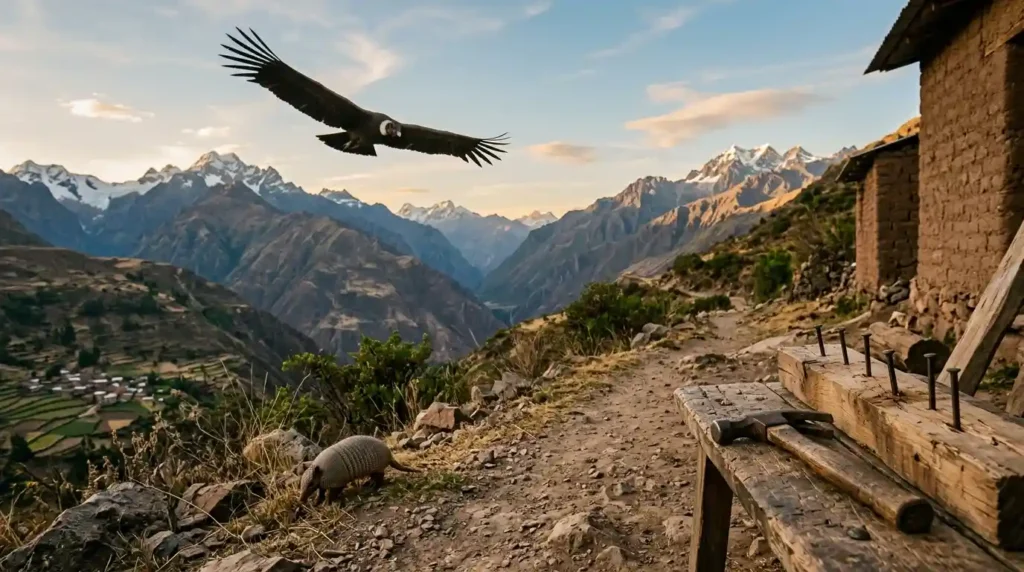
These images are not simply arguments that one creature or object is superior to another. They seem to express the desire to choose one’s own direction instead of remaining in a position assigned by someone else.
What Lies Beneath the Gentle Sound
Before I understood the lyrics, the song seemed entirely serene. After discovering what the words conveyed, I began to sense a painful desire to escape the life one is currently living beneath that calm surface.
Rather than accepting a role imposed from outside, the narrator wants to decide how to live. This is the human story I now hear within the song.
Not “I Certainly Will,” but “If I Could”
The English title includes the phrase “If I Could.” It is the language of possibility rather than certainty.
At the same time, the lyrics repeatedly answer these possibilities with the conviction that the singer surely would make such a choice. What emerges is neither simple resignation nor a triumphant declaration. It is the determination to seek another way of living while fully recognizing how difficult that may be.
A Quiet Resolution Rather Than a Heroic Proclamation
This is why the restrained singing suits the words so well. Within its calm delivery, we can hear both hesitation before reality and the will to move beyond it.
Understanding the lyrics did not erase the Andean landscape I had always imagined. Instead, the heart of one person entered that vast scenery, revealing another dimension within the music.
Its Place on Bridge Over Troubled Water
A Dramatic Change of Direction on the Second Track
The album Bridge Over Troubled Water begins with the title track, in which Art Garfunkel’s voice expands with overwhelming power and beauty.
“El Condor Pasa” follows immediately afterward. As the resonance of the grand piano and dramatic singing fades, the album moves into a world of dry flute and string sounds.
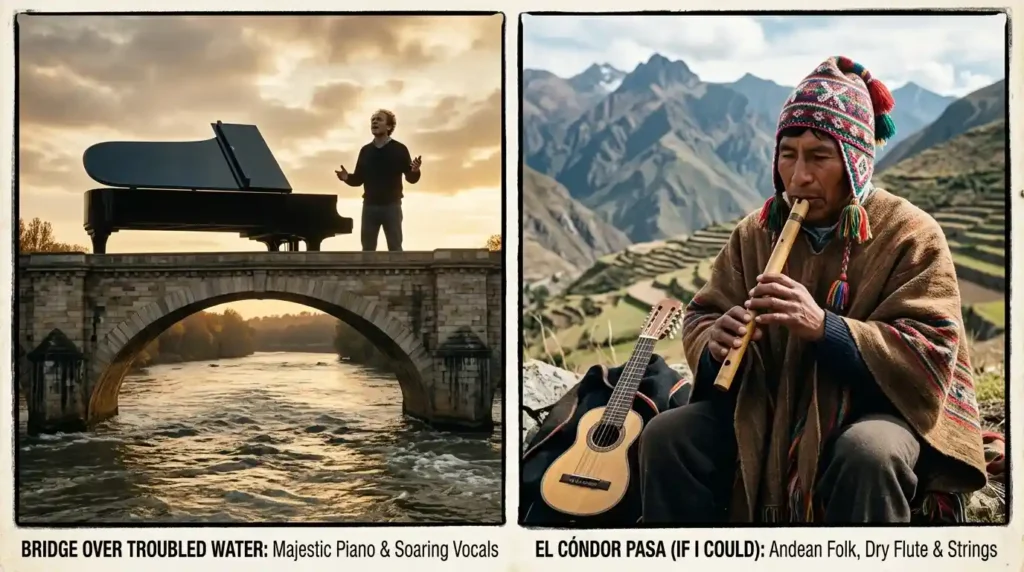
Through this contrast, the album’s musical horizon suddenly becomes much wider. The sequence opens a door beyond American folk and pop toward music cultivated in a distant part of the world.
A Perspective That Anticipates Paul Simon’s Later Work
In later years, Paul Simon incorporated reggae, gospel, South African music, and sounds from many other cultures into his own work.
It would be misleading to identify “El Condor Pasa” as the single direct starting point of everything that followed. Even so, the recording already reveals his interest in music outside his own cultural background and his ability to connect it with new words.
His method of respecting an existing musical tradition while bringing it into his own creative world also anticipates his later collaborations with musicians from around the globe.
Comparing the Two Official Videos
Simon & Garfunkel: Words Reveal the Inner Story
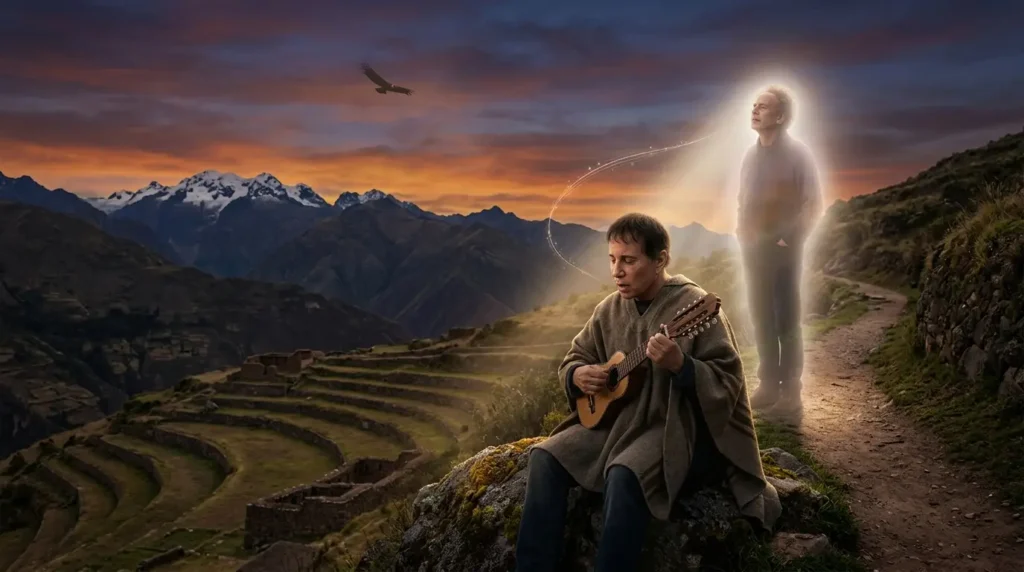
In the Simon & Garfunkel version, the addition of English lyrics brings the thoughts of an individual into the melody.
The traditional instruments suggest a distant landscape, while the singing expresses the desire to choose one’s own way of life. The union of an external world and an internal story gives this recording its distinctive character.
Leo Rojas: Instruments Paint the Landscape
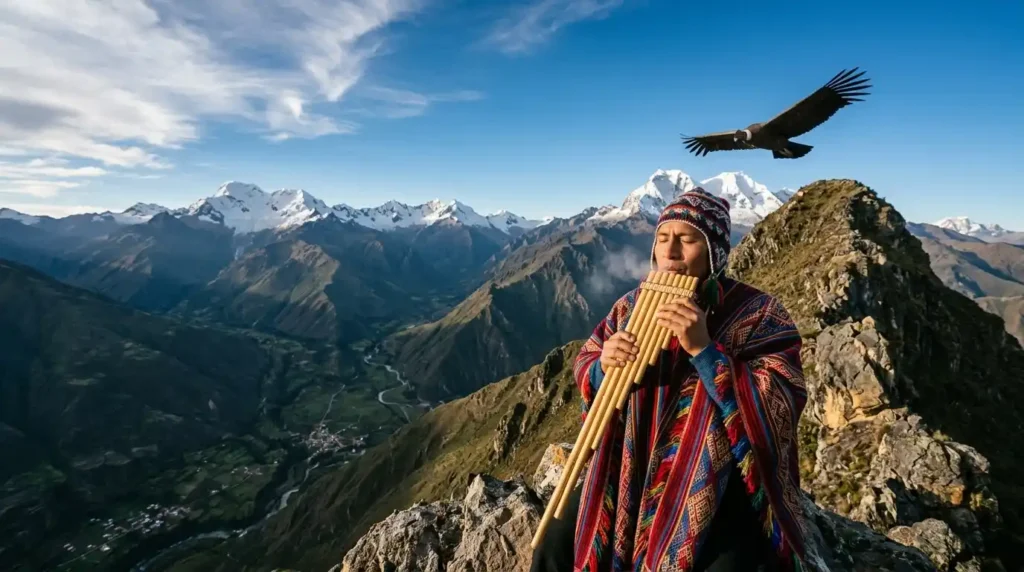
The Leo Rojas version, by contrast, contains no English lyrics. The pan flute carries the principal melody, while the natural scenery communicates the music’s grandeur and melancholy directly.
Because no words define its meaning, listeners are free to imagine their own landscapes and connect the music with personal memories or emotions. The strength of the melody itself becomes even more apparent.
Its Appeal as Both a Song and an Instrumental Piece
Comparing the two videos shows that the composition succeeds both as a song carrying words and as an instrumental work.
The Simon & Garfunkel recording expresses the inner feelings of a human being. The Leo Rojas interpretation brings the expansive soundscape created by the melody to the foreground.
Their approaches are different, but both possess the power to lift the listener’s gaze from the ground toward the sky.
Why I Ranked It No. 5
“El Condor Pasa” was not composed from the beginning by Simon & Garfunkel. Some may therefore question whether it should be ranked by the same standard as songs written entirely by the duo.
For me, however, the value of this recording cannot be determined solely by the identity of the melody’s original composer.
It brings together music born in Peru in 1913, Jorge Milchberg’s arrangement, the instrumental performance by Los Incas, Paul Simon’s English lyrics, and the voices of Simon & Garfunkel. Each element has its own distinct role, yet all of them contribute to a unified recording.
The song reached me even before I understood its words, and revealed another face after I learned their meaning. Its refusal to remain confined to a single impression is the principal reason I placed it at No. 5.
Closing Thoughts
“El Condor Pasa” has no driving rhythm, overpowering voice, or dramatic climax.
Yet as soon as the flute begins, the familiar world recedes and mountains and skies I have never seen appear before me. Listening to the English words reveals a person who wishes to leave an assigned place behind and choose a life directed by personal will.
A melody born in Peru traveled through the hands of many musicians and continues to be heard around the world through the recording by Simon & Garfunkel. Perhaps the beauty of the song lies within that long journey itself.
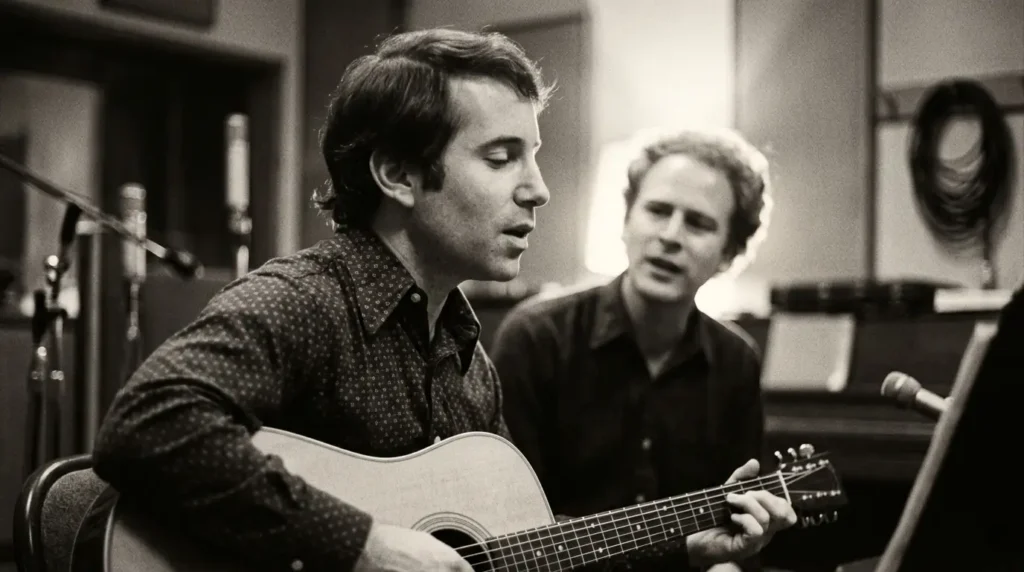
To me, “El Condor Pasa” is both a song that evokes a bird gliding across the sky and a song about a person who remains on the earth while dreaming of another way to live.
音楽ファン同士の交流・リクエストはこちら / Connect & Request Songs Here