🌐 English|🌐 日本語
- 🎧 Listen to This Article
- The Four Musicians I Knew from Records Were Right in Front of Me
- 1976: A Day at the Races and New Dimensions in Singing
- 1977: News of the World and Music the Audience Could Join
- 1978–1979: From Jazz to the Nippon Budokan
- 1980: The Game and a New Rhythmic Direction
- 1981–1982: Collaboration, Experimentation, and Divided Opinions
- Next: From The Works to Freddie’s Final Albums
🎧 Listen to This Article
Listen to a narrated overview of Part 2 of our Queen introduction.
Follow Queen from A Day at the Races to Hot Space, alongside personal memories of their 1979 concert at Tokyo’s Nippon Budokan.
🎵 English Narration
Listen to the article’s key points in English.
🎶 Japanese Narration
Listen to the article’s key points in Japanese.
The Four Musicians I Knew from Records Were Right in Front of Me
I saw Queen at Tokyo’s Nippon Budokan while I was at university.
Freddie Mercury, Brian May, Roger Taylor, and John Deacon. The four musicians I had come to know through their records were performing right in front of me.
Part 1 followed the members from their first connections through A Night at the Opera in 1975. This installment traces the years from A Day at the Races in 1976 to Hot Space in 1982, alongside my memories of the Budokan concert.
1976: A Day at the Races and New Dimensions in Singing
A Fifth Album That Complements A Night at the Opera
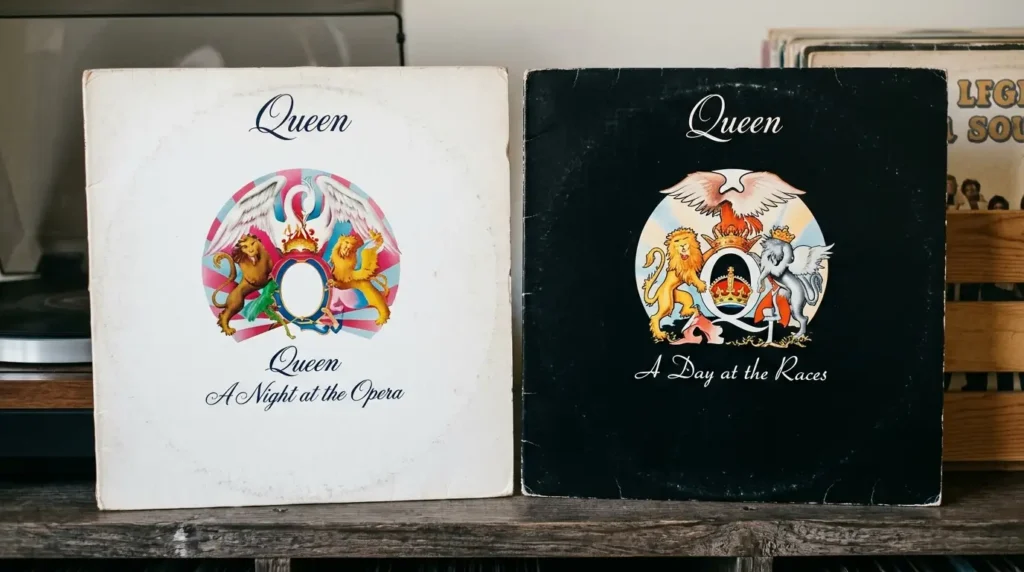
Released in December 1976, A Day at the Races was Queen’s first album produced by the band without an outside co-producer. Like its predecessor, it took its title from a Marx Brothers film.
The covers also form a pair: both feature the band’s crest, set against white on A Night at the Opera and black on A Day at the Races.
Brian’s “Tie Your Mother Down” drives forward on a muscular guitar riff. Freddie’s “You Take My Breath Away,” which follows, creates a quiet tension through piano and voice. The opening tracks place power and delicacy side by side.
“Somebody to Love” and “Teo Torriatte”
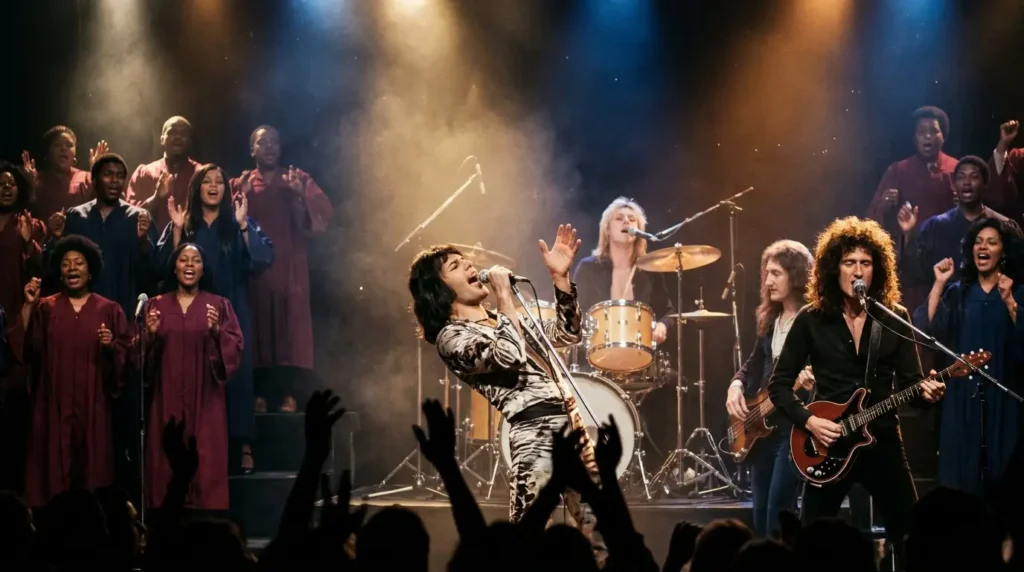
On “Somebody to Love,” Freddie, Brian, and Roger layered their voices to create the sound of a gospel choir. Where “Bohemian Rhapsody” unfolds like an opera, this song builds emotional intensity through the chorus responding to the lead singer’s pleas.
Brian wrote the closing track, “Teo Torriatte (Let Us Cling Together),” as a dedication to Queen’s Japanese fans, with part of the chorus sung in Japanese. The connection established during their first visit to Japan in 1975 had found its way into their music.
1977: News of the World and Music the Audience Could Join
Stomps, Claps, and a Crowd Singing Together
News of the World, released in 1977, opens with “We Will Rock You” and “We Are the Champions.” Brian wrote the first; Freddie wrote the second.
Heard in sports arenas and broadcasts, the rhythm of “We Will Rock You” may be familiar even to people who don’t know Queen by name.
The vocals ride over a repeating pattern of two stomps and one clap. With so few elements in the arrangement, the guitar’s entrance near the end makes a striking impact.
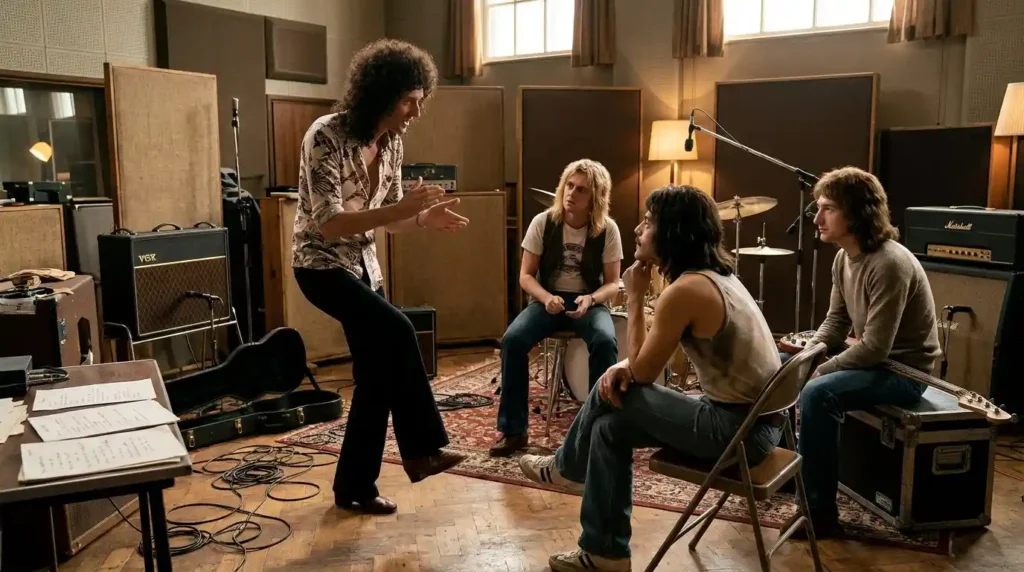
The film Bohemian Rhapsody also depicts Brian demonstrating this rhythm to the other members as he develops a song the audience can take part in.
“We Are the Champions” moves from a restrained opening into a chorus with a sweeping melody, inviting the entire venue to sing along.
These two songs became fixtures near the end of Queen’s concerts.
Power and Delicacy Beyond the Signature Hits
The opening pair doesn’t define the whole album. Roger’s “Sheer Heart Attack” is a relentless burst of raw energy. Although it shares its name with Queen’s 1974 album, the song appeared on News of the World.
In John’s “Spread Your Wings,” Freddie delivers a powerful vocal about someone urged to break free from his circumstances. Brian’s “It’s Late” is an extended rock song driven by its unfolding narrative and impassioned guitar work. Freddie’s closing “My Melancholy Blues” brings a quieter, piano-led mood.
1978–1979: From Jazz to the Nippon Budokan
Jazz: Broadening Their Musical Range Again
Released in November 1978, Jazz is not an album devoted to the genre in its title. Roy Thomas Baker returned as co-producer, and recording took place in Switzerland and France. It was Queen’s first studio album recorded outside Britain.
Freddie’s “Bicycle Race” shifts meter and mood within a short running time. Brian’s “Fat Bottomed Girls” puts a heavy rhythm and guitars at the forefront.
There’s also the piano-driven momentum of “Don’t Stop Me Now,” the heartfelt singing of “Jealousy,” and the relaxed sway of “Dreamer’s Ball.” Each brings a different approach to the performance.
April 1979: Experiencing Queen as Their Story Unfolded
The Jazz tour also brought Queen to Japan. Their 1979 Japanese dates ran from April into May, with performances at the Nippon Budokan on April 13, 14, 23, 24, and 25.
I attended university in Tokyo from April 1977 to March 1981, and I believe the Budokan concert I saw was in April 1979. I can no longer identify the exact date from memory.
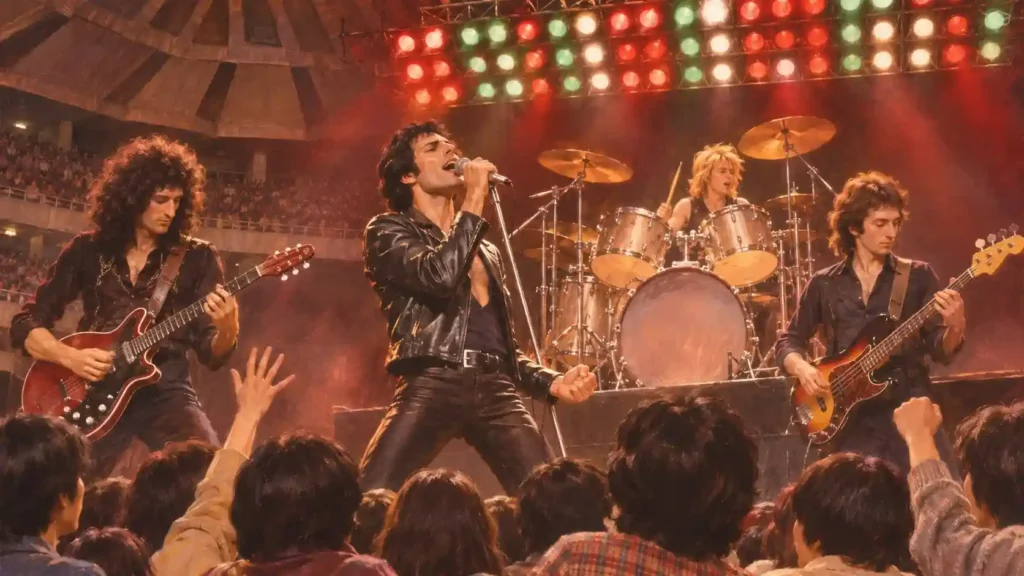
The albums later hailed as classics were, at the time, new releases arriving one after another. Those were the years of following Queen’s progress and waiting for their next record.
How Would They Present the Chorus of “Bohemian Rhapsody”?
“Bohemian Rhapsody” left a particularly strong impression. I knew the densely layered operatic chorus couldn’t be recreated by just the musicians onstage. Even so, I was curious to hear how they would handle it.
During that section, I couldn’t see anyone singing, and it sounded as though a recorded chorus was playing. I no longer remember the details of the lighting or stage setup precisely.
At Queen’s concerts during this period, a recording played during the operatic section while the members left the stage, returning to resume the performance with the hard-rock section. Brian has also described the arrangement as a chance to change costumes before coming back on.
Live Killers: A Record of Their Performances That Year
Queen’s first live album, Live Killers, was released in June 1979. Its performances were recorded during the European tour from January to March of that year. The audio does not come from the Budokan shows, but the cover photograph was taken during their Japanese tour that April.
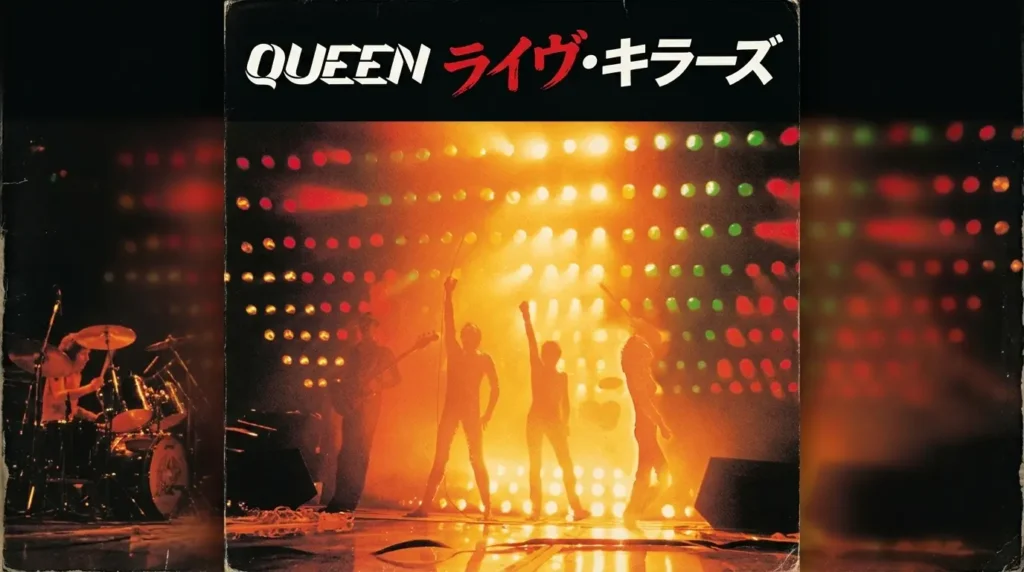
The opening “We Will Rock You” is a fast, full-band performance, unlike the familiar stomp-driven studio recording. An acoustic-guitar-led arrangement of “Love of My Life” creates an intimacy different from the original version.
Medleys linking shortened songs and an extended guitar solo let listeners experience the flow of a concert, rather than the track sequence of a studio album.
1980: The Game and a New Rhythmic Direction
Different Styles Bring Success in America
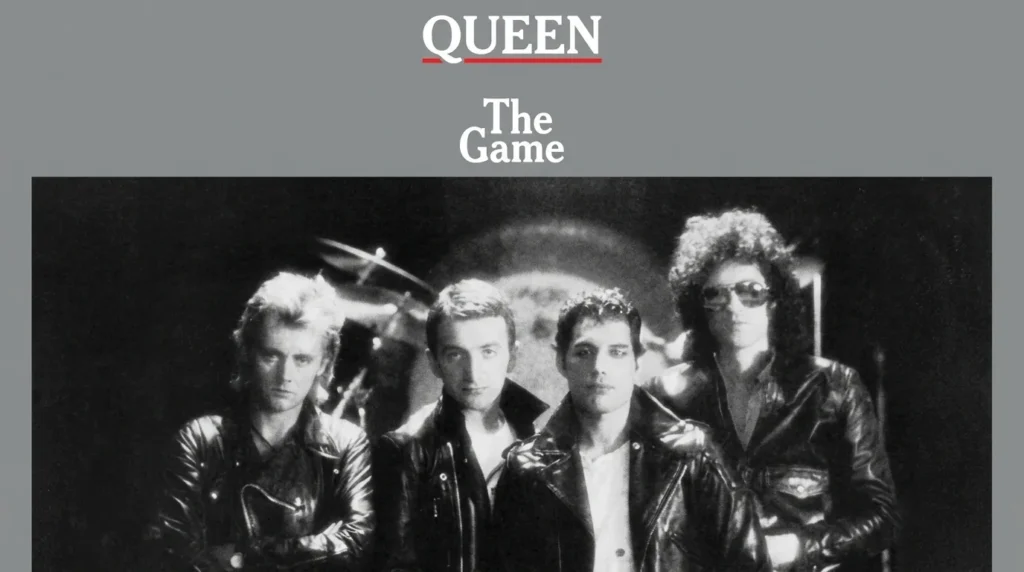
The Game, released in 1980, introduced a different sound. Recorded at Musicland Studios in Munich, it was co-produced by Queen and Mack. It was also the first Queen album to use a synthesizer.
Freddie’s “Crazy Little Thing Called Love” is a concise song with a rockabilly feel. Released as a single in 1979, it became Queen’s first number-one hit on the U.S. singles chart the following year.
John’s “Another One Bites the Dust” moves toward funk, with a repeating bass line driving the song. It also reached number one in America, while The Game became Queen’s first U.S. number-one album. Exploring different styles was bringing the band new listeners.
Melody and Singing Remain at the Heart of the Music
Freddie’s “Play the Game” and Brian’s “Save Me” both build outward from the piano. John’s “Need Your Loving Tonight” offers bright, accessible pop, while “Sail Away Sweet Sister,” sung mainly by Brian, features a gentle, memorable melody.
Flash Gordon: Composing for the Screen
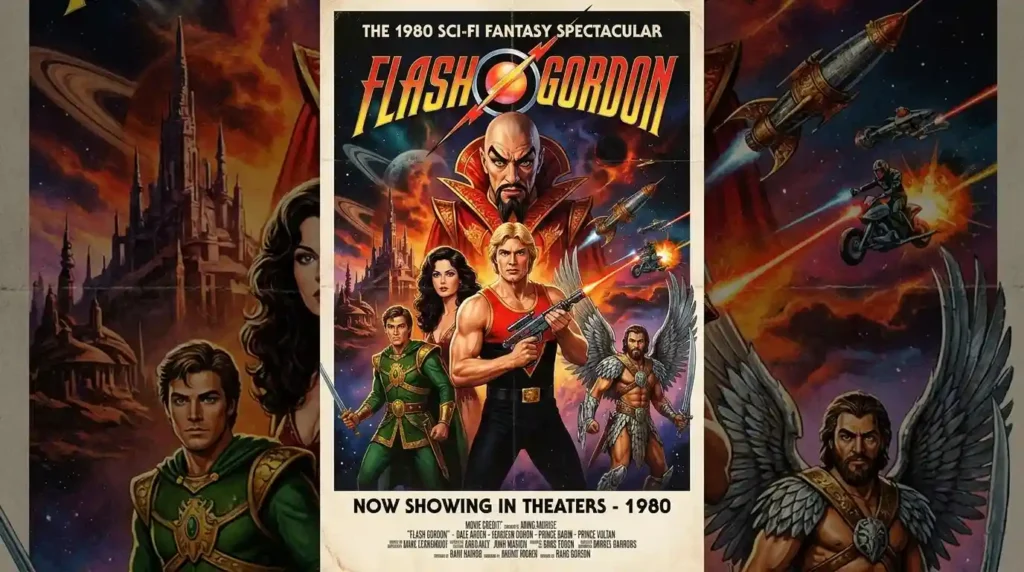
Queen also released the soundtrack album Flash Gordon in 1980. Its structure differs from their usual song-centered albums, weaving instrumental music together with dialogue and sound effects to connect scenes from the story.
Alongside the forceful chorus of “Flash’s Theme,” the album makes extensive use of synthesizers. Having built elaborate songs in the studio, Queen were now composing music to follow the action on screen.
1981–1982: Collaboration, Experimentation, and Divided Opinions
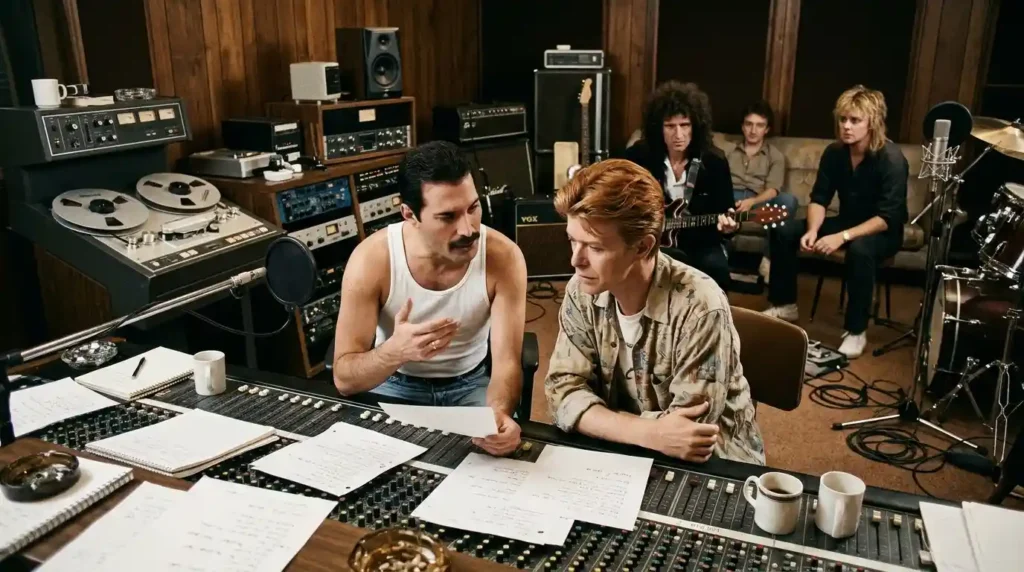
“Under Pressure,” Created with David Bowie
In 1981, Queen released “Under Pressure,” a collaboration with David Bowie. It grew out of sessions in Montreux, Switzerland, and reached number one on the British singles chart.
Over an instantly recognizable bass figure, Freddie and Bowie trade vocal lines. They move from low, conversational passages to moments when both raise their voices. Their contrasting tones and phrasing heighten the tension.
Hot Space: Going Further into Funk and Dance Music
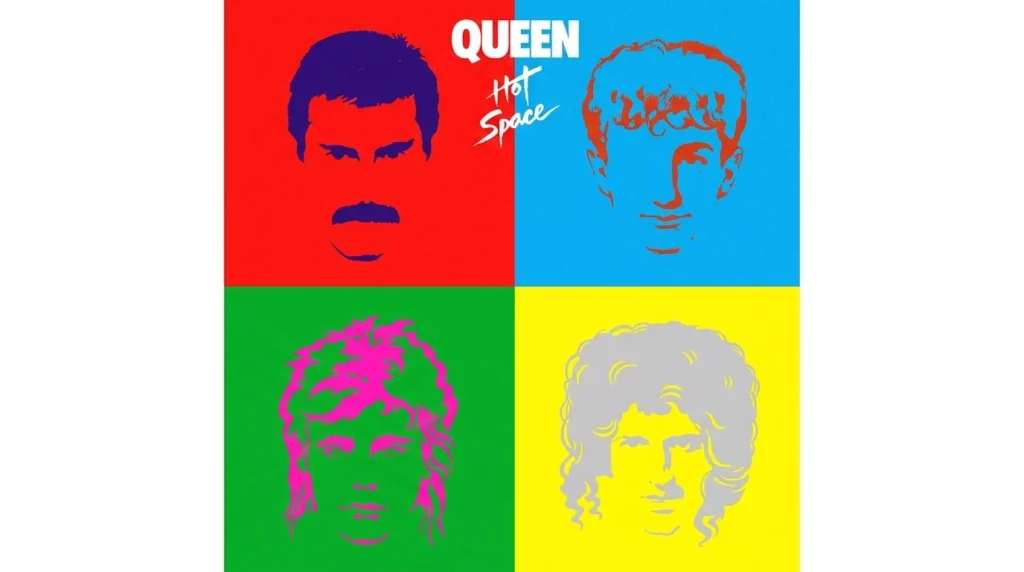
“Under Pressure” also appeared on Hot Space in 1982. The album took Queen further into funk and dance music after the success of “Another One Bites the Dust.”
“Staying Power” and “Back Chat” foreground repeating rhythms and sharply defined sounds. The gentle melody of “Las Palabras de Amor” and the guitars of “Put Out the Fire,” however, retain connections to the band’s earlier music.
The album reached number four in Britain. But some fans who preferred Queen’s heavier rock sound struggled with the move toward dance music, and the album divided opinion.
Next: From The Works to Freddie’s Final Albums
The next installment begins with The Works in 1984, then follows Queen through Live Aid, their last tour with Freddie, and the albums from his final years.
音楽ファン同士の交流・リクエストはこちら / Connect & Request Songs Here