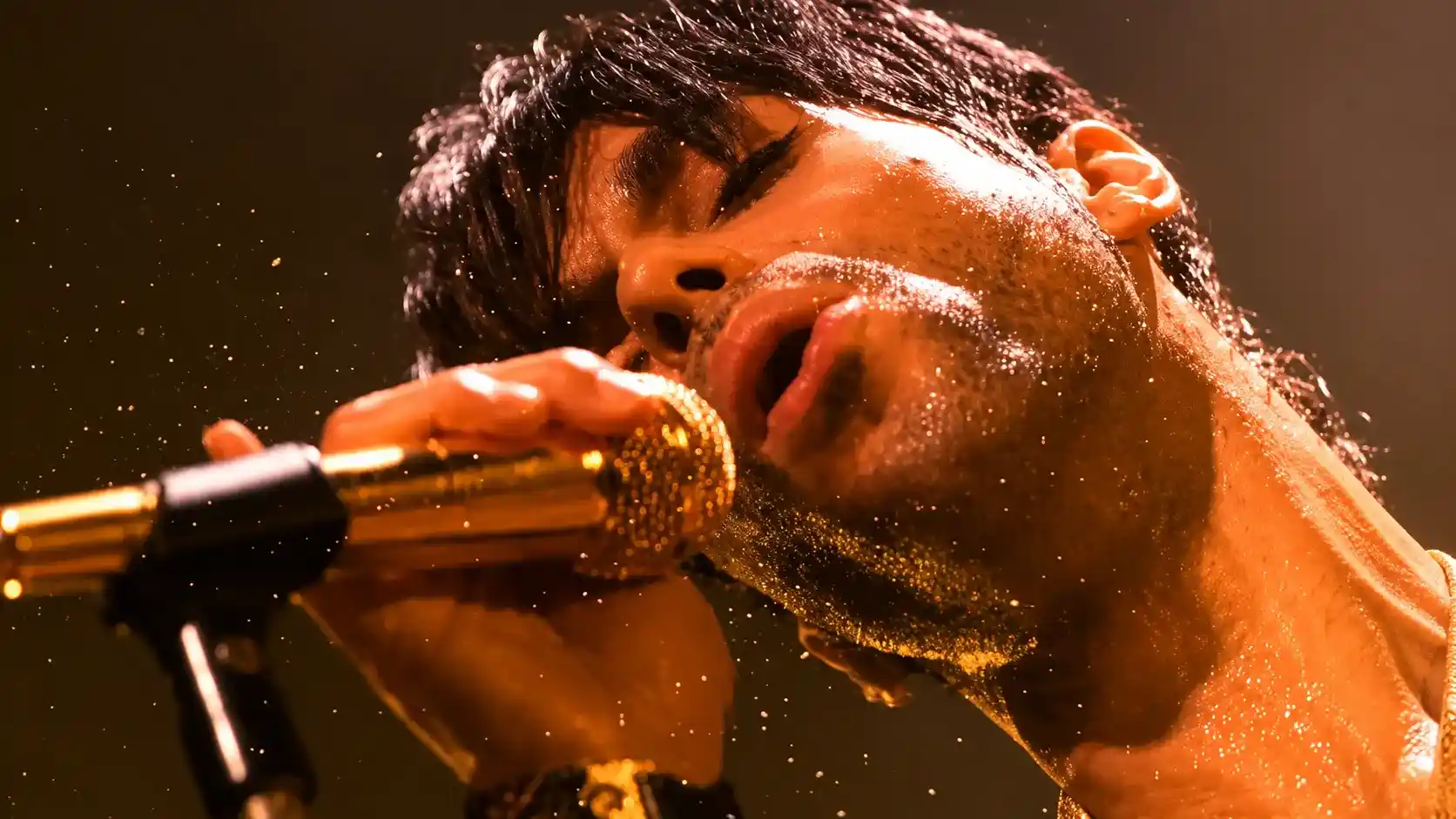
- 🎧 Enjoy This Article in Audio
- Today is Prince’s Birthday.
- First, please watch the official video on YouTube.
- The Mid-1990s Music Scene and Resistance to Over-Consumption
- A Multi-Layered Sonic Space: Exposing Deception Through Precise Melody
- Conclusion: A Compass to Identify True Gold
- (*1) Historical Context:Understanding the Turbulent Era of Renaming Himself as a Symbol
🎧 Enjoy This Article in Audio
You can quickly grasp the main points of this article through narration.
Recommended for those who want to catch the vibe of the music and the flow of the article before reading.
🎶 English Narration
An English audio introduction to the contents of this article.
⌛ Duration: Approx. 4 mins
🎵 Japanese Narration
A Japanese audio introduction to the contents of this article.
⌛ Duration: Approx. 3.5 mins
* Listening to the audio before reading helps you better understand the world of the music and the main points of the article.
Today is Prince’s Birthday.
On June 7, 1958, in Minneapolis, Minnesota, a solitary genius was born who would completely redraw the global map of music. His name is Prince. (He was born in 1958, the exact same year as me!)
He was a master multi-instrumentalist who perfectly commanded everything from vocals, guitar, bass, and keyboards to drums. He reigned as the absolute sovereign of the “Minneapolis Sound,” which precisely fused rock, funk, and R&B. Even after reaching the absolute pinnacle of his career in the 1980s with Purple Rain, he remained a solitary artist who refused to be bound by the conventional frameworks of the music industry, consistently delivering innovative sounds.
However, on April 21, 2016, he suddenly departed this world at the young age of 57 due to an accidental overdose of a powerful painkiller (fentanyl), which he used to cope with chronic, severe physical pain—the heavy price of his legendary, intense stage performances. The music he left behind, created by pouring out his very life, continues to shine without fading, even after his passing.
A Masterpiece of the ’90s, Released in the Midst of a Death Match with a Mega-Label
The track I am featuring today, “Gold,” is a deeply dramatic rock ballad that serves as the crown jewel of his album “The Gold Experience,” released on September 26, 1995. This was during a turbulent era when he had abandoned his birth name to rename himself as an unpronounceable “symbol.” (*1)
Released as a single worldwide on November 30, 1995, it climbed to number 3 on the UK Singles Chart and became a massive hit in Japan, dominating the charts of major FM radio stations across the country.
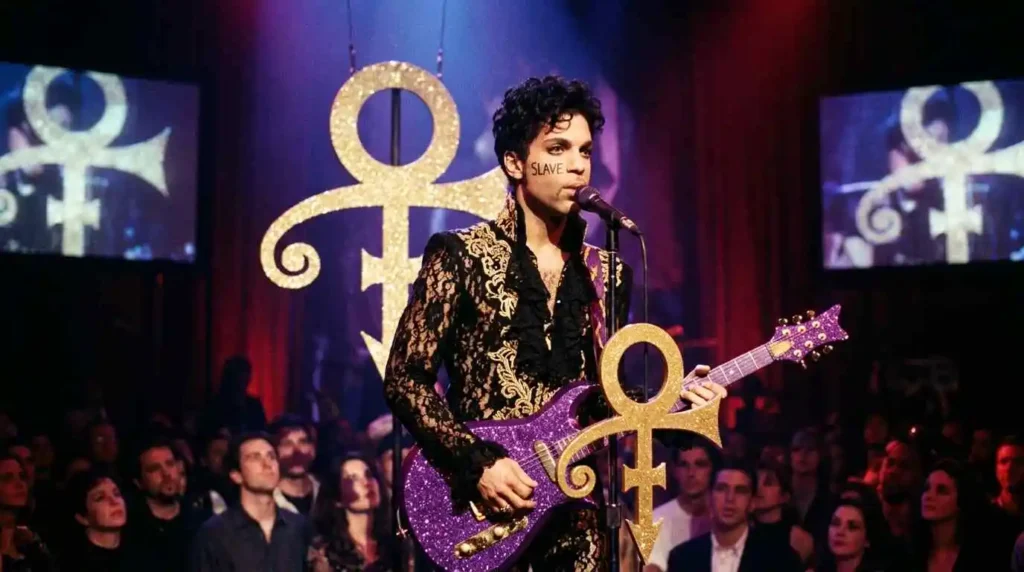
At the time, he was locked in a bitter legal battle with his record label, Warner Bros., over the ownership of his master recordings and his creative freedom. His fury toward the commercial system ran so deep that he routinely took to the stage with the word “SLAVE” written across his cheek.
Forged in the fires of such adversity, this song vividly embodies his unyielding pride as an artist who refused to cater to the masses, distinctively carving out the following elements:
- Presentation of Absolute Values: A cold, resolute rejection of the superficial brilliance manufactured by society, such as money and fame.
- A Perfectly Controlled Sonic Architecture: An overwhelming sense of drama woven from precise electronics and sky-splitting, razor-sharp guitar work.
- Deep Resonance in Japan: The fact that its uniquely soulful melody deeply penetrated the consciousness of not only Western music aficionados but also a vast range of listeners.
Through this masterpiece, he delivered a scathing critique of the cheap, mass-produced trends spawned by capitalism, thrusting upon us a piercingly cold perspective to discern true worth from the fake.
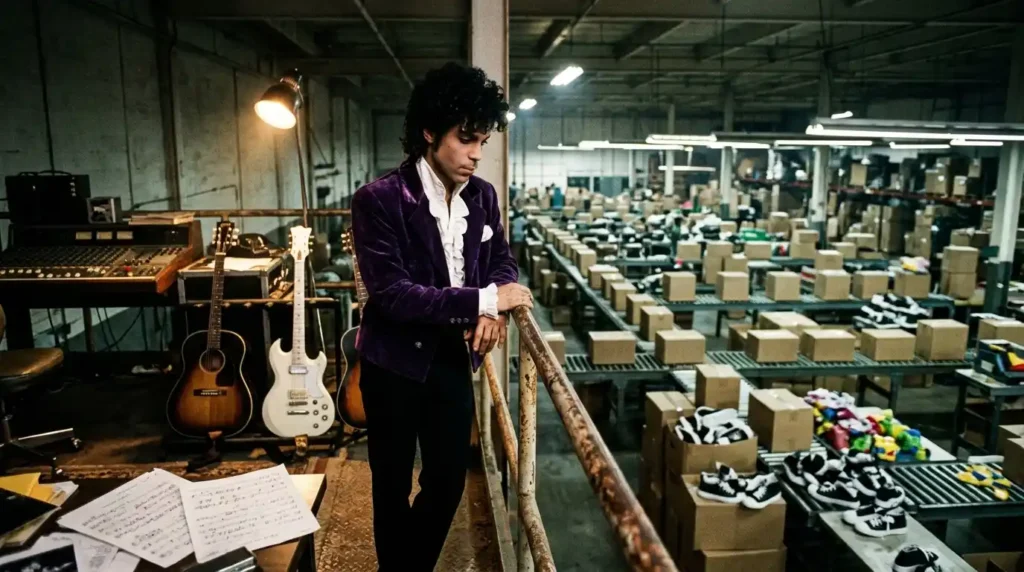
Translation of the Core Message
There's a mountain and it's mighty high, but you cannot see the top unless you fly.
Everyone is just selling what's already been sold, and saying what's already been said.
What's the use of money if you can't break the mold?
There's a coldness at the center of the flame, and everything that glitters click to gold.
People live their lives in a sea of despair, but talking about that reality is deemed out of style.
First, please watch the official video on YouTube.
Credits
Prince - "Gold"
Official Music Video
Album: "The Gold Experience" (1995)
Channel: Prince Official YouTube Channel
YouTube Release Date: October 13, 2017
Quick Commentary
This rock ballad feels like a brighter, more celebratory update of the grand resonance found in "Purple Rain," reimagined by Prince in the 1990s. The soaring chorus and expressive guitar lines craft a magnificent finale that transcends suffering to reach true "gold."
When I First Heard This Song
| My Age | Elem. | Junior High | High School | Univ. | 20s | 30s | 40s | 50s | 60s+ |
| Release Year | 1995 | ||||||||
| When I Heard It | ● |
I don’t think I listened to this song immediately upon its release. In fact, looking back at my age at the time, I might have already been stepping into my 40s.
The previously featured “Purple Rain” was a 1984 release, and even back then, I recognized it as a track with real backbone. However, by the mid-90s, I was a working professional entirely consumed by the daily grind of my job. I lacked the luxury of time to deeply investigate music, and as a result, I stopped tracking Prince’s moves closely. Because of this, I was completely unaware of his fierce legal battles over his master rights at the time.
Yet, years later, by some stroke of serendipity, I crossed paths with “Gold,” and it has remained one of my absolute favorites to this day.
As is often the case for Japanese listeners, I initially fell in love with it purely through the sheer beauty of the melody, without fully grasping the English lyrics. However, preparing this article forced me to closely re-examine the historical backdrop. Learning the true significance behind his symbolic name change, the intent behind the distinct shape of his guitar, and the profound weight of the lyrics has only solidified my profound attachment to this piece.
Music undeniably possesses the power to transcend borders. That said, whether or not you comprehend the deeper meaning of the poetry changes the sheer depth of the impact you receive from a piece of art. Even so, I have absolutely no intention of dismissing the experience of listening without understanding the words as “invalid.”

Whichever dimension of a song captures a listener’s heart is entirely a matter of personal freedom. That absolute freedom is the truest reason why we say music knows no borders.
For those encountering this song for the very first time, I invite you to patiently savor the magnificent architectural beauty of its dramatic arrangement.
The Mid-1990s Music Scene and Resistance to Over-Consumption
This timeless masterpiece, “Gold,” was unleashed upon the world in 1995.
The music industry of that era was undergoing a clear transitional phase, adjusting to a massive shift away from the glamorous pop of the 1980s toward a more introspective, raw rock aesthetic.
In the Western music scene, centered primarily around the United States, a profound transformation was cementing itself. The flashy, over-decorated pop and the highly commercialized hair metal that had defined the 1980s had already lost their grip on the mainstream.
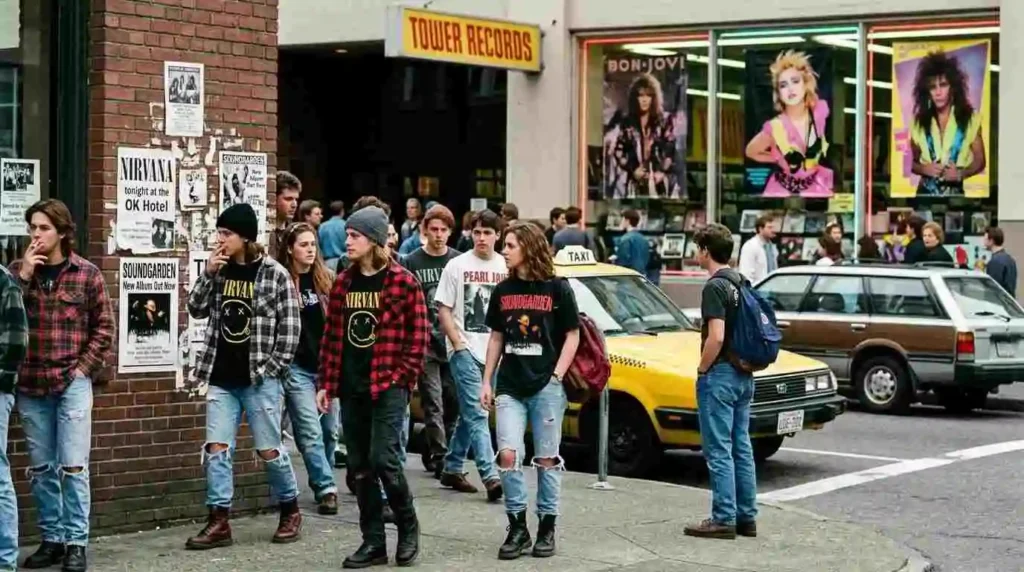
The youth had turned their gaze away from manufactured pop stars. Instead, alternative rock, which captured the raw anxieties, anger, and down-to-earth cries of a generation, had firmly established its roots as the dominant musical force.
Resisting the Cogs of the Mass-Consumption Machine
What was the situation like within Japan during this exact same period? In 1995, Japan was in the absolute thick of an unprecedented CD bubble. Mr.Children, coming off a string of massive hits the previous year, dominated the charts with releases like “【es】 ~Theme of Mr.Children~,” while artists produced by Tetsuya Komuro, such as TRF, were moving millions of CDs in the blink of an eye.
This was an era where “tie-ups”—having a song featured as a television drama theme or a major corporate commercial jingle—reigned as the absolute prerequisite for commercial success.
Every single week, people rushed to record stores to purchase and consume the precise trends manufactured by the media. Music had perfectly aligned itself with the machinery of mass media, functioning intensely as a vital economic cog driving broader social phenomena.
It was precisely against this Japanese backdrop, where everyone was being swept up in the same monolithic whirlpool of mass consumption, that Prince delivered “Gold.”
Visual Expression as a Scathing Satire of “False Gold”
A meticulous observation of the song’s official live performance video reveals a highly deliberate directorial intent. The entire stage is bathed in a dazzling, shimmering golden light while a relentless storm of confetti rains down, presenting a spectacle that looks superficially magnificent.
Yet, standing right in the center of that blinding radiance, Prince’s expression remains incredibly composed. In stark contrast to the ecstatic audience, he maintains a steady, detached, and deeply analytical gaze.
The excessive use of gold in the wardrobe and lighting is, in reality, a brilliant cinematic satire. He is intentionally role-playing the exact “manufactured brilliance engineered for sales” that his lyrics so heavily condemn.
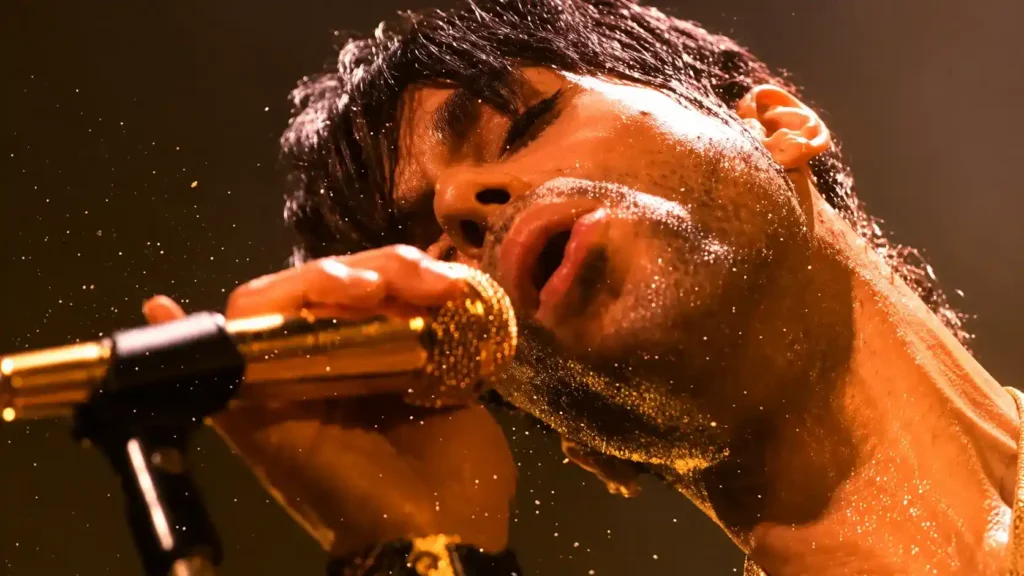
By consciously exaggerating the superficial aesthetics of a commercialized bubble, he exposes the complete emptiness at its core. This reflects a profound meta-perspective embedded within his artistry.
This work completely transcends the boundaries of a standard promotional video. A sharp irony directed at the hollow over-consumption plaguing the entire music scene of the era radiates from his every single gesture.
A Multi-Layered Sonic Space: Exposing Deception Through Precise Melody
A Rational, Calculated Arrangement That Rejects Empty Hype
Analyzing the musical framework of “Gold” serves as absolute proof of the precise intellect he possessed as a multi-instrumentalist. The foundation of the track is anchored by a rigid, linear drumbeat that maintains a strict tempo. It draws a sharp line separating itself from the syncopated, bouncing funk rhythms of his 1980s catalog.
On top of this unflinching rhythm, which refuses to let emotions boil over erratically, intricate keyboard melodies are meticulously stacked layer upon layer. The process mirrors the delicate construction of a complex, fragile piece of stained glasswork.

A brilliant sonic misdirection is executed within this arrangement. As the track progresses toward the chorus, the overall sound pressure builds dynamically. Despite this, the song’s temperature never hits a boiling point. Instead, the tone is deliberately steered in a direction that snaps the listener back into a state of clear-headed awareness.
A standard pop anthem would seize the chorus as an opportunity to detonate a wall of brass or explosive strings to overwhelm the listener. Prince completely rejected that formula.
He purposefully reins in his vocal dynamics, blending an elegant falsetto with a highly disciplined mid-range delivery. Rather than baiting an easy emotional reaction, this approach systematically awakens the listener’s consciousness.
Even the synthesized strings swelling in the background lack the warm, organic texture of an acoustic orchestra. They are engineered with a sharp, electronic edge that cleanly underscores a sense of urban isolation.
A Guitar Solo of Self-Deconstruction, Ignited at the Peak of Ascent
The breathtaking guitar solo that unfolds after the four-minute mark remains a legendary performance, widely celebrated among his fans and music critics as one of the absolute finest displays in his entire career, standing shoulder-to-shoulder with “Purple Rain.” It stands as a profound reminder that while he was a brilliant multi-instrumentalist, he was also a transcendent guitarist.
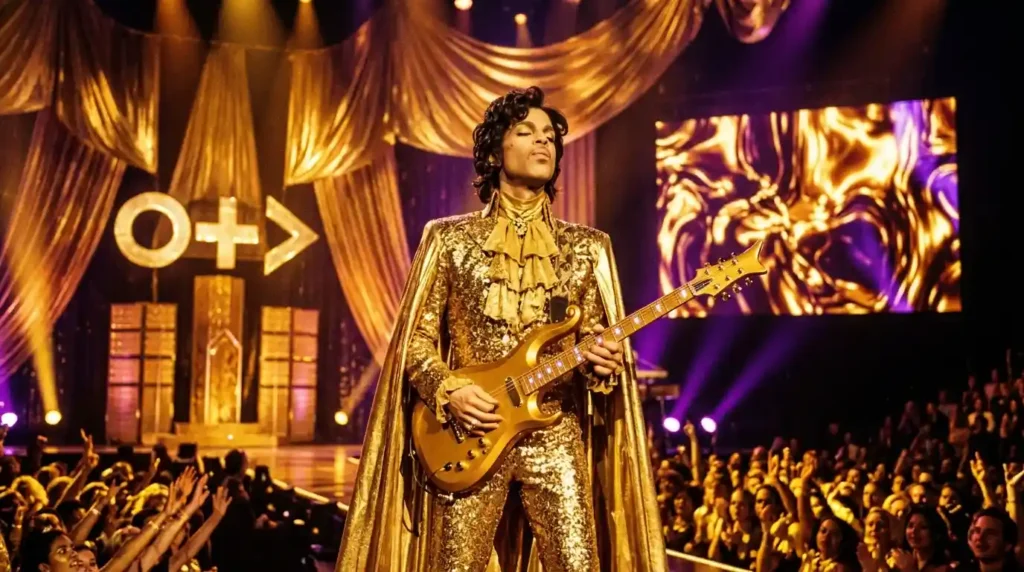
Crucially, this is not a display of empty virtuosity meant for self-aggrandizement. Every single string bend resonates with a poignant, razor-sharp urgency, sounding as if it is tearing through a veil of illusion.
Immediately after ascending to a magnificent emotional high, the solo dives into a rapid descent over a heavy, low-register riff. This progression feels like a direct translation of the human psyche—confronting a profound, bottomless emptiness at the very peak of worldly success.
Woven seamlessly into the brilliant phrasing are deliberate, slightly dissonant blue notes. This technique injects a thrilling tension, threatening to deconstruct the beautifully polished surface of the pop song from within.
It is precisely because of this absolute structural restraint that the eventual fade-out into complete silence leaves such a lasting, powerful impact on the listener.
The Gaze of a Realist Painter Observing a “House of Cards”
The true essence of this song resides in the calculated arrangement of objective metaphors scattered throughout the lyrics.
The opening line declares that even if a mountain is high, you cannot see its top unless you fly. This exposes a detached, critical view of a commercialized society that manipulates the masses by dangling unattainable ideals just out of reach.
Furthermore, a striking contrast is drawn with the mention of a molehill on solid ground. It brilliantly illustrates how incredibly trivial the fame and fleeting trends over which people obsess on a daily basis truly are when viewed from a distance.
The lyrics go on to depict people living their lives in a sea of despair. Here too, Prince completely avoids playing the role of an easy savior offering hollow comfort.
When he asserts that “hell is not fashion,” his perspective is not one of cold abandonment. Instead, his gaze functions like a microscope, capturing reality precisely as it exists.
He refuses to conveniently place himself within the boundaries of cheap sympathy. His focus is to accurately map out the systemic deceptions causing the pain. That unwavering commitment to truth is the core of the profound artistic integrity Prince maintained throughout his entire life.
Conclusion: A Compass to Identify True Gold
More than three decades after its initial release, the piercing intelligence driving “Gold” has not lost a fraction of its luster.
Our contemporary digital landscape has evolved into an era where individuals are encouraged to turn themselves into commodities, constantly competing for the fleeting glitter of superficial online approval.
This reality infuses the song’s core message with an even greater gravity today. The wisdom that “everything that glitters click to gold” strikes our hearts with an unprecedented relevance.
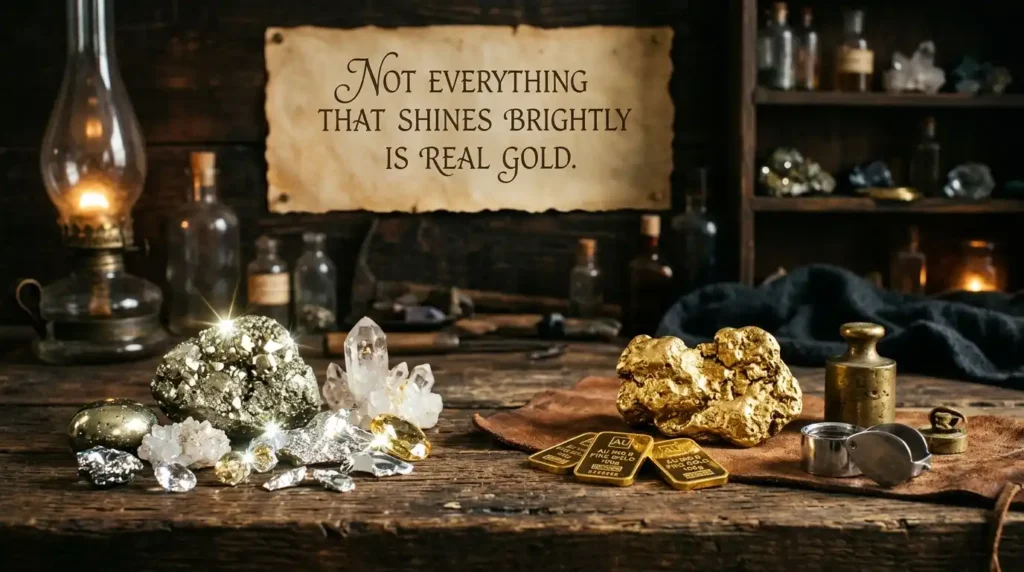
Prince consistently rejected the practice of offering cheap, shallow encouragement. He chose instead to step away from the fever of passing trends and objectively measure one’s intrinsic value. The disciplined arpeggios of this masterpiece continue to silently testify to that vital necessity today.
(*1) Historical Context:Understanding the Turbulent Era of Renaming Himself as a Symbol
This refers to the famous period between 1993 and 2000 when Prince completely ceased using his birth name “Prince” for his creative output, adopting instead an unpronounceable glyph—a unique symbol fusing the traditional male (♂) and female (♀) signs.
During this window, he was engaged in an intense, high-profile dispute with his record company, Warner Bros., over creative autonomy and the ownership rights to his catalog. Because his contract granted the corporation control over any music released under the name “Prince,” he chose to bypass that restriction by legally changing his identity to a symbol, defending his artistic sovereignty.
As a direct result of this name change, the media and his audience were left unable to refer to him by a conventional name, famously adopting placeholders like “The Artist Formerly Known As Prince” or simply “The Artist.” The 1995 album highlighted today, “The Gold Experience,” stands as a definitive milestone born from this precise era of symbolic identity.

音楽ファン同士の交流・リクエストはこちら / Connect & Request Songs Here