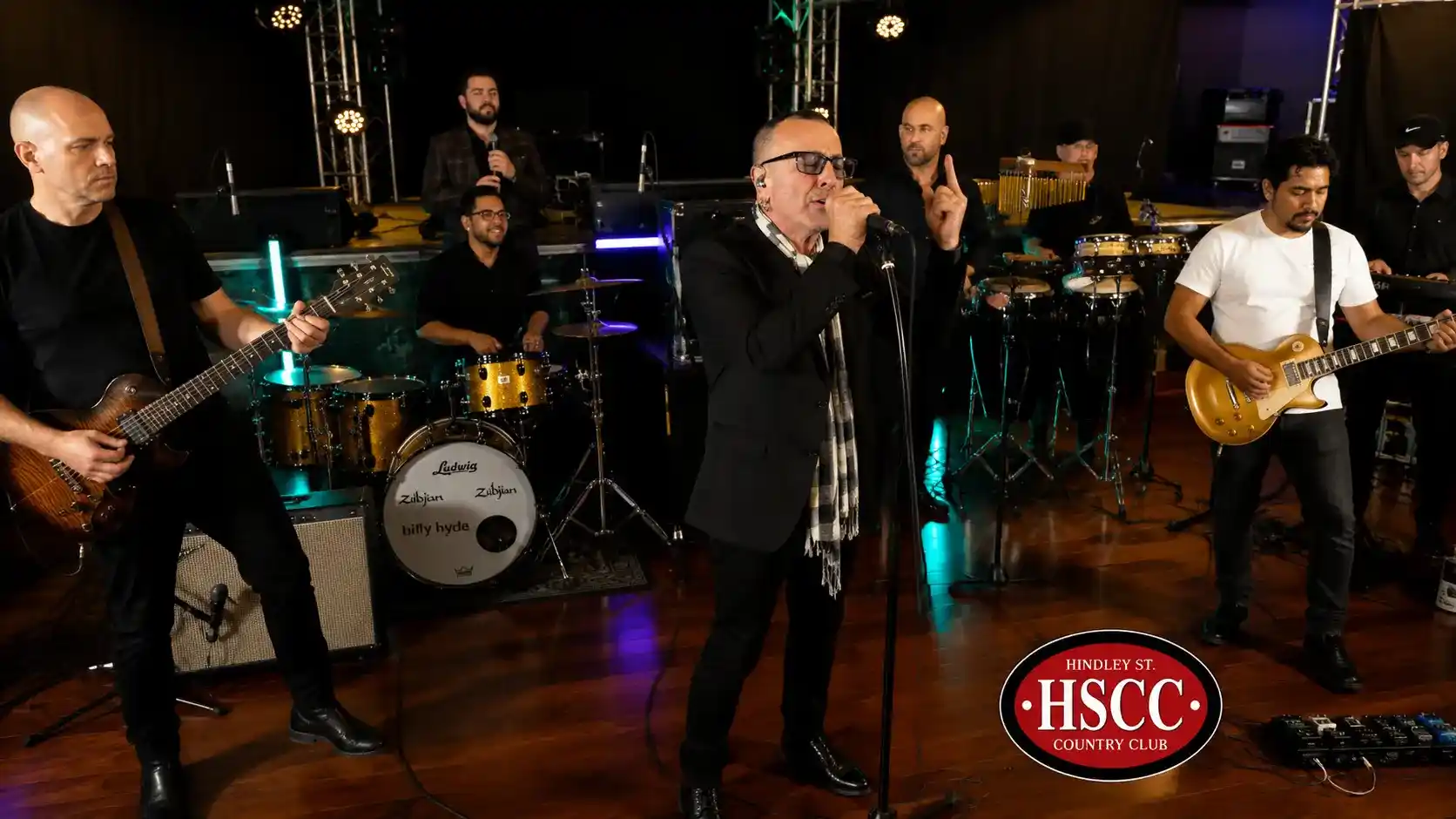
■For more about HSCC, click here
- 🎧 Listen to This Article
- This Time on My Personal Cover Selection: “Another Day in Paradise”
- First, Watch HSCC’s Version on YouTube
- The Irony Hidden in the Word “Paradise”
- In 1989, Phil Collins Turned His Attention to Homelessness
- Watch Phil Collins’ Official Video
- Why Doesn’t Phil Collins Raise His Voice?
- How Does HSCC Carry the Original Forward?
- Hearing Again Today a Song I First Knew in 1989
- “Think Twice” Still Resonates More Than 35 Years Later
- Conclusion — “Another Day in Paradise” Is Still Worth Stopping to Hear Again
🎧 Listen to This Article
You can quickly catch the key points of this article through narration.
Recommended if you want to get a feel for “Another Day in Paradise” and the overall flow of the article before reading.
🎶 English Narration
This audio introduces the article in English.
🎵 Japanese Narration
This audio introduces the article in Japanese.
Listening first will make it easier to grasp the atmosphere of “Another Day in Paradise” and the main points of the article.
This Time on My Personal Cover Selection: “Another Day in Paradise”
This time, I’m featuring “Another Day in Paradise,” released by Phil Collins in 1989.
Subtle keyboards, a steady rhythm, and Phil Collins’ slightly dry, restrained voice. It is not a song driven by dramatic shifts or explosive moments, yet once you hear it, it has a presence that is difficult to forget.

In 1989, I was 31 years old and in my ninth year of working life. I was no longer spending my time following new records and music news as I had during my student days. Work had become the center of my daily life.
Even so, I had known Phil Collins since his days with Genesis, and by then he had already scored numerous solo hits. “Another Day in Paradise” was not a song I deliberately sought out. It was probably one of those songs that simply found its way naturally into my life at the time.
A Vocal Style That Reminded Me of “One More Night”
What first drew me to the song was not its social theme, but the music itself.
It also reminds me in some ways of his 1985 hit “One More Night.” The subjects of the two songs are completely different, of course. Yet both avoid relying on vocal power or dramatic musical gestures. Instead, their relaxed tempos and restrained singing gradually draw the listener in. To me, that is very characteristic of Phil Collins.
Hearing HSCC’s cover this time gave me an opportunity to return to a song I had known for decades and listen to it from a different perspective.
Lyrics: A Free Interpretation
On a cold street, a woman asks someone for help.
But the man pretends not to hear and keeps walking.
We continue with our ordinary day as though nothing happened.
But should we really take that everyday life for granted?
Before walking past, perhaps we should think again.
First, Watch HSCC’s Version on YouTube
Official Video Credits
“Another Day In Paradise” — Phil Collins Cover
Performed by: The Hindley Street Country Club (HSCC)
Featured Vocal: Brad Polain
Original: Phil Collins — “Another Day in Paradise”
Published on: HSCC Official YouTube Channel
Two-Line Commentary
HSCC revisits one of Phil Collins’ signature songs with Brad Polain’s composed vocal and the band’s precise live performance.
Rather than disturbing the restraint of the original, the arrangement adds the warmth and immediacy of musicians playing together.
The Irony Hidden in the Word “Paradise”
Judging only by the title “Another Day in Paradise,” you might expect a peaceful song about spending another day in some idyllic place.
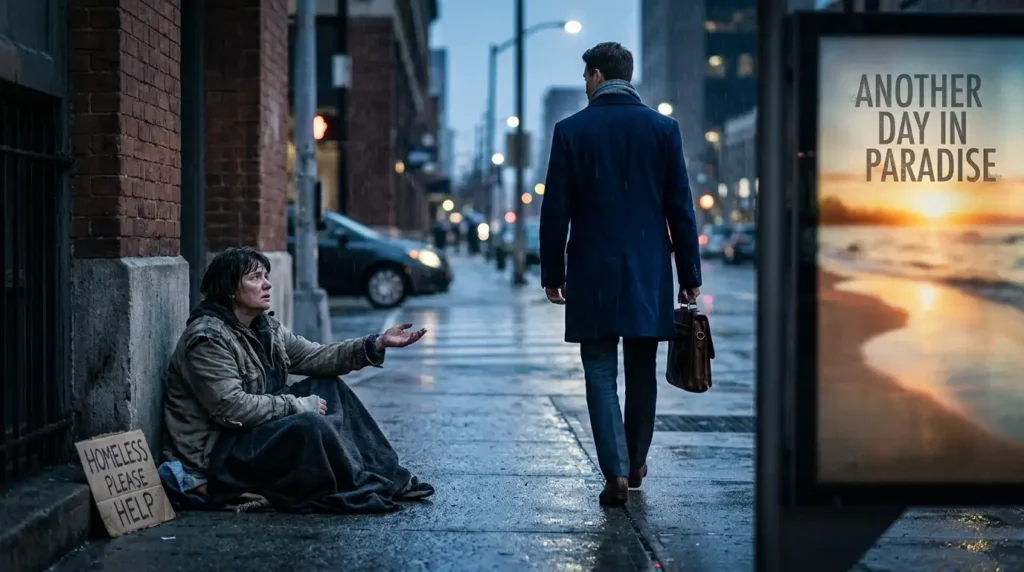
Instead, the song opens with a woman on a cold street who has nowhere to sleep and asks a passing man for help. He does not turn around. He pretends not to hear her and walks away.
It Is Not Only a Story About the Man Who Walks Away
If the song merely condemned this particular man as cold-hearted, it would remain a simple story about one person’s indifference.
But in the chorus, the words “Think twice” shift the focus toward the listener.
What seems like an ordinary day to us may look like an unattainable “paradise” to someone else. That contrast gives the title its powerful irony.
The Question Left by “Think Twice”
Phil Collins does not offer a grand ideal or a specific solution.
Instead, the song asks us to think once more before deciding that someone else’s hardship has nothing to do with us. With that simple appeal, an incident on a street corner becomes something that concerns the listener as well.
In 1989, Phil Collins Turned His Attention to Homelessness
“Another Day in Paradise” was released as the first single from Phil Collins’ 1989 album …But Seriously.
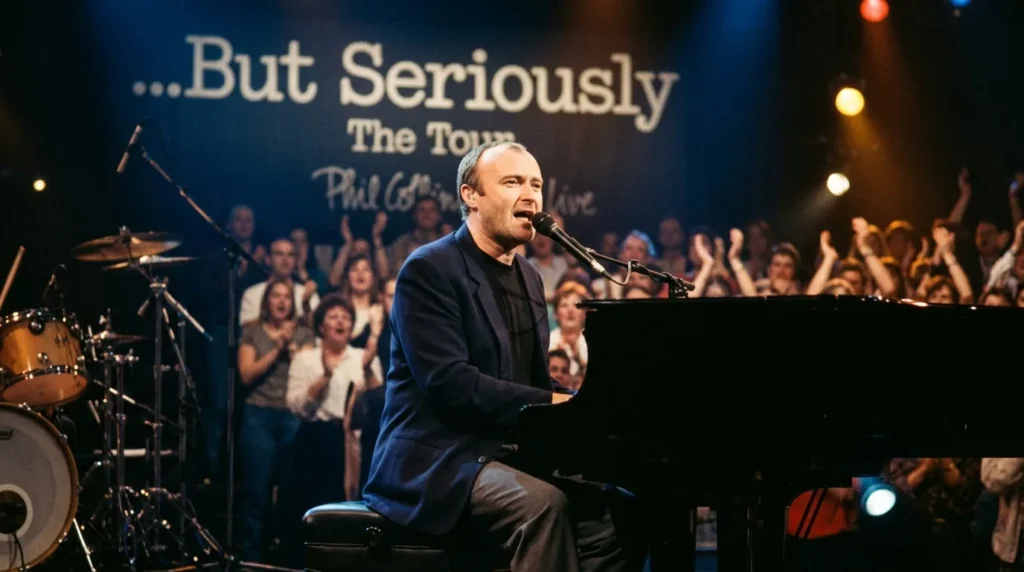
By then he already had numerous hits, including “You Can’t Hurry Love,” “Against All Odds,” “Sussudio,” and “One More Night.” Through both Genesis and his solo career, Phil Collins had become one of the defining musical figures of the 1980s.
Turning a Difficult Subject into Accessible Pop
The song deals with homelessness and society’s tendency to look away. Yet the weight of its subject is not translated into an equally heavy musical arrangement.
Soft keyboards and a measured rhythm provide the foundation while the vocal moves forward without emotional excess.
An uncomfortable reality is placed inside an accessible melody. That contrast prevents “Another Day in Paradise” from becoming merely a conventional message song.
A Worldwide Hit and a Grammy Award
“Another Day in Paradise” reached No. 1 on the Billboard Hot 100 in the United States and peaked at No. 2 in the United Kingdom.
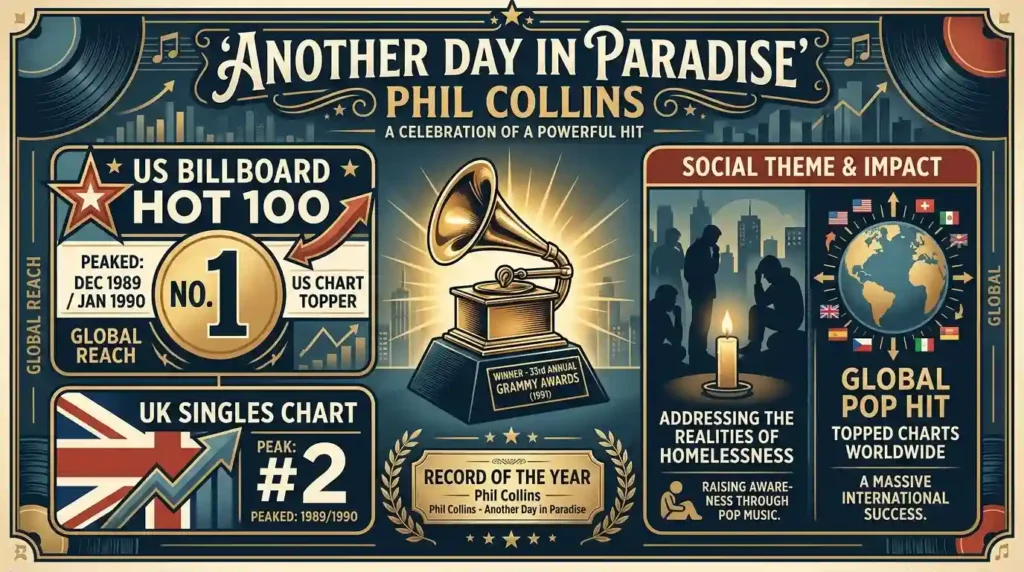
At the 33rd Annual Grammy Awards in 1991, it also won Record of the Year.
The fact that a song dealing with such a serious social subject became a worldwide pop hit is an essential part of its history.
Watch Phil Collins’ Official Video
Official Video Credits
Song: Another Day in Paradise
Artist: Phil Collins
Album: ...But Seriously
Released: 1989
Written by: Phil Collins
Produced by: Phil Collins and Hugh Padgham
Published on: Phil Collins Official YouTube Channel
Two-Line Commentary
One of Phil Collins’ signature songs, depicting a homeless woman and a passerby who avoids her, while examining the human tendency to look away from another person’s hardship.
The gentle melody and restrained vocal make the harsh reality described in the song even more striking.
Why Doesn’t Phil Collins Raise His Voice?
Despite dealing with such a difficult subject, Phil Collins never brings anger to the forefront of his performance.
The Understated Delivery Gives the Listener Nowhere to Hide
If he attacked someone directly in a forceful tone, listeners could distance themselves from the message by thinking, “He isn’t talking about me.”
Instead, Collins seems to place each event before us without declaring who is good or bad. That makes it harder to dismiss the passerby’s behavior as something completely unrelated to ourselves.
Where It Connects with “One More Night”
This style of singing is also why the song reminds me of “One More Night.”
One deals with love, while the other confronts a social issue. Yet both gradually draw the listener in without exaggerating emotion, relying instead on melody and the subtle expression of the voice. That is one of the qualities I have always associated with Phil Collins’ ballads.
How Does HSCC Carry the Original Forward?
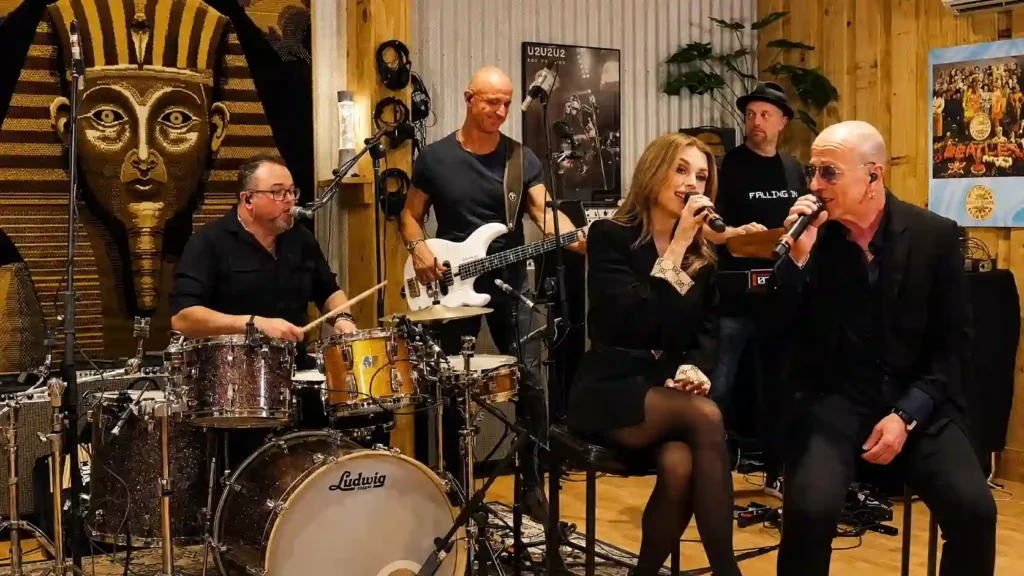
One of the defining features of HSCC’s version is that the band does not radically reinvent the song.
The musicians are all capable of displaying impressive technique, yet here they give priority to supporting the song rather than drawing attention to individual virtuosity.
The Appeal of a Cover That Does Not Change Too Much
Some covers dramatically alter the tempo or structure and create an entirely different musical world. HSCC chooses another approach.
The band respects the tempo and basic framework of the original while adding the texture of a live performance. As a result, the familiar character of the song remains intact, but it gains an intimacy different from the studio recording.
Brad Polain Does Not Try to Imitate Phil Collins
Brad Polain’s vocal does not attempt to reproduce Phil Collins’ performance note for note.
His composed voice remains at the center while the drums, bass, keyboards, and other instruments fill only the spaces they need to fill. Because the video also lets us see the musicians responding to one another, we can sense the entire band building the song together.
From a “Social Issue” to the Story of One Person
The original inevitably carries the reputation of being “Phil Collins’ worldwide hit about homelessness.”
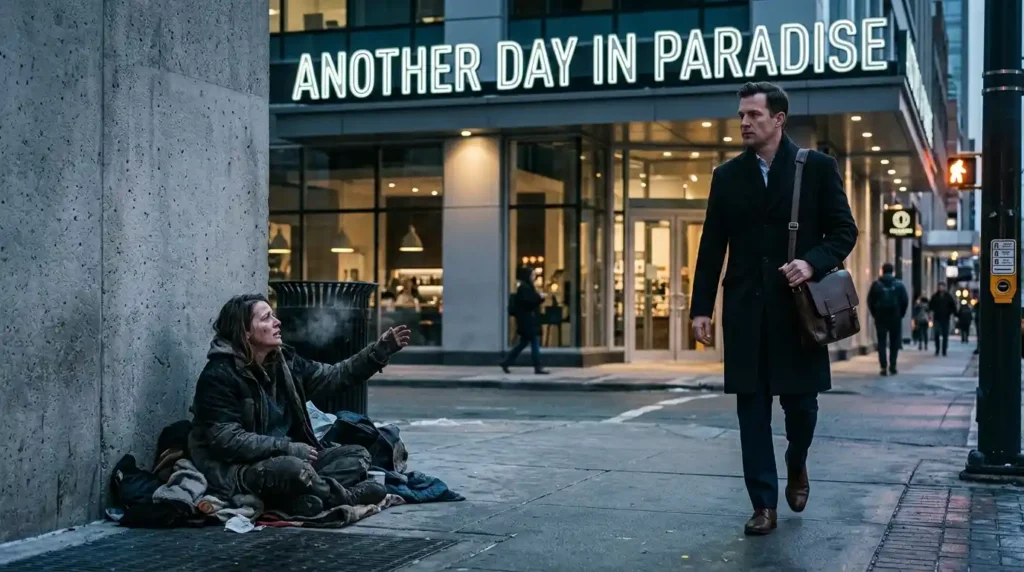
Watching HSCC perform it, however, brings the individuals in the story closer: one woman asking for help, and one man walking past her.
The song speaks about society as a whole, but it is also a deeply personal story about how we see the person standing directly in front of us.
Hearing Again Today a Song I First Knew in 1989
Back in 1989, I did not analyze the song in the detail I do today. What stayed with me first was the melody and Phil Collins’ unmistakable voice.
Many years later, HSCC’s cover led me back to the original, and I found myself noticing aspects of it that had not stood out to me before.
The Song Stays the Same, but the Listener Changes
The recording made in 1989 has not changed. But what I receive from it today does not have to be identical to what I heard when I was 31.
A song that attracted us through its melody or voice when we were younger can reveal its lyrics and background more strongly after many years have passed. Music we have known for decades can take on a different character as the listener accumulates experiences. That was part of the pleasure of rediscovering this song.
“Think Twice” Still Resonates More Than 35 Years Later
More than 35 years have passed since “Another Day in Paradise” was released.
Yet the question at its center remains relevant: what do we do when someone in need is standing directly before us?
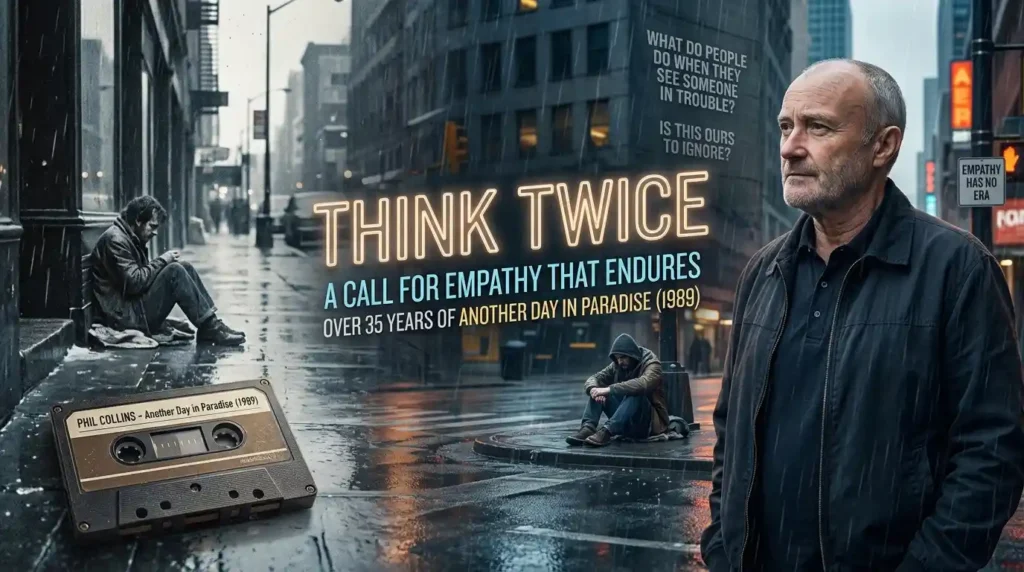
What Phil Collins leaves us with is the simple appeal: “Think twice.”
Before deciding that what we see has nothing to do with us, think about it once more. The fact that those words have not lost their meaning is one reason the song became more than simply a hit from 1989.
Conclusion — “Another Day in Paradise” Is Still Worth Stopping to Hear Again
In “Another Day in Paradise,” Phil Collins portrays a woman asking for help and a man who avoids her voice and walks away.
Inside its gentle sound lies a difficult question: how far are we willing to regard another person’s hardship as something that concerns us?
HSCC preserves the basic structure of the original and gives it new life through Brad Polain’s vocal and the immediacy of a live band performance.
For me, this is a song that entered my life naturally when I was 31. The qualities I originally heard in it as a characteristically understated Phil Collins ballad remain, but today I also listen to the questions raised by its words.
“Think twice” — stop for a moment and think again.
That brief appeal has remained at the heart of the song from 1989 to the present day.


音楽ファン同士の交流・リクエストはこちら / Connect & Request Songs Here