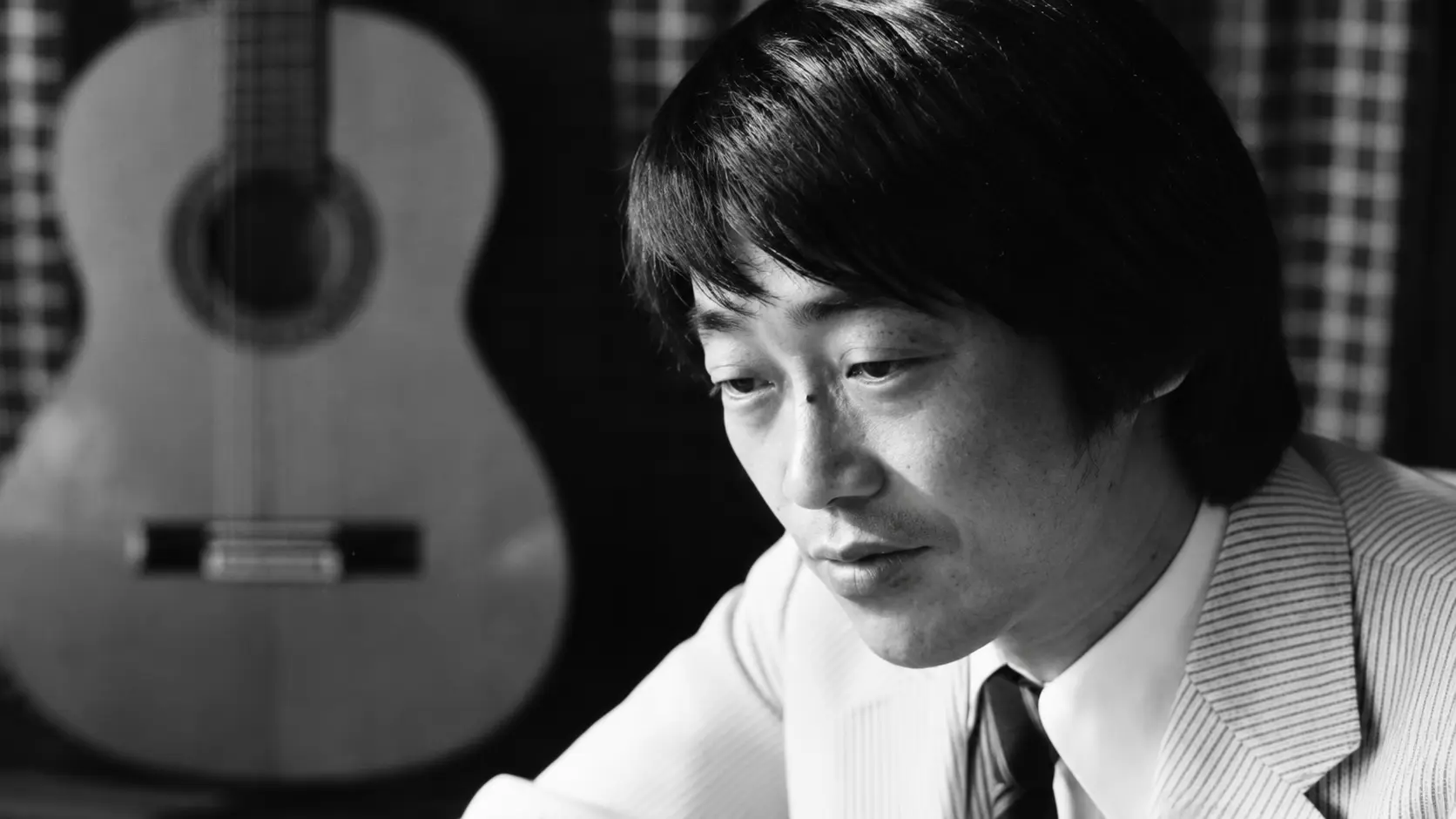
Discover the Story of Koichi Morita!
- 🎧 Listen to This Article
- No. 2: “Sugite Shimaeba”
- First, listen to Koichi Morita sing “Sugite Shimaeba.”
- Not a “Beautiful Youth,” but a Youth That Became Beautiful
- Why Can Even Painful Days Become Beautiful?
- A Song Born in 1977
- Koichi Morita’s Melody and Arrangement
- How Old Is the Man Looking Back on His Younger Self?
- In Closing
🎧 Listen to This Article
Get a quick overview of the article through narration.
Listen before reading to get a feel for “Sugite Shimaeba” and the main ideas explored in this article.
🎵 English Narration
An English narration introducing the main ideas of this article.
🎶 Japanese Narration
A Japanese narration introducing the main ideas of this article.
Listening first will help you get a clearer sense of the world of “Sugite Shimaeba” and the key ideas explored in the article.
No. 2: “Sugite Shimaeba”
“Sugite Shimaeba” was written by Yu Aku, composed and arranged by Koichi Morita, and recorded by Koichi Morita & Top Gallants in 1977. It appears as the opening track and title song of the album Sugite Shimaeba, released on September 21, 1977.
Released after the major success of “Seishun Jidai” (“Days of Youth”) the previous year, this song does not portray youth simply as a bright and glorious season of life.
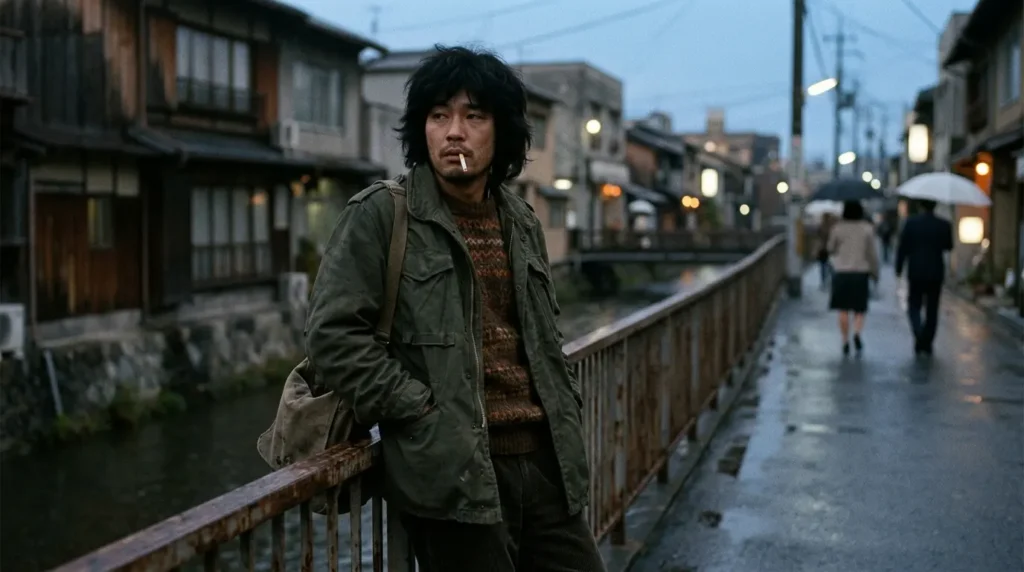
Instead, the story begins with a young man who is neither prosperous nor confident about the direction of his life.
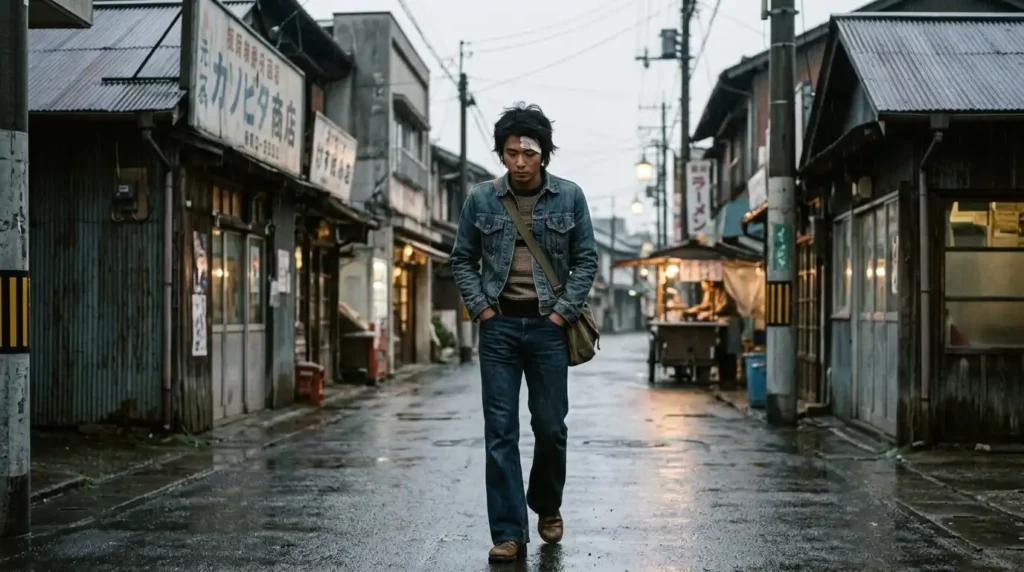
He is frustrated with himself. He becomes involved in a troubled relationship. He hurts others and is hurt in return. Yet the song does not turn these experiences into a conventional story of success or personal growth. In the end, all of them are gathered into the same thought.
Those days were not beautiful when he was living them.
But once they have passed, even the awkward and painful years begin to look different.
To me, that is the heart of “Sugite Shimaeba.”
My Interpretation
There was nothing beautiful or privileged about those days.
There were times of uncertainty, pain, and loneliness.
Yet with the passing of time, even that awkward youth is gently transformed.
Looking back now, the days that have passed all seem beautiful.
💡 You might also like: View the original Japanese lyrics (External site)
If the lyrics are available only in Japanese, you can use your browser’s translation feature or an AI translation tool to understand their general meaning.
First, listen to Koichi Morita sing “Sugite Shimaeba.”
(This is not an official video, so I have linked it through the image below. Click the image to listen.)
Credits
🎥 Koichi Morita & Top Gallants — “Sugite Shimaeba”
Lyrics: Yu Aku Music & Arrangement: Koichi Morita
Source: YouTube, “Sugite Shimaeba — Koichi Morita & Top Gallants”
About the Song
A quiet look back at the uncertainty, loneliness, and emotional wounds of youth.
It captures how even the bitter parts of those years can become cherished memories across the distance of time.
Not a “Beautiful Youth,” but a Youth That Became Beautiful
Songs about youth often revolve around familiar ideas: dreams, love, friendship, and the future. Youth itself is treated as something precious, as though simply living through those years makes life shine.
But “Sugite Shimaeba” takes a different path. The young man portrayed by Yu Aku is uncertain, vulnerable, and unable to make peace with himself.
A Young Man Biting into a Hard Apple
One of the most striking images in the first part of the song is that of a young man biting into a hard apple. He is not a heroic figure confidently chasing his dreams. He knows that he cannot go on as he is, yet he has no clear idea what he should do next.
I find the image of the apple particularly effective. Nothing dramatic needs to happen. That simple physical act of biting into it is enough to suggest his frustration and lack of direction.
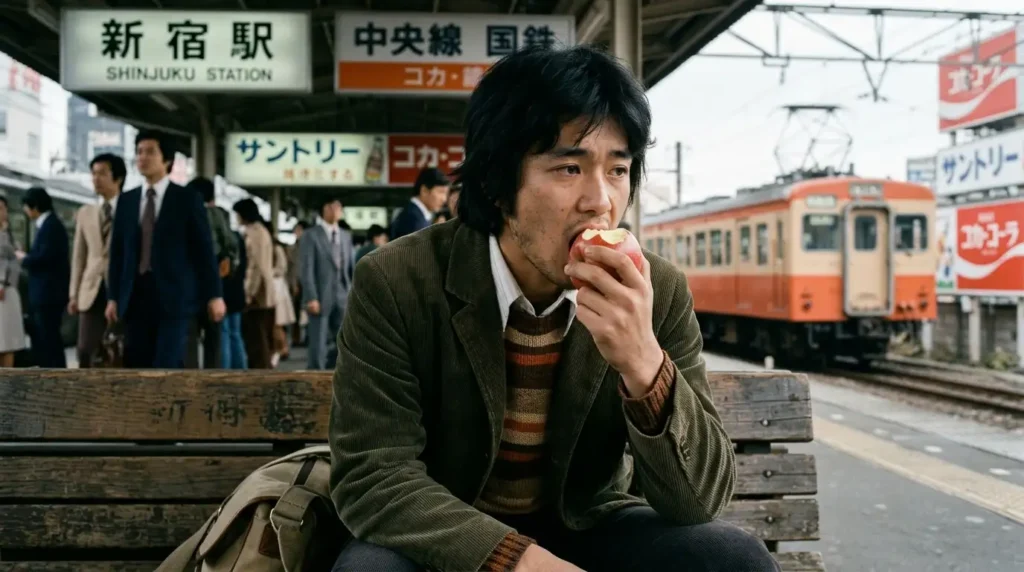
He has not yet become anyone in particular. But neither is he content to remain where he is. That unsettled state feels like one of the most recognizable realities of being young.
Love Offers No Easy Rescue
The second part moves into more dangerous emotional territory. His dreams seem to be slipping downward, and he becomes deeply entangled in a relationship with a woman. Yet there is no comfort there either.
Neither of them seems to believe that the relationship is good for them. Still, they cannot simply walk away. They remain back to back, listening to each other’s voices. Yu Aku does not turn the relationship into a sweet romantic memory; instead, he portrays two people who cannot find a way out.
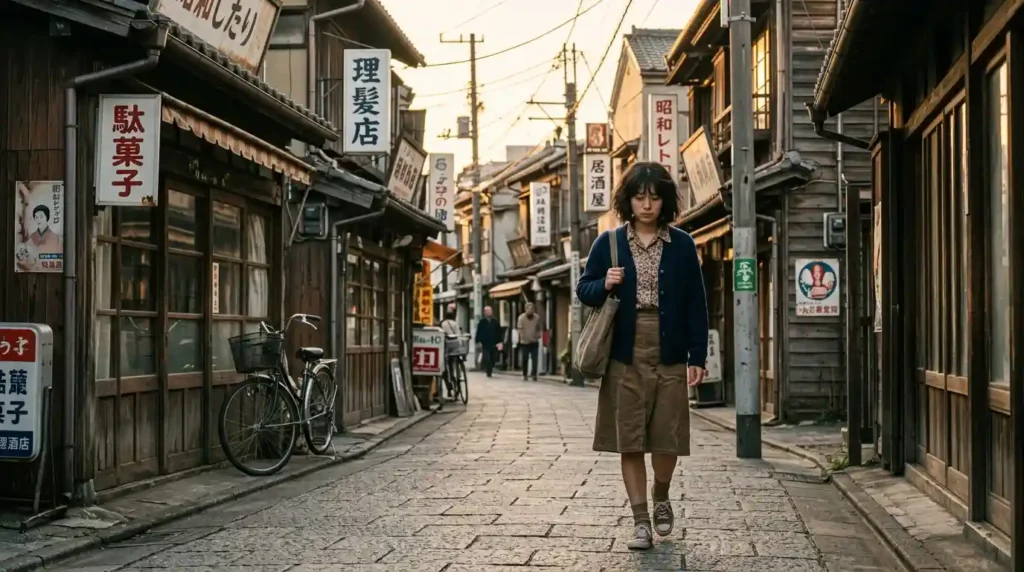
And the “Light” of Youth Remains Far Away
In the third part, the perspective widens from the individual to youth itself.
The darker side of being young feels much closer than the brighter one. There is frustration, conflict, aimless wandering. Mistakes that might have been avoided later in life are confronted head-on because, at that age, there is not yet enough experience to step around them.
The first part centers on the self, the second on love, and the third on relationships with others and youth as a whole. Each approaches those years from a different angle, yet all three arrive at the same destination.
It is this three-part structure that prevents “Sugite Shimaeba” from becoming mere nostalgia.
Why Can Even Painful Days Become Beautiful?
Whenever I listen to this song, I find myself thinking about the title itself.
The passage of time does not change what actually happened. A failure remains a failure, and the fact that we hurt someone does not disappear. Yet decades later, we may remember the same events with emotions very different from those we felt at the time.
The Past Does Not Change. We Do.
What once seemed overwhelming can eventually become one episode in a much longer life. The person looking back now knows that one failure may have led to another path, and that life continued even after a painful separation.
The past itself has not been rewritten. What has changed is the person looking back, now carrying everything that happened afterward.

We do not have to deny how painful those days were to accept that the person we were back then was also part of who we are. To me, that is part of what the word “beautiful” means in “Sugite Shimaeba.”
The Power of the Word “All”
There is another detail that catches my attention: the song does not select only certain memories to preserve.
Not only the happy days, but also the loneliness, uncertainty, and sadness are gathered together and viewed as one period of life.
Rather than erasing inconvenient memories and turning youth into a sentimental story, the song accepts even its failures as part of one’s own time. That gives it a persuasiveness that simple nostalgia cannot fully explain.
A Song Born in 1977
“Sugite Shimaeba” was released in 1977, shortly after Koichi Morita & Top Gallants had achieved major success with “Seishun Jidai.” The album Sugite Shimaeba contains ten tracks, including “Betsuri no Amagasa,” “Boku no Shippai,” “Kansho Jidai,” and “Shinjuku Love Story,” with the title song placed first.
1977 was also the year I graduated from high school and moved to Tokyo to attend university. So this song belongs to the same period in my own life.
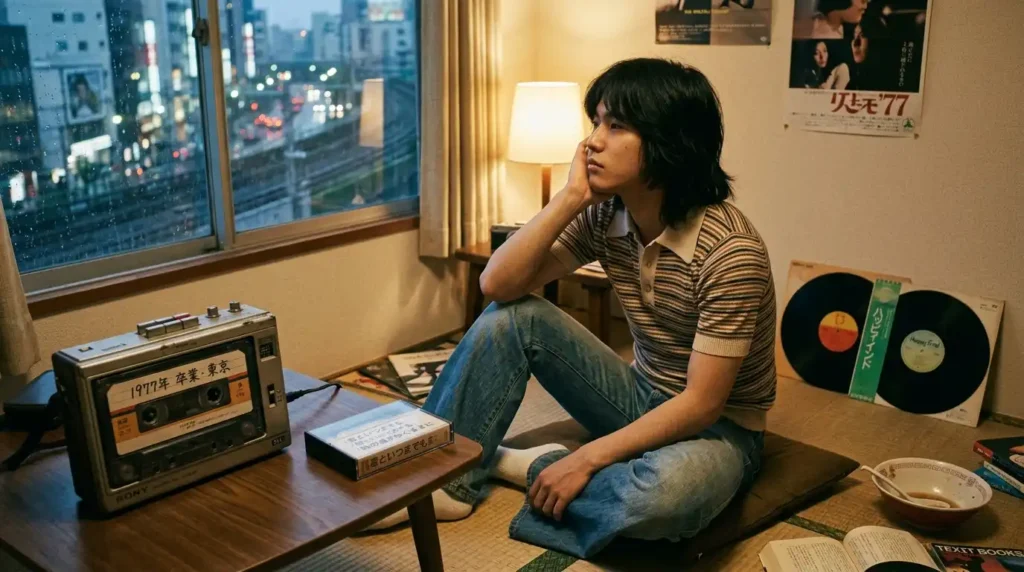
And “Sugite Shimaeba,” the title track, opens the album. I find something especially fitting in the fact that the entire record begins with a song that looks back on youth from a distance.
Looking at Youth from a Different Place Than “Seishun Jidai”
The difference becomes clearer when the song is placed alongside “Seishun Jidai,” the signature hit of Koichi Morita & Top Gallants.
If “Seishun Jidai” captures the emotional uncertainty of someone still living inside youth, “Sugite Shimaeba” stands at a distance from those years and looks back at the person who once lived through them.
Both songs deal with youth, but by changing the point of view, they create entirely different emotional textures. Today, “Sugite Shimaeba” feels closer to me. That is not a judgment about which song is better. It is simply a reflection of where I now stand in my own life.
Koichi Morita’s Melody and Arrangement
It is Morita’s composition and arrangement that keep these lyrics from becoming excessively heavy.
The subject could easily have produced an intensely sentimental song. Instead, the music avoids turning the memories into tragedy, allowing the words to move naturally through an accessible melody.
A Voice That Does Not Tell Us What to Feel
Morita’s own singing is also particularly well suited to the song.
He does not raise his voice to dramatize the sadness. He sings almost as if he were quietly checking each memory one by one. As a result, the listener is never told, “This is where you should cry.” We are free to place our own memories beside his.
To me, he does not sound like a man who has reached some lofty state of wisdom. He sounds more like a man looking back with a faint, knowing smile and thinking, “I really was awkward back then.”
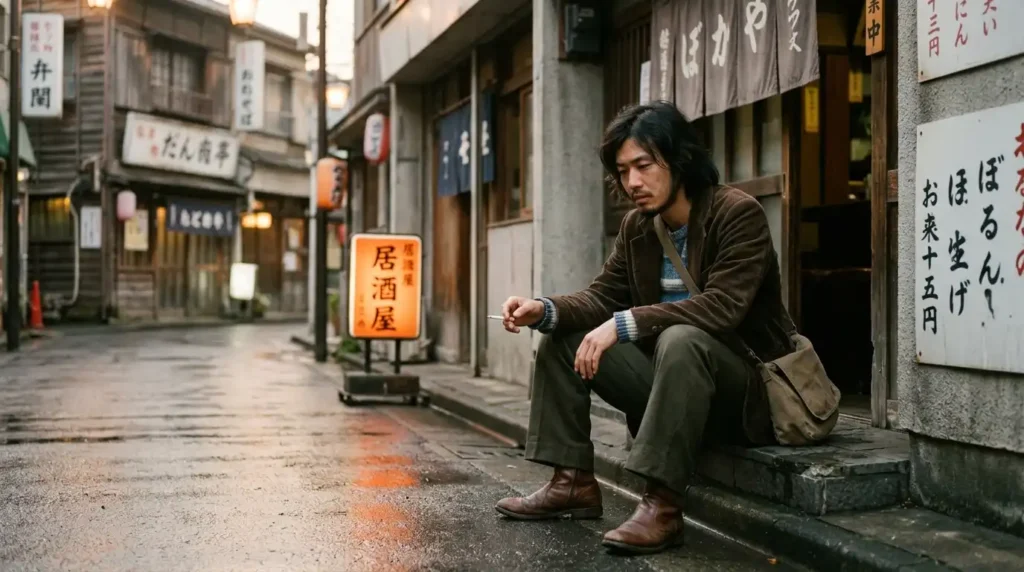
That emotional temperature keeps the final thought from sounding exaggerated. Yu Aku’s words, Morita’s melody, and the understated delivery all seem to meet at exactly the right distance.
How Old Is the Man Looking Back on His Younger Self?
Whenever I listen to “Sugite Shimaeba,” one question comes to mind.
How old is the man telling this story?
Of course, the lyrics never give us a specific age. What follows is simply my own interpretation, but the younger self being remembered feels to me like someone between about eighteen and his early twenties.
He is frustrated that he has not yet become anyone in particular, and he is anxious because he cannot see what lies ahead. In love, he cannot find the right distance from another person; in conflict, he ends up hurting others and being hurt himself. He seems less like an experienced adult than a young man who has not yet learned how to handle his own emotions.
How Far Has He Traveled from His Youth?
Then how old is the man who is remembering all of this?
I do not hear an elderly man looking back on a youth half a century in the past. At the same time, imagining someone in his late twenties remembering events from only a few years earlier feels too close.
If I were to picture him, I would imagine a man in his mid-thirties to around forty looking back on himself at about twenty. That distance feels right to me.

Ten, fifteen, perhaps twenty years have passed. That is long enough for events that once seemed overwhelming to be viewed from farther away. He does not have to reject his younger self, nor does he need to romanticize him. He has simply reached an age when he can say, “That was who I was then.”
And Today, the Song Feels Even More Distant to Me
What makes this especially interesting is that time has not passed only for the man in the song. It has passed for me as a listener as well.
My own position in life is completely different from where it was when this song appeared in 1977. When I was young, I might simply have heard it as a song about a man looking back on his past. Today, both the youth he remembers and the age from which he remembers it already lie far behind me.
Within the song, an adult man looks back on his youth. And now I am listening from a point in life even farther away, looking toward that same youth.
Three different layers of time begin to overlap: the young man he once was, the adult man remembering him, and me listening to the song today. Perhaps that is why the title “Sugite Shimaeba” carries far more weight for me now than it once did.
In Closing
The young man in “Sugite Shimaeba” is neither a hero nor a success story.
He is frustrated with himself, loses his way in love, clashes with others, and sometimes wanders without knowing where he is going. While he is living through those years, they can hardly have seemed glorious.
Yu Aku looks at that young man from the perspective of later life. Koichi Morita, in turn, carries those words through the song without making them excessively sentimental.

When I listen to this song now, I do not find myself wishing that I could return to those days.
Perhaps it is precisely because there is no need to return that I can finally look at the past for what it was.
In 1977, I too had only just stepped into a new life. There are things I can see now that I could not see then. And there were surely things I could see then that are no longer visible to me today.
“Sugite Shimaeba” is more than a song about nostalgia for youth. It asks what our own past begins to look like when, after many years, we finally turn around and face the person we once were. Decades later, that question still reaches me.

音楽ファン同士の交流・リクエストはこちら / Connect & Request Songs Here