
The history of Kobukuro is…Click here!
🎧 Listen to This Article
Listen to a concise narration covering the key points of this article.
Recommended for readers who would like to understand the emotional world of “Tsubomi” and the overall direction of the article before reading.
🎶 English Narration
An English narration introducing the background of “Tsubomi” and the feelings expressed in the song.
🎵 Japanese Narration
A Japanese narration introducing the background of “Tsubomi” and the feelings expressed in the song.
Listening first will make it easier to understand the song’s feelings for a late mother and the main ideas explored in the article.
No. 2 Is “Tsubomi”
If someone were asked to name just one song that represents Kobukuro, many people would probably choose “Tsubomi.”
“Tsubomi” was released on March 21, 2007, as Kobukuro’s 14th single. It was later included as the third track on their sixth original album, 5296, released on December 19 of the same year.
The pain of losing someone dear, the gratitude that remains, and the wishes that could never be fulfilled—“Tsubomi” gathers these feelings into one story and awakens memories that listeners have kept deep within their hearts.
While thinking of someone they can never see again, how does the person left behind continue through the years with everything that person gave them? “Tsubomi” looks beyond the moment of farewell and toward the life that continues afterward.
The song is known to have been written by Kentaro Kobuchi from his feelings for his late mother. Yet its story is not confined to one mother or one family.
It can become a personal story not only for those who have lost their mother, but also for anyone who longs to see a father, family member, friend, or loved one again.
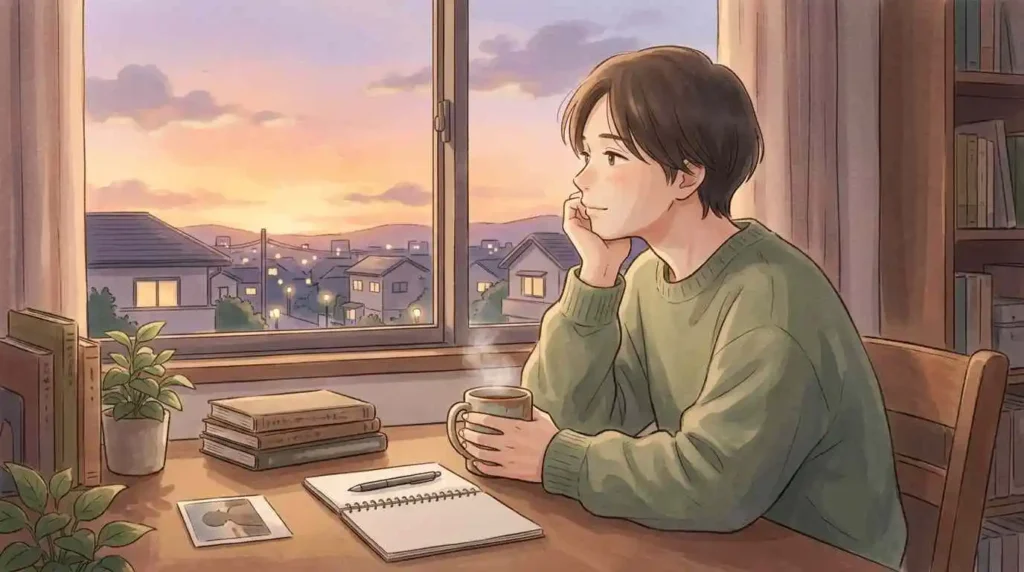
I placed “Tsubomi” at No. 2 for reasons that go beyond its fame and commercial success.
The song does not simply transform a painful event into a beautiful memory and leave it there. It looks directly at the tears hidden behind a smile and at the voice that can no longer be heard, before finally returning our attention to the feet of the person who must continue living. I believe this honesty is what has allowed “Tsubomi” to be sung and cherished for so many years.
Interpretive Translation
The kindness you left behind still burns as a light deep within my heart.
Whenever I look up at a bud swaying in the wind, the smile I can no longer touch seems to unfold across the sky.
Even on nights when tears bring me to a halt, your voice gently urges me forward.
Until the day the dream we once shared finally blossoms, I will begin walking again.
💡 You might also like: View the original Japanese lyrics (External site)
If the lyrics are available only in Japanese, you can use your browser’s translation feature or an AI translation tool to understand their general meaning.
First, Listen to the Song on YouTube
Shared Credits
Song: Tsubomi
Artist: Kobukuro
Lyrics and Music: Kentaro Kobuchi
Arrangement: Kobukuro
Release Date: March 21, 2007
Label: Warner Music Japan
Media Tie-In: Theme song for the Fuji TV drama Tokyo Tower: Mom and Me, and Sometimes Dad
Published on: Kobukuro Official YouTube Channel

“Tsubomi” was released as Kobukuro’s 14th single. The lyrics and music were written by Kentaro Kobuchi, and the arrangement was credited to Kobukuro.
① Kobukuro — “Tsubomi” Music Video
Video Title: Kobukuro - Tsubomi
Video Type: Official Music Video
YouTube Release Date: November 8, 2014
Two-Line Commentary
This official music video uses symbolic imagery and the duo’s restrained performance to portray a song in which Kentaro Kobuchi entrusted his memories of and gratitude toward his late mother.
Its progression from subdued scenes toward a fuller emotional expression brings the song’s story of carrying grief while continuing toward the future into clear focus.
② “Tsubomi” — KOBUKURO LIVE TOUR ’07 “Tsubomi” Version
Video Title: Celebrating 100 Million Music Video Views: Kobukuro “Tsubomi” KOBUKURO LIVE TOUR ’07 “Tsubomi” ver.
Concert: KOBUKURO LIVE TOUR ’07 “Tsubomi” Final Performance
Recorded: August 12, 2007
Venue: Saitama Super Arena
YouTube Release Date: June 26, 2024
Reason for Release: Special publication commemorating the “Tsubomi” music video surpassing 100 million views on YouTube
Two-Line Commentary
Shunsuke Kuroda’s commanding lead vocal fills Saitama Super Arena, while Kentaro Kobuchi’s urgent harmony carries the song’s sense of loss and love directly to the audience.
As the performance approaches its conclusion, the voices of the duo and the emotions of the audience converge, revealing how “Tsubomi” grew into a song shared by countless people.
What Was Hidden Behind the Smile
The Person Who Refused to Show Her Tears
The opening of “Tsubomi” does not portray someone openly crying, but someone smiling so that no one will notice the tears.
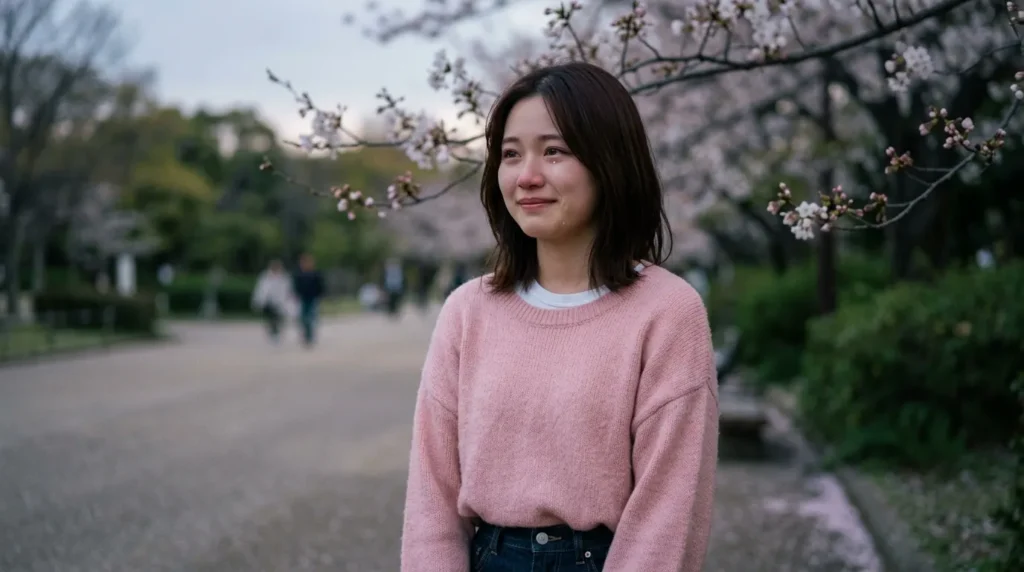
A person who sees only that expression may never notice the pain being carried underneath it. Yet when someone looks back on that smile later, suffering that could not be understood at the time begins to emerge.
That distance in time gives “Tsubomi” its distinctive sorrow.
When a Past Expression Takes on a Different Meaning
We cannot always understand the full meaning of another person’s words or expressions at the moment we encounter them. Sometimes years must pass before we finally recognize what they truly meant.
What feelings were hidden inside those words? What had that person endured behind that smile? Questions that can no longer be asked begin to acquire new meanings within our memories.
“Tsubomi” does not repaint a remembered smile entirely with regret. It tries to accept both the pain that went unnoticed and the love that was unquestionably given.
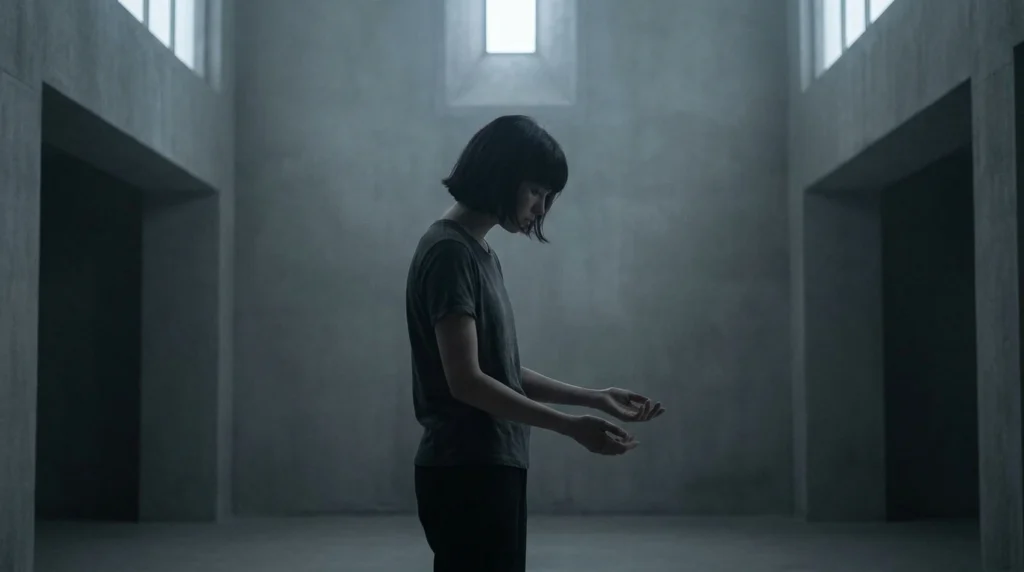
What Continues to Illuminate the Heart
The light described in this song does more than make a remembered scene appear beautiful.
The person who encouraged us and showed us which direction to take is no longer beside us. Even so, the words and kindness we received remain alive in the way we think and live today.
Even when we can no longer see someone, the time we shared with that person does not simply disappear. “Tsubomi” portrays the process through which memories of the past become a source of strength for living today.
What It Means for Shunsuke Kuroda to Sing Kentaro Kobuchi’s Memories
“Tsubomi” was written by Kentaro Kobuchi. At its center are the feelings Kobuchi himself carried for his late mother.
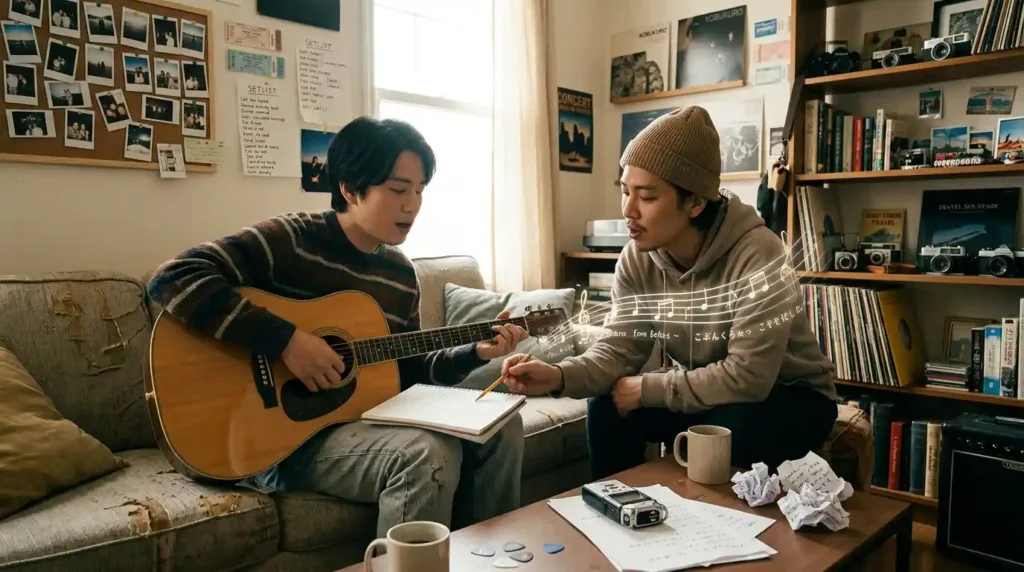
Yet it is Shunsuke Kuroda who carries much of the song’s lead melody. Rather than placing his own experience directly in the foreground, Kobuchi sends it into the world through the voice of his partner. I believe this structure prevented “Tsubomi” from remaining only a private confession.
From One Man’s Experience to the Listener’s Own Story
If Kobuchi had sung the song alone, it might have sounded more directly like a letter addressed to his mother. Passing the song through Kuroda’s voice, however, creates a small but important distance between the lyrics and their author.
Because that distance exists, listeners do not merely observe Kobuchi’s life from outside. They can place the face of someone they long to see within the song. This may be one reason why “Tsubomi,” which began as a song about a mother, also reached people grieving the loss of family members and friends.
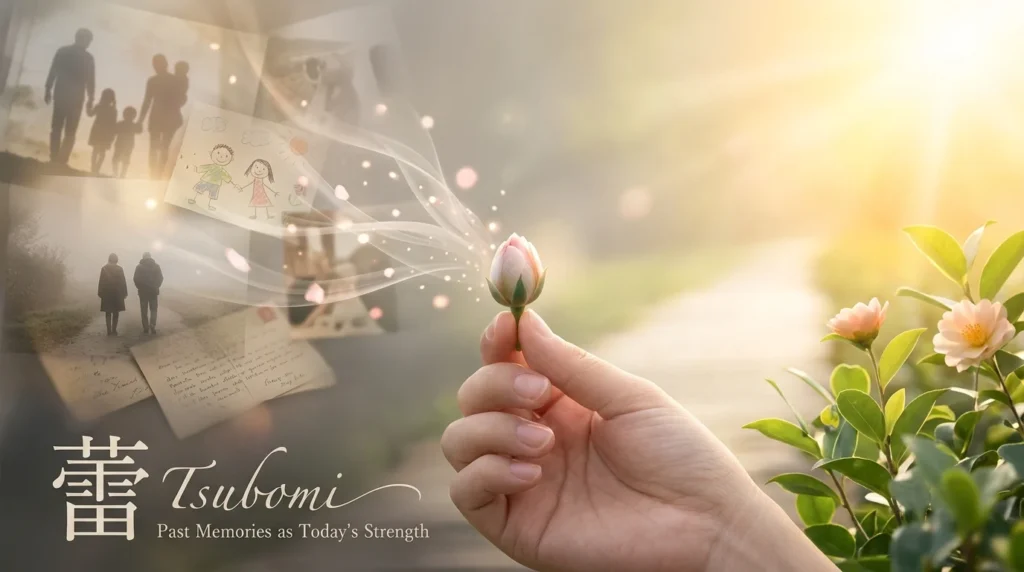
Shunsuke Kuroda Does Not Overexplain the Sorrow
Kuroda does not sing as though he were trying to explain every detail of the sadness contained in the lyrics. In the lower register, he places each word firmly; as the melody rises, he opens the voice itself.
As a result, listeners are not instructed where they should cry. They are moved at the moment when their own memories begin to stir. The performance of “Tsubomi” does not force tears upon the audience. It has the strength to leave the place where those tears emerge to each listener.
Kentaro Kobuchi’s Voice Is Not Merely the Author’s Signature
If Kobuchi’s harmony is heard only as a voice supporting Kuroda’s lead, an essential part of “Tsubomi” is easily overlooked.
Kobuchi’s voice is not there to insist that the experience belongs to him. He entrusts the song to Kuroda while joining him at crucial moments to sing the same words. In that position, we can hear the complex feelings of a man who is both the song’s author and one of its performers.
A memory that began as his alone becomes a song completed by two voices. I believe the essence of Kobukuro in “Tsubomi” lies less in the contrast between the height and weight of their voices than in the way the song is passed from one man to the other.
Why Is the Song Called “Tsubomi”?
Not a Flower, but Something That Has Yet to Open
I believe it is significant that the song is called “Tsubomi,” meaning “flower bud,” rather than simply “Flower.”
A flower has already opened. A bud, by contrast, holds the possibility of opening while remaining unfinished. It contains not only expectation, but also the uncertainty of whether it will truly bloom.
Refusing to Let an Unfulfilled Dream End
The scenes we hoped to witness with someone dear and the words we wanted to tell them lose their destination when that person is gone. Yet “Tsubomi” does not attempt to abandon those things in their unfinished state.
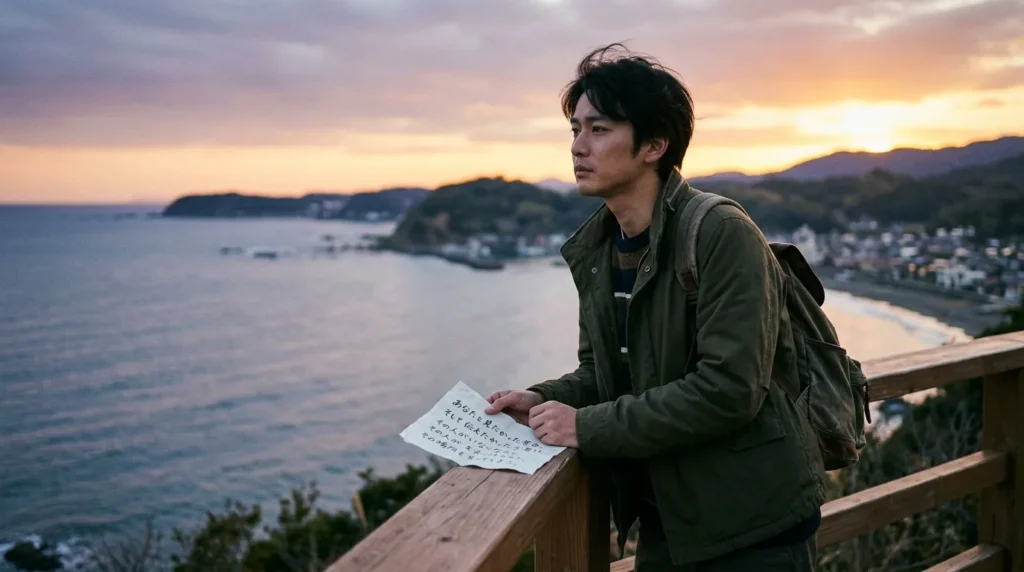
The dream once imagined together is carried into the years that the surviving person must continue to live. By believing that the dream may one day open, the promise shared with the deceased no longer belongs only to the past.
Within the single word “Tsubomi” reside both the longing for someone who can no longer be seen and a life that has not yet reached its end.
“Tsubomi” Became One of the Defining Songs of 2007
A Song That Grew Beyond the Drama
“Tsubomi” was written as the theme song for the Fuji TV drama Tokyo Tower: Mom and Me, and Sometimes Dad. The drama’s portrayal of a mother and son overlapped with the song’s feelings for a deceased mother, and the song gradually became engraved in the memories of a wide audience.
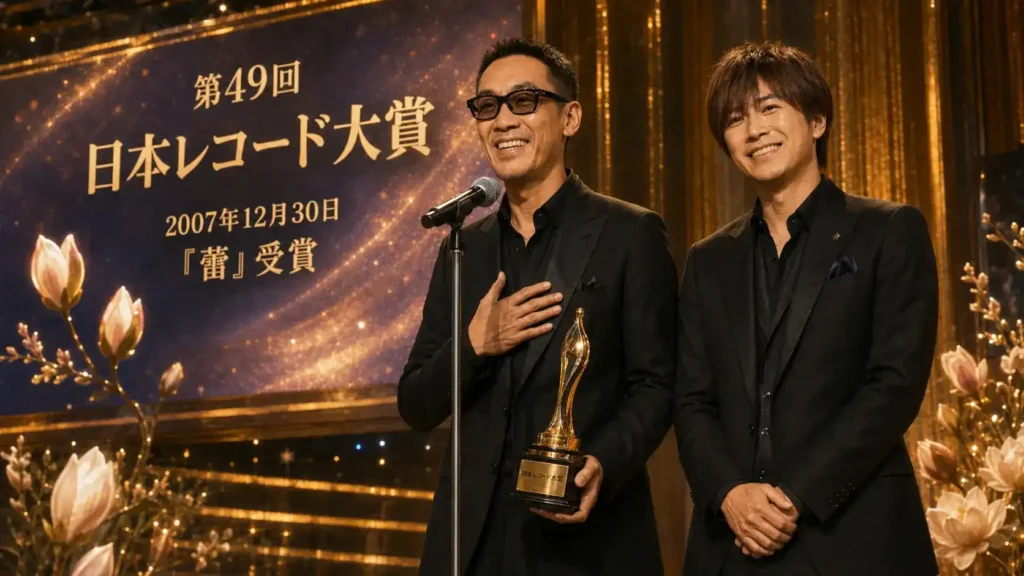
On December 30, 2007, “Tsubomi” received the Grand Prix at the 49th Japan Record Awards. It was Kobukuro’s first Japan Record Award Grand Prix and became a major milestone in the duo’s career.
A Reach That Cannot Be Measured by Awards Alone
The value of “Tsubomi,” however, cannot be explained only through awards and records.
The song becomes complete when each listener recalls one person from their own life. Even when everyone hears the same recording, the face that appears, the words once exchanged, and the scene that touches the heart will differ from one person to another.
Kobuchi’s deeply personal feelings for his mother grew into a song capable of holding the memories of countless people. That may be why “Tsubomi” has continued to reach listeners across generations.
In Closing
Whenever I listen to “Tsubomi,” I think about the relationships that continue even after someone has died.
We can no longer hear that person’s voice or exchange words with them. Even so, what they taught us, the kindness they gave us, and the scenes we witnessed together become part of our judgment and the way we live.
“Tsubomi” is not a song that tells us to stop crying. Nor does it urge us to forget. It sings of continuing to live the time that remains while still thinking of someone we can no longer see.
We continue nurturing the bud within our hearts, even for the person who could not remain to see it bloom. Because that wish lives inside the song, “Tsubomi” reaches a different place in each listener’s life every time it is heard.
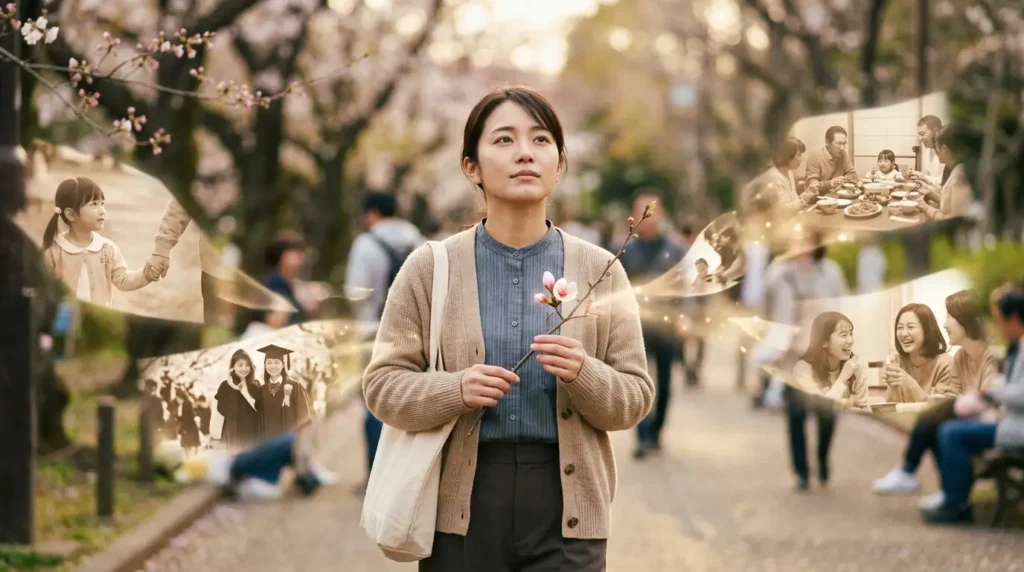
No. 2 in My Personal Top 10 Kobukuro Songs is “Tsubomi.”

音楽ファン同士の交流・リクエストはこちら / Connect & Request Songs Here