
Reframing the Original Perspective with Live-Driven Momentum — An Australian Soul-Shaking Classic and the Slang and Pride Hidden in Its Lyrics
■ Learn more about HSCC here ➡ |Do You Know the Remarkable Band Called HSCC?
- 🎧 Listen in Audio
- Introduction: Why HSCC Is Singing This Song Now
- First, Watch the Official YouTube Video
- Song Background: The 1980s Fever and the Meaning of “Down Under”
- Lyric Deep Dive: The Traveling Aussie’s Adventure
- HSCC’s “Resolution” — Live Arrangement Brilliance and Jordan Lennon’s Roar
- 1. Jordan Lennon — A Young Vocalist with Rock-Star DNA
- 2. Rhythm Section — An Ironclad Groove
- 3. Arrangement Genius — Recreating the Flute Riff
- 4. The “Room” You Can Feel Through the Video
- Conclusion: The Thunder That Echoes Across Time
🎧 Listen in Audio
This article is also available as a three-minute English narration.
Experience the energy of HSCC’s reimagined “Down Under,” the pride and humor within the lyrics,
and the driving force that only live performance can deliver — now through sound.
You can enjoy it before reading or after finishing the article.
🇺🇸 English Narration
Introduction: Why HSCC Is Singing This Song Now
Among the countless “local anthems” around the world, few songs are as deeply tied to national identity as Men at Work’s “Down Under”.
Released in 1981, the song topped charts in both the United States and the United Kingdom. When Australia won the 1983 America’s Cup yacht race, the track was sung like a national anthem. It is, in many ways, Australia’s “unofficial national anthem.”
Then in 2022, this monumental anthem was taken on by HSCC (The Hindley Street Country Club), one of the world’s premier cover bands, also based in Adelaide, Australia.
Their performance video is far more than a simple nostalgic recreation. It represents a point of arrival — where the pride of hometown musicians meets world-class contemporary musicianship.
This article offers a deep dive into the performance, the lyrics, and the cultural background of this iconic song.
First, Watch the Official YouTube Video
Song Background: The 1980s Fever and the Meaning of “Down Under”
The title “Down Under” is a slang nickname referring to Australia (and sometimes New Zealand), located “down” on the world map in the Southern Hemisphere.
For a nation once colonized by Britain, the phrase contains both self-deprecating humor — “the other side of the world” — and fierce pride in having built a distinct culture of its own.
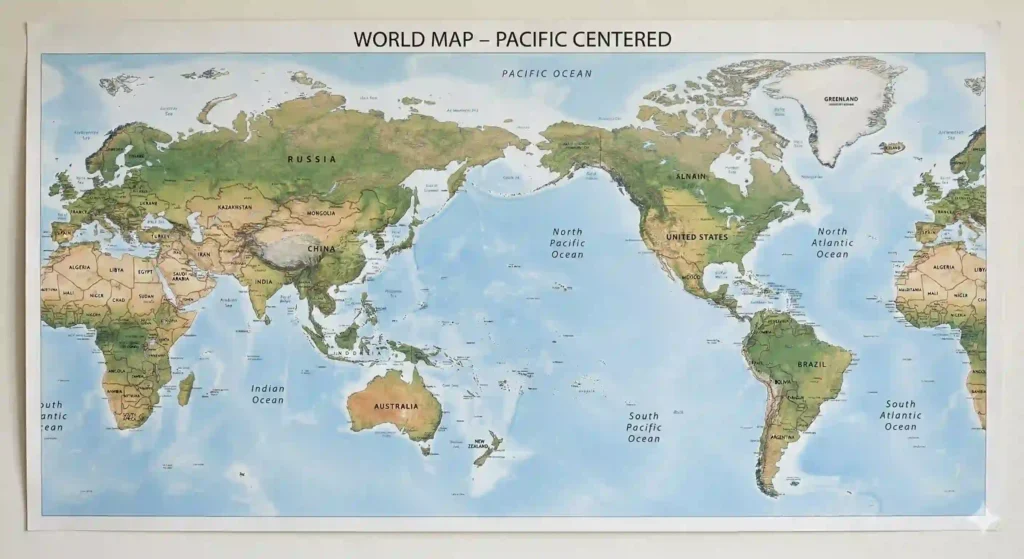
The song’s rise in the early 1980s coincided with the global expansion of Australian pop culture, aided by the rise of MTV. Men at Work led the charge with new-wave rock infused with reggae rhythms.
Lyric Deep Dive: The Traveling Aussie’s Adventure
The lyrics depict an Australian man traveling the world and encountering strange experiences along the way. Beneath the seemingly nonsensical imagery lies a clever reflection of how Australians saw themselves through the eyes of the world.
Let’s unpack some key phrases and their cultural context.
1. “Fried-out Kombi”
“Travelling in a fried-out Kombi / On a hippie trail, head full of zombie”
This opening line instantly drags the listener into the atmosphere of the late ’70s and early ’80s.

- Kombi: A Volkswagen Type 2 van — iconic transport for surfers and hippies.
- Fried-out: Either an overheated, worn-out engine or a person exhausted by heat and travel.
- Hippie trail: The overland travel route backpackers took from Europe through South and Southeast Asia toward Australia.
The protagonist is a rugged wanderer in a battered van, covered in dust. This “tough and free traveler” image is one of the archetypes of Australian identity.
2. “Head full of zombie”
Here, “zombie” is not a horror monster. It is commonly interpreted as slang for strong marijuana or the hazy, mentally checked-out state it produces.

In other words, this short phrase compresses the lingering aftertaste of hippie culture, a sense of emptiness, and a glimpse of the era’s drug culture into a single image.
3. “Vegemite sandwich”
“He just smiled and gave me a Vegemite sandwich”
This may be the song’s ultimate power phrase. In verse two, a man in Brussels (Belgium) appears and offers the narrator a “Vegemite sandwich.”
- Vegemite: A nationally beloved Australian fermented spread made from yeast extract.
Dark, intensely salty, and strongly aromatic, Vegemite is often described by non-Australians as “a punishment taste.” But for Australians, it is a childhood staple — a true comfort food.

The scene implies a playful stereotype: “You’re from Australia, right? You must love this.” It’s humor wrapped in solidarity — “Yes, we’re those weird Vegemite people (and that’s exactly the point).”
4. “Men plunder / Men chunder”
The chorus also carries unmistakable wildness.
- Men plunder: A metaphor echoing colonial history and rough frontier spirit.
- Men chunder: A strong Aussie slang term meaning “to vomit.”
Set against glowing women and beautiful nature, we get men who drink too much beer and throw up. By singing gritty reality rather than “high poetry,” the song captured working-class hearts and rose into a national anthem.

HSCC’s “Resolution” — Live Arrangement Brilliance and Jordan Lennon’s Roar
The Impact of HSCC’s “Reconstruction”
As mentioned above, “Down Under” is sacred territory for Australians. It’s the kind of song that can burn you if you touch it carelessly. HSCC faced it directly — and with an exceptionally polished approach.
The moment you hit play on their YouTube performance, anyone who knows the original will notice a key difference: the thickness of the sound and the higher “resolution” of the rhythm.
The original Men at Work version has that charmingly light, slightly cheap, pop-forward early-’80s production. HSCC preserves the pop spirit while upgrading the track into a tougher, modern funk-rock machine built for today’s audio systems.

From here, let’s look at the standout points in each part of the arrangement.
1. Jordan Lennon — A Young Vocalist with Rock-Star DNA
The single biggest reason this cover becomes a definitive performance is vocalist Jordan Lennon. HSCC features many singers, but his explosive power on rock numbers is in a league of its own.
Compared with Colin Hay
Colin Hay, the original vocalist, sang with a slightly nasal, laid-back delivery — almost like a traveler’s muttered monologue.
Jordan Lennon’s approach, by contrast, is full-on stadium rock.
He holds back a touch from the intro through the early verse, but you can already hear the richness of his overtones. Then the instant the chorus hits — “I come from a land down under” — his voice bursts into a bright, commanding shine.

One detail worth spotlighting is how he treats the ends of lines.
“Can’t you hear, can’t you hear the thunder?”
In the word “thunder,” his vibrato is both powerful and glossy — youthful force with veteran-level control. With him at the center, the song stops being a “comic old hit” and becomes a living, present-tense anthem.
2. Rhythm Section — An Ironclad Groove
HSCC’s heartbeat — bassist Constantine Delo and drummer Brad Polain — is fully on display here, arguably even hotter than usual.
Reggae Meets Rock
The groove of “Down Under” is built on reggae-influenced offbeats (a ska-like feel). But if it leans too far into reggae, the track can feel lightweight.
Brad keeps the offbeat motion lively with hi-hat control, while the snare and kick land with tank-like weight and tightness.
This balance — light on top, massive on the bottom — is a core HSCC signature. Your body starts moving because the rhythm section builds a perfect “pocket.”

3. Arrangement Genius — Recreating the Flute Riff
That iconic flute intro (played by Greg Ham on the original) is essential. But HSCC doesn’t have a flutist in their lineup.
So they recreate it with a unison line between keyboard (Dave Ross) and guitar (Jake Milic).
The synth tone intentionally leans into a slightly “cheap” ’80s wind-instrument vibe — a clear nod of respect. Meanwhile the guitar doubles the melody, adding thickness and live-band power.
“Make up for what you don’t have — and make it cooler than the original.” That’s HSCC’s arranging philosophy in a nutshell.
4. The “Room” You Can Feel Through the Video
HSCC’s appeal isn’t only sonic — the studio atmosphere is part of the experience.
Their performances always carry near-one-take tension alongside a relaxed mood where bandmates exchange smiles and eye contact.

In “Down Under,” you can spot moments where players glance at each other during solos and grin when a great phrase lands.
That’s proof they aren’t machines executing sheet music — they’re craftsmen turning the room’s energy into music. A group of Australian mates, genuinely enjoying their own national anthem. That positive vibration is exactly what grabs viewers and won’t let go.
Conclusion: The Thunder That Echoes Across Time
“Can’t you hear, can’t you hear the thunder?” (Can’t you hear the thunder?)
In the lyrics, “thunder” symbolizes a sign of change — an unstoppable force.
The thunder Men at Work unleashed in 1981 resounded again decades later as a new thunderclap called HSCC.
This cover is not simply nostalgia. It teaches a musical truth: when great songs are played by great players, they sound new in any era.


コメント