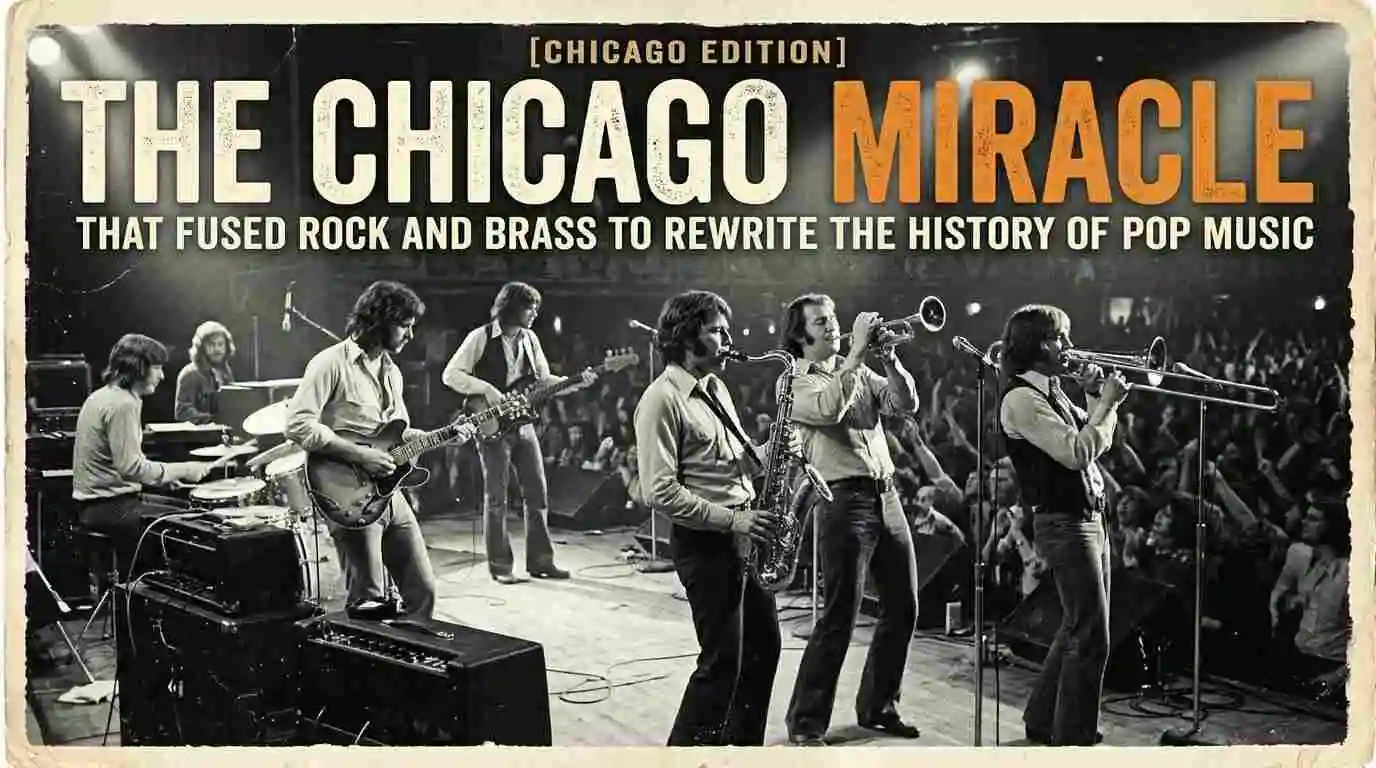
💛The “Miracle of Chicago,” the band that fused rock and brass and rewrote pop history, starts here: Read the series introduction.
- 🎧 Listen to This Article
- Coming in at No. 2 is “Questions 67 and 68”
- First, listen to the official audio tracks on YouTube
- A love song, yet the music refuses to rest sweetly
- The mysterious distance created by the numbers “67” and “68”
- Far more than just adding brass to a rock band
- Observing the song’s evolution through three official takes
- Why it stands at No. 2
- In Conclusion
🎧 Listen to This Article
You can easily catch the key points of this article through our narration.
Recommended for those who want to get a feel for “Questions 67 and 68” and the overall flow before reading the text.
🎶 English Narration
This audio introduces the content of this article in English.
🎵 Japanese Narration
This audio introduces the content of this article in Japanese.
Listening to the audio first will help you better grasp the world of “Questions 67 and 68” and the main points of the article.
Coming in at No. 2 is “Questions 67 and 68”
When people talk about Chicago, their attention naturally gravitates toward beautiful ballads like “Hard to Say I’m Sorry” or flashy rock tunes like “25 or 6 to 4.”
However, if I were asked to explain the true essence of Chicago in just one song, there is a very high probability that I would want to choose “Questions 67 and 68.”
This song is packed with the raw ambition of their debut era—an energy that cannot be contained within the sophisticated pop direction they embraced in later years. Included in their 1969 debut album “Chicago Transit Authority” and released as a single in July of the same year, this track stands as the definitive starting point of Chicago’s journey.
Despite being a rock band, they refused to treat the horn section as mere decoration. While carrying the scent of jazz, they never escaped into overly complex or esoteric territory. And though it is a song about love, the sheer momentum of the sound is astonishingly grand.
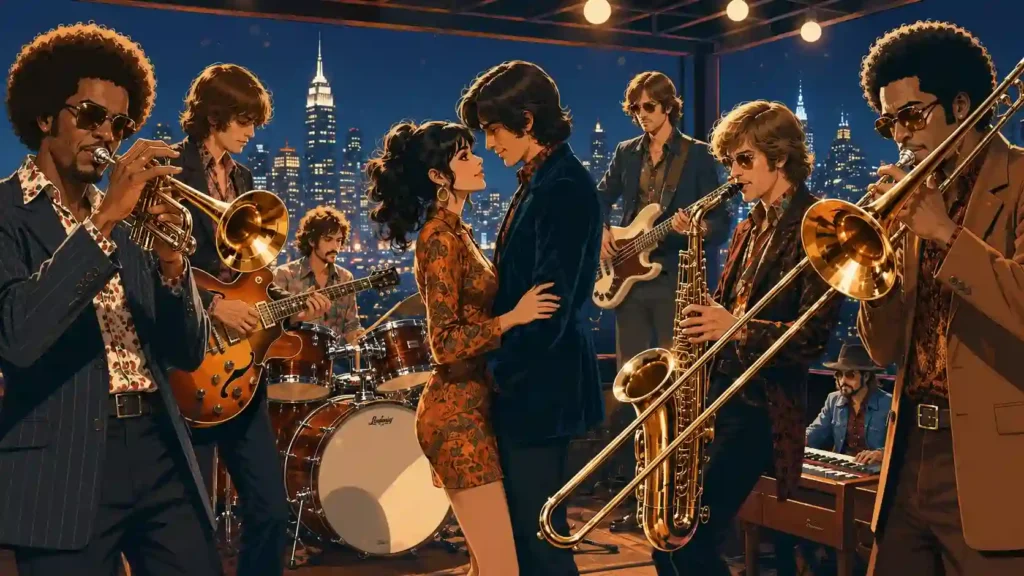
All of these elements resonate simultaneously within a single track.
The reason I placed this song at No. 2 is not simply because it is a “masterpiece.” It is because listening to this track allows your ears to instantly grasp how Chicago intertwined rock, jazz, brass, and pop, long before your intellect tries to process it.
Furthermore, beneath its bright and vibrant sound, the lyrics harbor quite complex emotions. The joy of meeting someone, the wonder of two hearts aligning, the impulse to know the answers, and yet, a conflicting sense that even if those answers are never spoken, it is already more than enough.
This emotional sway is precisely what makes it so fascinating.
My Personal Translation
I met you, and our hearts aligned.
Is this feeling a mere coincidence, or was it destined from the start?
I feel like I want answers, but the truth is, I don't need them anymore.
The happiness of being with you drives away even the dark memories of the past.
First, listen to the official audio tracks on YouTube
Track Credits
Chicago - "Questions 67 and 68"
Japanese Title: クエスチョンズ67/68
Written by: Robert Lamm
Originally Featured on: "Chicago Transit Authority"
Original Album Release: 1969
Produced by: James William Guercio
Official Audio 1: Studio Version / 2002 Remaster
Provided by: Rhino
Featured on: "The Very Best of Chicago: Only the Beginning"
Audio Source: 2002 remaster of the 1969 original recording
Two-Line Commentary
If you want to experience the foundational blueprint of "Questions 67 and 68," this studio version is the perfect place to start.
The rock, jazz, and brass elements of a young Chicago unite beautifully, vividly showcasing the prototype of the signature Chicago sound.
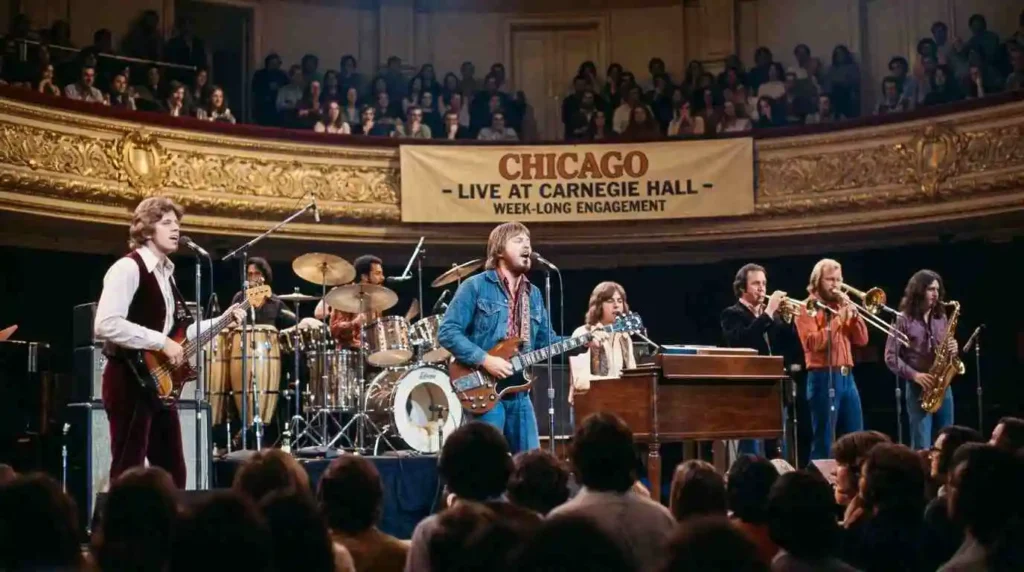
Official Audio 2: Live at Carnegie Hall Version
Provided by: Rhino
Featured on: "Chicago at Carnegie Hall" / "At Carnegie Hall"
Recorded: April 5–10, 1971, at Carnegie Hall, New York City
Two-Line Commentary
In this live recording, the performance prowess and on-stage tension of early Chicago come through even more rawly than in the studio version.
The momentum of the brass, the drive of the rhythm section, and the intensity of the vocals collide, allowing you to savor the band performing at the absolute height of their powers in 1971.
Official Video 3: Guitar Center Sessions Version
Provided by: Guitar Center
Show: Guitar Center Sessions on DIRECTV
Format: Official live performance video from later years
Two-Line Commentary
Rather than the ferocious edge of their early days, this footage highlights the remarkable stability and sophistication that only comes from decades of playing together.
The contours of the brass, vocals, and rhythm are cleanly refined, offering a wonderful taste of "Questions 67 and 68" performed by a matured, grown-up Chicago.
A love song, yet the music refuses to rest sweetly
The lyrics of “Questions 67 and 68” are actually quite straightforward.
Meeting a certain person, finding your hearts intertwined, and constantly questioning whether this emotion was born out of a sudden spark or if it occurred naturally. Looking purely at the words, it is a love song capturing the confusion of a youthful romance.

Yet, Chicago does not perform this song as a quiet, gentle confession. From the very introduction, the horns push right to the front, the rhythm bounces dynamically, and the vocals pierce through with a bright radiance.
Questioning, yet the music charges forward
Normally, the uncertainty of love is depicted with a more introverted tone. But in this song, a tiny doubt arising within the chest suddenly dashes outward, as if every traffic light on the street corner turned green all at once.
This distinct brightness sounds quintessentially “Chicago” to me.
Hesitant, yet never sinking.
Questioning, yet never looking down.
Yearning for answers, while the performance is already racing ahead.
This paradoxical sensation is the core charm of the track.
The simultaneous presence of “wanting to know” and “not wanting to hear”
The protagonist of the lyrics repeatedly states that they “want to know” where they stand with their partner. Yet at the same time, they seem to be rejecting a definitive answer somewhere deep down.

This is because the current state of happiness is already overwhelmingly powerful.
If love can be neatly explained by logic, it might bring a sense of security. However, the exact moment it is fully explained, the magical brilliance of that emotion can sometimes fade a little.
Therefore, the protagonist seeks the answer while simultaneously fearing it. Because these two conflicting emotions overlap so closely, “Questions 67 and 68” transcends being just another cheerful love song.
The mysterious distance created by the numbers “67” and “68”
The numbers “67” and “68” in the title leave a slight mystery for the listener. That said, I believe there is no need to over-interpret the exact meaning of these figures.
What truly matters is not the literal meaning of the numbers themselves, but the unique texture they give to the title. The name “Questions 67 and 68” deliberately lacks the sweet, romantic words found in typical love songs.

A title that presents “inquiries” rather than sweet declarations
It doesn’t say “I love you.” It doesn’t say “I only have eyes for you.” It simply states: there are questions. Moreover, it’s not just a single question—it’s numbers 67 and 68.
This sense of distance is incredibly intriguing. While the core emotion is remarkably passionate, the title looks almost like an observational log.
The moment a person falls in love, they cannot neatly explain their feelings. Why this specific person? Why today? Why does the image of this person remain so vividly in the heart, pushing aside all past memories?
Present happiness driving away past darkness
In these lyrics, the partner’s presence reaches deep into the soul, pushing away the memories of previous painful times. In other words, the love sung about in this track is not just a simple flutter of the heart.
The current happiness grows so intense that it overpowers past pain. Chicago chose to frame this profound sensation not through sugary words, but as a series of “questions.”
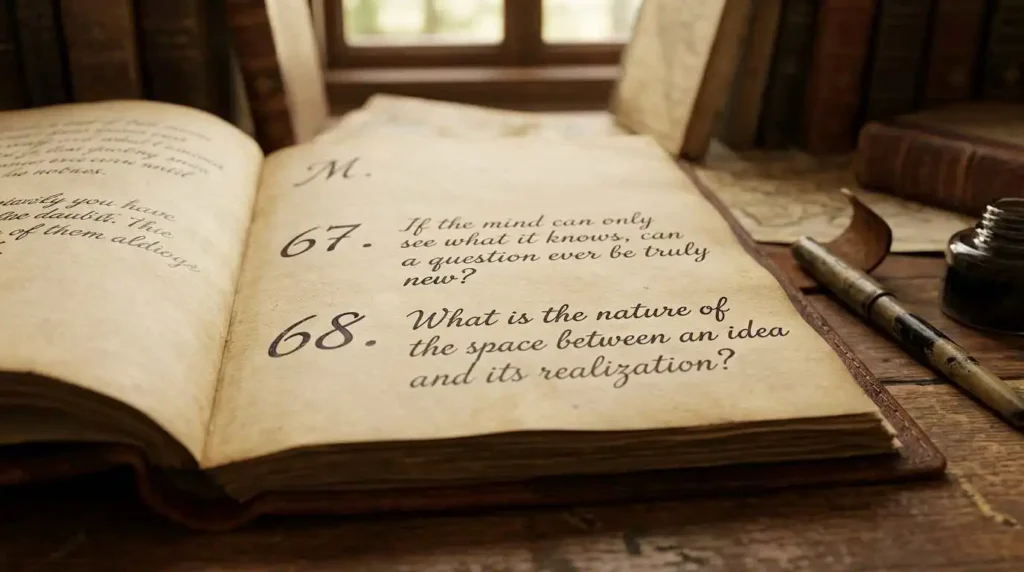
This is precisely why I believe this song cannot be contained within the boundaries of a standard love song. While singing of romance, it simultaneously touches upon the highly fundamental machinery of human emotion: “Why are we drawn to someone to the point of being saved by them?”
Far more than just adding brass to a rock band
The brilliance of Chicago does not lie merely in the fact that they added wind instruments to a rock band configuration.
What is truly vital is that the horn section functions as the very skeleton of the track, rather than as an ornamental flourish. In “Questions 67 and 68,” this characteristic is displayed with absolute clarity.
Every time the horns sound, the song doesn’t just become flashier; the outline of the melody gains strength, the angle of the rhythm shifts, and even the vocal delivery is propelled forward.
The exhilarating sensation of horns commanding the progression
In many rock tracks, brass is utilized to reinforce the emotional peak of the chorus. But in Chicago’s case, the brass stands directly at the center from the very beginning.
The trumpet, trombone, and saxophone do not simply offer brief responses; they drive the song on the exact same footing as the guitar or keyboards. This three-dimensional sonic arrangement was their absolute lifeline during their debut era.
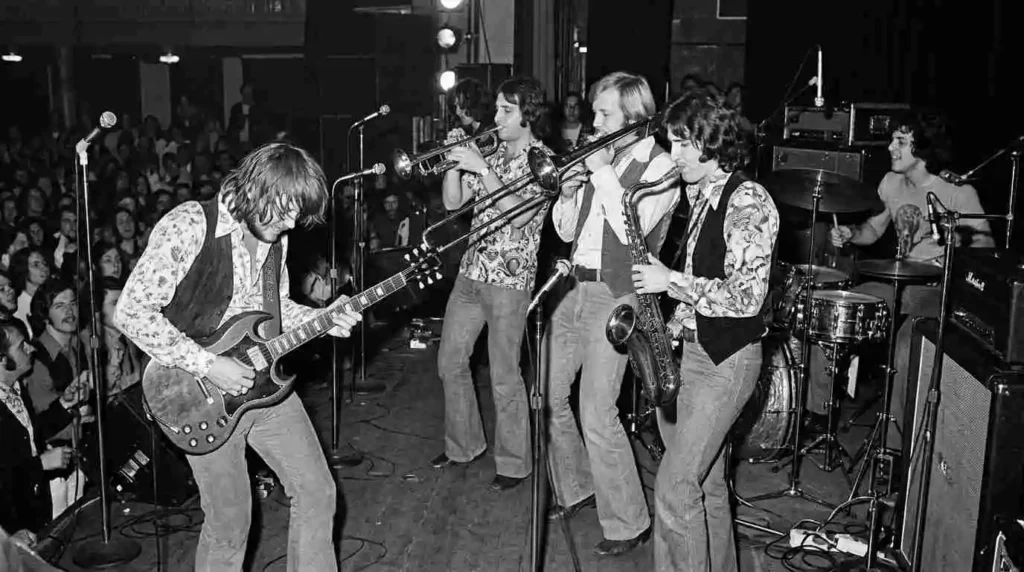
Listening to “Questions 67 and 68” reveals that the term “brass rock” was never just a genre label—it was the very mindset of the band itself.
The brilliant songwriting of Robert Lamm
The sheer brilliance of Robert Lamm, who penned the lyrics and music, shines vividly through this track.
The melodies Robert Lamm writes are undeniably pop, yet they never tread a simple, predictable path. While remaining instantly memorable and accessible, the chords and arrangement structures possess a subtle, clever twist.
Because of this, no matter how many times you listen, it never devolves into a superficial oldies track. While it sings of a youthful romance, as a piece of music, it is incredibly shrewd and sophisticated.

This specific sensation—being completely accessible yet possessing an unmeasurable depth—is one of the core reasons why Chicago has continued to be cherished for so long.
Observing the song’s evolution through three official takes
In this article, I have highlighted “Questions 67 and 68” through three distinct official recordings.
The studio version, the live at Carnegie Hall version, and the Guitar Center Sessions version. Placing these three side-by-side reveals not only the inherent magic of the song itself, but also the passage of time experienced by Chicago as a collective band.
The studio version boasts the pristine perfection of a master blueprint
The studio version holds the sheer beauty of a pristine architectural blueprint from their debut era. The entry points of each instrument, the sharpness of the horns, the placement of the vocals, and the movement of the rhythm are all meticulously organized.
For anyone experiencing this song for the first time, I would recommend starting with the studio version. It communicates exactly what Chicago was striving to achieve with the utmost clarity.
The Carnegie Hall version overflows with the raw heat of a young band
On the other hand, the Carnegie Hall performance delivers a palpable, raw texture entirely distinct from the studio recording. The heat of the performance, the breath of the stage, and the collective surge of the band charge forward directly from beyond the speakers.
By 1971, Chicago already possessed supreme musical command, yet they still retained the distinct, ferocious energy characteristic of a young band. You can experience both of these elements intersecting beautifully in this live cut.
The Guitar Center version reveals the contours of a fully matured ensemble
In the Guitar Center Sessions version, the song adopts yet another completely different expression.
Rather than the aggressive momentum of their youth, the performance highlights an ironclad stability that can only be forged by a band performing together over decades. The sonic contours are beautifully refined, and the individual role of each instrument stands out with crystal clarity.
This does not mean their power has diminished in the slightest. On the contrary, it is a magnificent performance that confirms just how incredibly robust the fundamental skeleton of this song truly is.
Why it stands at No. 2
So, why did I choose to place this track at No. 2?
“Questions 67 and 68” is a song that brilliantly demonstrated the band’s identity at a point very close to Chicago’s origin. Brass, rock, jazz, and pop blend entirely naturally, and while it functions as a love song, it possesses immense emotional depth.
Listening to this track makes it immediately obvious that Chicago was never just an ordinary rock band. They transformed the horn section from a mere decoration into the true engine of the track, turning a youthful romantic inquiry into a vibrant, surging piece of brass rock.

Even so, I have ultimately assigned this track the No. 2 spot.
The reason is that within Chicago’s catalog, there exists another singular piece that steps into an even grander theme—one that cannot be measured solely by musical perfection.
The absolute core of their debut era, shining precisely because it is No. 2
When it comes to understanding the musical prototype of Chicago, “Questions 67 and 68” is absolutely worthy of the No. 1 spot.
It is a sweet love song, yet the performance is incredibly sharp. It is bright, yet the lyrics carry an underlying anxiety. It is pop, yet the structural arrangement is immensely intricate.
However, what this track gazes upon is still confined to individual, personal emotions. From this point, Chicago would eventually expand into a band that tackles human relationships at large, the societal atmosphere, and the deep-seated anxiety born when communication fails completely.
When considering that massive, expansive trajectory, I felt it was most natural to place “Questions 67 and 68” at No. 2.
In Conclusion
By placing “Questions 67 and 68” at No. 2, I believe the spectacular brilliance residing at the very starting point of Chicago has been brought into sharp focus.
Expressing the confusion of love not through a damp, somber confession, but through the pulsating energy of brass and rock—at the exact moment of that conception, Chicago was already looking toward an entirely different horizon than any of their contemporaries.
Yet, in my personal Chicago chronicle, there is still one more piece of work that I absolutely must place above this song.
It is a track that conveys not just absolute sonic perfection, but speaks volumes about exactly what the collective entity of Chicago was gazing upon, and what they were trying to question.
That is precisely why “Questions 67 and 68” remains at No. 2.
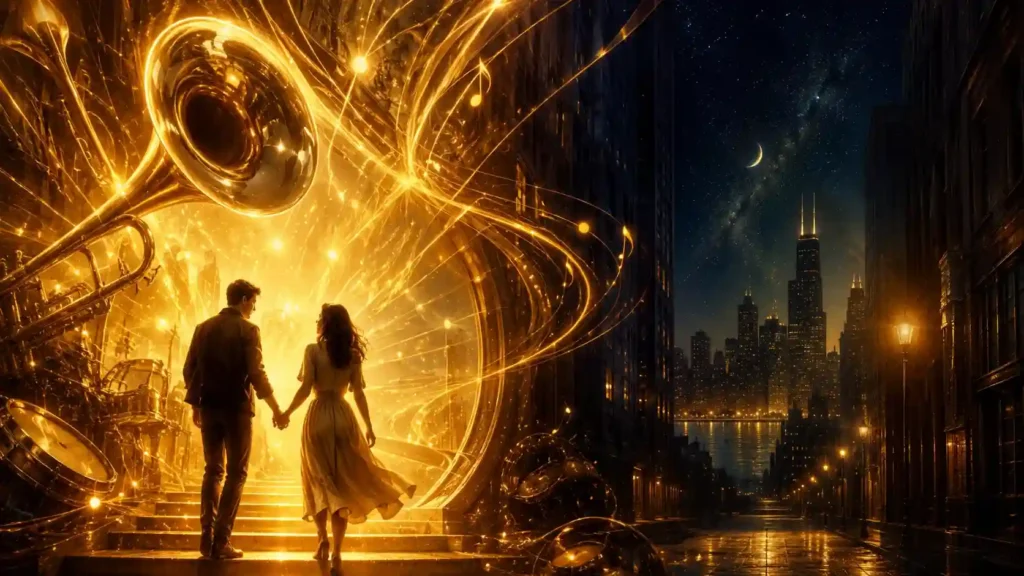
This track serves as an incredibly radiant entryway into the world of Chicago.
And the song that claims the No. 1 spot is the one that reveals the even deeper, more profound space lying just beyond that magnificent entrance.
音楽ファン同士の交流・リクエストはこちら / Connect & Request Songs Here