🎧 Listen to this article
You can catch the key highlights of this article via audio.
Recommended for those who want a quick overview before diving into the text.
🎵 English Narration
The content of this article is explained in English audio.
⌛ Duration: Approx. 3 min
🎵 Japanese Narration
You can also listen to the same content in Japanese.
⌛ Duration: Approx. 3 min
* Listening to the audio first provides a more multi-dimensional understanding of the background and atmosphere of the song.
No. 13: “Thunder Road”
In 1975, a monumental talent named Bruce Springsteen truly kicked open the doors to the world with his masterpiece, “Born to Run.”
The song that opens that legendary album is the one I’m introducing today: “Thunder Road.”
To be honest, even in my own personal ranking, placing this song at “No. 13” required a bit of courage. I can almost hear the imaginary backlash from die-hard fans: “Ken, are you serious? No. 13 for this anthem?!” In objective terms, it’s a sacred track that deserves to be in the top three, if not at the very top.
But I can’t help it. For me, this song is too deeply entwined with a slightly embarrassing “memory of those days.” It’s too close to the landscape of my own life to be treated as a masterpiece displayed in a glass case. That personal distance is exactly why it sits at this “No. 13” spot—oddly mid-range, yet absolutely indispensable.
Interpretation
Let's stop being pushed around by the ghosts of the past.
Don't be afraid just because we aren't young anymore; there’s still a place for us at the end of this Thunder Road.
There's no reason to cling to this town of losers any longer, right?
So Mary, climb in. I'm pulling out of here to win.
Listen to the Official Audio
Track Credits
Thunder Road — Bruce Springsteen
・Artist: Bruce Springsteen
・Album: "Born to Run" (1975)
・Genre: Rock / Folk Rock
Quick Summary
"Thunder Road" is one of Bruce Springsteen’s signature songs, serving as the dramatic opening to his 1975 breakthrough album. Highly acclaimed as one of the greatest rock songs of all time, it depicts hope, desperation, and a new journey through cinematic storytelling.
🎤 Performance Credits
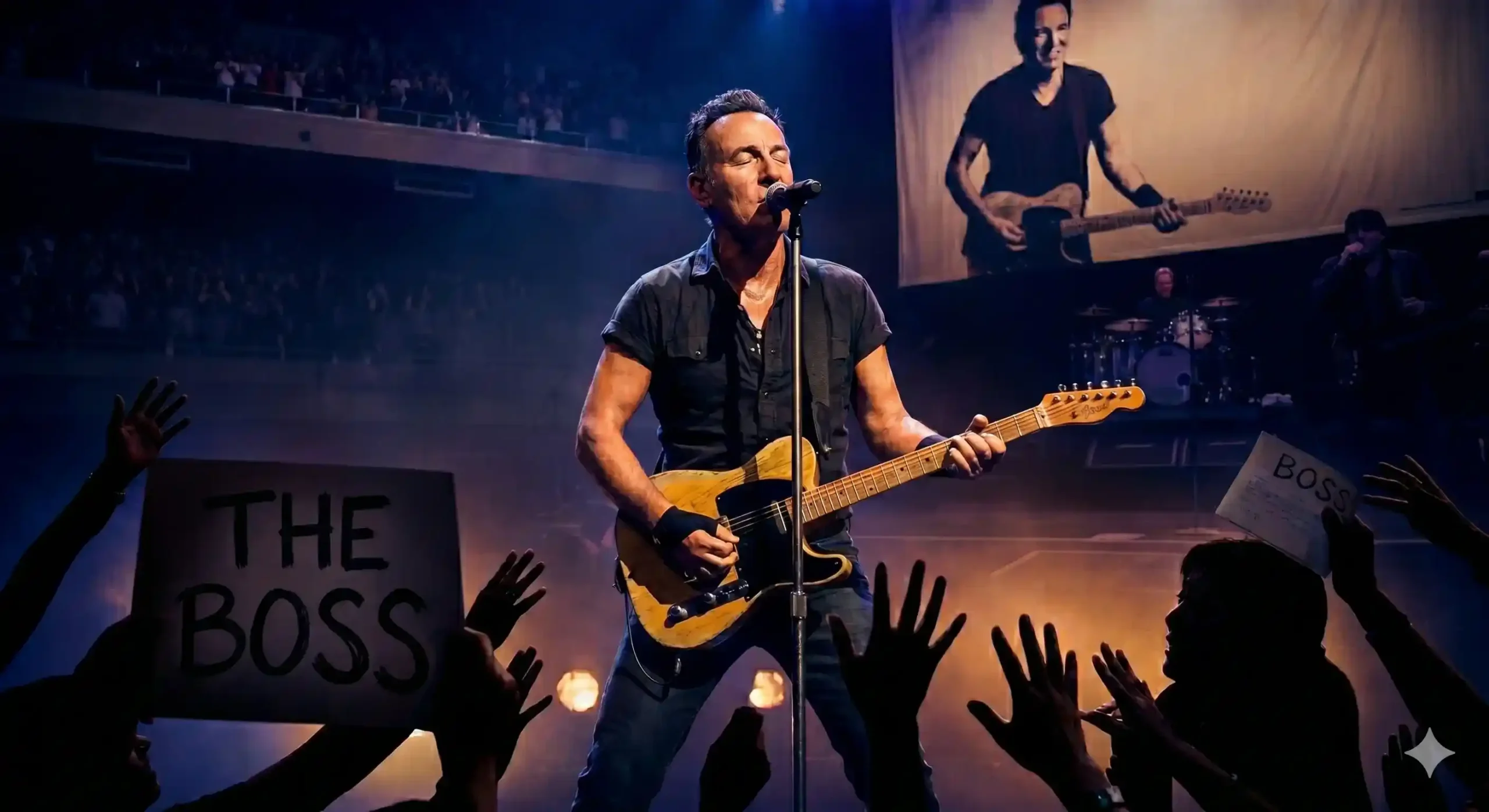
Artist: Bruce Springsteen & The E Street Band
Performance: Live in London, 1975 (Hammersmith Odeon)
📌 Quick Summary
This live footage from the 1975 London show captures the raw energy and passion of the song's original era, showcasing why Springsteen became a global phenomenon.
Solitude Lurking Behind the Lively Days
During my university years, I lived in a tiny apartment in Setagaya, Tokyo, somewhere between Meidaimae and Higashimatsubara. It was a quiet, residential area, slightly removed from the bustle of the student quarters.
My room—a modest four-and-a-half tatami mat space—wasn’t always dark. Friends would gather and laugh, and there was always someone by my side to share the music. There was a genuine sense of “fulfillment” in those small, everyday moments.
However, the moment my friends would leave and I was left alone, the scenery would shift instantly.
By nature, I have a very strong “homing instinct” and have never been particularly resilient against loneliness. The greater the joy of having someone near, the more acutely I felt the silence when it was gone—the feeling of “who am I, really?” creeping in. Staring out the window at the blank wall of the house next door, that sense of drift would quietly amplify.

In those moments, I would naturally reach for the turntable.
I’d drop the needle, and as Roy Bittan’s piano intro began to flow, the heavy silence of the room would start to be rewritten. Bruce’s voice didn’t feel like a hero swooping in to rescue me; it felt more like he was sitting down next to me, quietly saying, “Hey, it’s about time we head out.” There was an incredible sense of comfort in that. While the song played, I could forget my own uncertainty and simply focus on the “road” ahead. For me, “Thunder Road” was a quiet reset button.
A Song for Us, the Ordinary Ones
The lyrics of “Thunder Road” open like a cinematic short film. The slamming of a screen door, a dress swaying—with just a few words, the stifling heat of summer and the restlessness of dusk drift into my small room.
What I love most is the famous line the protagonist delivers to Mary:
“You ain’t a beauty, but hey, you’re alright.”

Technically, that’s quite a rude thing to say. If I had said that to the girl in my room back then, I probably would’ve been laughed at or ignored. But this unpolished, clumsy honesty is exactly where the song’s reality lies.
This isn’t a glossy, Hollywood romance. It’s about realizing, “We aren’t special, we don’t have movie-star looks, and we have no guarantees for the future. But because we’re just ordinary, let’s take a chance on this road together.” It’s an honest, life-sized sincerity.
For someone like me, who would feel weak the moment I was alone, this idea of “starting out even if you’re full of flaws” was incredibly comforting. Bruce wasn’t a hero from a distant world; he was a companion standing on the same ground, clumsily putting an arm around my shoulder.
Running On and Coming Home
Life after graduation wasn’t the dramatic “escape” I had imagined in my four-and-a-half mat room.

Throughout my professional life, I kept my foot on the accelerator, carrying responsibilities and navigating the complexities of organizations. That sense of “drift” I felt in my youth eventually transformed into the pressure of work and the solitude of leadership. Yet, my homing instinct never changed; I was always searching for a place where I could truly feel at peace.
In the middle of those exhausting days, hearing this song would momentarily bring back the air of that old apartment.
Chasing the “Promised Land” meant “success in a distant place” when I was young. But after so many years of experience, it sounds different now. It’s more like a “mental orbit”—a way to reset yourself and return to who you really are, no matter how much the world has bruised you.
The Wordless Roar: What the Saxophone Tells Us
The most beautiful part of “Thunder Road” is how it ends.
After the protagonist declares, “I’m pulling out of here to win,” Bruce’s voice stops. What follows is the emotional tenor sax solo by the late Clarence Clemons.
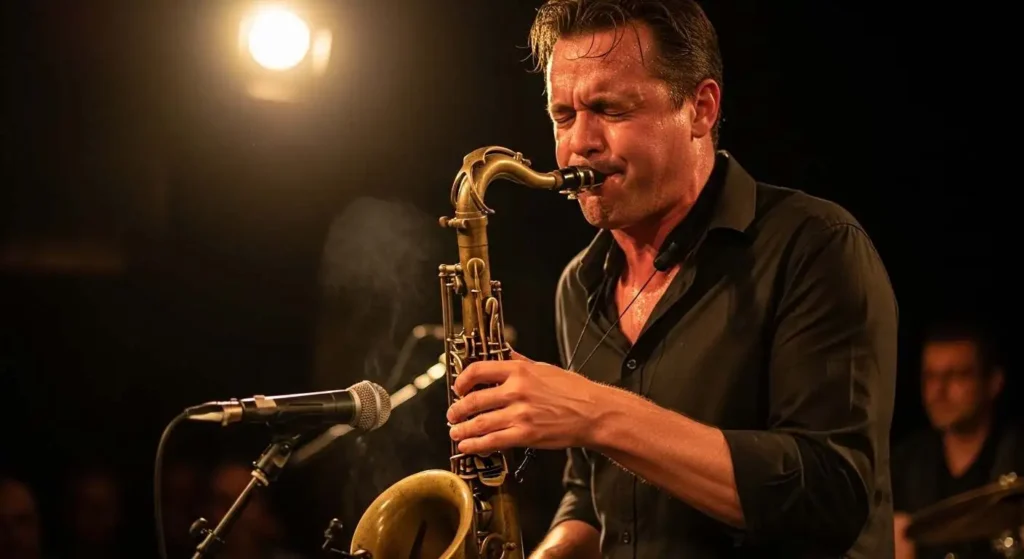
Intertwining with the piano, the sax roars with strength and tenderness. There are no words because the life that lies ahead of that Thunder Road is something too complex and endearing to be explained with simple language. It’s life itself.
No. 13: A Place to Return
I placed this song at No. 13 because it has moved beyond being “a special song” to become a part of my “daily life.”
Rather than a ranking, it’s more like a favorite “rest area” on the long highway of my life. Every time I stop there, I return to neutral and find the energy to grab the steering wheel again for tomorrow. That’s why No. 13—tucked away rather than on a pedestal—feels like the right distance between me and this song.

Even now, I occasionally listen to this song alone. When the harmonica starts, I feel like my twenty-year-old self—the one who shivered a little in that four-and-a-half mat room—is sitting next to me, nodding silently.
“Alright, let’s keep going tomorrow, shall we?”
Springsteen’s voice, with its life-sized warmth, will surely continue to play by my side as I drive on.

音楽ファン同士の交流・リクエストはこちら / Connect & Request Songs Here