🌐 English|🌐 日本語
The Stylistics: Their Story and Musical Journey
- 🎧 Listen to This Article
- No. 6 is “From the Mountain.”
- First, Listen to the Official YouTube Video
- A Conversation with God Begins on a Stormy Mountain
- “Where Has Love Gone?” — God’s Lament
- Polluted Rivers and a Land Stripped of Greenery
- Van McCoy’s Mysterious Musical Landscape
- What Russell’s Falsetto Communicates
- The Song’s Place on the Album Heavy
- A Mission Entrusted at Daybreak
- Final Thoughts
🎧 Listen to This Article
Enjoy a narrated summary of the key points covered in this article.
Listen before reading to discover the story behind “From the Mountain” and what makes this recording so distinctive.
🎵 English Narration
An English audio introduction to the themes and musical highlights of this article.
🎶 Japanese Narration
A Japanese audio introduction to the themes and musical highlights of this article.
Listening first will help you appreciate the song’s spiritual narrative, Van McCoy’s dramatic arrangement, and the beauty of The Stylistics’ vocals.
No. 6 is “From the Mountain.”
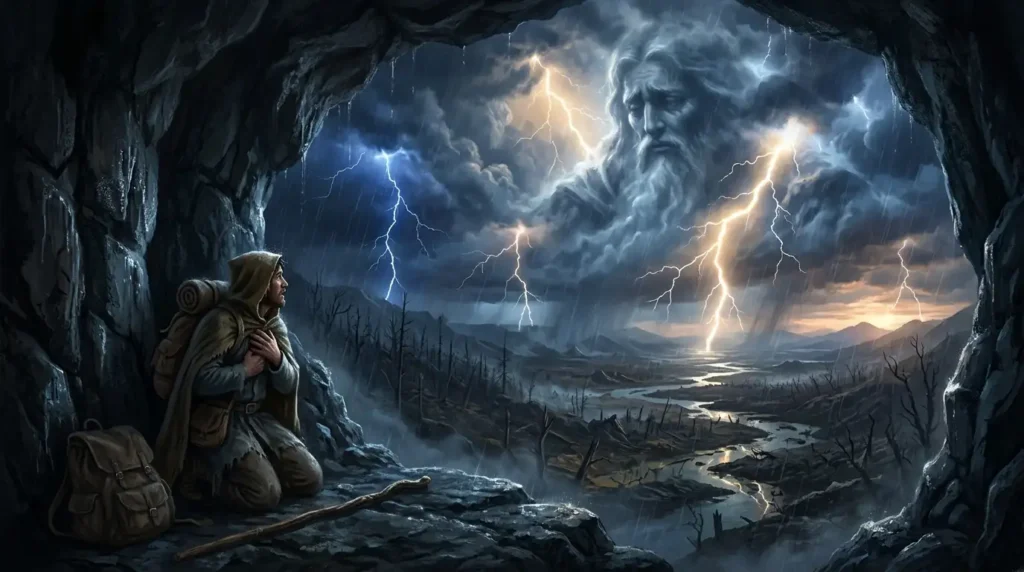
No. 6 in My Personal Best 10: The Stylistics is “From the Mountain.” Released in 1974 as the closing track on the album Heavy, it is an unusual entry in the group’s catalog, using the voice of God to confront human conflict and the destruction of nature.
By this time, The Stylistics had become widely admired for sophisticated love songs, including “You Make Me Feel Brand New.” Yet “From the Mountain” turns away from romance to examine the conduct of humanity itself.
Although it was not a major American chart hit, the song was released as a single in Japan, while its title was used for an album issued in the United Kingdom. A mysterious opening, dramatic melodic development, and Russell Thompkins Jr.’s beautiful voice combine to create something quite different from the group’s best-known recordings.
A Free Interpretation of the Lyrics
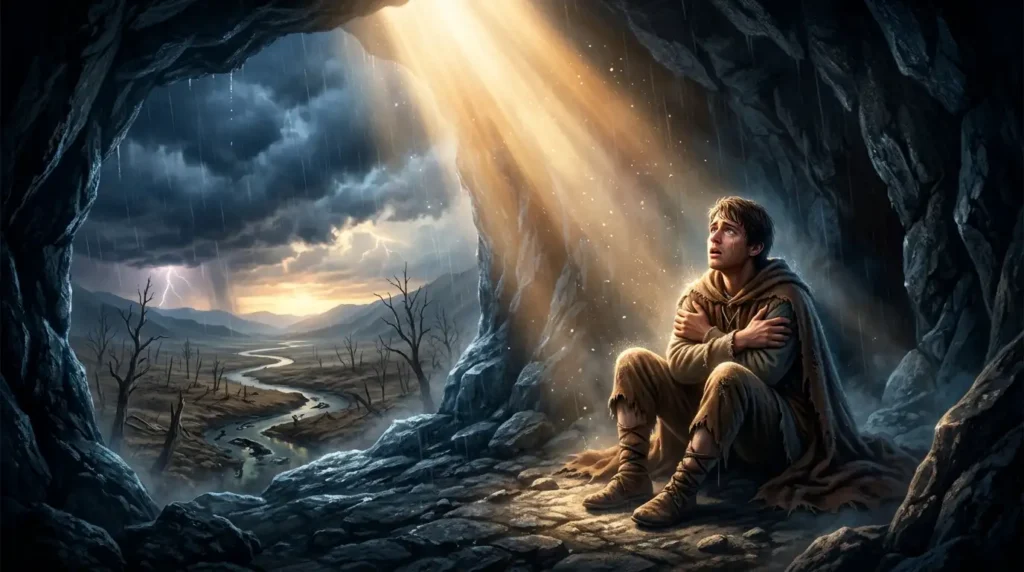
Alone and trembling with fear in a mountain cave, I heard the voice of God amid the thunder.
“Where has love gone? Why do brothers turn against one another and kill?” God asked in sorrow.
Humanity had polluted the rivers and trees, turning once-green lands into places of hunger.
At daybreak, God told me to descend the mountain and return to the people.
“Tell them what they have done. They have wounded my heart deeply.”
First, Listen to the Official YouTube Video
🎵 Official Video Credits
Song: “From the Mountain”
Artist: The Stylistics
Release Year: 1974
Album: Heavy
Written by: Hugo Peretti, Luigi Creatore, and George David Weiss
Produced by: Hugo & Luigi
Arranged and Conducted by: Van McCoy
Channel: The Stylistics (Official Artist Channel)
Video Format: Official Visualizer
🎼 About the Song
Through the story of a man who hears God's voice on a mountain, this song explores human conflict and environmental destruction from a spiritual and social perspective.
Its solemn introduction and dramatic vocal performance reveal a side of The Stylistics rarely heard in their romantic ballads.
A Conversation with God Begins on a Stormy Mountain
The story opens on a mountain in the middle of the night. A storm is raging, and the narrator has taken refuge in a cold cave. There is no sign of anyone nearby. In just a few lines, the lyrics establish an atmosphere of isolation and fear.
Why has he come to the mountain? What is he trying to escape? Nothing is revealed about his past. Without knowing his circumstances, the listener is drawn into an unsettling world filled with thunder.
A Voice Heard Through the Thunder
Lightning flashes across the sky, and the voice of God emerges. The storm is more than a dramatic backdrop. It announces the presence of a power far beyond human control.
What makes the encounter intriguing is that God does not begin by questioning the narrator’s actions. Instead, the voice speaks about the condition of humanity. A story that begins with one person’s suffering suddenly expands to encompass the entire world.
The Significance of the Mountain Setting
Hearing the voice of God on a mountain recalls biblical narratives, particularly those associated with Moses. The pattern is familiar: someone receives a divine message in an isolated place and is then called upon to carry it back to others.
Yet the narrator is not portrayed as a person with extraordinary powers. He enters the story as an ordinary human being, frightened and seeking shelter. The remarkable development is that someone so vulnerable is entrusted with a message of enormous importance.
“Where Has Love Gone?” — God’s Lament
God’s question concerns the disappearance of love from the human world. This is not romantic love. It is the compassion that allows people to care for one another and respect the value of human life.
The Tragedy of Brothers Killing Brothers
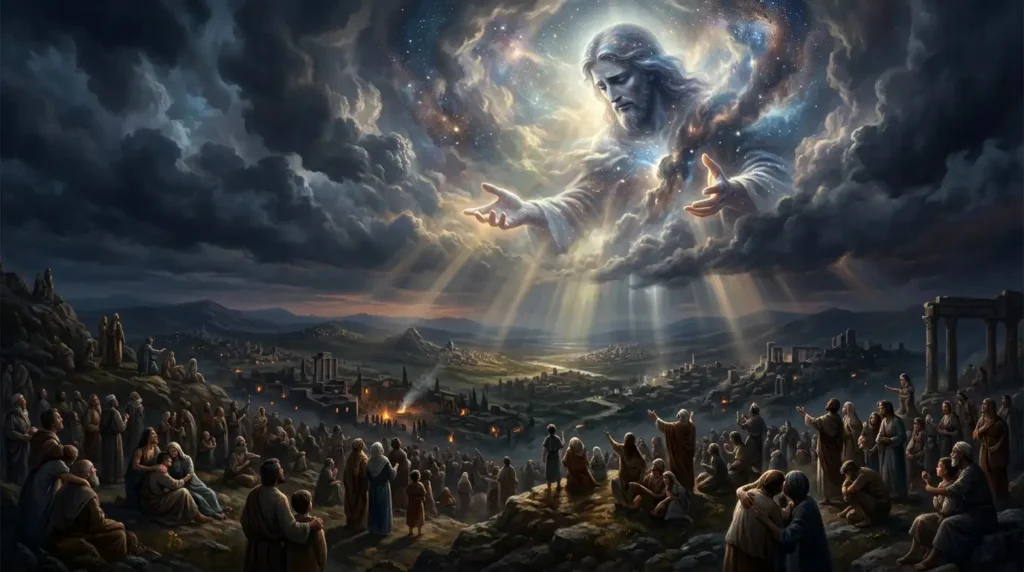
God speaks of human beings as His children and grieves that they are killing one another. By describing those in conflict as brothers, the song makes the senselessness of violence especially painful.
The lyrics identify no particular country or war. Their concern extends beyond conflicts between nations to the violence that has repeatedly troubled human societies throughout history.
The Love Beneath the Anger
God’s words are stern, but they convey more than anger. By calling humanity His children, He reveals an emotional bond that makes their actions all the more distressing. His disappointment cannot be separated from the depth of His love.
Those we love most deeply can also cause us the deepest pain. God’s questions sound less like a declaration of punishment than a heartbreaking appeal from someone who feels that a cherished relationship is being lost.
Polluted Rivers and a Land Stripped of Greenery
The lyrics shift from violence among people to the destruction of the natural world. Rivers and trees have been polluted, while land once covered in greenery has become a place of hunger. The contrast between abundance and devastation is unmistakable.
Two Kinds of Harm Caused by Humanity
Killing other human beings and damaging the environment are different acts. Yet the song places them side by side. Humanity is not only destroying lives; it is also damaging the natural systems on which its own survival depends.
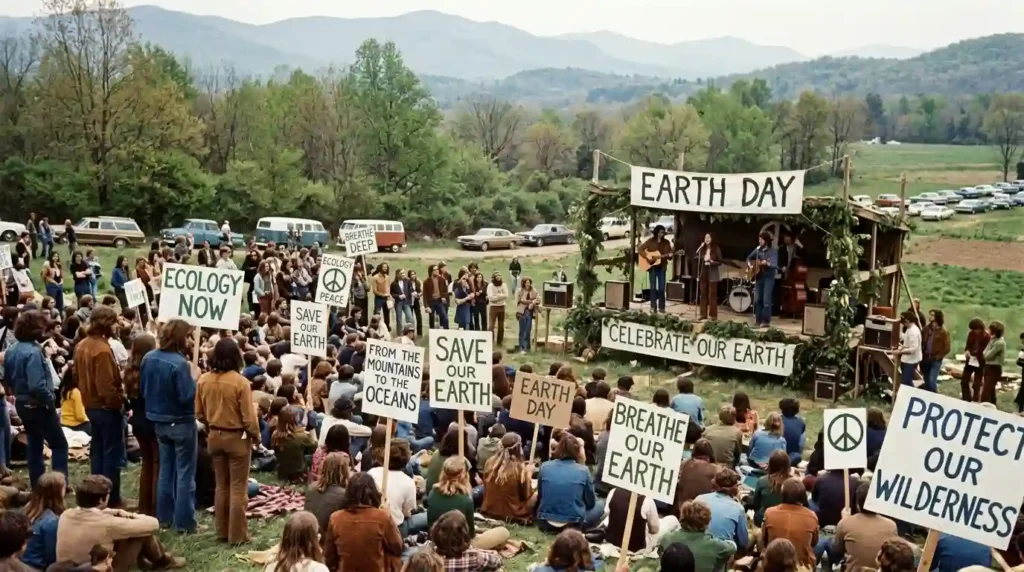
Environmental awareness was growing in the United States during the early 1970s. The first Earth Day took place in 1970, helping bring pollution and conservation into the national conversation. The concerns expressed in this 1974 recording therefore have a meaningful connection to the period in which it appeared.
Environmental Destruction Seen Through God’s Eyes
Environmental problems are often discussed in terms of their effects on human health and daily life. In this song, however, God looks upon the changes taking place on Earth. The pollution of rivers and trees becomes a moral question about humanity’s conduct.
The transformation of fertile land into a place of hunger also emphasizes how closely human survival is tied to the natural world. Although these concerns were expressed more than half a century ago, they remain relevant today.
Van McCoy’s Mysterious Musical Landscape
The appeal of “From the Mountain” cannot be explained through its lyrics alone. The tension of the introduction, the distinctive instrumental colors, and the accompaniment’s changing character turn the narrative into a compelling musical experience.
The Sounds of Harpsichord and Sitar
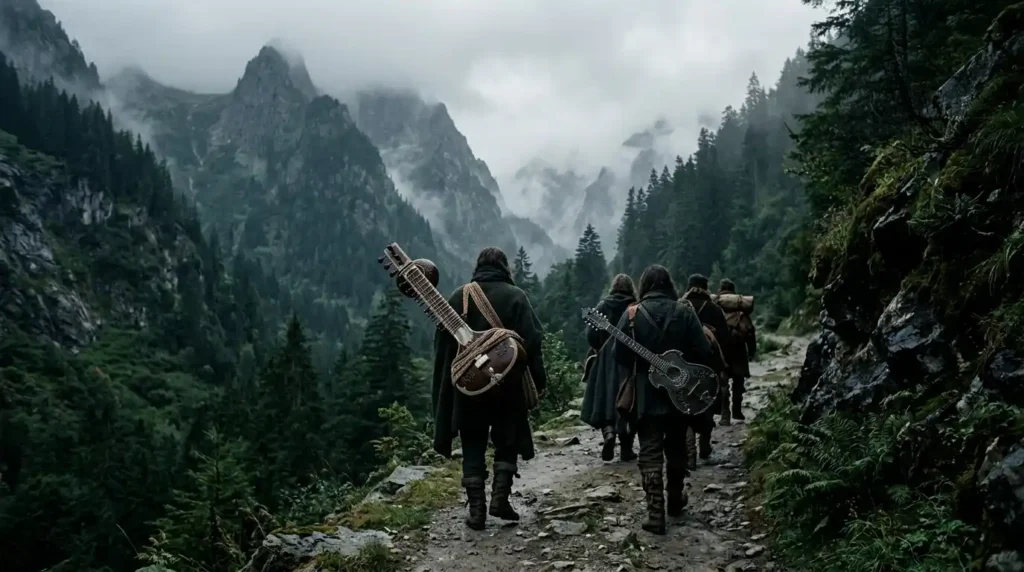
One of the most striking elements of the opening is the combination of sounds reminiscent of a harpsichord and a sitar. The crisp, almost metallic attack of one contrasts with the shimmering resonance of the other, creating an atmosphere unlike the lush, string-driven soul arrangements commonly associated with the group.
These unusual textures suit the narrator’s isolation deep in the mountains and his apprehension about what is to come. The instruments do more than accompany the words; they help the listener imagine the setting itself.
An Arranger Whose Talents Went Far Beyond Disco
Van McCoy, who arranged and conducted the recording, would achieve a major hit the following year with “The Hustle.” Although he is closely associated with disco, his work in soul and ballads demonstrates a much broader musical range.
Here, rather than relying solely on sweeping strings, McCoy combines unusual instrumental colors with a full-bodied accompaniment. His arrangement gives the spiritual narrative a grand scale without overwhelming the vocal performance.
A Careful Balance of Stillness and Tension
The accompaniment does not maintain the same intensity throughout. Changes in instrumental layering and dynamics distinguish moments of solitude from passages in which God’s voice dominates the story.
Rather than depending on literal sound effects to reproduce thunder and lightning, the arrangement builds tension through melody and instrumental movement. In roughly four minutes, the music carries a complete dramatic narrative from its unsettling beginning to its unresolved conclusion.
What Russell’s Falsetto Communicates
Russell Thompkins Jr.’s falsetto is one of the defining sounds of The Stylistics. Its sweet, soaring quality has made countless love songs memorable. In “From the Mountain,” however, that same voice is used to convey a far more serious subject.
A Beautiful Voice Carrying Troubling Words
The lyrics deal with loneliness, fear, violence, and environmental destruction. Yet Russell does not express their weight by shouting or forcing anger into his performance. He maintains the fluidity of the melody while allowing the seriousness of the words to come through.
The passages in which God questions the disappearance of love are especially affecting. As the questions return, the beauty of Russell’s upper register does not soften the sadness. Instead, it makes the emotional appeal feel more urgent.
A Performance That Never Becomes a Sermon
A song with a social message can sometimes sound like a lecture, depending on how it is performed. In “From the Mountain,” Russell’s voice moves naturally with the melody, inviting the listener into the story rather than simply delivering a moral judgment.
Serious questions, expressed through an exquisitely beautiful voice. That contrast gives the recording its distinctive character. The vocal qualities that made The Stylistics famous for romantic music prove equally effective in a very different setting.
The Song’s Place on the Album Heavy
“From the Mountain” closes the nine-track 1974 album Heavy. After songs such as “The Miracle,” “Star on a TV Show,” and “Heavy Fallin’ Out,” the album ends with a spiritual narrative unlike anything that precedes it.
Production by Hugo & Luigi
The album was produced by Hugo Peretti and Luigi Creatore, the team known as Hugo & Luigi. Both are also credited as writers of “From the Mountain,” alongside George David Weiss.
This production team differed from the Thom Bell-led approach that had shaped the group’s early successes. Nevertheless, the recordings continued to showcase the group’s vocal strengths while expanding their musical range. “From the Mountain” is a particularly revealing example of that development.
A Japanese Single and a British Album
“From the Mountain” was released as a single in Japan, backed with “Thank You Baby.” In the United Kingdom, an album containing the same tracks as Heavy was issued under the title From the Mountains.
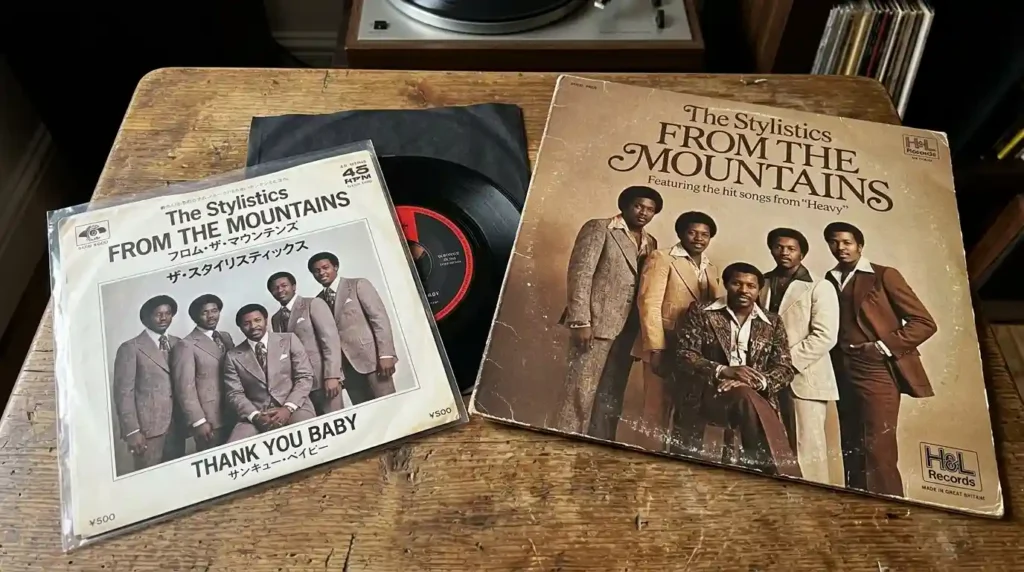
These different releases show that the recording received attention beyond its original placement on an album. Although it did not achieve the chart success of the group’s signature hits, it remains an important piece of their broader musical story.
A Mission Entrusted at Daybreak
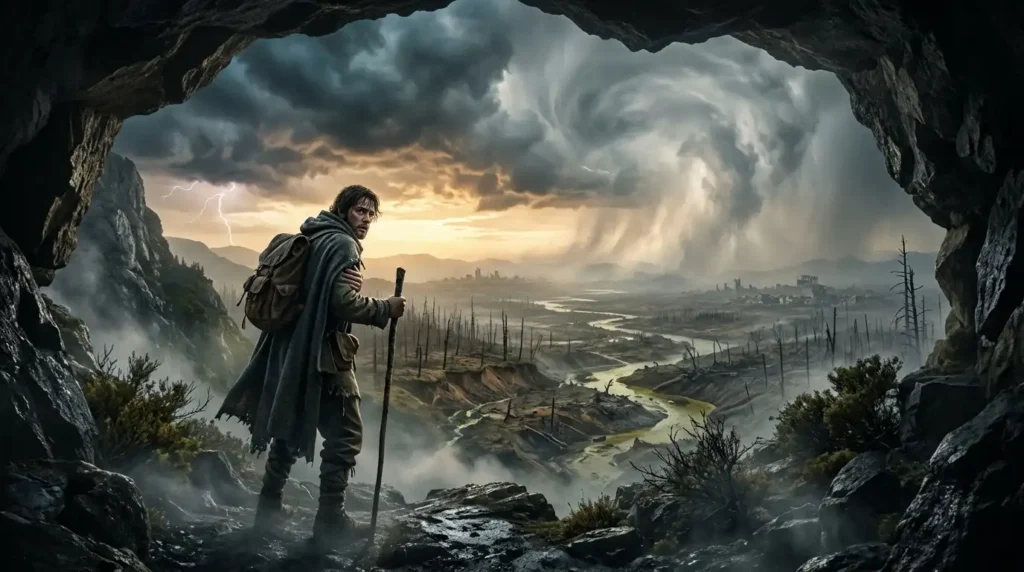
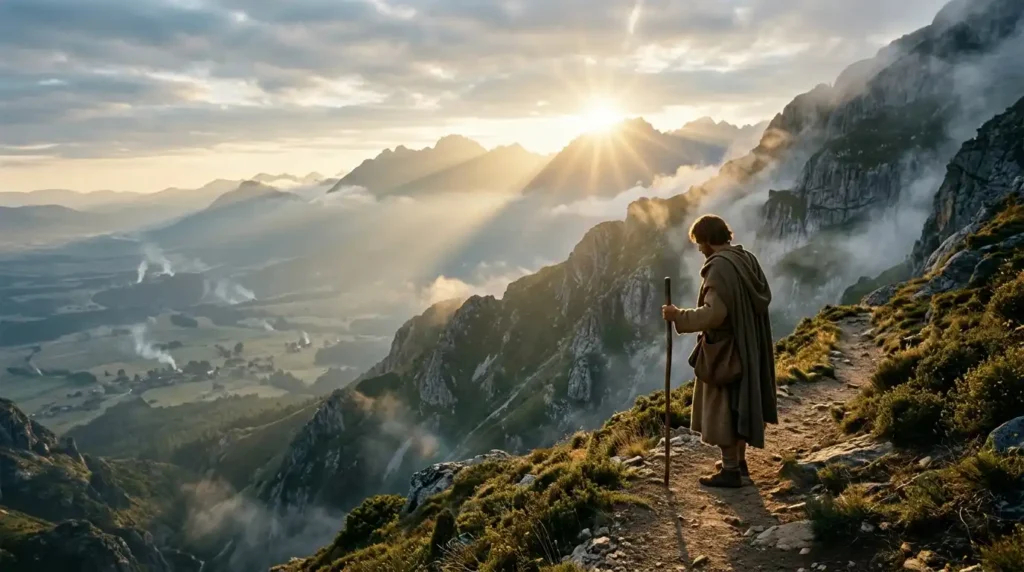
Near the end of the story, morning arrives on the mountain. God instructs the narrator to descend and return to the people. The man who spent the night hiding in fear is now given a responsibility that requires him to face the world again.
God’s Final Message
The message entrusted to the narrator is that humanity’s actions have deeply wounded God’s heart. It is neither a proclamation of punishment nor a detailed plan for solving the world’s problems.
In response to human wrongdoing, God reveals profound sorrow. The narrator’s mission is to carry that sorrow back to the people whose actions caused it.
A Story Without a Final Resolution
We are never told what happens after the narrator descends the mountain. Do the people accept God’s message? Does human society change? The lyrics provide no answers.
Perhaps that is why God’s questions continue to resonate beyond the story. Why do human beings fight one another and damage the natural world? The responsibility of considering those questions is left with the listener.
Final Thoughts
“From the Mountain” reveals a side of The Stylistics quite different from their celebrated love songs. Drawing on a spiritual narrative, it becomes a compelling musical work through Van McCoy’s arrangement and Russell Thompkins Jr.’s remarkable vocal performance.
What stands out most is the combination of weighty instrumentation and delicate falsetto. The seriousness of the subject never overwhelms the melodic beauty that defines the group’s sound.
A story of God’s sorrow, carried by the unmistakable elegance of The Stylistics. It is an unexpected combination that makes this distinctive recording rewarding to revisit.

音楽ファン同士の交流・リクエストはこちら / Connect & Request Songs Here