🌐 English|🌐 日本語
The Stylistics: Their Story and Musical Journey
- 🎧 Listen to This Article
- No. 1: “Sixteen Bars”
- First, Listen to the Official YouTube Video
- The Idea Behind Sixteen Bars
- Flowers, Sunshine, Oceans, and Shorelines: Love Through Nature
- A Thousand Violins and a Never-Ending Symphony
- The Songwriters and Producers Behind The Stylistics in 1976
- A Celebration of Love Rather Than Heartbreak
- “Sixteen Bars” and Its Reception in Japan
- Final Thoughts
🎧 Listen to This Article
Enjoy a convenient audio overview of the key points covered in this article.
Listen before reading to discover the appeal of “Sixteen Bars” and get a sense of what the article explores.
🎵 English Narration
An English audio introduction to the main points of this article.
🎶 Japanese Narration
A Japanese audio introduction to the main points of this article.
Listening first will help you appreciate the lyrics, musical qualities, and central themes of “Sixteen Bars” before exploring the full article.
No. 1: “Sixteen Bars”
No. 1 in My Personal Best 10: The Stylistics is “Sixteen Bars.”
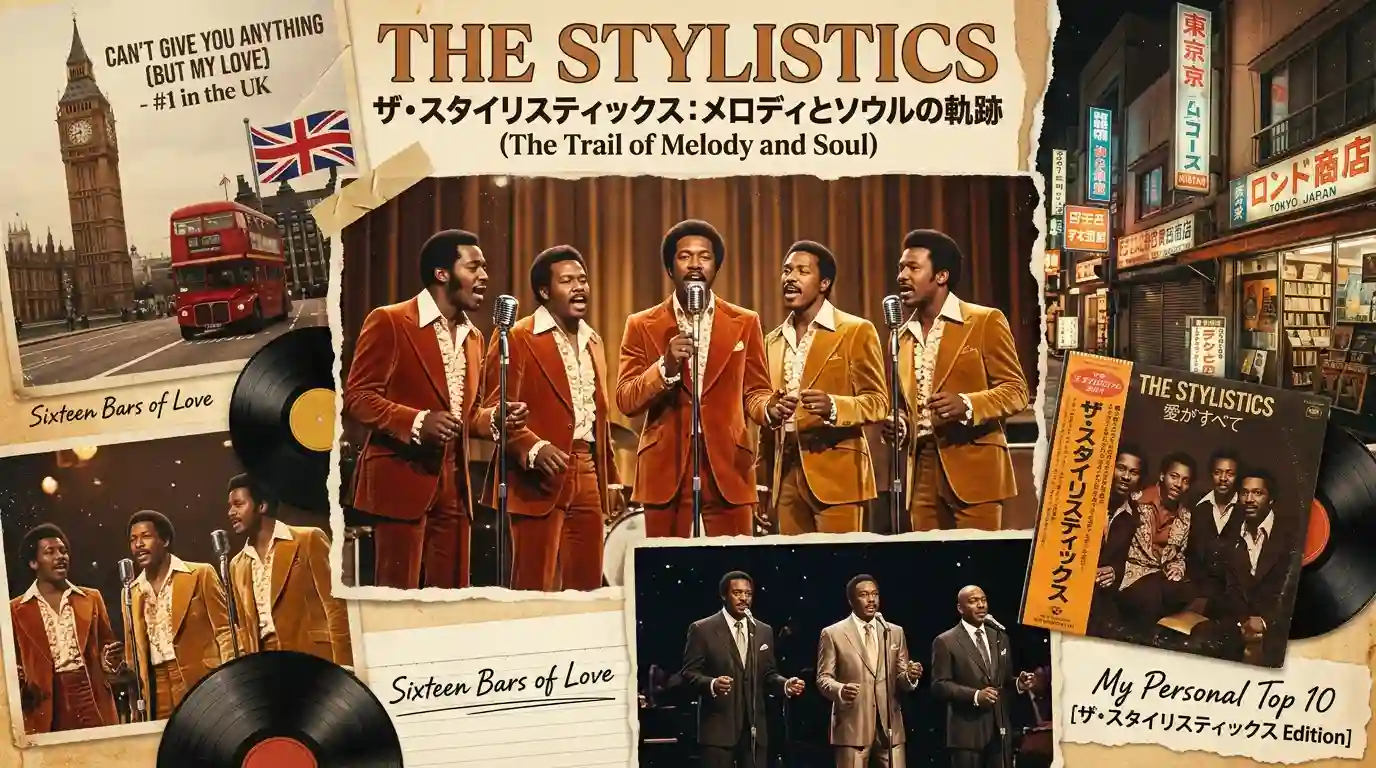
Featured on their 1976 album Fabulous and released as a single that same year, the song reached No. 7 on the UK Singles Chart. Following their British chart-topping success with “Can’t Give You Anything (But My Love)” in 1975, The Stylistics continued to enjoy considerable popularity.
In fact, “Sixteen Bars” was the very first song that introduced me to The Stylistics. I can’t remember exactly when I first heard it. Was it shortly after entering university in Tokyo, or just before graduating from high school in 1977?
What I do remember clearly is the impression it made on me. That soaring horn introduction, followed by a beautiful melody touched with melancholy. The combination immediately caught my attention. It marked the beginning of my connection with The Stylistics.
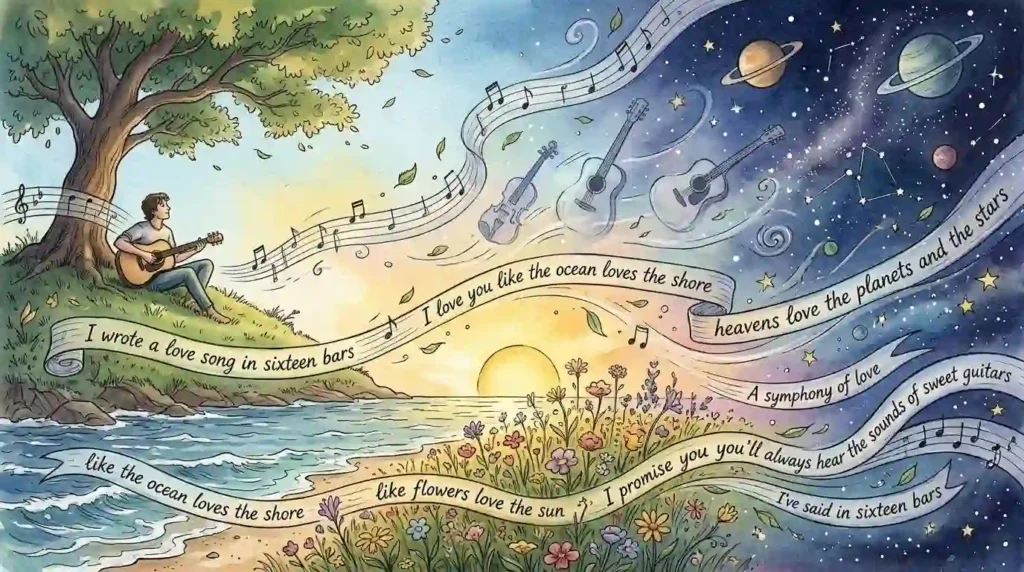
The song’s narrator expresses his feelings through a short love song, drawing on images of flowers, sunshine, oceans, and stars. From the modest framework of sixteen musical bars, his declaration of love expands toward the heavens. That imaginative contrast is one of the song’s most appealing qualities.
A Free Interpretation of the Lyrics
I've poured my love for you into a little song of sixteen bars.
Like a flower reaching for the sun, or the ocean embracing the shore, my heart belongs to you.
With a thousand violins and the gentle sound of guitars, I want to play a symphony of love that never ends.
I want the whole world to know just how deeply I've fallen for you.
It may be only sixteen bars, but everything I feel for you is in this song.
First, Listen to the Official YouTube Video
Credits
🎵 The Stylistics – “Sixteen Bars”
Video courtesy of The Stylistics (Official YouTube Artist Channel)
Two-Line Commentary
A romantic song that captures a man's feelings for the woman he loves in just sixteen bars of music.
Through images of flowers, sunshine, oceans, and shorelines, it expresses an affection that seems to have no end.
The Idea Behind Sixteen Bars
Many love songs have titles that directly address a romantic partner or describe an emotional state. “Sixteen Bars,” however, takes its name from a musical structure rather than a feeling.
The narrator tells us that he has written a love song containing everything he wants to say to someone special. The act of creating music for a loved one becomes a central theme of the song.

What Are Sixteen Bars in Music?
A bar, also called a measure, is a unit that organizes musical beats into a regular pattern. In common time, for example, a measure typically contains four beats. In popular music, phrases of eight or sixteen bars frequently form recognizable musical sections.
However, the title “Sixteen Bars” does not mean that the entire recording lasts only sixteen measures. The phrase refers to the love song the narrator has written. What matters is his conviction that he has expressed everything he needs to say within that limited musical space.
Choosing a Short Song to Express Love
A long letter can describe shared memories, important experiences, and hopes for the future. A shorter message, on the other hand, often reveals what matters most to the person writing it.
The narrator chooses to communicate his feelings through melody. There is something intimate about expressing affection in music rather than through ordinary conversation.

Flowers, Sunshine, Oceans, and Shorelines: Love Through Nature
The lyrics bring together flowers and sunshine, oceans and shorelines, and the heavens with their planets and stars. Each pairing suggests a different kind of relationship. Examining these images reveals the narrator’s idealized vision of love.
Like a Flower Reaching for the Sun
Sunlight is essential to the growth of most plants. By comparing his feelings to the relationship between a flower and the sun, the narrator suggests that the woman he loves is indispensable to his life.
This is not presented as a desire to possess or control someone. Instead, his heart turns toward her as naturally as a flower reaches for light. The image conveys an uncomplicated, heartfelt attraction.
The Ocean and the Shore: A Familiar Bond
Waves approach the shore and then return to the sea. Their movement continues in an endless cycle.
Romantic relationships also develop through repeated moments of everyday life: conversations, thoughtful gestures, and quiet acts of consideration. The ocean-and-shore image suggests a bond sustained by familiarity rather than extraordinary events.

From the Earth to the Stars
The lyrics eventually turn toward the heavens, planets, and stars. The imagery moves from familiar earthly surroundings to the vastness of space. As the scale expands, the narrator’s feelings seem to reach beyond ordinary experience.
Of course, human relationships do not follow the fixed patterns of nature. Both partners have their own wishes, and their feelings may change over time. These comparisons are best understood as expressions of the narrator’s romantic ideal rather than literal descriptions of love.
A Thousand Violins and a Never-Ending Symphony
After the images drawn from nature, the lyrics introduce musical instruments, including violins and guitars. The narrator imagines a magnificent performance for his beloved and promises a symphony of love that will never end.
The reference to a thousand violins is hardly a literal promise to assemble an orchestra of that size. Rather, the imagined ensemble conveys the richness of his emotions.
A Song About Writing a Song
“Sixteen Bars” has an intriguing narrative structure. The narrator describes a love song he has written, while The Stylistics perform a song about that very experience.

Listeners hear his declaration while experiencing the musical world he imagines. When violins and guitars are mentioned in the lyrics, attention naturally shifts toward the instruments in the actual arrangement.
The music described within the lyrics overlaps with the music coming from the recording. This layered structure gives the song a distinctive charm.
Grand Romantic Language, an Approachable Melody
A thousand violins and an everlasting symphony might sound extravagant when considered on their own. Yet the song itself has a melody that feels natural and easy to sing along with.
Its combination of elegance and warmth allows even the most extravagant declarations of affection to feel sincere.
The Songwriters and Producers Behind The Stylistics in 1976
The album Fabulous, which includes “Sixteen Bars,” reflects the musical direction The Stylistics were exploring in 1976. Their distinctive vocal style remained intact, while the arrangements incorporated elements associated with contemporary pop and dance music.
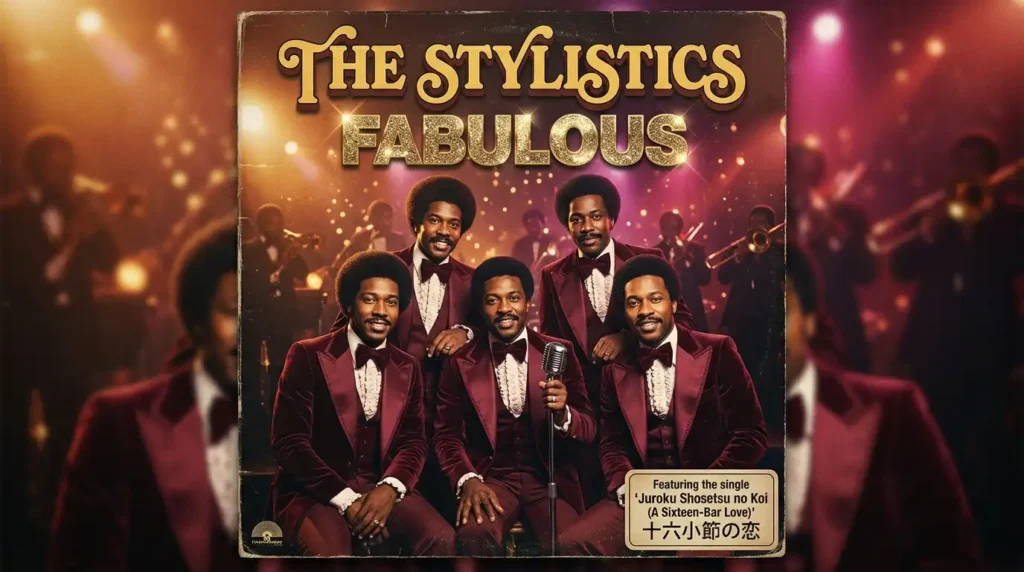
The song was written by Hugo Peretti, Luigi Creatore, and George David Weiss. Production was handled by Hugo & Luigi.
This songwriting and production team contributed to numerous Stylistics recordings during the mid-1970s. Their work explored a direction distinct from the Philadelphia soul sound associated with the group’s earlier collaborations with Thom Bell, while preserving the qualities that made The Stylistics recognizable.
The Horn Introduction That Makes an Immediate Impression
One of the first things that stands out is the bright, soaring horn introduction. Beneath its cheerful sound lies a melody with a slightly nostalgic character, establishing the song’s atmosphere before the vocals begin.
To Japanese listeners, the introduction may even recall certain qualities of traditional Japanese popular songs, known as kayōkyoku. Its melodic phrasing has a familiarity that can appeal to listeners who are not especially knowledgeable about 1970s Western pop.
Despite the prominent horns, the arrangement never becomes excessively showy. Strings and other instruments enter over a steady rhythmic foundation, supporting the main melody without overwhelming it.
The Intimacy of Russell Thompkins Jr.’s Voice
Russell Thompkins Jr.’s soft, high-pitched voice is one of the song’s defining attractions. What deserves particular attention, however, is not simply his vocal range but the way he shapes the words around the melody.
As the lyrics move through their images of nature, the phrases flow smoothly from one scene to another. When the narrator returns to the love song he has written, the central idea comes clearly into focus.
Russell avoids placing unnecessary emphasis on individual words, allowing the melody to carry the meaning. Even the more elaborate comparisons sound conversational rather than overly dramatic.
The Harmony of the Backing Vocals
The blending of several voices transforms an intimate declaration into something musically expansive.
Rather than competing for attention, the harmonies support the lead vocal. Even when the instrumental arrangement becomes fuller, the melody remains clearly defined. That careful balance contributes greatly to the song’s easygoing appeal.
A Celebration of Love Rather Than Heartbreak
Many of The Stylistics’ best-known songs explore complicated emotions, including separation, regret, and longing for someone who is no longer present.
The narrator of “Sixteen Bars,” however, is not portrayed as struggling with heartbreak. Instead, he wants to express his affection through music and let the entire world know how he feels.
The lyrics do not reveal how the woman responds or what the future holds for the couple. The narrator’s immediate concern is finding a way to communicate the emotions he feels in the present.
The Happiness of Creating Something for Someone
People sometimes write letters, take photographs, or make gifts for someone they love. Imagining the recipient’s happiness can be rewarding in itself, quite apart from the moment the gift is finally presented.
“Sixteen Bars” captures something of that creative pleasure. There is happiness not only in loving someone, but also in finding a way to express that love. The song can be heard as a celebration of that simple human experience.
“Sixteen Bars” and Its Reception in Japan
The original English title, “Sixteen Bars,” refers directly to a musical unit. In Japan, however, the song was released under the title Jūroku Shōsetsu no Koi, meaning “Love in Sixteen Bars.” By adding the word “love,” the Japanese title made the romantic subject immediately apparent.
A Japanese single was released in 1976, with “Jenny” on the B-side. The pairing differed from that of the British release.
The Japanese title connects the technical concept of sixteen measures with the emotional subject of the song. It preserves the distinctive idea behind the original while making the theme accessible to Japanese listeners.
During the 1970s, Western popular music reached a wide audience in Japan through radio broadcasts and records. Sometimes the exact circumstances of hearing a song fade from memory, while its melody remains remarkably clear.

Final Thoughts
“Sixteen Bars” brings together images from nature, the grandeur of an imagined orchestra, and a simple musical number to create a memorable love song. Its horn introduction, Russell’s distinctive voice, and elegant string arrangement give the recording a character all its own.
The song also holds a special place in my memory because it introduced me to The Stylistics. Whether I first heard it near the end of high school or at the beginning of university life in Tokyo, the details have become blurred. Yet the beauty I discovered in that first listening has never faded.
How much love can someone express in just sixteen bars?
“Sixteen Bars” turns that question into a beautiful piece of music. For me, it remains an unforgettable song—and the beginning of a lasting appreciation for The Stylistics.
音楽ファン同士の交流・リクエストはこちら / Connect & Request Songs Here