- 🎧 Listen to This Article
- Today Is Kentaro Shimizu’s Birthday — Featuring “Shitsuren Restaurant” (Heartbreak Restaurant)
- First, Listen to Kentaro Shimizu Sing “Shitsuren Restaurant”
- Heartbroken? Come Right In! — The Strange World of Heartbreak Restaurant
- 1976 — When Japanese Folk and Pop Music Were Changing
- Why Is This Melody So Hard to Forget?
- The Last Man at the Restaurant — A Surprise Ending
- What If Heartbreak Restaurant Really Existed?
- Listening Again, 50 Years Later
🎧 Listen to This Article
Enjoy a narrated introduction to the highlights of this article.
Before reading, listen to discover the charm of Kentaro Shimizu’s “Shitsuren Restaurant” (Heartbreak Restaurant) and get a feel for the story behind the song.
🎵 Japanese Narration
Listen to an introduction to this article in Japanese.
🎶 English Narration
Listen to an introduction to this article in English.
Listening first will help you appreciate the atmosphere of “Heartbreak Restaurant” and the main themes explored in this article.
Today Is Kentaro Shimizu’s Birthday — Featuring “Shitsuren Restaurant” (Heartbreak Restaurant)
October 11 marks the birthday of Japanese singer and actor Kentaro Shimizu. Born in 1952 in Kitakyushu, Fukuoka Prefecture, he is affectionately known as “Shimiken.” He turns 74 in 2026.
Shimizu first attracted attention through appearances on the youth-oriented television program Ginza NOW! On November 21, 1976, he made his recording debut with “Shitsuren Restaurant” (Heartbreak Restaurant), released by CBS/Sony. He was 24 years old.
With a guitar in his hands and an intense gaze, he looked quite different from the clean-cut male idols of the day. There was something rough-edged about him, with a distinctly rebellious streak. Yet his powerful voice also revealed a surprising sensitivity. That combination quickly captured the attention of young listeners.

By 1977, his popularity had grown so much that his closely cropped hairstyle became a trend known as the “Kentaro Cut.” His follow-up single, “Kaeranai / Koibito yo” (I Won’t Return / My Love), also reached No. 1 on Japan’s Oricon weekly singles chart. Other releases included “Enryo Suru na yo” and “Nakimushi.”
That same year, he won the Best New Artist Award at the 19th Japan Record Awards and made his first appearance on the 28th NHK Kohaku Uta Gassen, Japan’s prestigious year-end music program. In little more than a year, he had become a major star.
He later pursued an acting career, but repeated arrests involving drugs interrupted his work in entertainment on several occasions.
His life has been marked by both remarkable success and serious setbacks. Nevertheless, his contribution to the Japanese music scene of the late 1970s remains an important part of its history.
Today’s Featured Song: “Shitsuren Restaurant” (Heartbreak Restaurant)
Released on November 21, 1976, “Shitsuren Restaurant” was written, composed, and arranged by Hiro Tsunoda, a drummer, singer, and songwriter.
In 1977, the single spent five consecutive weeks at No. 1 on the Oricon weekly chart. It remained on the chart for 28 weeks and sold an estimated 628,000 copies — an extraordinary achievement for a debut single.
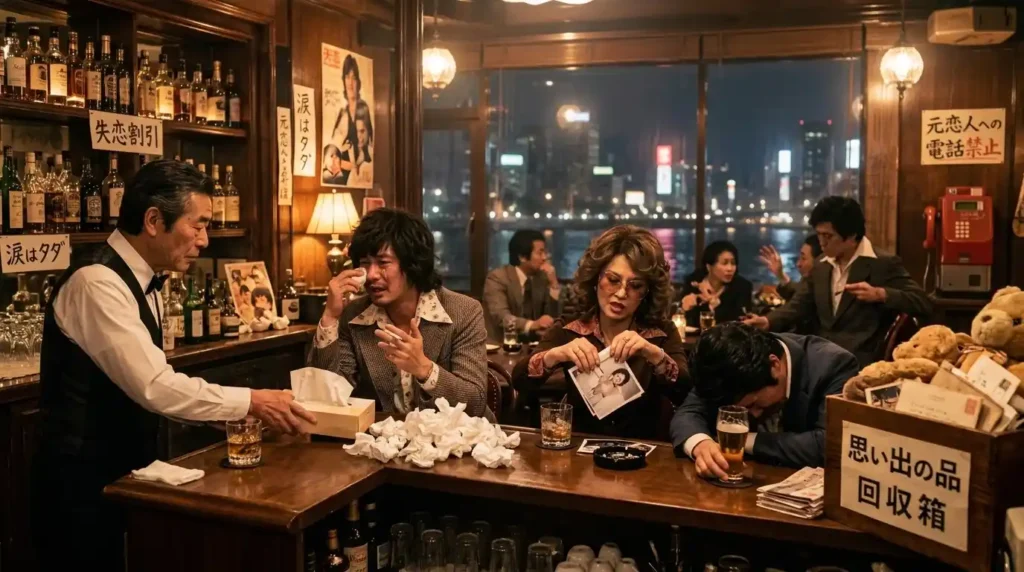
The song takes place in an unusual restaurant where people gather after having their hearts broken. Through its colorful characters, it explores human vulnerability, wounded pride, and the absurdities of love with a wonderfully playful sense of humor.
My Interpretation of the Lyrics
Once again tonight, men with broken hearts gather at this little restaurant.
They try to laugh and act tough, but memories of the women they loved still hurt.
Bartender, make me a special cocktail — something strong enough to wash away my tears and regrets.
As I listen to someone else's troubles, my own heart slowly begins to mend.
But by the time I finish my last drink, I find myself thinking of her all over again.
💡 You might also like: View the original Japanese lyrics (External site)
If the lyrics are available only in Japanese, you can use your browser’s translation feature or an AI translation tool to understand their general meaning.
First, Listen to Kentaro Shimizu Sing “Shitsuren Restaurant”
Note: This is not an official video. Click the image below to watch the performance on YouTube.
When I First Heard This Song… ♫
| My Age | Elementary | Junior High | High School | University | 20s | 30s | 40s | 50s | 60+ |
| Release Year | 1976 | ||||||||
| When I Heard It | ● |
I think I first heard this song sometime between late 1976 and early 1977. I was in my final year of high school, preparing to leave my hometown in Oita and move to Tokyo for university the following spring.
Among all the hits playing on radio and television, “Shitsuren Restaurant” stood out. The idea of a restaurant for people suffering from heartbreak was intriguing, and Shimizu’s rugged, masculine image seemed unusually grown-up to me as a teenager.
The melody, Kentaro’s slightly raspy voice, the lyrics, the rhythm — every single element hit the mark for me.
Heartbroken? Come Right In! — The Strange World of Heartbreak Restaurant
A Place Where Nobody Has to Hide Their Tears
What kind of place do you imagine when you hear the name “Heartbreak Restaurant”? Most restaurants attract customers with delicious food or a pleasant atmosphere. This one, however, welcomes people whose hearts have been broken.
There are handkerchiefs for those who need to cry and comfortable chairs for weary souls. The idea is to fill the emptiness left by lost love with a satisfying meal. What an unusual business concept! If such a restaurant really existed, customers might start discussing their relationship problems before even ordering dinner.
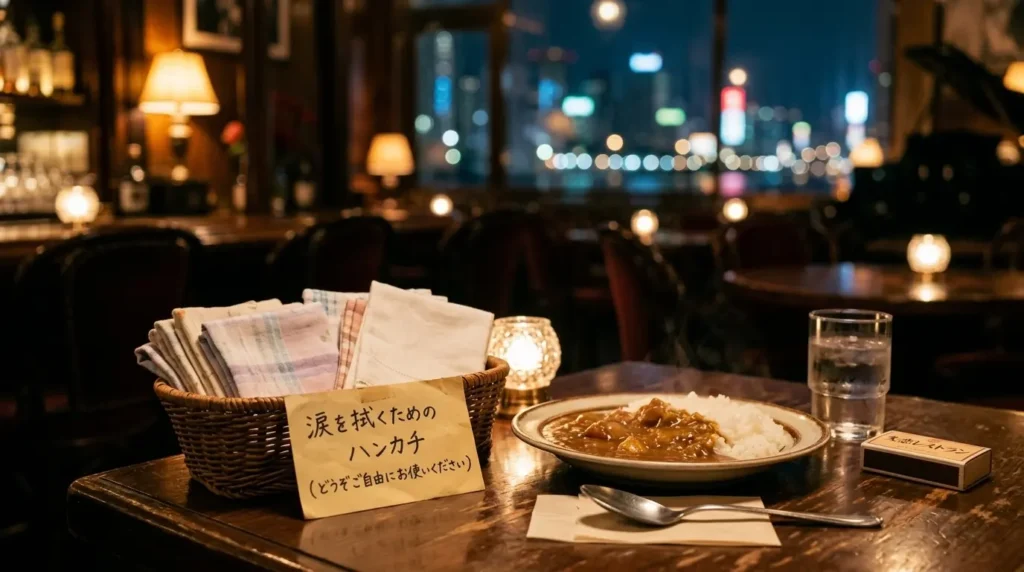
Still, I rather like the idea. Immediately after a breakup, you may want someone to listen, yet explaining every painful detail can be exhausting.
Here, nobody would find it strange if you sat quietly over a meal with a miserable expression. A place where you didn’t have to pretend everything was fine might make a difficult evening a little easier.
The Clown and the Magician — The Irony Behind the Characters
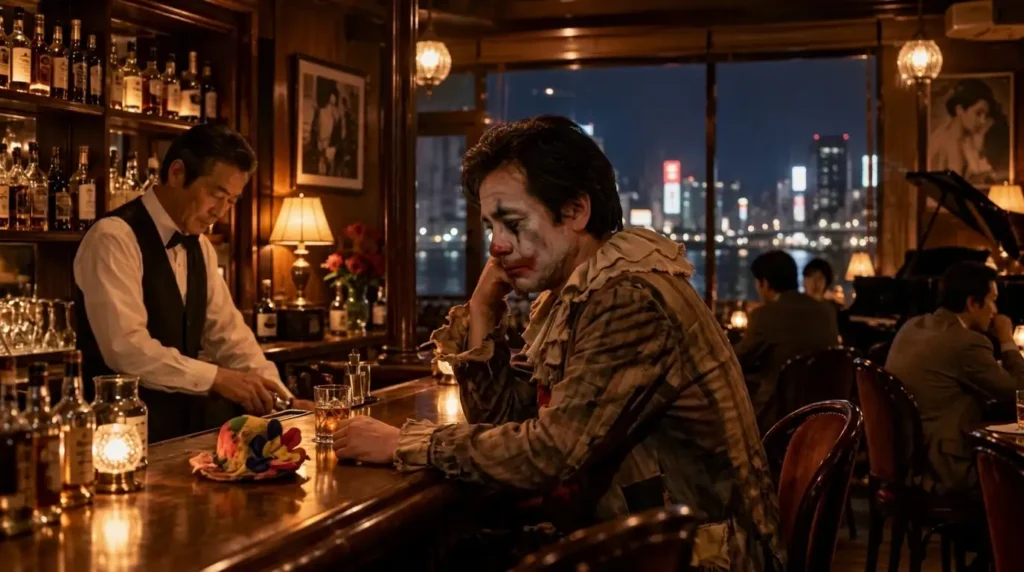
One of the cleverest features of the lyrics is the choice of characters. One is a clown, the other a magician. Both make their living by entertaining people.
The Man Who Makes Everyone Laugh Can No Longer Smile
A clown’s job is to make an audience laugh. Yet after being betrayed by the woman he loved, this particular clown can no longer find a reason to smile himself.
He may perform with an exaggerated grin onstage while carrying deep sadness in his private life. Sometimes, the people who are best at cheering up others find it hardest to talk about their own troubles. The choice of a clown captures that contradiction beautifully.
Even a Magician Cannot Bring Back Lost Love
The magician is equally unfortunate. Onstage, he can make things disappear and reappear. But there is one thing he cannot bring back: the woman he has lost. No matter how impressive his tricks, he cannot control another person’s feelings.
If a magic trick could bring back an ex-lover, there would probably be far fewer broken hearts in the world.
Two men who can entertain an audience are powerless when it comes to their own love lives. That contrast gives the lyrics their distinctive combination of irony and humor.
1976 — When Japanese Folk and Pop Music Were Changing
Looking Back at the Hits of 1976
The year “Shitsuren Restaurant” was released was a fascinating period in Japanese popular music. Momoe Yamaguchi had a hit with “Yokosuka Story,” Hiromi Ohta with “Momen no Handkerchief” (Cotton Handkerchief), and Harumi Miyako with “Kita no Yado Kara” (From an Inn in the North).
That same year, Pink Lady made their debut with “Pepper Keibu,” while Koichi Morita & Top Gallants released “Seishun Jidai” (The Days of Youth).
Meanwhile, singer-songwriters such as Takuro Yoshida, Yosui Inoue, and Yumi Arai were becoming increasingly influential. Traditional Japanese pop, folk, rock, and the emerging “new music” movement existed side by side, with artists borrowing ideas from one another.
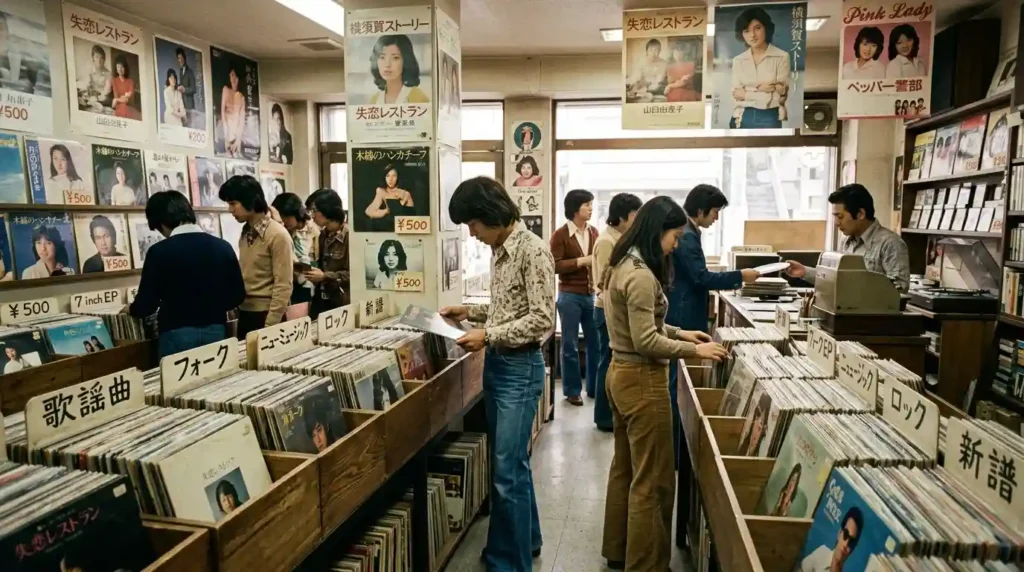
Shimizu’s debut single did not fit neatly into any one category. Its melody was accessible in the tradition of Japanese pop, but the instrumental backing had a distinctly Western-influenced groove. That mixture sounded fresh at the time.
When Television and Radio Made the Hits
In those days, hit songs spread across Japan mainly through television music shows and radio countdown programs. There were no smartphones offering instant access to practically any song.
You either bought the record or waited for the next broadcast. Many listeners recorded their favorite songs onto cassette tapes and played them repeatedly. Television appearances also helped turn a singer’s face, clothing, and hairstyle into recognizable symbols.
Shimizu’s striking appearance certainly benefited from that environment. Released in November 1976, his debut single continued gaining popularity into the following year, eventually becoming a major hit.
Hiro Tsunoda’s Distinctive Musical Approach
Hiro Tsunoda, who wrote and composed the song, was already well known as a skilled drummer. In 1971, he released his own recording of “Mary Jane,” a song reflecting his strong affinity for soul and rock.
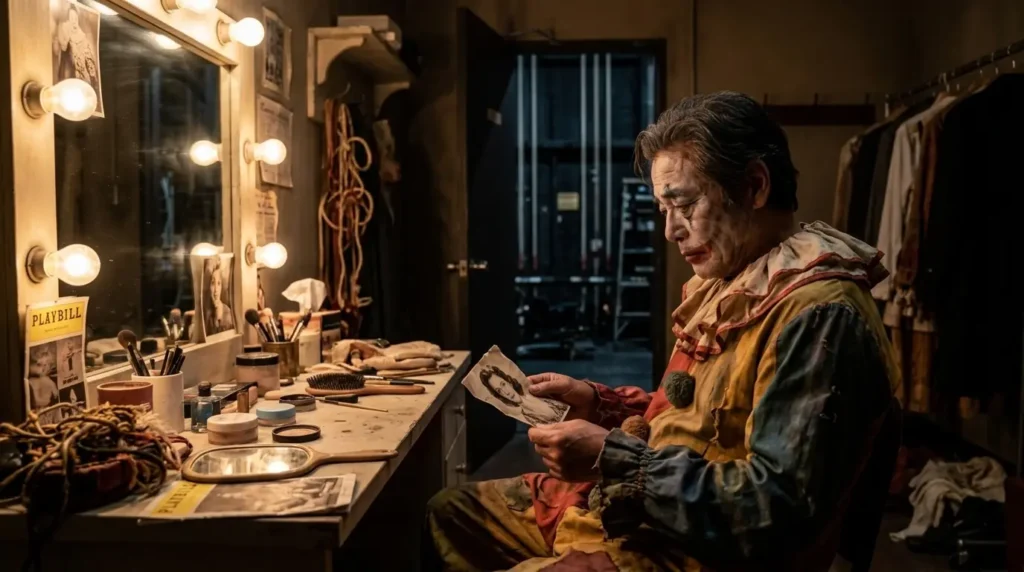
With “Shitsuren Restaurant,” he demonstrated another talent: creating a complete little story within the limits of a popular song.
By introducing memorable characters such as the clown and the magician, then saving a surprise for the ending, Tsunoda constructed something resembling a miniature stage play. The lyrics and music work together to bring that story to life.
Why Is This Melody So Hard to Forget?
An Upbeat Rhythm Paired with Sad Lyrics
Listen to the song again, and you may notice that the music is nowhere near as gloomy as the story. There is a firm beat from the bass and drums, crisp guitar playing, and an instantly recognizable melodic hook.
Rather than turning heartbreak into a heavy ballad, Tsunoda sets it to a rhythm that almost makes you want to move. Imagine the same lyrics performed slowly with just a piano. The emotional effect would be entirely different.
Although the characters change from verse to verse, the recurring melody holds the story together. The repeated calls to the bartender are especially memorable — the sort of phrases that stay in your head long after the record has finished.
The Character of Kentaro Shimizu’s Voice
Then there is Shimizu’s singing. His voice has a rich lower register and a slightly rough texture. When he pushes the words forward, you can hear the energy and confidence of a young performer.
Rather than presenting romantic feelings in a polished, delicate manner, his delivery makes you sense the vulnerability beneath a man’s tough exterior.
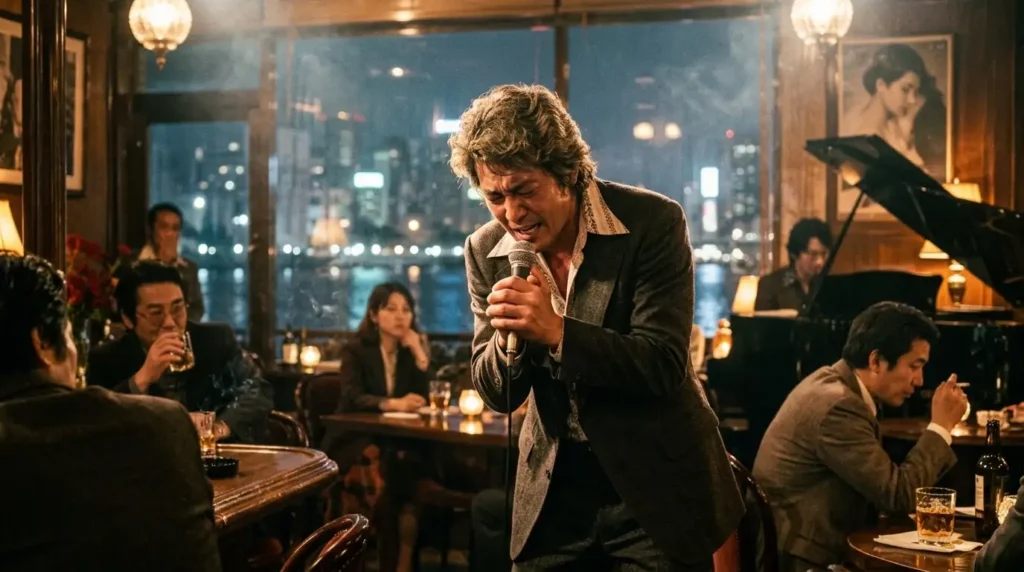
At 24, Shimizu seemed older than his years, but he was hardly a man who had figured everything out. His voice combined youthful bravado with a certain awkwardness about love. That made him an ideal interpreter of this song.
The Last Man at the Restaurant — A Surprise Ending
A Secret Revealed After Everyone Has Gone
For me, the most entertaining part of “Shitsuren Restaurant” comes at the very end. Throughout the song, the narrator has been responding to the troubles of the restaurant’s heartbroken customers and calling on the bartender for drinks and music.
He sounds almost like a seasoned expert in matters of the heart. But after everyone else has left, we discover something completely unexpected.
It turns out that the narrator has never actually been in love himself. The man who seemed to know so much about heartbreak has never experienced love in the first place. What a clever twist!
The Bartender and the Narrator Are Two Different People
There is another detail worth noticing: the relationship between the narrator and the bartender. In the lyrics, the narrator asks the bartender to prepare drinks and even requests a song.
That means we should not automatically assume he owns or runs the restaurant. It seems more natural to imagine him as another customer, someone who happens to be speaking to the people nursing their broken hearts.
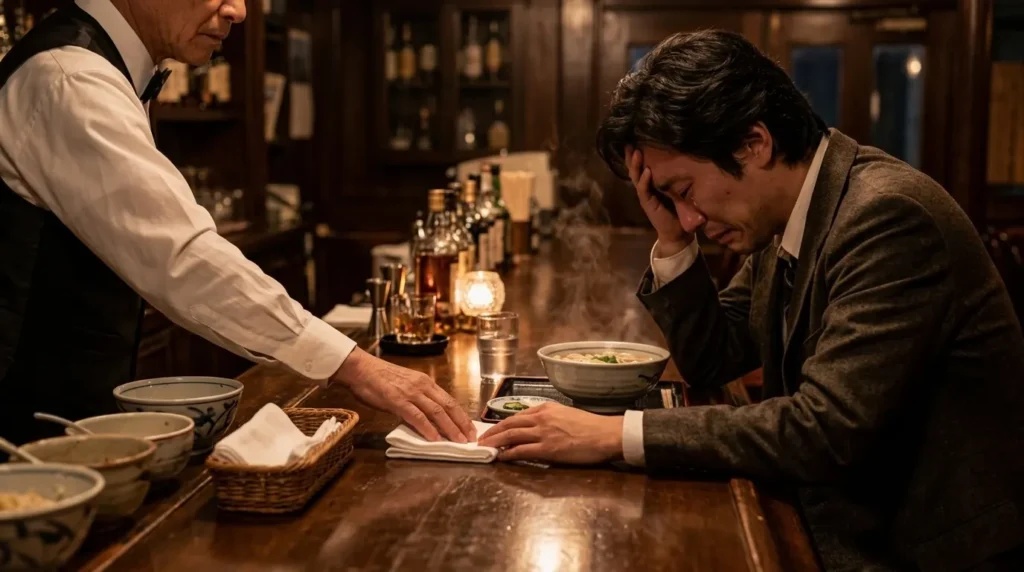
Despite having no romantic experience, he behaves as though he understands everything about failed relationships. And by the end, he seems ready to order a little romance for himself. It is a wonderfully amusing situation.
Perhaps He Longed for Love More Than Anyone Else
One possible interpretation is that the narrator finds other people’s heartbreak fascinating precisely because he has never experienced romance himself.
Having your heart broken is painful. But it also means you once cared deeply enough about someone to be hurt. To a man who has never fallen in love, the restaurant’s customers possess an experience he can only imagine.
Perhaps his final request is not simply a wish to experience heartbreak. Maybe what he really wants is to fall genuinely, passionately in love with someone. That is only my interpretation, of course, but it gives the lonely figure at the end of the song an unexpectedly touching quality.
What If Heartbreak Restaurant Really Existed?
A Little Restaurant Hidden in a Backstreet of 1970s Tokyo
Now, let me indulge my imagination. I picture the restaurant somewhere in Tokyo during the 1970s, perhaps on the ground floor of an aging building, tucked away on a side street just beyond a busy entertainment district.
Push open a heavy wooden door, and you find a dimly lit room glowing with amber lights. Whiskey bottles and a small vase stand on a polished counter. At a table toward the back, a man in a business suit sits staring at a plate of food that has gone cold.
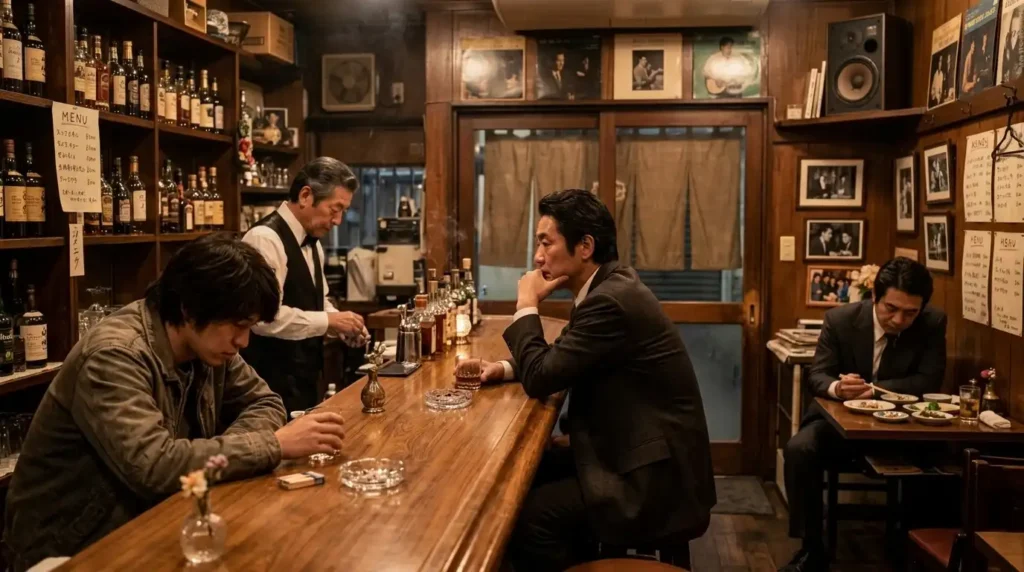
Old record sleeves decorate the walls, and jazz plays softly through a small speaker. The bartender does not pry into anyone’s personal life. He simply prepares the drinks, occasionally exchanging a few words with his customers.
At one end of the counter sits a young man whose girlfriend has just left him. Beside him is an older customer who still cannot forget a romance that ended years ago. The room smells faintly of cigarette smoke, but there is a reassuring warmth about the place. That is the scene I imagine when I hear this song.
Can a Good Meal Really Cure a Broken Heart?
The very idea of filling an emotionally wounded heart with food is rather charming. Some people lose their appetite after a breakup, while others eat far more than usual.
Of course, even the finest meal cannot bring back someone who has left. But eating something warm, talking to another person, going home, and getting a good night’s sleep can sometimes be the first small steps toward feeling better.
Although I must admit, a restaurant called “Heartbreak Restaurant” might not be my first choice for a romantic anniversary dinner!
Listening Again, 50 Years Later
From Letters and Landline Phones to Smartphones
In 2026, exactly 50 years have passed since the song’s release. Back in 1976, there were no mobile phones or social media. People relied on letters and household telephones to stay in touch with someone they loved.
And when you called, there was no guarantee that the person you wanted would answer.
If a family member picked up the phone, you had to nervously ask to speak to your sweetheart. You might wait days for a reply to a letter or stand at a meeting place wondering whether the other person would ever arrive. Limited ways of communicating brought their own particular anxieties.
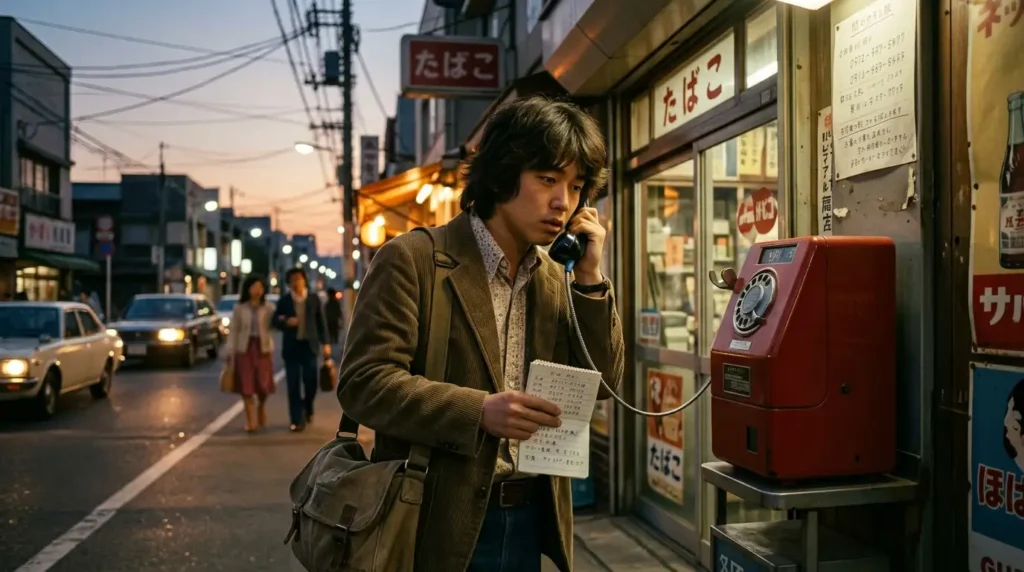
Today, a quick glance at your smartphone may reveal what a former partner has been doing. Modern technology makes communication easier, but perhaps it also makes certain people harder to forget.
Still, no matter how much the world changes, the happiness of falling in love and the pain of accepting a breakup remain deeply human experiences.
Bartender, Make That One for Me Too
What I enjoy most about “Shitsuren Restaurant” is that none of its characters is a master of romance. There is the clown who has forgotten how to laugh, the magician whose tricks cannot restore his lost love, and the narrator who has never fallen in love at all. Each is awkward in his own way.
There is no perfect formula for love, and no foolproof way to avoid getting hurt. We all put on a brave face sometimes, lose heart at others, and somehow find our own way through romance.
And now, I think I might like to stop by that little restaurant myself.
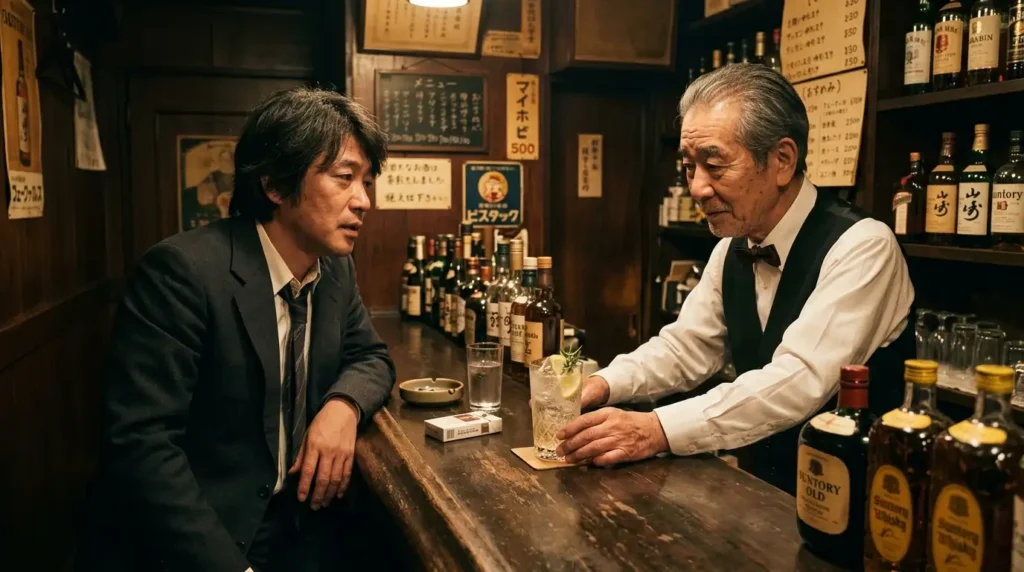
Bartender, one cocktail, please. And if possible, make it something that won’t leave me feeling terrible tomorrow morning!

音楽ファン同士の交流・リクエストはこちら / Connect & Request Songs Here