- 🎧 Listen to This Article
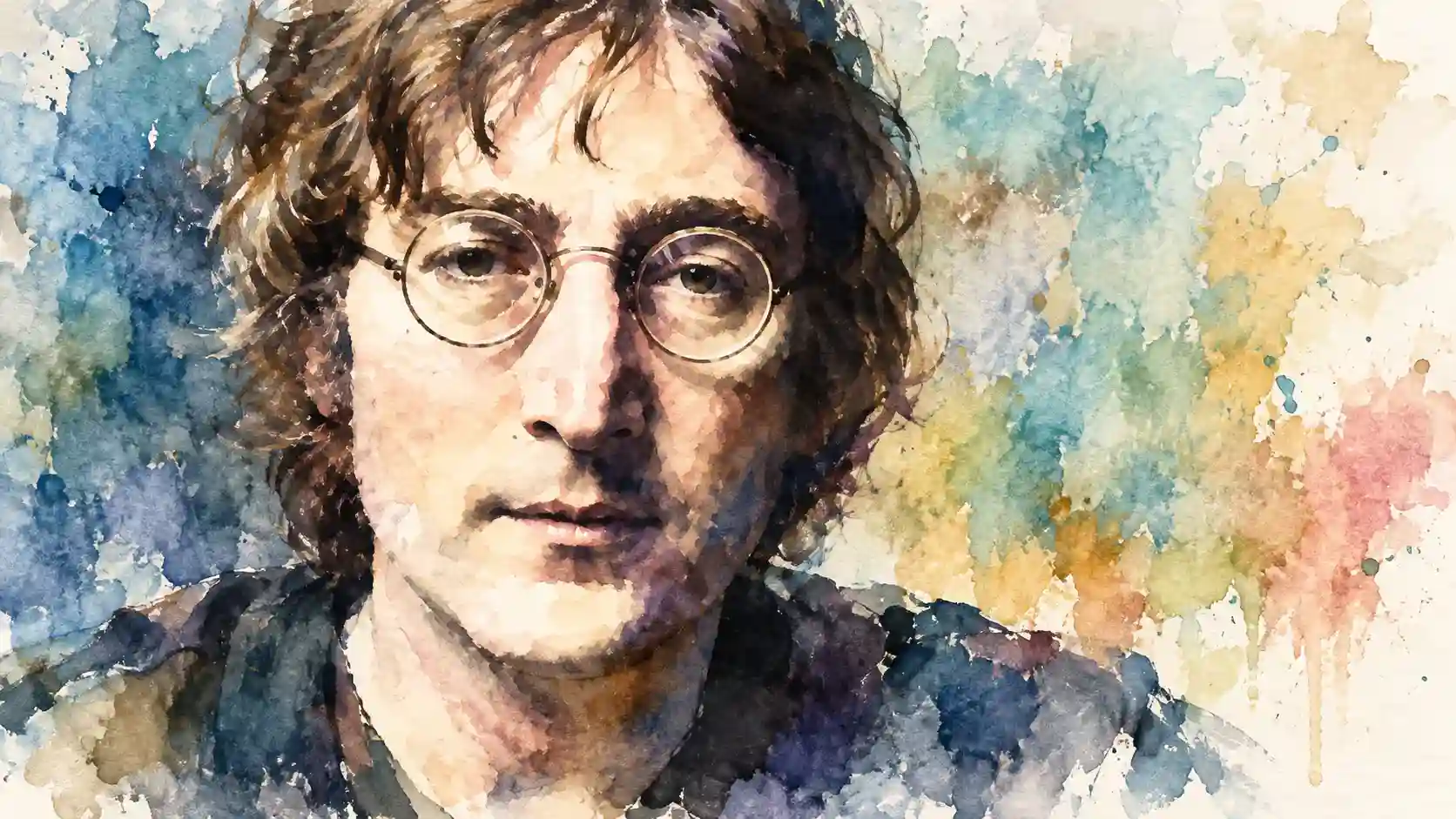
- October 9 Is John Lennon’s Birthday
- When I First Heard This Song
- 1970: “Mother,” Born at the End of the Beatles
- Why Does “Mother” Feel So Exposed?
- He Says “Goodbye”—Then Ends by Crying, “Don’t Go”
- Piano, Bass, Drums—A Stripped-Down Performance
- Around 1970, Rock Was Moving in More Than One Direction
- Not John the Beatle, but John Lennon the Individual
- “Mother”—Why It Still Feels So Raw More Than Half a Century Later
🎧 Listen to This Article
Get a quick overview of the article through narration.
Listen before reading to get a sense of the story behind “Mother” and the overall flow of the article.
🎵 English Narration
An English narration introducing the key points of this article.
🎶 日本語
A Japanese narration introducing the key points of this article.
Listening first will help you better understand the background of “Mother” and the key points explored in this article.
October 9 Is John Lennon’s Birthday
John Lennon was born in Liverpool, England, on October 9, 1940.
Alongside Paul McCartney, George Harrison, and Ringo Starr, Lennon became one of the central figures of the Beatles and left an enormous mark on popular music in the 1960s.
But if we look at Lennon’s music only through his years with the Beatles, I think we miss an essential side of John Lennon as an artist.
From childhood, he lived apart from his father, Alfred, and did not live with his mother, Julia. He was raised by his aunt Mimi. As he grew older, John reconnected with his mother, only to lose her in a road accident in 1958, when he was 17.
Even after achieving worldwide fame, his feelings about his family never disappeared. In 1970, as the Beatles came to an end and Lennon reached a major turning point in his life, those emotions moved to the center of his music.
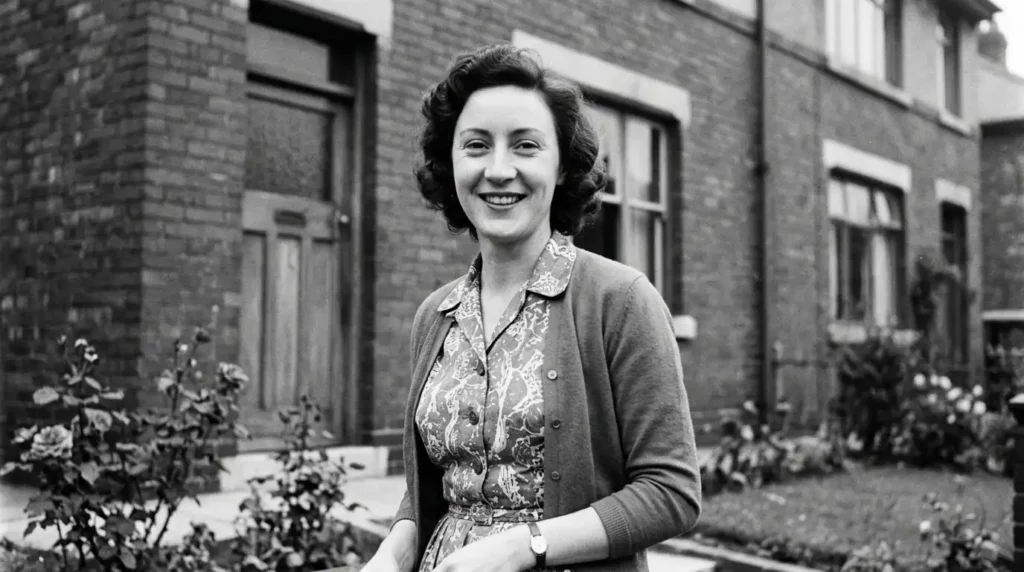
One of the clearest expressions of those feelings is the song featured here: “Mother.”
A Free Interpretation
I wanted to be loved. I wanted to be needed.
But what I longed for never truly came.
So I try to say goodbye to the past.
And yet the child deep inside me is still crying out—"Mother, don't go. Father, come home."
First, listen to the official audio on YouTube.
Official Audio Credits
John Lennon – "Mother" (2010 Remastered)
Written by John Lennon
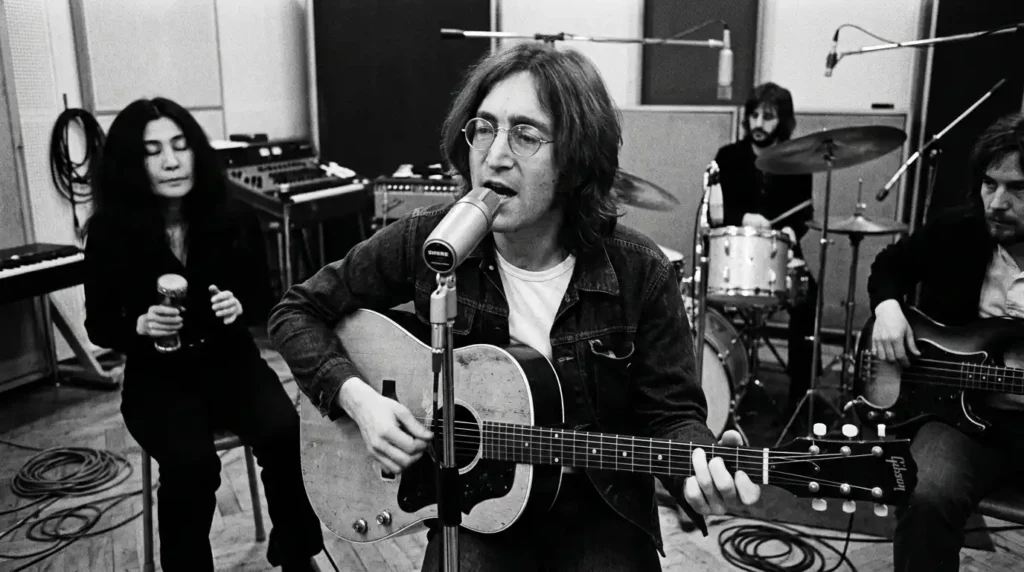
John Lennon: piano, vocals / Yoko Ono: wind / Ringo Starr: drums / Klaus Voormann: bass
Produced by John Lennon, Yoko Ono, and Phil Spector
From the album John Lennon/Plastic Ono Band
Audio: Official John Lennon YouTube Channel
Two-Line Introduction
A song in which John Lennon confronts the pain of losing his mother and growing up with an absent father.
From its restrained opening to its final screams, "Mother" lays bare the loneliness and loss he had carried with him for years.
When I First Heard This Song
| My Age | Elementary School | Junior High | High School | University | 20s | 30s | 40s | 50s | 60+ |
| Year Released | 1970 | ||||||||
| When I First Heard It | ● |
“Mother” is a John Lennon song released in 1970. It opens John Lennon/Plastic Ono Band, his first solo studio album after the breakup of the Beatles, and was also released as a single in the United States.
I first heard it in the music room at my junior high school.
When I walked into the room, our music teacher, Mr. Jono, put on a record. As I remember it, I think it was John Lennon/Plastic Ono Band. Since “Mother” is the opening track, it was the first song that came through the speakers.
I don’t remember how good the sound system was, but because it was a dedicated music room, I do remember hearing the record at considerable volume.
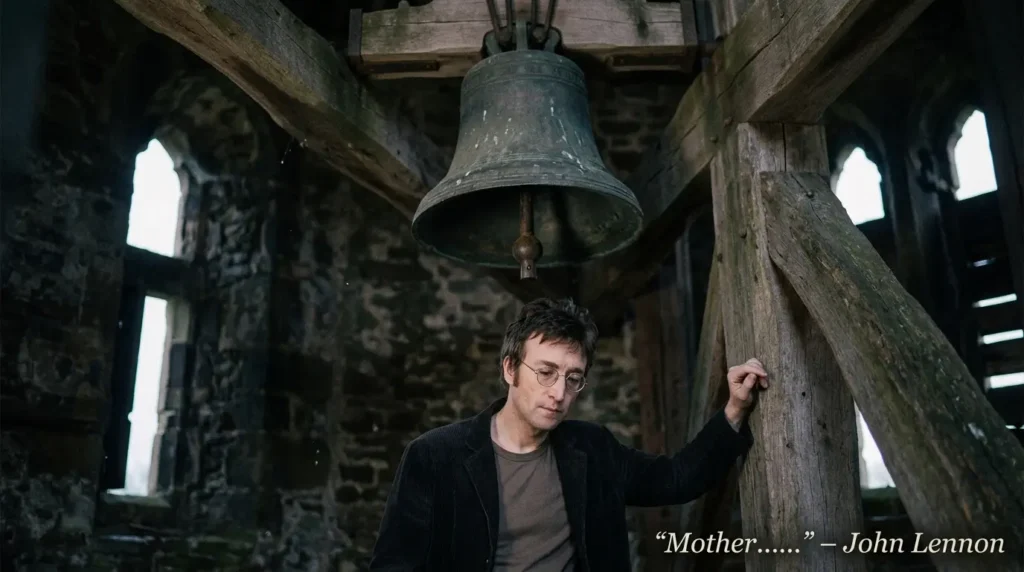
Out of the silence came the slow, heavy tolling of a bell. Then, as the bell faded away, Lennon’s voice suddenly entered: “Mother…”
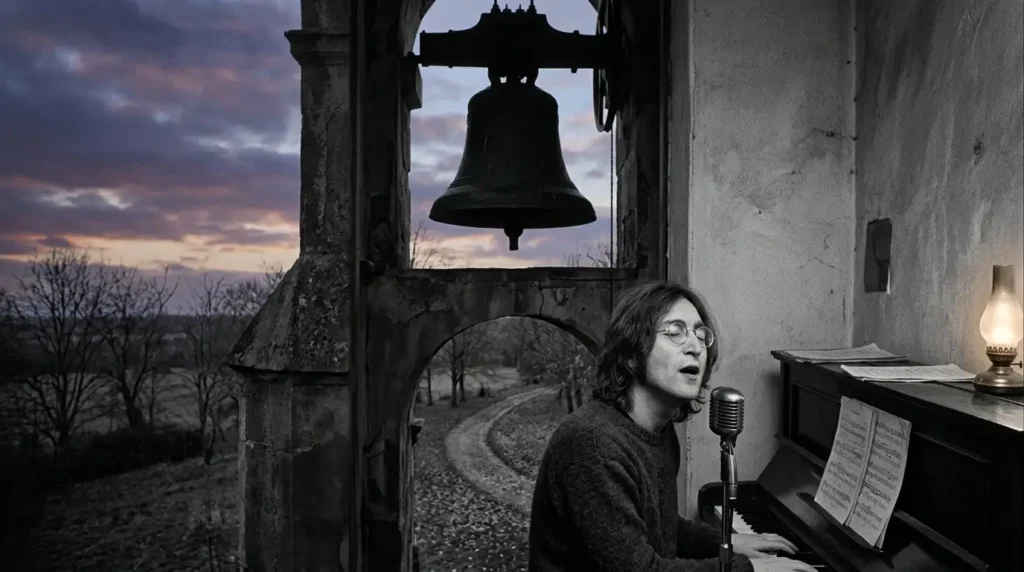
The impact of that opening has stayed with me ever since.
At the time, I knew nothing about Lennon’s childhood or the circumstances behind the album. Of course I knew the Beatles, but I belonged to a slightly younger generation and had not followed them in real time.
Even so, I immediately felt, “This isn’t an ordinary song.” By the end, he is calling out for his mother and father so intensely that the very form of the song seems close to breaking apart. Listening to that voice, what I felt as a boy was nothing less than a “cry from the soul.”
For a junior high school student with no knowledge of the story behind it to feel that much says something about the extraordinary power of “Mother.”
1970: “Mother,” Born at the End of the Beatles
John Lennon/Plastic Ono Band, the album that includes “Mother,” was released in Britain and the United States on December 11, 1970. It was Lennon’s first full-fledged solo studio album after the breakup of the Beatles.
“Mother” was also released in the United States that same day as the first single from the album, backed with Yoko Ono’s “Why.” The single version was edited down from the album recording and reached No. 43 on the Billboard Hot 100.
The album reached No. 8 on the UK Albums Chart. Judged purely by chart numbers, it was not a commercial phenomenon on the scale of the Beatles or Lennon’s later Imagine.
But the value of this record cannot be measured by sales alone. Having stepped away from the enormous presence of the Beatles, Lennon turned directly toward his own past.
Why Does “Mother” Feel So Exposed?
In 1970, John Lennon and Yoko Ono underwent Primal Therapy, developed by psychotherapist Arthur Janov.
Janov believed that much of the psychological pain experienced in adulthood had its roots in emotions suppressed during childhood. For Lennon, his family history went straight to the heart of that idea.
However, it would be inaccurate to say that Lennon began screaming in his music simply because he underwent Primal Therapy.
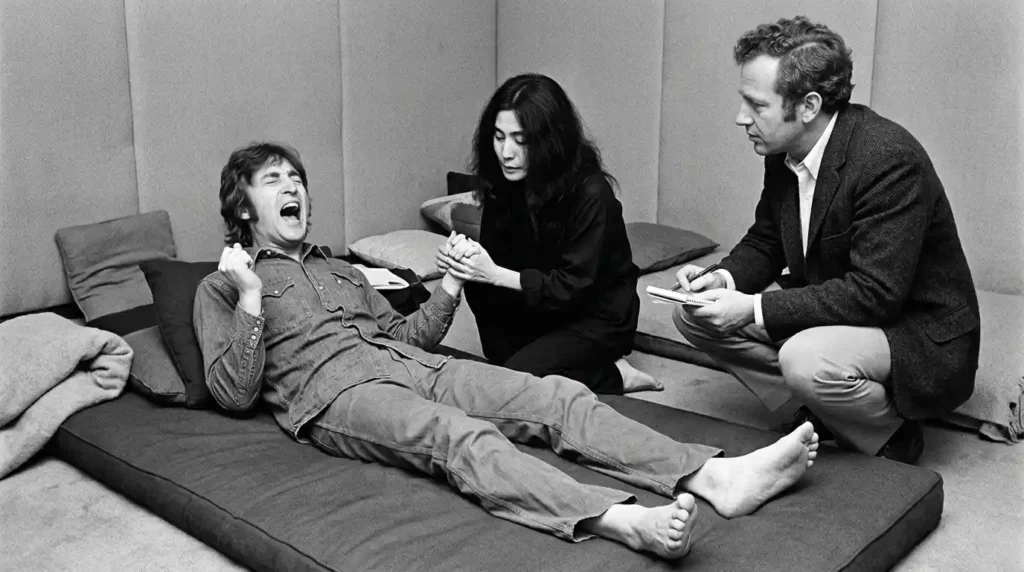
Lennon himself later pointed out that he had already been singing and screaming about pain in “Cold Turkey.” Rather than giving him an entirely new means of expression, Primal Therapy can more reasonably be seen as a catalyst that led him to confront emotions he had carried for years.
His Mother Julia and His Father Alfred
Lennon’s father, Alfred, was a merchant seaman, and John spent long periods apart from him from an early age. He did not live with his mother Julia either; he was raised primarily by his aunt Mimi and her husband, George.
As John grew older, he re-established a relationship with Julia. She helped open the door to music for him, teaching him banjo chords and buying him a guitar.
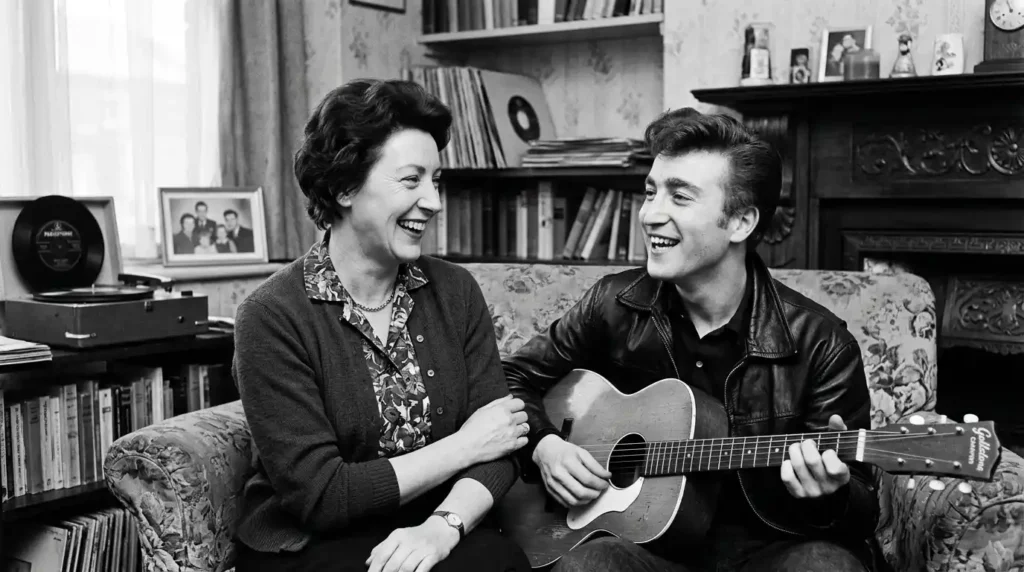
Then, on July 15, 1958, Julia was killed in a road accident.
John was 17. Her death came just as he had been rebuilding his relationship with his mother.
The title “Mother” consists of a single word. Behind that word, however, lies a complicated family history stretching from Lennon’s childhood into his youth.
He Says “Goodbye”—Then Ends by Crying, “Don’t Go”
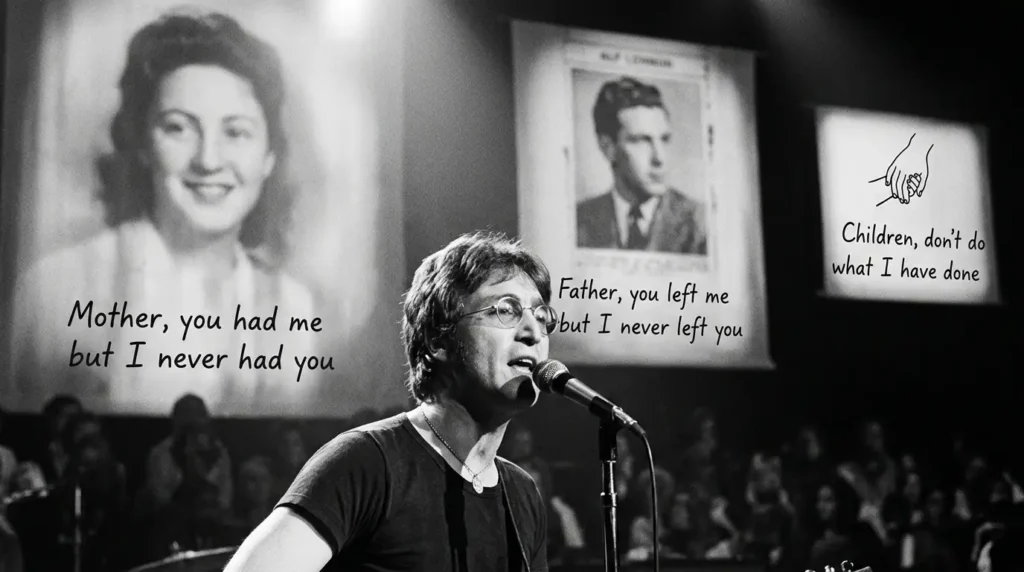
The lyrics themselves are remarkably direct. Instead of relying on elaborate metaphors, Lennon addresses his mother, his father, and then children directly.
First comes his mother. She gave birth to him, but she could not be the mother he had wanted and needed.
Then he turns to his father. His father left, yet John could never completely let go of his longing for him.
In the third section, his attention shifts to children. He urges them not to repeat what happened to him.
At this point, “Mother” becomes more than a song addressed to one parent. It also expresses a determination not to pass the damage created within one generation on to the next.
The Emotion Moves in Opposite Directions
One of the most fascinating aspects of the song is the contrast between its opening sections and its ending.
At first, Lennon says “Goodbye” to his mother and father. It sounds as though he is trying to draw a line under the past.
But as the song progresses, that resolve begins to collapse. What finally emerges is an extraordinarily direct plea: he does not want his mother to go, and he wants his father to come home.
A 30-year-old rock star known around the world ends up calling for his parents like a small child.
And his voice grows more intense with every repetition. At first his vocal remains within the melody; gradually, emotional urgency takes precedence over conventional beauty, until the singing becomes a scream.
By the closing section, judging the performance simply in terms of vocal technique no longer seems relevant. Lennon has moved beyond the conventional idea of simply “singing a song.”
Piano, Bass, Drums—A Stripped-Down Performance
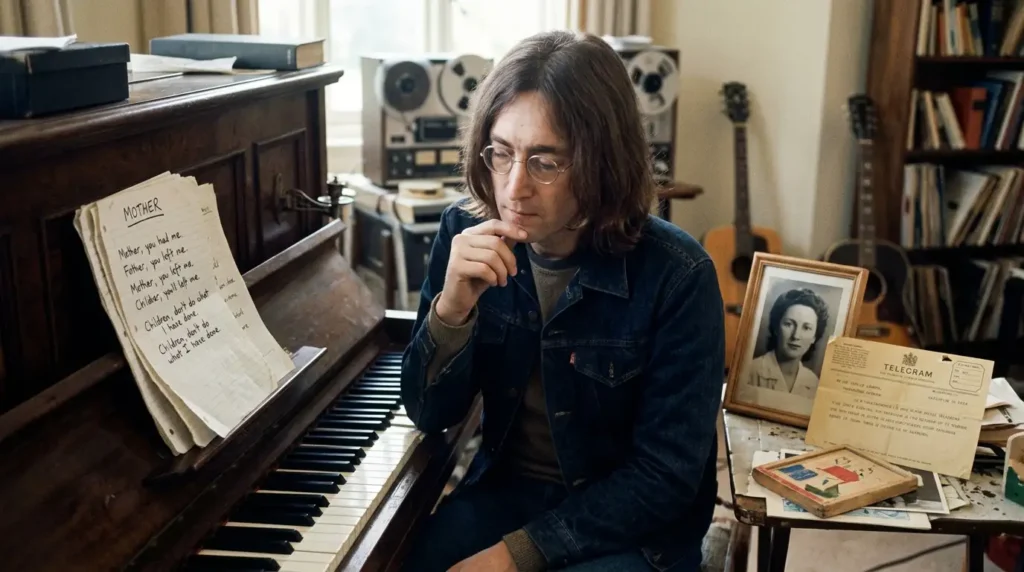
Part of the force of “Mother” comes from its spare instrumentation.
At its core are Lennon’s piano and vocals, Ringo Starr’s drums, and Klaus Voormann’s bass. The official credits also list Yoko Ono for “wind.”
It stands in sharp contrast to the multilayered recording and elaborate studio craftsmanship heard on later Beatles albums such as Sgt. Pepper’s Lonely Hearts Club Band and Abbey Road.
Ringo and Klaus Build the Foundation
Ringo’s drumming is particularly striking.
Rather than filling the track with flashy drum fills, he strikes exactly where the song needs him, driving Lennon’s vocal forward. Even as the tension in Lennon’s voice rises toward the end, the drums never compete for attention.
Klaus Voormann’s bass works in much the same way, concentrating on the structural foundation rather than decoration.
Phil Spector is also credited as a producer, but his trademark “Wall of Sound” is not pushed to the foreground. According to Yoko Ono, Spector joined the sessions relatively late, when the album’s fundamental direction had already taken shape.
As a result, it is not instrumental grandeur but the human voice itself that has the greatest presence.
Around 1970, Rock Was Moving in More Than One Direction
The years around 1970, when “Mother” emerged, were a period in which rock music was rapidly expanding in several directions.
By the late 1960s, psychedelic rock and sophisticated studio recording had developed dramatically. At the same time, another current was moving toward leaner, more direct performances.
Bob Dylan and the Band had already moved toward a more stripped-down sound, while the Beatles themselves attempted a return to basics in the sessions that eventually led to Let It Be. As the 1970s began, singer-songwriters were also increasingly bringing their private lives and inner conflicts directly into their work.
John Lennon/Plastic Ono Band belongs partly within that broader shift.
But Lennon went further. He did not stop with everyday life or romantic relationships; he put some of the most painful parts of his childhood onto a record.
Not John the Beatle, but John Lennon the Individual
Listening to “Mother,” there is little sense that Lennon is trying to capitalize on his status as a former Beatle.
If anything, it sounds as though a man who had belonged to the biggest band in the world is stripping that identity away, layer by layer.
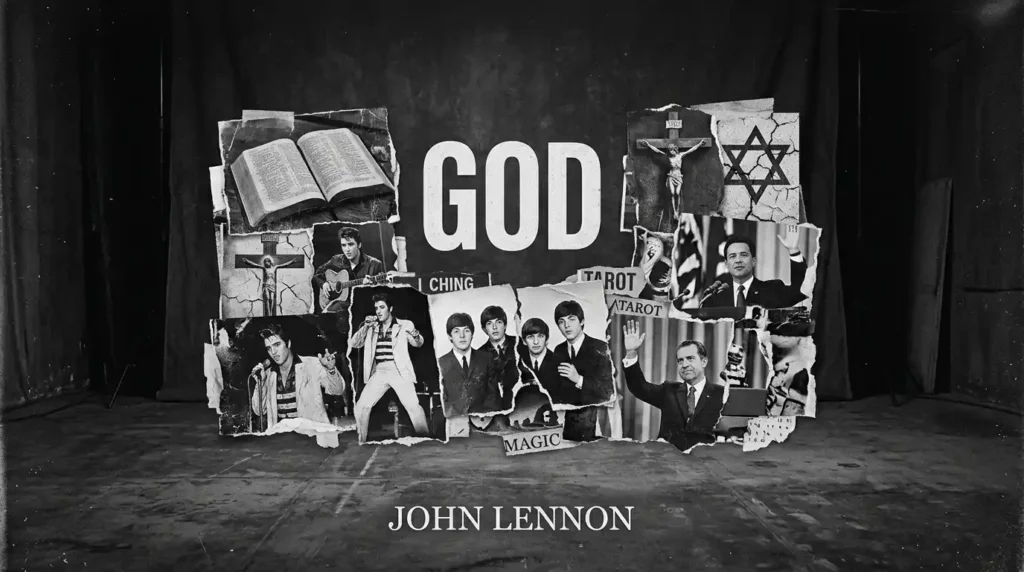
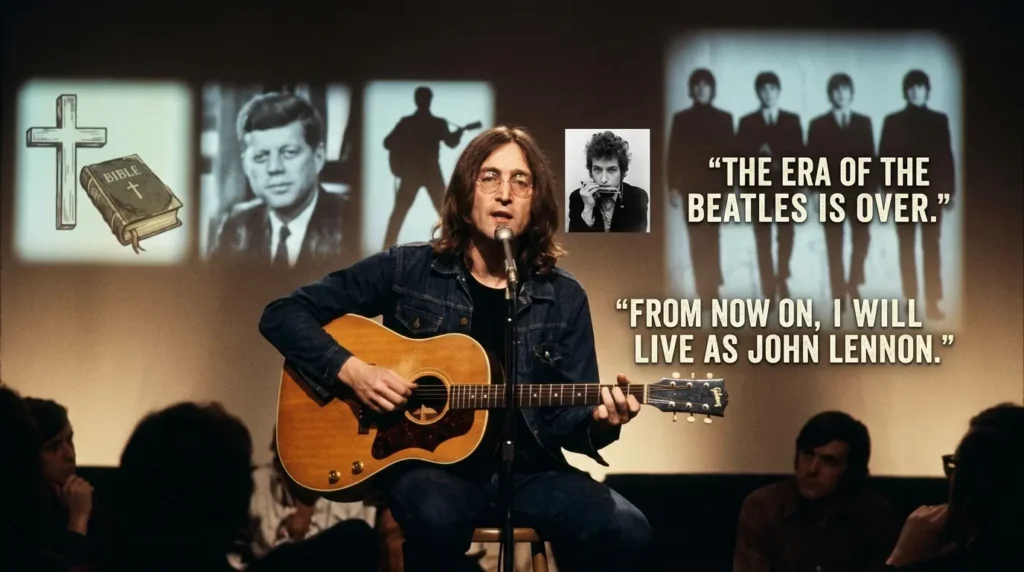
On “God,” one of the final tracks on John Lennon/Plastic Ono Band, Lennon names God, the Bible, Hitler, Kennedy, Elvis, Bob Dylan, and finally the Beatles among the things he says he does not believe in.
He then makes his position unmistakable: the Beatles era is over, and from this point forward he will live as John Lennon, an individual rather than a member of the band.
Seen in that light, it is highly symbolic that John Lennon/Plastic Ono Band begins with “Mother.”
Not the symbol of a peace movement. Not the central figure of the Beatles.
The first person we encounter on the album is simply a human being longing for his mother and father.
“Mother”—Why It Still Feels So Raw More Than Half a Century Later
“Mother” is not the kind of song you casually hum to yourself.
But once you hear it, it is difficult to forget.
A complicated family history, the death of his mother when he was 17, the breakup of the Beatles, Primal Therapy, and a radically stripped-down performance—all of these elements converge in a single recording.
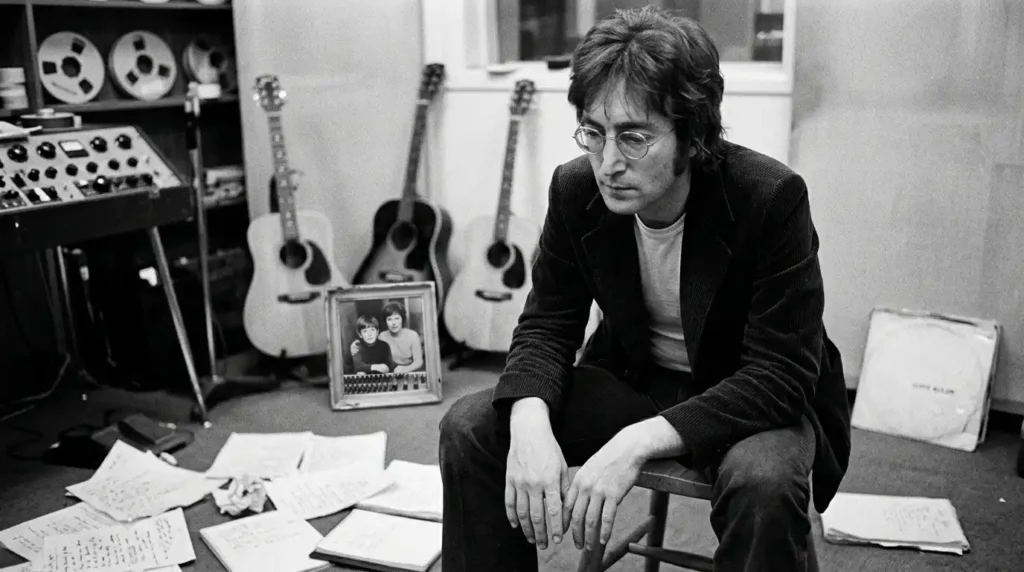
Yet “Mother” is not a song that requires all of that background knowledge to make an impact.
When I first heard it in junior high school, I knew almost none of the story behind it. And still, the opening bell and that first “Mother…” pulled me in with extraordinary force.
I think that is where the true power of this song lies.
October 9, John Lennon’s birthday.
Today, rather than listening to him simply as the rock star who helped change the world, I want to hear the human being behind that enormous name.
And for that, I want to listen to “Mother” once again.
音楽ファン同士の交流・リクエストはこちら / Connect & Request Songs Here