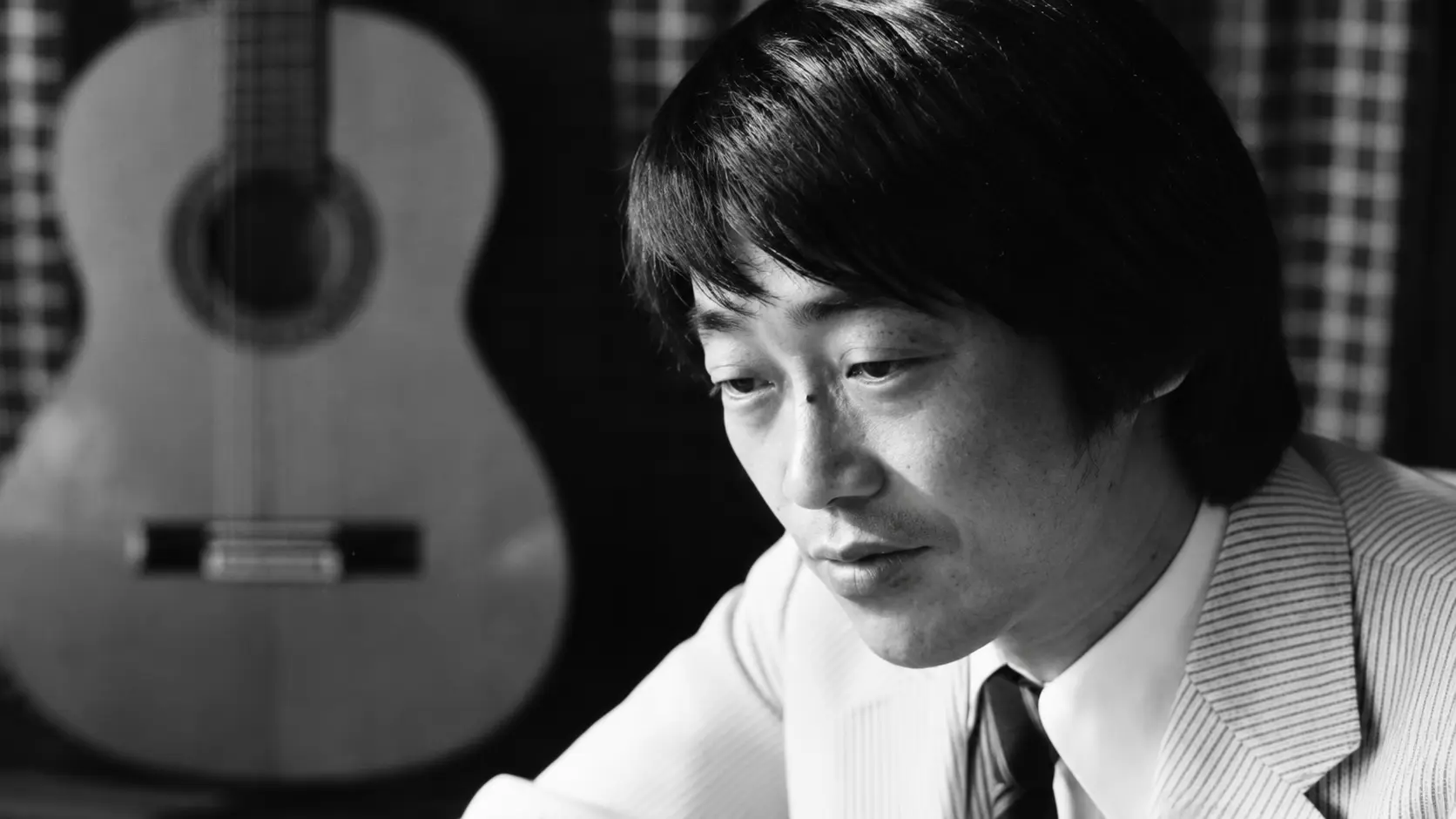
Explore the story of Koichi Morita here!
- 🎧 Enjoy This Article in Audio
- No. 1: “Seishun Jidai (Days of Youth)”
- First, listen to Koichi Morita sing “Seishun Jidai.”
- A Couple Standing on the Threshold of Graduation
- A Song About Youth That Never Romanticizes It
- Yu Aku’s Words, Set in Motion by Koichi Morita
- From 1976 to 1977 — Nearly Half a Year to Reach No. 1
- In 1976, I Was Also in My Final Year of High School
- No. 2 “Sugite Shimaeba” and No. 1 “Seishun Jidai”
- Why “Seishun Jidai” Is My No. 1
- In Closing
🎧 Enjoy This Article in Audio
Listen to a concise narration of the key points from this article.
Recommended before reading if you would like to get a feel for “Seishun Jidai” and the overall flow of the article.
🎶 English Narration
An English narration introducing the key points of this article.
🎵 Japanese Narration
A Japanese narration introducing the key points of this article.
Listening first will help you get a feel for “Seishun Jidai” and grasp the key ideas of the article before you begin reading.
No. 1: “Seishun Jidai (Days of Youth)”
“Seishun Jidai” was released as a single by Koichi Morita & Top Gallants on August 21, 1976, with lyrics by Yu Aku and music and arrangement by Koichi Morita. The song was also included on the album Seishun Jidai.
It did not shoot straight to the top immediately after its release. Instead, it gradually climbed the charts through the autumn, finally reaching No. 1 on the Oricon weekly singles chart dated January 17, 1977. It remained there for four consecutive weeks and eventually became a major hit, selling approximately 1.02 million copies.
It also ranked No. 2 on Oricon’s year-end singles chart for 1977.
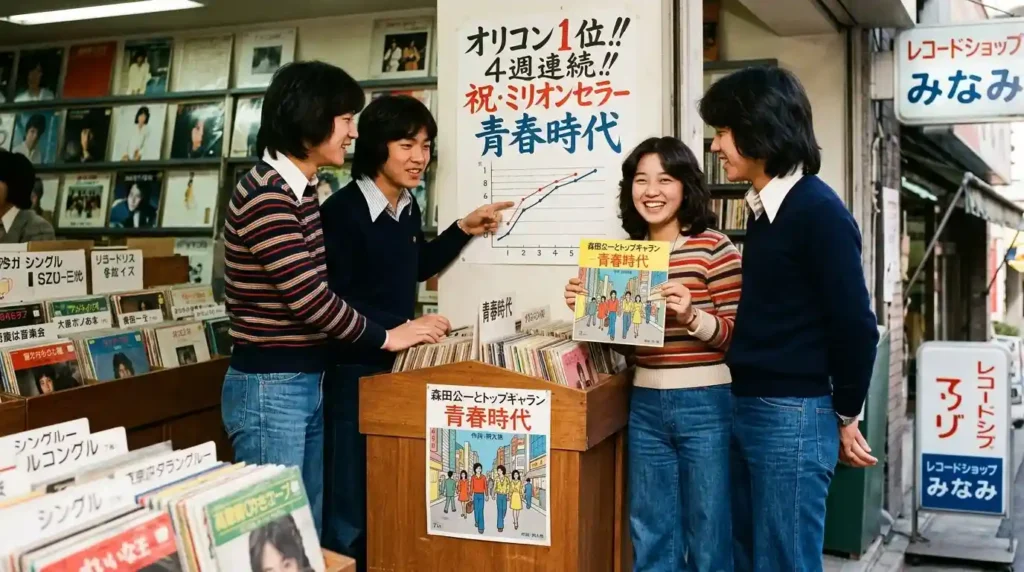
I did not place this song at No. 1 in my personal miniBest7 simply because it was the biggest hit by Koichi Morita & Top Gallants. I chose it because a song I have known since I was young has, over the passing decades, somehow begun to look back at me from an entirely different angle.
It is a song about youth, and yet perhaps we cannot truly understand it until our own youth is over.
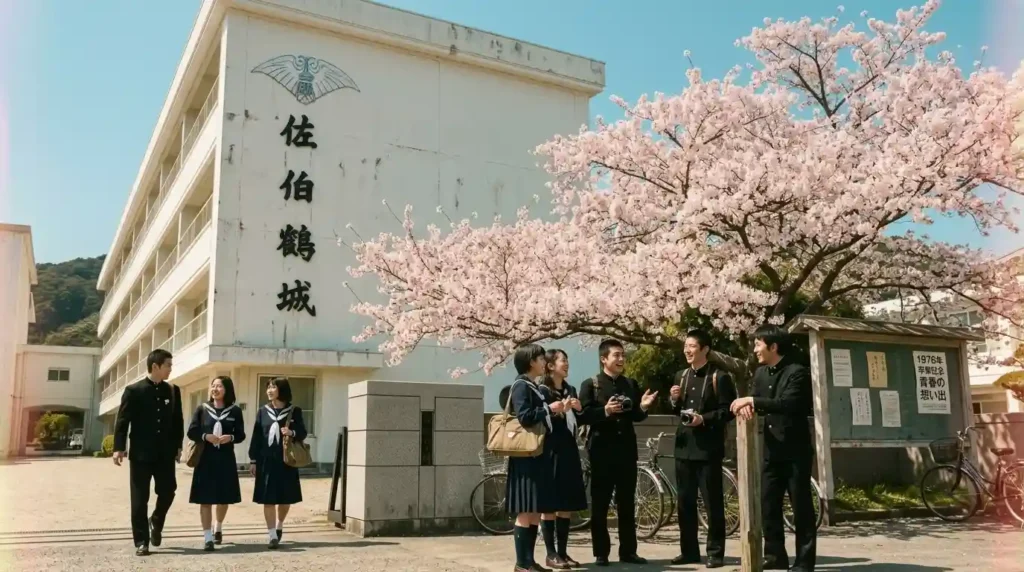
And in 1976, when this song was released, I was in my final year of high school. The time portrayed in the song — those months just before graduation — was remarkably close to the season of life I was living myself.
My Interpretation
When we are in the midst of youth, we rarely realize that we are young.
We simply live through days of uncertainty, hurt, and unanswered questions.
Only after that season has passed do we discover how brightly those days once shone.
Youth begins to glow in the heart only after it has drifted a little farther away.
💡 You might also like: View the original Japanese lyrics (External site)
If the lyrics are available only in Japanese, you can use your browser’s translation feature or an AI translation tool to understand their general meaning.
First, listen to Koichi Morita sing “Seishun Jidai.”
(This is not an official video, so I have linked it through the image below. Click the image to listen.)
Credits
Performance: Koichi Morita & Top Gallants — “Seishun Jidai”
Lyrics: Yu Aku / Music: Koichi Morita
From the YouTube channel “Adult Music”
About the Song
Released in 1976, “Seishun Jidai” became one of the defining hits of Koichi Morita & Top Gallants.
Yu Aku’s words and Morita’s buoyant melody vividly capture the uncertainty and heartache of youth.
A Couple Standing on the Threshold of Graduation
The title “Seishun Jidai” may suggest a broad stretch of life extending from the late teenage years into one’s twenties. Yet the time portrayed in this song is much narrower. From the opening, we are placed just six months before graduation.
The lyrics never specify what kind of school the two are graduating from. But if we read them as high school students, they would be around seventeen or eighteen — standing at the border between childhood and adulthood, at an age when they are beginning to face decisions about where their lives will go next.
On the Verge of Adulthood, There Are No Easy Answers
Once they graduate, yesterday’s familiar routine will no longer continue. Will they go on to further education or start working? What will happen to their relationship? Questions they could once postpone suddenly become real.
Yet the years they have spent together cannot simply be reduced to a neat conclusion. They have to choose a future without knowing how their relationship will change. That uncertainty lies at the emotional starting point of the song.
What “Seishun Jidai” captures is not the glamour of being young, but the hearts of two people hesitating at the entrance to adulthood.
A Song About Youth That Never Romanticizes It
Judging by the title alone, one might expect a celebration of youth. But the two people Yu Aku portrays are not racing toward the future filled with hope and confidence.
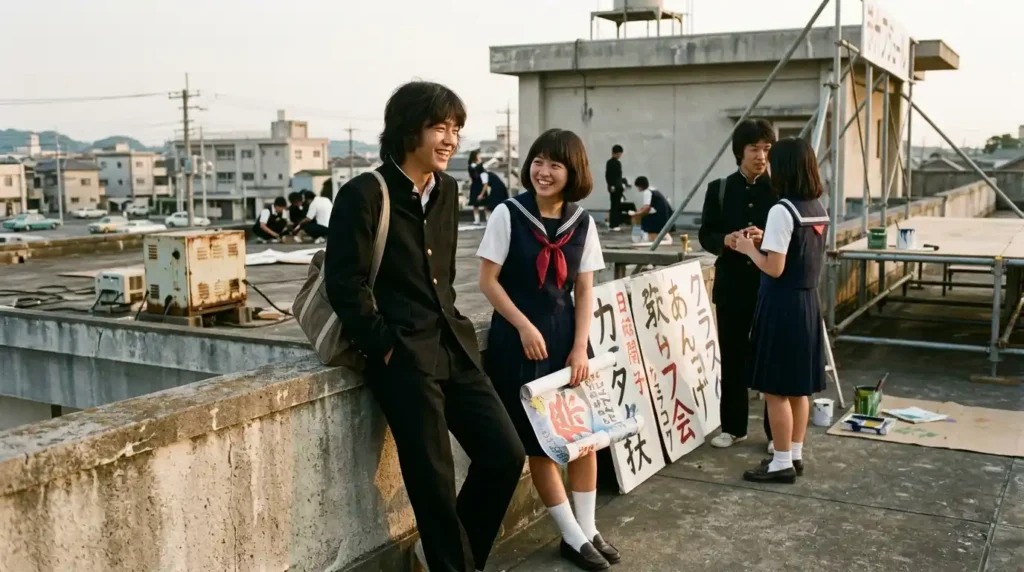
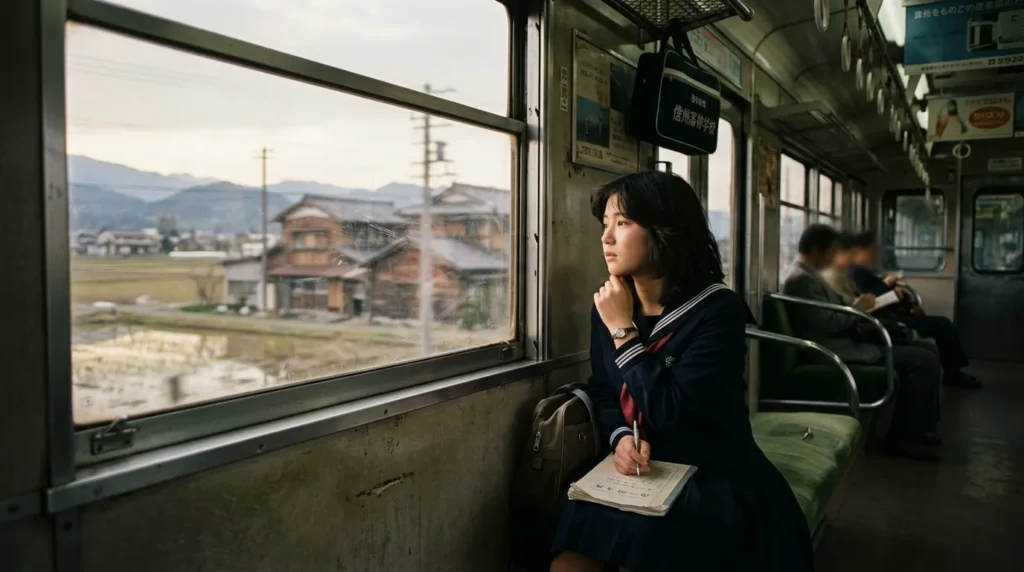
They are uncertain about love, uncertain about the future, and uncertain even about what will become of their relationship. Graduation keeps approaching nonetheless. Youth is not presented here as a glittering memory, but as a period whose true nature remains invisible to the people actually living through it.
In the Middle of Youth, We Cannot See Our Own Youth
When we are living through those years, everyday concerns consume us. We fall in love and are shaken by a single remark. We quarrel with friends. We worry about what path to take after school.
Even the feeling that we have not yet become anyone can seem desperately important at the time.
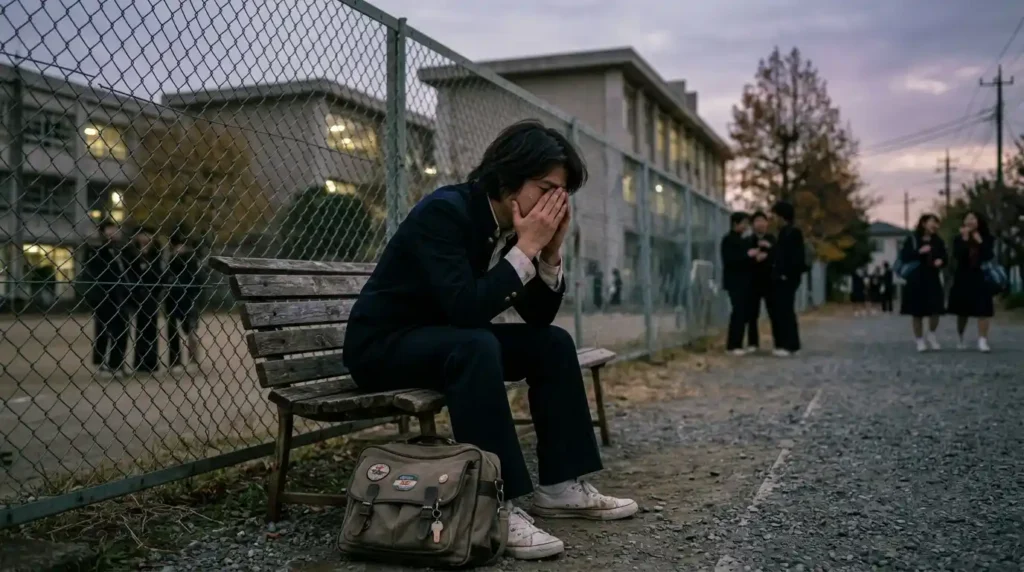
We do not go through each day thinking, “These are the wonderful days of my youth, so I must treasure every moment.”
We want to grow up quickly. We want freedom. We want to know where we are going. And while we are thinking about all of that, the seasons move ahead of us, until one day the place where we once stood has become part of the past.
Only years later do we realize that perhaps those very days when we could not find the answers were our youth.
To me, the title “Seishun Jidai” contains precisely that reversal of time and perspective.
Yu Aku’s Words, Set in Motion by Koichi Morita
The lyrics deal with graduation, love, uncertainty, and the passage of time. Read only as words on a page, the themes are surprisingly reflective and could easily have become heavy.
Yet “Seishun Jidai” never sinks into darkness. Yu Aku writes words that make us stop and think, while Koichi Morita carries them forward on an accessible, buoyant melody. That contrast allows brightness and sadness to exist naturally within the same song.
An Intro Inspired by “Tsugaru Jongara-bushi”
Koichi Morita has said that he drew inspiration for the song’s distinctive opening from “Tsugaru Jongara-bushi,” a traditional Japanese folk song. The idea came from his sense that Japanese listeners are instinctively drawn to melodies rooted in the country’s folk tradition.
And indeed, it takes only the first few seconds to recognize “Seishun Jidai.” The introduction is more than a prelude; it has become part of the song’s identity.
The Heart Hesitates, but the Music Keeps Moving
If these lyrics had been paired with a slow and mournful melody, the result might have sounded like a farewell song about two lovers approaching graduation. Morita’s melody does something different. It keeps moving forward even while the characters remain uncertain.
The heart may hesitate, but time does not. Graduation draws closer, the seasons change, and each person must eventually move toward a different place. To my ears, that feeling is expressed not only through the words, but through the music itself.
From 1976 to 1977 — Nearly Half a Year to Reach No. 1
“Seishun Jidai” was released on August 21, 1976. It did not immediately reach the top of the charts. Instead, it gradually gained support through the autumn and the end of the year, before beginning a four-week run at No. 1 on the Oricon weekly singles chart dated January 17, 1977.
The single sold approximately 1.02 million copies and ranked No. 2 on Oricon’s year-end singles chart for 1977, becoming one of the signature recordings of Koichi Morita & Top Gallants.
A Song That Reached People Beyond Their Youth
There is an interesting aspect to the song’s success. Despite being titled “Seishun Jidai,” it was reportedly embraced not only by young listeners but also by people in their late twenties, thirties, and forties who had already left those years behind.
For younger listeners, it could sound like a song about the uncertainty they were facing at that very moment. For older listeners, it could bring back a place in life they had once passed through themselves. Its ability to offer a different point of entry depending on the listener’s age may help explain the breadth of its appeal.
In 1976, I Was Also in My Final Year of High School
For me, this song carries another, more personal meaning.
When “Seishun Jidai” was released in 1976, I was in my final year of high school. I graduated in March 1977, and in April I moved to Tokyo to begin university.
In other words, I was living through almost exactly the same season as the “six months before graduation” portrayed in the song. Looking back now, I am struck by just how closely this song coincided with my own age and circumstances.
Back Then, I Could See Only Half of What This Song Meant
At the time, life after graduation existed only in my imagination. I would go to Tokyo, meet new people at university, and begin living in a city I did not know. Of course I understood intellectually that decades of life lay ahead of me, but there was no way I could truly feel what that meant.
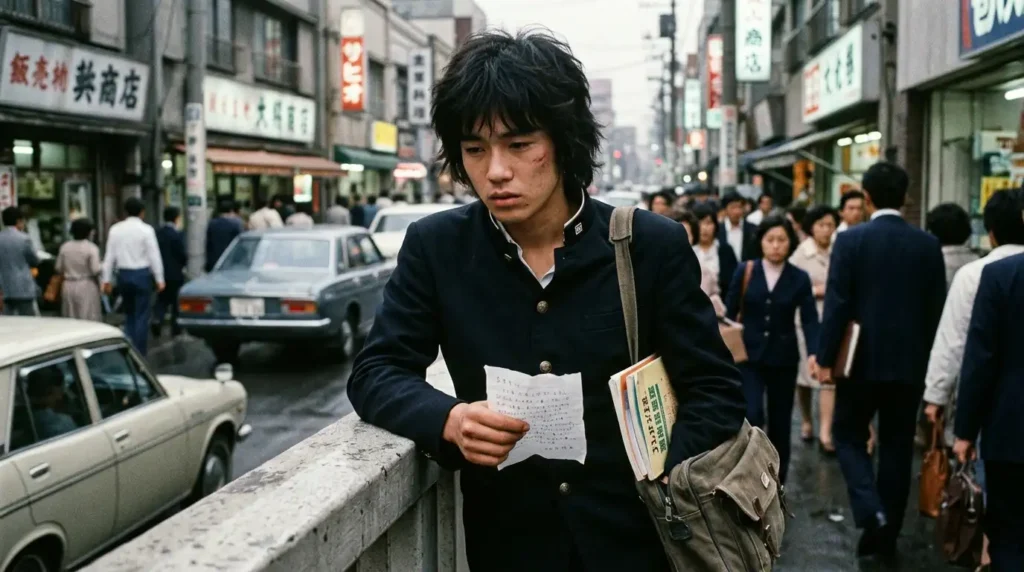
So even when I listened to “Seishun Jidai,” I do not think I was yet capable of fully receiving the depth of what Yu Aku had written.
Nearly half a century has passed since then. When I hear the song now, I remember not only the boy I was around the time I graduated from high school, but also the day I left for Tokyo, friends from my university years, and even the streets I used to walk.
The song is still the same song from 1976. I am the one who has changed.
There are things I could not see then that I can see now. At the same time, the high-school senior I once was possessed feelings that I can no longer experience in quite the same way. The ability to move between those two points in time within a single song is one of the special qualities of music that has remained with us for decades.
No. 2 “Sugite Shimaeba” and No. 1 “Seishun Jidai”
There is a reason I placed “Sugite Shimaeba (Once It Has Passed)” at No. 2 and “Seishun Jidai” at No. 1 in this miniBest7.
Both songs were written by Yu Aku and composed by Koichi Morita. But they look at youth from different points in time.
What Connects the Two Songs Is the Passage of Time
The young people in “Seishun Jidai” are being asked to find answers as graduation approaches, yet they remain uncertain about both love and life. They cannot look at the season they are living through with the perspective they will gain years later.
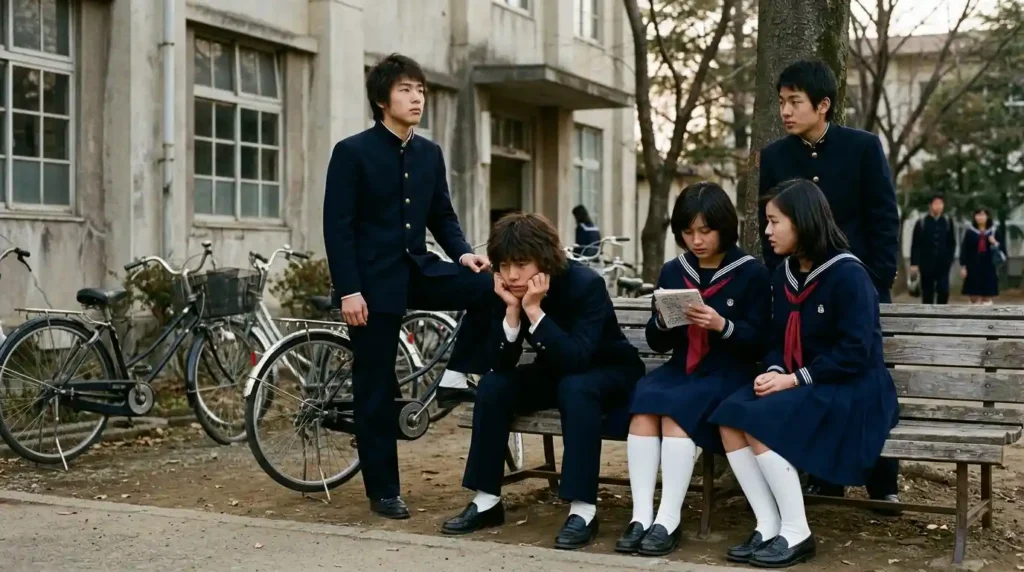
“Sugite Shimaeba,” by contrast, looks back from a point beyond that stage of life. The worries and awkwardness that once felt so serious begin to take on a different appearance after enough years have passed.
“Seishun Jidai” is a song about people who do not yet know what youth truly is.
“Sugite Shimaeba” looks back after that truth has finally become clear.
By placing these two songs at No. 1 and No. 2, the different perspectives on youth created by Koichi Morita and Yu Aku become part of a single flow of time. For me, this order simply feels right.
Why “Seishun Jidai” Is My No. 1
Koichi Morita created other songs that are deeply connected to my own memories. Even so, I could not imagine ending this miniBest7 with anything other than “Seishun Jidai.”
The reason is that this song has changed along with my own sense of time. In my final year of high school, I heard it as a song about young people approaching graduation. Now, after nearly half a century of life, I can see beyond the same melody into the years I myself have travelled through.
The years a listener has lived can themselves add new meaning to a song. For me, no other Koichi Morita song makes me feel that more strongly than “Seishun Jidai.”
In Closing
No. 1 in my Koichi Morita miniBest7 is “Seishun Jidai.”
Yu Aku portrayed two people approaching graduation without yet finding their answers, while Koichi Morita gave those words a bright melody that continues to move forward. A heart that wants to pause, and time that refuses to wait — that combination makes this far more than a simple celebration of youth.
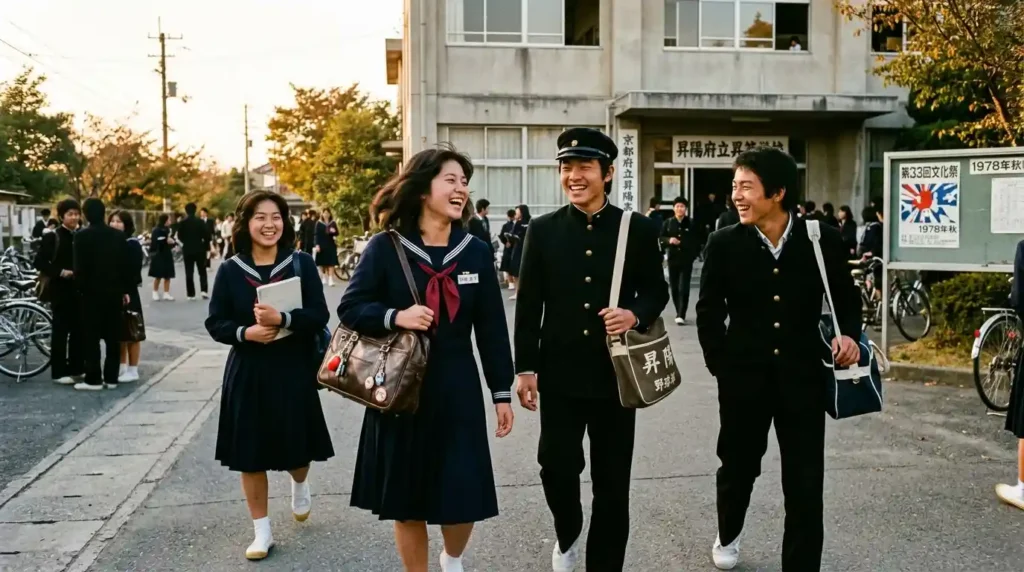
In 1976, as a high-school senior, I had no idea what the rest of my life would look like. University, countless encounters and farewells, work, family — all of it still lay somewhere in the future.
Looking back now, I realize that youth was never made up only of extraordinary moments. The days when I worried about my future, the days when I laughed with friends, and even the ordinary days that seemed to pass without meaning — all of them belonged to that season.
Perhaps that is why, nearly half a century later, this song still refuses to remain merely an old hit from another era.
For me, “Seishun Jidai” is a song that quietly gives back, even now, the value of days whose worth I could not understand while I was living them.


音楽ファン同士の交流・リクエストはこちら / Connect & Request Songs Here