- 🎧 Listen to This Article
- More Than “Seishun Jidai” — The Musician Koichi Morita
- Chapter 1: From Hokkaido to Tokyo — The Origins of Composer Koichi Morita
- Chapter 2: The 1970s — The Rise of a Hitmaker
- Chapter 3: Koichi Morita & Top Gallants — When the Composer Became the Singer
- Chapter 4: Koichi Morita as a Songwriter for Others — Hits That Colored the Showa Era
- Chapter 5: Television and Anime — His Music in Other Places
- Chapter 6: The 1980s — Toward “Jidai Okure”
- Chapter 7: What Defined Koichi Morita’s Music?
- Epilogue — What Remains After the Song
🎧 Listen to This Article
Get a quick overview of this article through narration.
Recommended before reading if you would like an introduction to Koichi Morita’s musical journey and the overall story of this article.
🎶 English Narration
An English narration introducing the content of this article.
🎵 Japanese Narration
A Japanese narration introducing the content of this article.
Listening first will give you a clearer sense of Koichi Morita’s musical journey and the key themes explored in this article.
More Than “Seishun Jidai” — The Musician Koichi Morita
When you hear the name Koichi Morita, what song comes to mind first?
For many Japanese listeners of my generation, the answer is probably “Seishun Jidai” (Days of Youth). Released in 1976 and performed by Koichi Morita & Top Gallants, the song remains one of the defining songs of youth from Japan’s Showa era, still remembered and sung nearly half a century later.
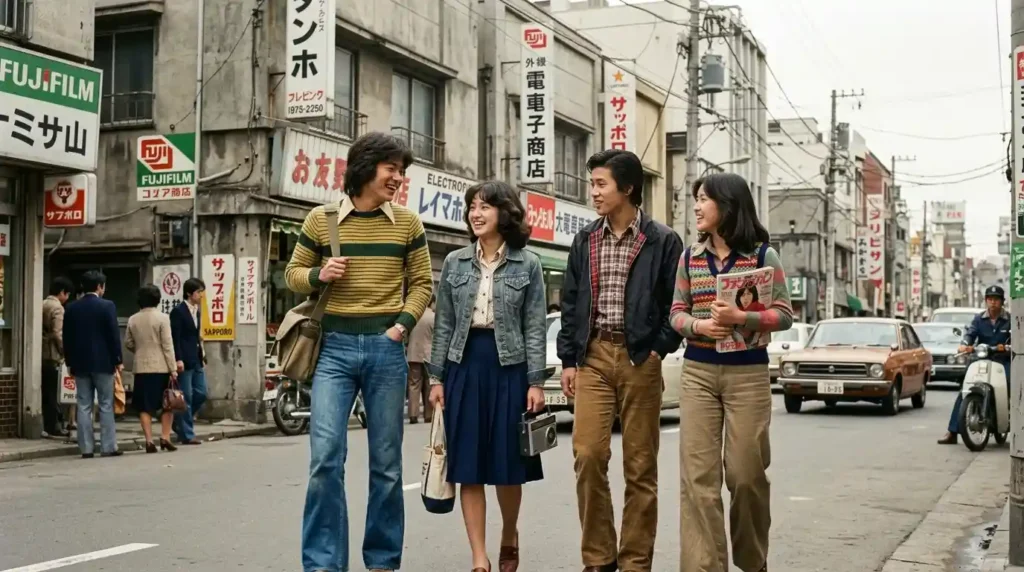
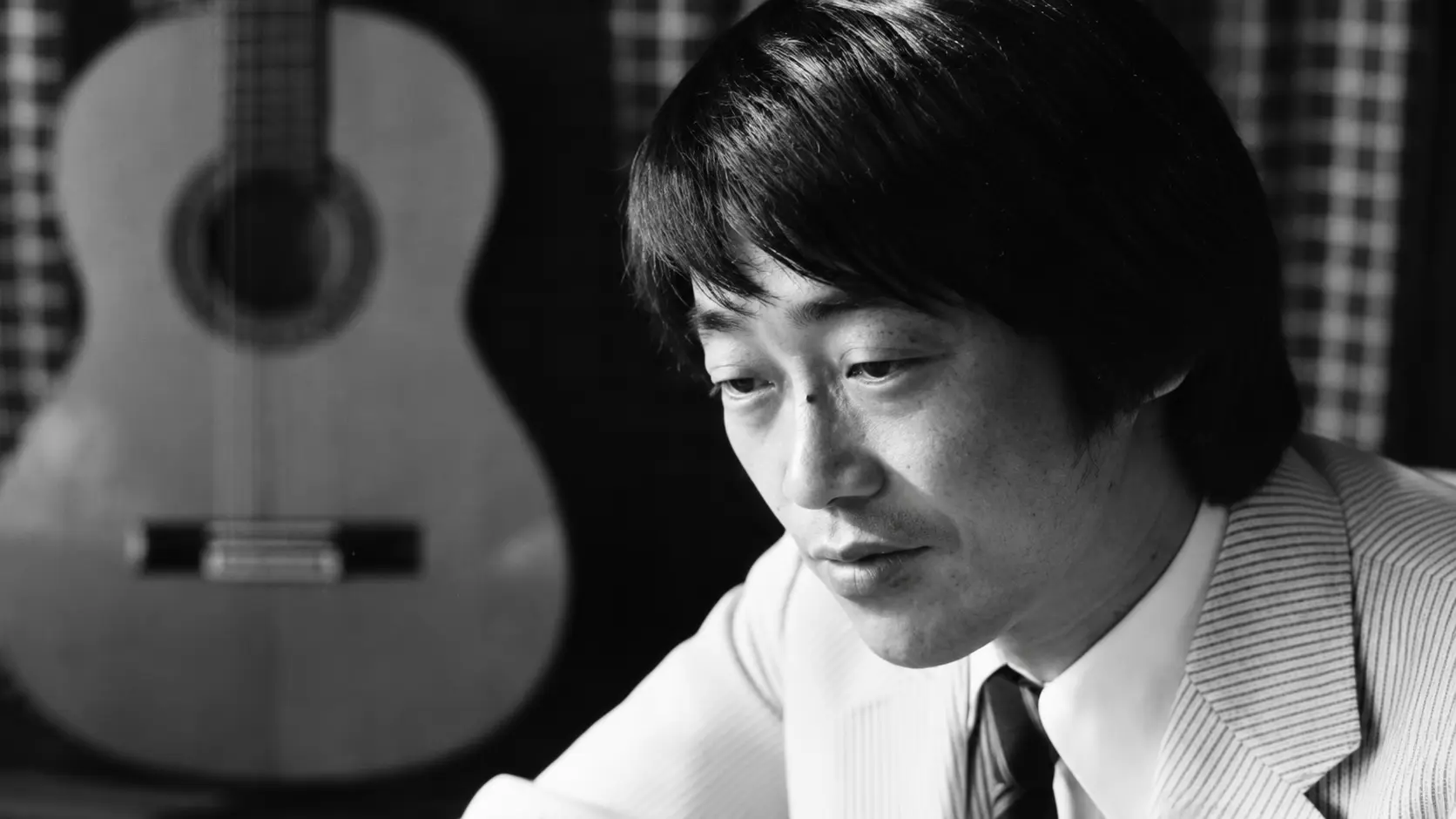
For me as well, the name Koichi Morita is almost inseparable from “Seishun Jidai.” But looking back over his career, it becomes clear that describing him simply as “the man who sang Seishun Jidai” tells only a small part of the story.
Before he was known as a singer, Morita was one of the composers who helped shape the golden age of Showa kayokyoku.
Mari Amachi’s “Hitori Janai no,” Akiko Wada’s “Ano Kane wo Narasu no wa Anata,” Junko Sakurada’s “Hajimete no Dekigoto,” Nana Okada’s “Seishun no Sakamichi,” and, later, Eigo Kawashima’s “Jidai Okure” — the singers and musical styles vary widely, yet all of these songs bear the name Koichi Morita as composer.
Meanwhile, the songs he performed with Top Gallants reveal a somewhat different world from the one found in the music he wrote for other singers: youth, separation, loneliness, and the passing of time. Even amid the glittering Japanese pop scene of the 1970s, there was something wistful, earthy, and deeply human in their music. Before beginning my “My Personal miniBest: Koichi Morita” series, I would like to look back at Morita’s musical journey, both as a composer and as a singer.
Chapter 1: From Hokkaido to Tokyo — The Origins of Composer Koichi Morita
Born in Hokkaido in 1940
Koichi Morita was born in Hokkaido in 1940. In 1959, he entered the Department of Music at Nihon University College of Art.
His Starting Point Was Writing Songs, Not Singing Them
One important thing to understand about Morita’s career is that he did not originally enter the music world with the goal of becoming a singer. At the center of his musical life was first and foremost the act of writing songs.
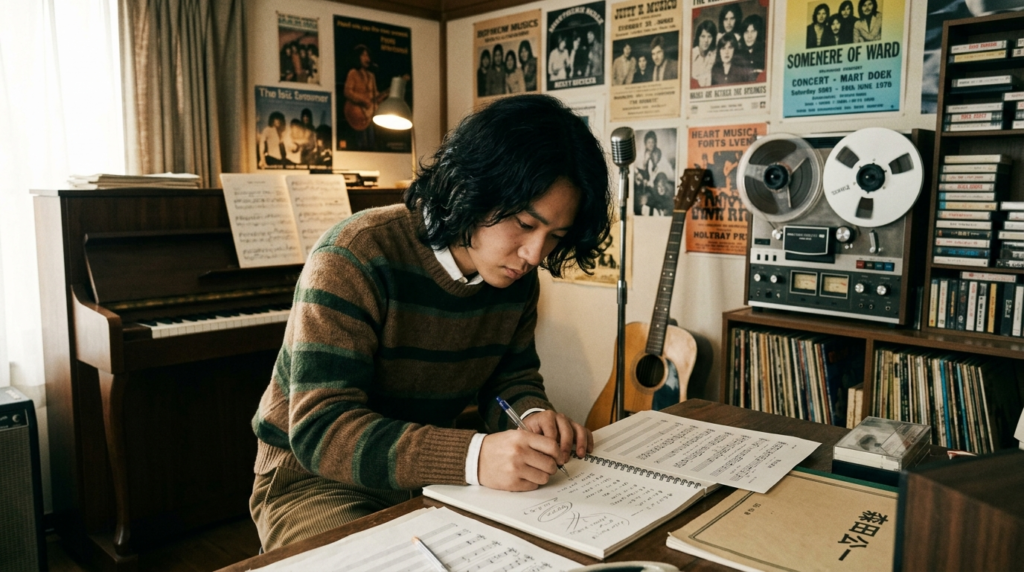
He would later step up to the microphone and perform many songs himself, but underneath it all was the sensibility of a composer.
A man who created songs eventually came to express his own compositions in his own voice. That progression is essential to understanding Koichi Morita as a musician.
The 1960s — Taking His First Steps as a Composer
Ryoko Moriyama’s “Aisuru Hito ni Utawasenai de”
One of the key works from Morita’s early career was “Aisuru Hito ni Utawasenai de”, released by Ryoko Moriyama in 1968. Morita himself wrote both the lyrics and the music.
In later years, he would produce numerous hits by setting melodies to the words of lyricists such as Yu Aku. In his early career, however, there were also songs for which he handled both words and music. By the latter half of the 1960s, the name Koichi Morita was steadily gaining prominence in the Japanese popular music world.
Chapter 2: The 1970s — The Rise of a Hitmaker
Songs That Changed Character with the Singer
Mari Amachi’s “Hitori Janai no”
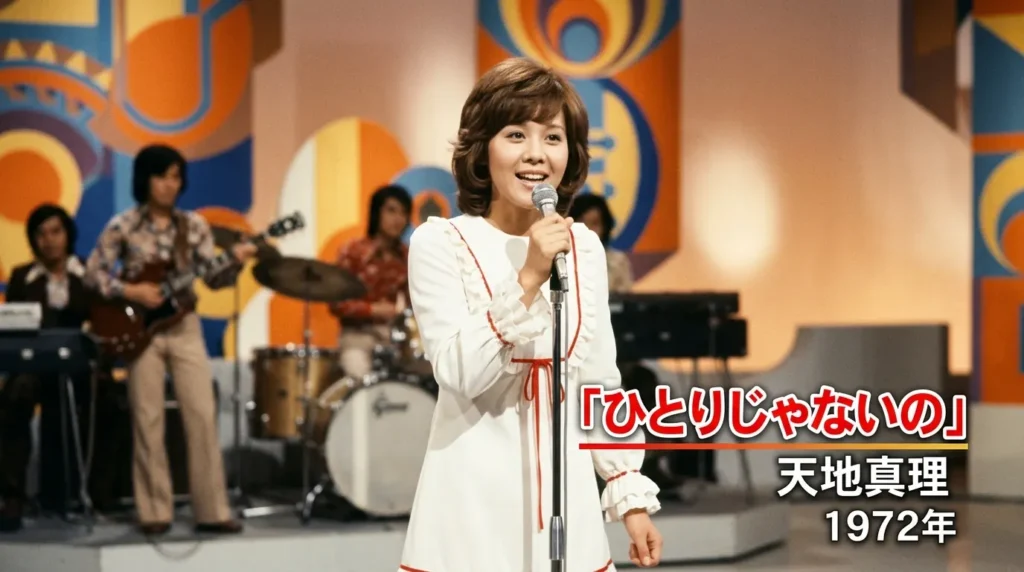
As the 1970s began, Morita produced one hit after another as a composer. In 1972, he composed and arranged Mari Amachi’s “Hitori Janai no”. Its bright, immediately accessible sound perfectly suited Amachi’s image at the time.
Akiko Wada’s “Ano Kane wo Narasu no wa Anata”
That same year, Morita composed and arranged Akiko Wada’s “Ano Kane wo Narasu no wa Anata”. Where “Hitori Janai no” is light and buoyant, this song is expansive and powerful, making full use of Wada’s commanding voice.
Although both songs were created by the same composer in the same year, they could hardly be more different in character.
Rather than forcing singers into his own musical mold, Morita wrote to suit each singer’s voice and personality. These two songs clearly demonstrate the breadth of his abilities as a composer. “Ano Kane wo Narasu no wa Anata” also earned Wada the Best Vocal Performance Award at that year’s Japan Record Awards.
Working with Yu Aku — Where Words and Melody Came Together
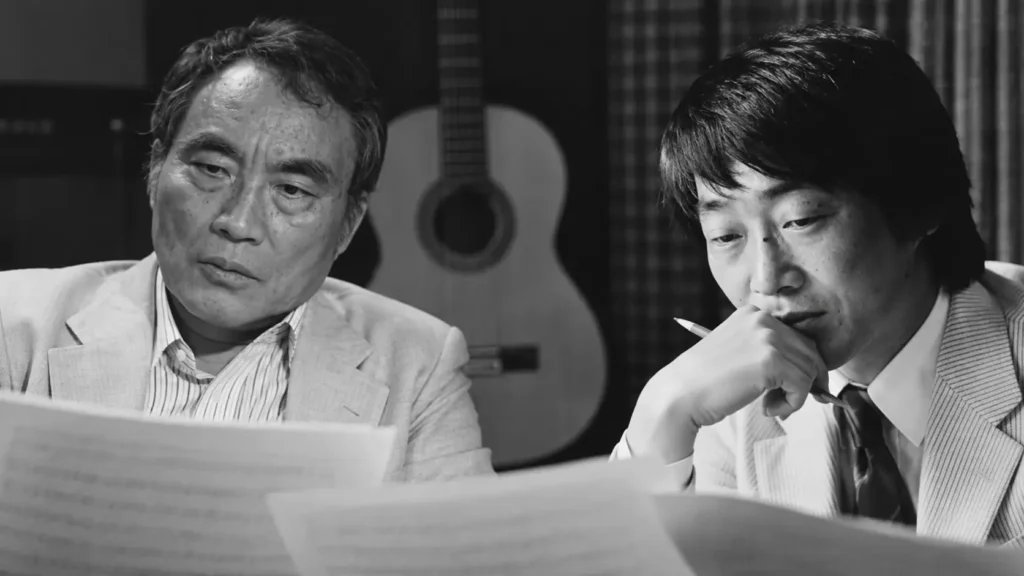
One name appears again and again when looking back over Morita’s career: lyricist Yu Aku.
Aku’s lyrics had a remarkable ability to bring a person or a scene vividly to life. Morita transformed those words into songs that ordinary people could remember and sing.
From Writing for Others to Singing the Songs Himself
Their collaborations produced numerous songs, including Akiko Wada’s “Ano Kane wo Narasu no wa Anata,” Junko Sakurada’s “Jushichi no Natsu,” and Yoichi Sugawara’s “Ubaguruma.” But their partnership did not end with songs written for other performers.
Before long, Morita himself began singing words written by Yu Aku.
Chapter 3: Koichi Morita & Top Gallants — When the Composer Became the Singer
Another Side of the Hitmaker
In the 1970s, Morita had another identity beyond that of a composer. He led Koichi Morita & Top Gallants and sang with the group himself.
For other singers, he wrote songs designed to bring out their individual qualities. In contrast, the songs he performed with his own group revealed people in a more modest, sometimes earthy and unvarnished way. Here was a somewhat different Koichi Morita from the polished hitmaker of mainstream kayokyoku.
“Geshukuya” — A Song with the Texture of Everyday Life
The 1975 Japan Record Award for Composition
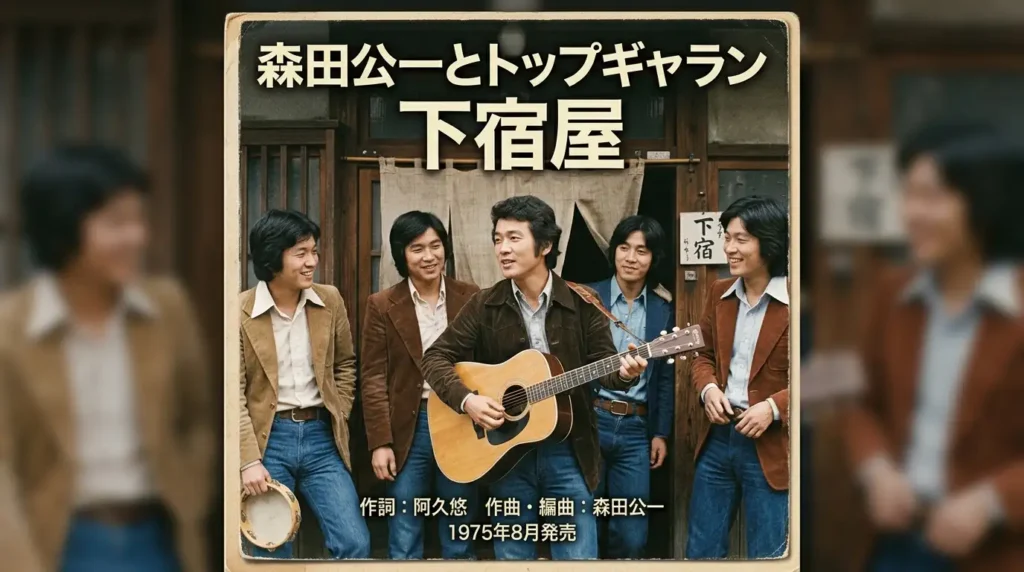
In August 1975, Koichi Morita & Top Gallants released “Geshukuya”. The lyrics were written by Yu Aku, with music and arrangement by Morita. The song earned Morita the Composition Award at the 17th Japan Record Awards.
That same year, Yu Aku received the Lyricist Award for Yoichi Sugawara’s “Ubaguruma,” another song composed by Morita.
Junko Sakurada’s “Jushichi no Natsu,” again with lyrics by Aku and music by Morita, was also associated with Sakurada’s Popularity Award at the Japan Record Awards. 1975 was a year in which the work of these two men had a particularly strong presence in Japanese popular music.
A Different Kind of Youth
At the time, the Japanese music scene was producing one glamorous hit after another, particularly through the booming idol industry.
Yet the world sung about by Morita and Top Gallants was not always bright. Poverty and loneliness within youth, the distance between people, and the passing of time. Rather than portraying youth only as a beautiful memory, they also sang about the loneliness that existed within it. That gave their music its distinctive character.
1976 — The Breakthrough of “Seishun Jidai”
The Signature Song Delivered in the Composer’s Own Voice
“Seishun Jidai” was released on August 21, 1976. I was in my third year of high school at the time.
With lyrics by Yu Aku and music and arrangement by Koichi Morita, the song brought widespread recognition to a composer who had already written numerous hits for other singers.
What makes this song so interesting is that, despite its title, it is not simply an anthem celebrating youth. When we are actually young, we do not necessarily know where we are going. Only after those years have passed do we begin to understand what they meant. Beneath the bright, memorable melody lies that sense of uncertainty.
For me, “Seishun Jidai” sounds completely different now from the way it did when I was young. Perhaps it is less a song for people living through youth than one that gains greater depth when heard by those looking back on it from a distance.
Another World Behind the Big Hit
When one song becomes overwhelmingly famous, the rest of an artist’s work can easily disappear into its shadow. Koichi Morita & Top Gallants may be a good example. They left behind a wide range of songs both before and after “Seishun Jidai.”
A View of Youth That Refused to Idealize It
Their songs do not simply romanticize being young. They explore the distance between people, what remains after separation, and emotions that change with time. Through ordinary scenes of everyday life, they reveal something recognizably human.
The approachable melodies keep the songs from becoming overly heavy, yet something remains after the music ends. That is precisely what drew me back to Top Gallants when I listened to them again.
Chapter 4: Koichi Morita as a Songwriter for Others — Hits That Colored the Showa Era
From Idols to Powerful Vocalists
Tracing Morita’s work as a composer reveals an astonishing range. He wrote for singers with very different voices and styles, including Mari Amachi, Junko Sakurada, Nana Okada, Akiko Wada, and Yoichi Sugawara.
His Mark on 1970s Idol Pop
His compositions included Junko Sakurada’s “Hajimete no Dekigoto” in 1974 and “Jushichi no Natsu” in 1975, followed by Nana Okada’s “Seishun no Sakamichi” in 1976. (Junko Sakurada and I were born in the same year.)
“Hajimete no Dekigoto” became Sakurada’s first No. 1 single on the Oricon chart, while “Seishun no Sakamichi” remains one of Okada’s best-known songs. Morita’s ability to bring out a brightness and youthful quality quite different from the songs he sang himself also demonstrates his skill as a professional composer.
Koichi Morita’s Music for Children
“Minami no Shima no Hamehameha Daio”
Morita’s work was not limited to kayokyoku and idol pop for adults. “Minami no Shima no Hamehameha Daio”, broadcast on NHK’s Minna no Uta in 1976, was written by lyricist Akira Ito and composed by Morita. The original broadcast was performed by Ado Mizumori and Top Gallants.
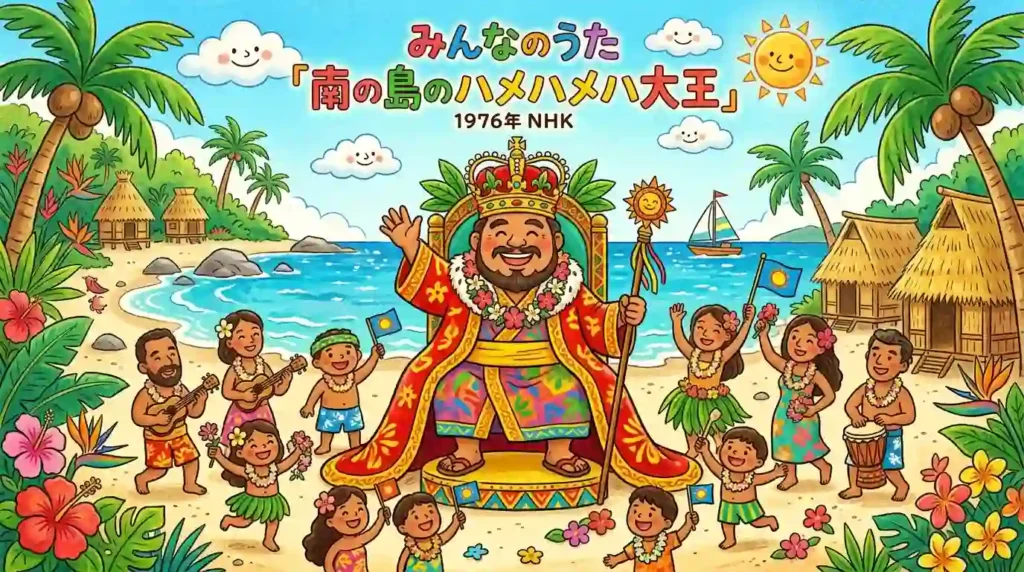
Realizing that this instantly memorable children’s song came from the same composer gives a good sense of the breadth of Morita’s work. He could create entirely different musical worlds according to the singer and the audience.
Chapter 5: Television and Anime — His Music in Other Places
Beyond Kayokyoku
Morita’s work was not confined to kayokyoku singles. His name can also be found in theme songs for television programs and animated series.
Theme Songs for Princess Sarah and Little Women
For the 1985 anime Princess Sarah, Morita composed the opening theme “Hana no Sasayaki” and the ending theme “Himawari.” For the 1987 series Little Women, he also composed the later opening theme “Itsuka Kitto!” and the ending theme “Otosama e no Lullaby.”
He was not responsible for the complete background scores of these series, but his compositions nevertheless reached television audiences through their theme songs. It is another side of his career that can easily be overlooked if we focus only on his 1970s kayokyoku hits.
Chapter 6: The 1980s — Toward “Jidai Okure”
1986 — Eigo Kawashima’s “Jidai Okure”
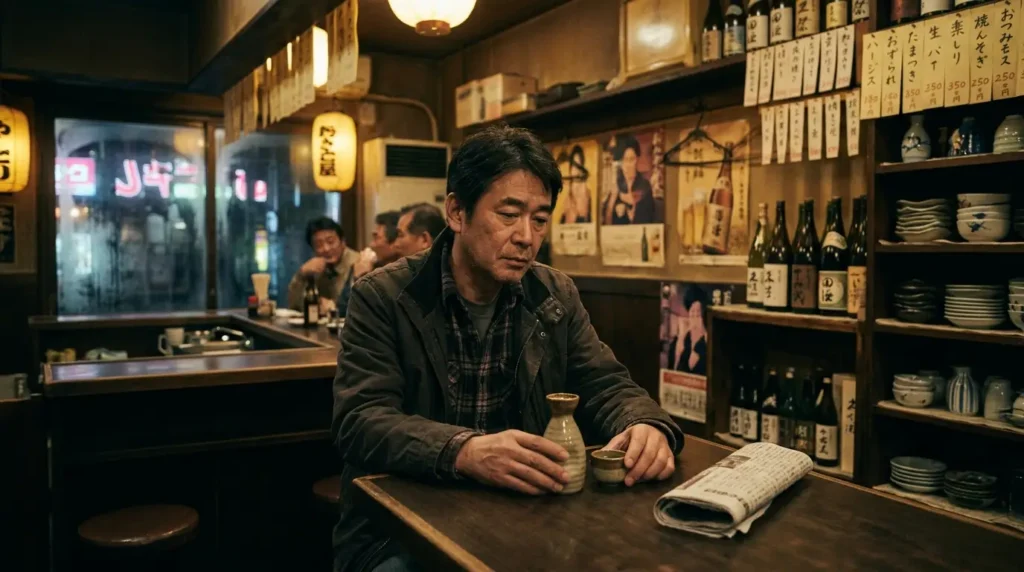
In 1986, another enduring song emerged from the partnership of Yu Aku and Koichi Morita: Eigo Kawashima’s “Jidai Okure.” The lyrics were written by Aku, with music by Morita.
From Youth to a Grown Man’s Way of Life
This was a completely different world from the glamorous idol pop of the 1970s. Rather than seeking attention, the song values remaining true to one’s own way of life. Rather than adapting skillfully to the times, it is about holding on to what matters as a human being. Kawashima’s powerful, unadorned voice gave that world a compelling sense of conviction.
Ten years had passed since “Seishun Jidai.” From a song looking back on youth to one portraying the way an older man chooses to live, the words of Yu Aku and the music of Koichi Morita once again came together in a song that would remain in the hearts of many listeners.
Chapter 7: What Defined Koichi Morita’s Music?
The Range of a Professional Composer
Looking back over these songs, it is difficult to define Morita’s work through a single musical style. “Hitori Janai no” and “Ano Kane wo Narasu no wa Anata,” or “Minami no Shima no Hamehameha Daio” and “Jidai Okure,” each demanded something entirely different from the composer.
Yet one quality runs through much of his work: his melodies stay in the ear without overwhelming the lyrics. He brought out the individuality of the singer and allowed the words to reach the listener naturally, while still creating songs that could be remembered after a single hearing. Rather than simply imposing his own musical identity, he considered who was singing and what they were singing. That, I think, was where Koichi Morita’s strength as a professional composer truly lay.
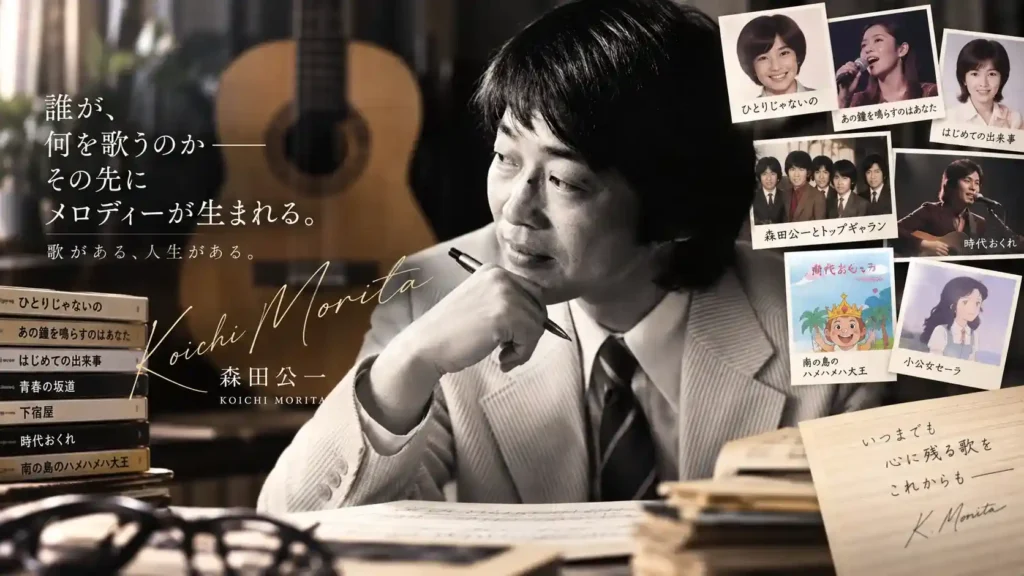
And What Appeared When He Sang His Own Songs
A Different Side Revealed with Top Gallants
When Morita himself sang, however, something changed. He was not the kind of singer who relied on overwhelming vocal power or technical display. Even so, his slightly dry, understated delivery brought out the uncertainty of youth, human loneliness, and the sadness of time slipping away. (I have always loved this side of his music.)
There was the professional composer who wrote songs for many different singers, and there was the performer who portrayed more intimate, everyday human scenes in the songs he sang with his own group. The coexistence of those two sides is, for me, what makes Koichi Morita such an interesting musician.
Epilogue — What Remains After the Song
For this article, I listened again to a wide range of Morita’s songs. Did these songs survive because they became famous, or did they become famous because they possessed something that allowed them to endure? Listening again to music written nearly half a century ago, I find myself wondering about that.
Morita’s songs do not necessarily overwhelm you the moment you hear them. Instead, something seems to remain quietly afterward. Neither the words nor the melodies are difficult, yet they do not disappear with time. They return unexpectedly, sometimes long after the music has ended. There is a quiet strength in his songs that makes them linger.
He sang about youth without making youth the whole story. He sang about loneliness without leaving only darkness behind. Beneath the approachable melodies lie human frailty and the quiet passage of time. That is what makes listening to Koichi Morita so rewarding for me today.
Next, I will begin “My Personal miniBest: Koichi Morita.”

音楽ファン同士の交流・リクエストはこちら / Connect & Request Songs Here