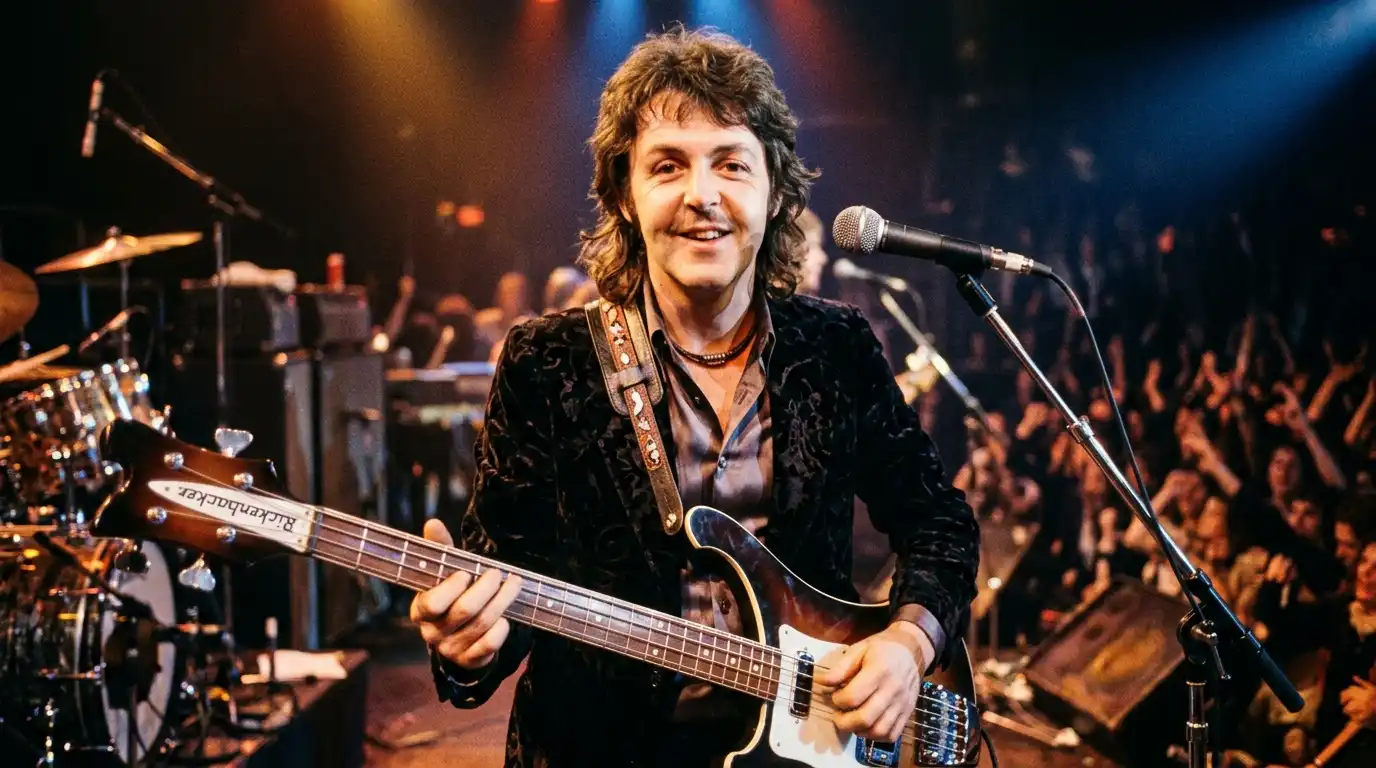
Explore Paul McCartney’s Journey Here!
- 🎧 Enjoy This Article in Audio
- No. 4: “Listen to What the Man Said”
- First, Listen to the Official YouTube Video
- Why Does This Song Feel So Good to Hear?
- From New Orleans to Los Angeles
- Wings Sound Like a Real Band
- Paul’s Vocal Is at the Heart of the Song’s Brightness
- In Closing — Love Doesn’t Have to Be Complicated
🎧 Enjoy This Article in Audio
You can quickly explore the key points of this article through narration.
Recommended if you would like to get a sense of the appeal of “Listen to What the Man Said” and the overall flow of the article before reading.
🎵 English Narration
An English narration introducing the content of this article.
🎶 Japanese Narration
A Japanese narration introducing the content of this article.
Listening first can make it easier to grasp the appeal of “Listen to What the Man Said” and the key points of the article.
No. 4: “Listen to What the Man Said”
My No. 4 Paul McCartney song is “Listen to What the Man Said.”
Released as a Wings single on May 16, 1975, it was also included on the album Venus and Mars, released on May 30. I was 16 years old and in my second year of high school at the time.

The song reached No. 1 in the United States and sold more than one million copies.
It also climbed to No. 6 in the UK. Following the enormous success of Band on the Run, the song became one of the defining hits of a period when Wings were carrying that momentum into their next chapter.
But what draws me to this song has little to do with chart positions or sales figures. From the opening moments to the very end, the music seems constantly alive, pulling the listener along with it. No matter how many times I hear it, it has a way of lifting my mood.
My Interpretation of the Lyrics
People have all kinds of things to say about love.
But to me, love is something gentler, something that quietly embraces us.
No matter what anyone else says, two people should follow their own path and let their love grow.
For now, all they need to do is believe in the wonderful things that may lie ahead.
First, Listen to the Official YouTube Video
🎵 “Listen to What the Man Said”
Artist: Paul McCartney & Wings
Written by: Paul McCartney, Linda McCartney
Album: Venus and Mars (1975)
Video: PaulMcCartney.com Track of the Week
Published: November 20, 2012
Official Channel: PAUL McCARTNEY
📝 Two-Line Overview
A bright and buoyant pop song that stands among the highlights of the 1975 album Venus and Mars.
Paul’s instantly appealing melody is given an extra burst of color by Tom Scott’s distinctive saxophone.
Why Does This Song Feel So Good to Hear?
The first thing I notice when I hear “Listen to What the Man Said” is the sense of brightness that runs through the entire song. But it is more than simply cheerful. The rhythm, bass, guitars, and vocals never compete for attention; instead, each element seems to invite the next one naturally into the music.
Paul’s melody is constantly moving, yet it never feels restless. From the opening vocal to the chorus, one phrase flows smoothly into the next, and before long, the listener is simply carried along by the song’s momentum.
It Never Forces Its Happiness on You
There are no grand declarations of love here, nor any dramatic build toward an emotional climax. And yet, by the time the song ends, it leaves you feeling remarkably uplifted.

At its heart is a simple, optimistic idea: whatever other people may say about love, two people should follow their own path. Rather than explaining that idea through argument or philosophy, the song communicates it through the sheer buoyancy of the music itself.
The Japanese Title Gives a Rather Different Impression
The Japanese title, Ano Ko ni Osekkai, roughly suggests “meddling in that girl’s affairs.” It is certainly memorable, but it gives a rather different impression from the original title, “Listen to What the Man Said.”
The song is not really about interfering in someone else’s romance. To me, its message is much broader: people may have all kinds of opinions about love, but in the end, you have to trust what you feel. There is an easygoing optimism in that outlook on life.
From New Orleans to Los Angeles
For the making of Venus and Mars, Wings traveled to New Orleans. Paul, Linda, and Denny Laine were joined by guitarist Jimmy McCulloch and drummer Joe English, establishing a new lineup for the band.
The album was recorded in New Orleans and Los Angeles.
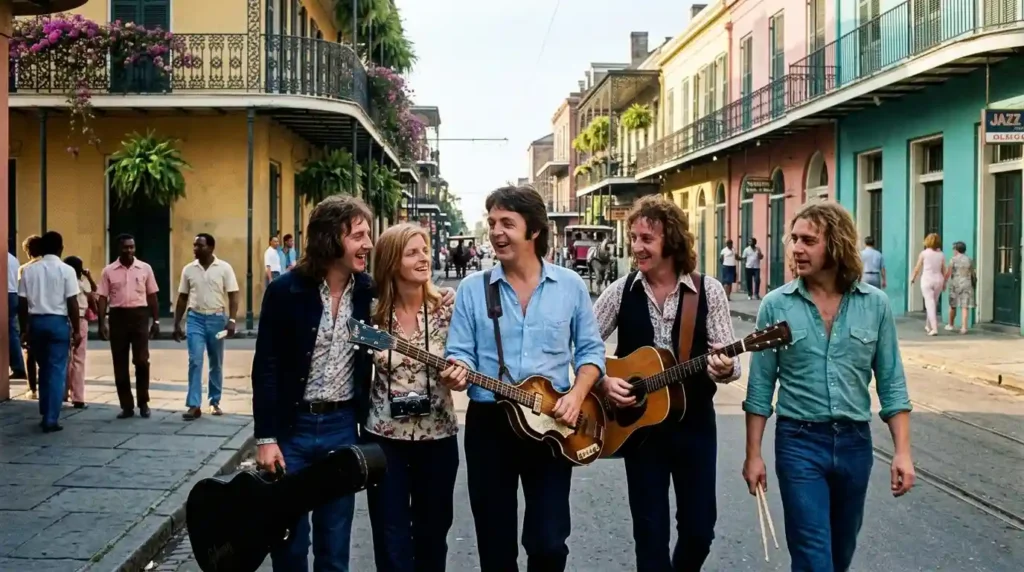
Paul later recalled that although they did not simply transplant the distinctive musical styles of New Orleans into the album, spending time there affected the atmosphere in which they worked and contributed to the vitality of the record.
A Promising Song That Still Seemed to Be Missing Something
“Listen to What the Man Said” did not immediately take shape as the finished recording we know today. Paul had high hopes for the song itself, but after recording the backing track in New Orleans, he felt that the result had not quite lived up to his expectations.
Later, in Los Angeles, former Traffic guitarist Dave Mason added guitar. Even then, something still seemed to be missing. It is surprising to think that a song that now sounds so effortless was, during production, still searching for that final ingredient.
Tom Scott’s Very First Saxophone Take
That was when saxophonist Tom Scott entered the picture. When he arrived at the studio and began playing along with the song, the engineer was already recording him.
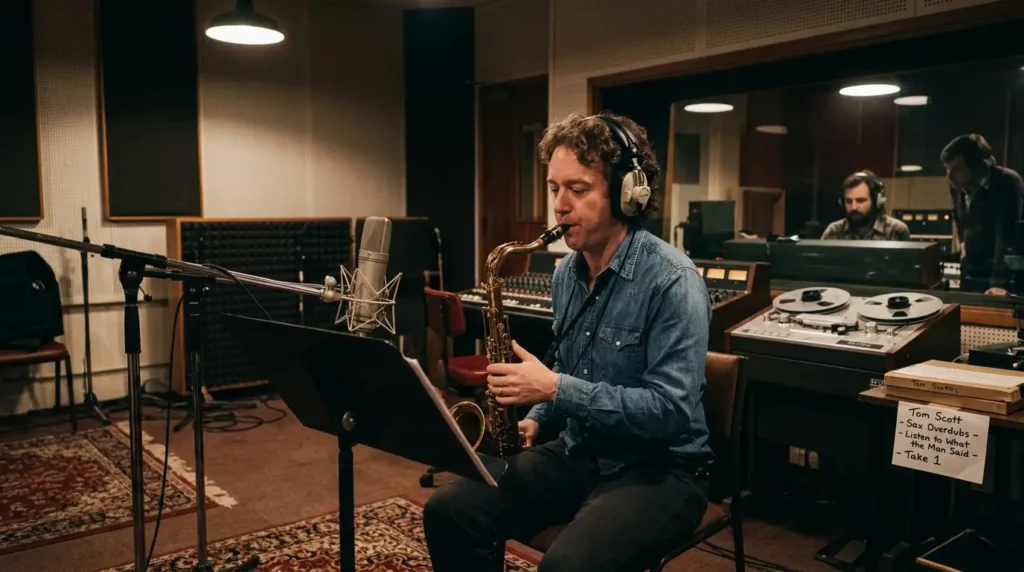
Scott later tried several more takes, but none captured quite the same feeling as that first performance. In the end, it was the original take that made the finished record. Instead of a carefully refined performance, what survived was his spontaneous reaction to the song the first time he played it.
The Saxophone Becomes Another Melody
When you listen closely, Tom Scott’s saxophone does not feel like a conventional solo inserted into the middle of the song. It functions almost like another voice within the arrangement, responding to Paul’s singing and weaving between the vocal phrases to create its own sense of movement.
This becomes especially striking in the latter part of the song, where the vocal and saxophone overlap and gradually raise the energy. Yet the arrangement never feels overcrowded.
Knowing that the recording had seemed to be missing something before Scott arrived makes perfect sense once you hear the finished version.
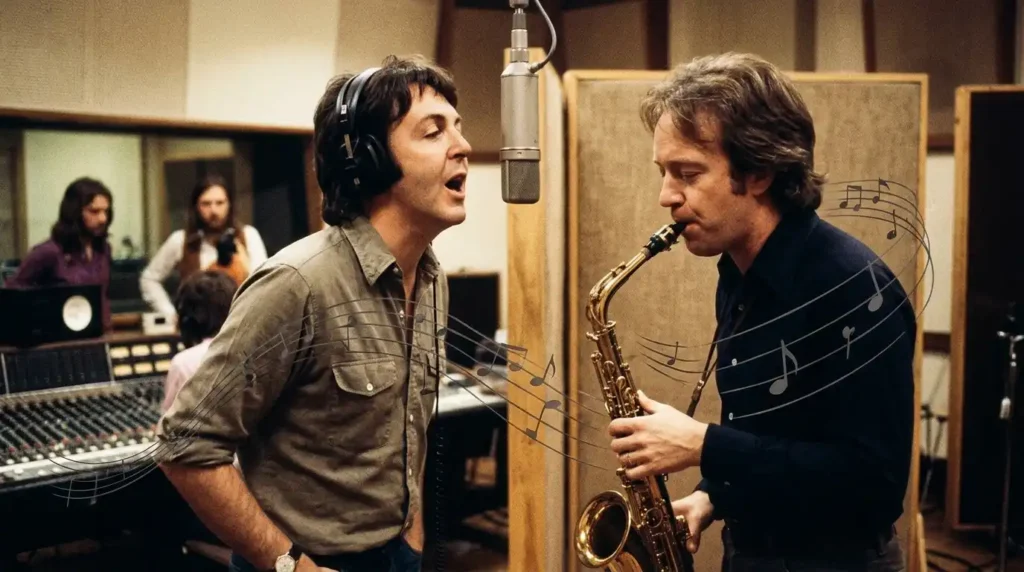
Wings Sound Like a Real Band
Another thing that draws me to this song is that it showcases not only Paul’s songwriting ability, but also how strong Wings had become as a band by this point.
Joe English’s drumming is crisp and agile, and together with Paul’s bass, it gives the song a steady drive that keeps everything moving forward.
Then come the guitars of Jimmy McCulloch and Dave Mason, the backing vocals of Linda and Denny Laine, and, of course, Tom Scott’s saxophone. There are many elements in the arrangement, yet each one seems to have its own clearly defined place.
After the Success of Band on the Run
The previous album, Band on the Run, had brought Wings worldwide success. On Venus and Mars, rather than simply repeating that formula, the band seemed determined to find its next identity with a new lineup.
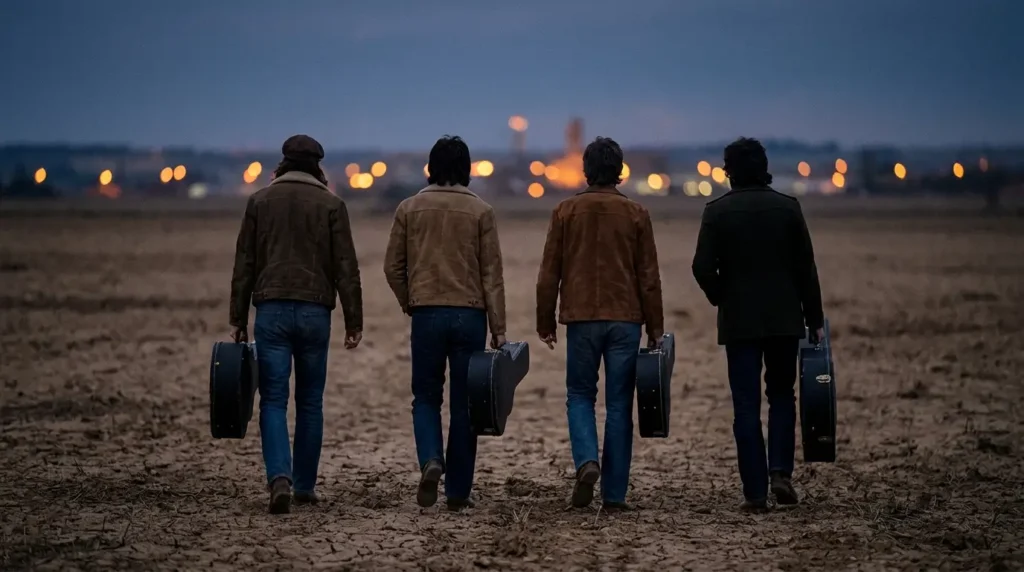
“Listen to What the Man Said” is one of the most accessible examples of that change.
Although the song was written by Paul and Linda and produced by Paul, the individual personalities of the musicians who took part remain clearly audible in the finished recording.
A Sound Paul Could Not Have Created Alone
This is one of the aspects of the recording process that I find especially interesting. Paul is, of course, at the center of the song, but one of the sounds that ultimately defined the finished record came from an outside musician: Tom Scott, playing saxophone with almost no preparation.
The ability to write a great song and the ability to recognize exactly what that song needs are not necessarily the same talent. Paul was willing to accept what another musician brought into his own work and, even when a performance emerged almost by accident, keep it if it was right. That says a great deal about his judgment as a producer.
Paul’s Vocal Is at the Heart of the Song’s Brightness
So far I have focused mainly on the playing and arrangement, but what makes “Listen to What the Man Said” so immediately approachable is, above all, Paul’s voice. Rather than pushing his vocals or emphasizing every emotion, he carries the melody with an easy, relaxed delivery.
What strikes me most is the brightness in the voice itself. Instead of passionately insisting that we should believe in love, he seems almost to be saying, “Maybe we don’t have to make it all so complicated.” That lack of strain suits the song perfectly.

The Melody Comes Alive Because He Never Forces It
Paul never weighs the phrases down unnecessarily. Rather than pushing every word to the front, he lets his voice follow the natural flow of the melody. As a result, the vocal never interferes with the song’s momentum.
And although the performance sounds effortless, his control of pitch and rhythm is remarkably precise. Singing that sounds completely natural often requires considerable skill. Here, that technique never calls attention to itself; it simply becomes part of the pleasure of the music.
A Different Side of His Voice from “Maybe I’m Amazed”
Paul can also deliver a performance driven by the sheer power of his voice, as he does on “Maybe I’m Amazed.” But “Listen to What the Man Said” calls for something entirely different.
Here, his vocal slips naturally into the arrangement and helps maintain the song’s brightness from beginning to end. The fact that the same singer can use his voice so differently depending on the song is another part of Paul’s appeal as a vocalist.
In Closing — Love Doesn’t Have to Be Complicated
At the heart of “Listen to What the Man Said” is a remarkably straightforward idea: whatever other people may say, perhaps we should simply trust in love.

Paul turns that idea into a pop song of about four minutes without ever making it sound preachy. Behind it lies not only his melodic gift, but also the strength of Wings as a band and his willingness to embrace an unexpected performance when it gave the song exactly what it needed.
For me, “Listen to What the Man Said” is one of those songs that naturally lifts my spirits every time I hear it. The same music I heard when I was 16 still gives me that sense of enjoyment more than 50 years later. Perhaps that, in itself, says something about the enduring strength of this song.
音楽ファン同士の交流・リクエストはこちら / Connect & Request Songs Here