
Click here for Yosui Inoue’s History!
- 🎧 Enjoy This Article in Audio
- No. 5 is “Shonen Jidai” (Boyhood)
- First, Please Listen via These YouTube Videos
- The Authentic Reality Born from the Resonance of “Kaze Azami”
- Natsumi Hirai’s Piano Weaves a Tender, Yet Sorrowful Boundary
- The Unparalleled Depth of Emotion Woven by Japanese Phonetics
- The Universality of a Melody Resonating Beyond Eras and Performers
- Conclusion
🎧 Enjoy This Article in Audio
You can quickly grasp the main points of this article through narration.
Recommended for those who want to catch the vibe of the music and the flow of the article before reading.
🎶 English Narration
An English audio introduction to the contents of this article.
⌛ Duration: Approx. 4 mins 15 secs
🎵 Japanese Narration
A Japanese audio introduction to the contents of this article.
⌛ Duration: Approx. 4 mins 10 secs
* Listening to the audio before reading helps you better understand the world of the music and the main points of the article.
No. 5 is “Shonen Jidai” (Boyhood)
Released in September 1990, “Shonen Jidai” (Boyhood) stands as the biggest hit in Yosui Inoue’s career. Today, it has become a true national anthem in Japan, even featured in music textbooks nationwide.
Many may remember it fondly as the theme song for the Sony Handycam commercials. (According to Oricon charts, this track is Yosui Inoue’s most prominent hit, selling approximately 850,000 copies.)

Yet, the reason this song continues to captivate people’s hearts so deeply goes far beyond the simple evocation of nostalgia.
Carried by the exquisite piano melody crafted by Natsumi Hirai, the song delivers a mystical world where the very “sound of the words” weaves vivid imagery that transcends literal meaning.
As we surrender to the familiar, comforting melody, we find ourselves gently guided beyond the boundaries of our own personal memories, straight into the “original landscape” that everyone harbors deep within their soul.
In this article, I would like to delve a bit deeper into the harmony of sound and language woven by Yosui, looking behind the scenes of this immensely famous masterpiece.
Essence Translation: The Worldview of the Lyrics
The season shining in golden hues quietly draws to a close, as a somewhat familiar breeze sweeps through the streets.
The night sky we looked up to with racing hearts, and the contours of our minds swaying with faint yearnings, remain vividly etched upon the distant boundaries of memory.
When looking out the window amidst the bustling reality of daily life, that lost time still calls out to our hearts under a different name.
💡 You might also like: View the lyrics(External site)
If the lyrics are displayed only in Japanese, you can use your browser’s translation feature or an AI translation tool to understand the general meaning.
First, Please Listen via These YouTube Videos
Common Credits
Song Title: Shonen Jidai (Boyhood)
Original Vocal: Yosui Inoue
Lyrics: Yosui Inoue
Composition: Yosui Inoue, Natsumi Hirai
Arrangement: Seiji Katsu, Yosui Inoue
Original Single Release: September 21, 1990
Featured Album: "Handsome Boy"
Note: Theme song for the Toho film "Shonen Jidai".
Please click the image below.
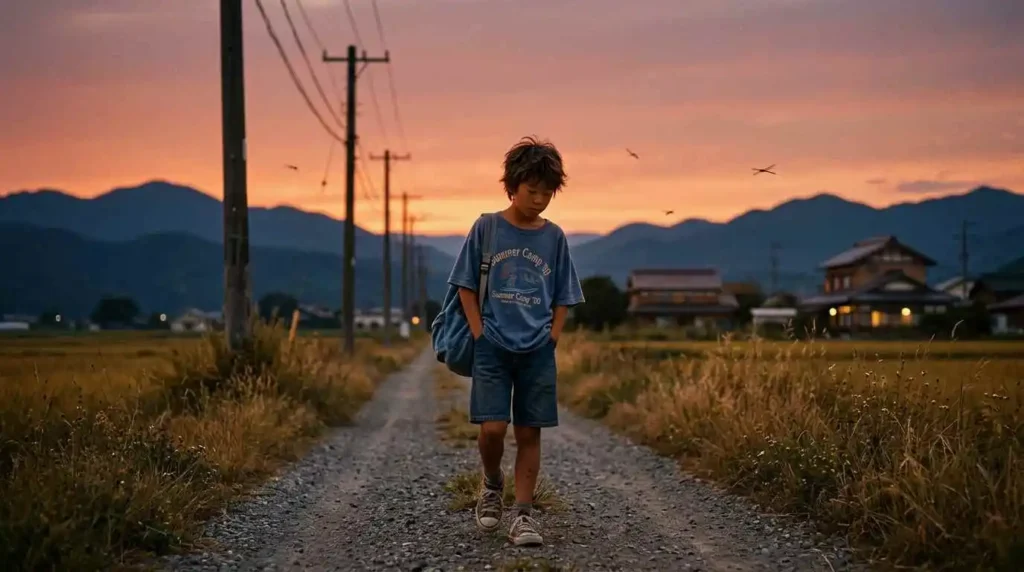
This is the original 1990 studio recording. Beginning with the serene, quiet piano intro, Yosui's wonderfully transparent vocals layer on top, instantly transporting the listener to a faraway place. It is a fully realized sanctuary of sound that cannot be categorized merely by the word nostalgia.
Next is a live audio recording backed by a full orchestra, offering an undeniable sense of scale. (Please click the image below.)

The grand orchestral arrangement expands the song's inherent lyricism manifold. Unlike the private texture of the studio version, this performance hits you with a breathtaking emotion, as if you have just finished watching an epic film. Yosui's vocals beautifully convey the stillness of late summer and a tender gaze toward unreturning time. Yosui Inoue "Shonen Jidai" Live Video. (Recording year and venue unconfirmed.)
Following that is a live video featuring a different, simpler piano-centric configuration. (Please click the image below.)
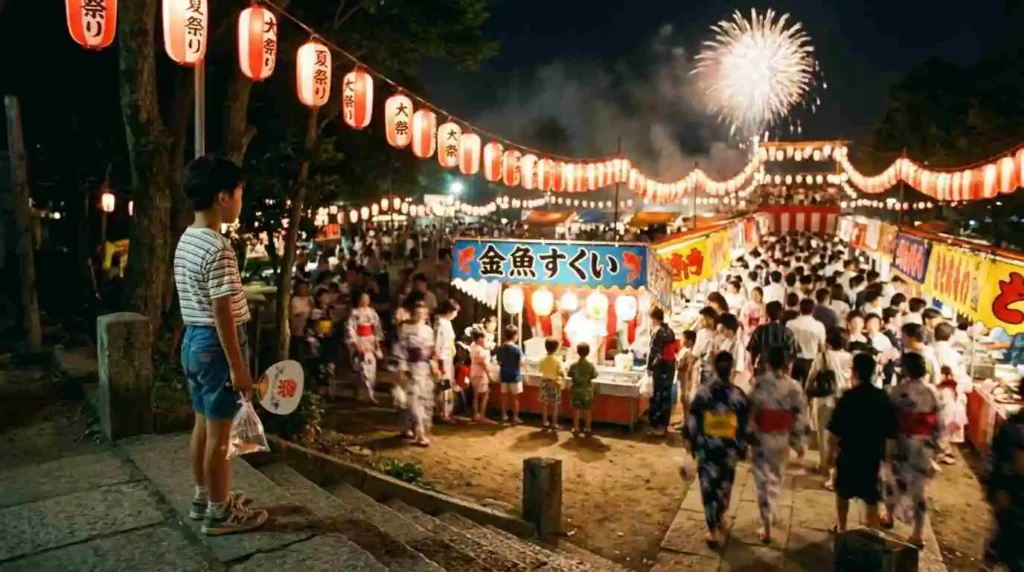
Yosui Inoue "Shonen Jidai" Live Video
From "ap bank fes ’12 Fund for Japan" held at Michinoku Park, Miyagi Prefecture on August 19, 2012.
Yosui's detached, calm vocals dissolve seamlessly into the late summer air and the quiet fervor of the venue. Though it sings of a deeply personal childhood memory, it beautifully reawakens the summer memories of every single listener.
(Note: To ensure full copyright consideration, non-official video distributions on this blog are not embedded directly. Instead, they are linked to external sites via custom images.)
Next is an official cover version by Hikaru Utada. A true diva who can master any musical genre. Truly brilliant!
Credits
Song Title: Shonen Jidai
Original Song: Yosui Inoue "Shonen Jidai"
Lyrics: Yosui Inoue
Composition: Yosui Inoue, Natsumi Hirai
Video: From the DVD "20-Dai wa Ikeike!"
Event: A live streaming event held on January 19, 2003, to commemorate Hikaru Utada's 20th birthday
Note: Official cover video by Hikaru Utada
Two-Line Review
This cover captures Hikaru Utada quietly singing Yosui Inoue's classic "Shonen Jidai" at the milestone age of 20.
While preserving the nostalgia of the original track, it infuses Utada's signature transparency and introspective resonance.
The Authentic Reality Born from the Resonance of “Kaze Azami”
The mysterious gravitational pull of this track dwells in the quiet resonance of the opening words.
The moment we hear the first phrase, “Natsu ga sugi, Kaze azami” (Summer has passed, the wind-thistle), our consciousness is instantly drawn into that unique atmosphere.
No matter how many pages of a botanical dictionary you turn, a plant named “Kaze Azami” does not exist.
This is an expression Yosui intuitively coined from the sheer phonetics of the words and the beauty of the characters’ alignment. Nevertheless, the moment this sound touches our ears, a distinct imagery rises effortlessly in our minds: the sight of lonely late-summer grasses gently swaying in the breeze, and the tactile sensation of a cool wind brushing against the skin.

Natsumi Hirai’s Piano Weaves a Tender, Yet Sorrowful Boundary
The iconic melody of “Shonen Jidai” was born from a close collaboration between Yosui and co-composer Natsumi Hirai (Shinji Kawahara).
Having crossed paths during a recording project for Yoko Oginome, they are said to have carefully layered their creative sensibilities around fragmentary motifs brought in by Yosui to craft this beautiful melody.
In particular, the piano chord progressions that support the song’s spine from the intro onward are brilliantly designed to gently envelope the listener’s emotions. A heart-wrenching minor chord is softly slipped into the bright major key. It feels as though the shadow of autumn creeping right behind the brilliant summer light has been directly translated into sound.
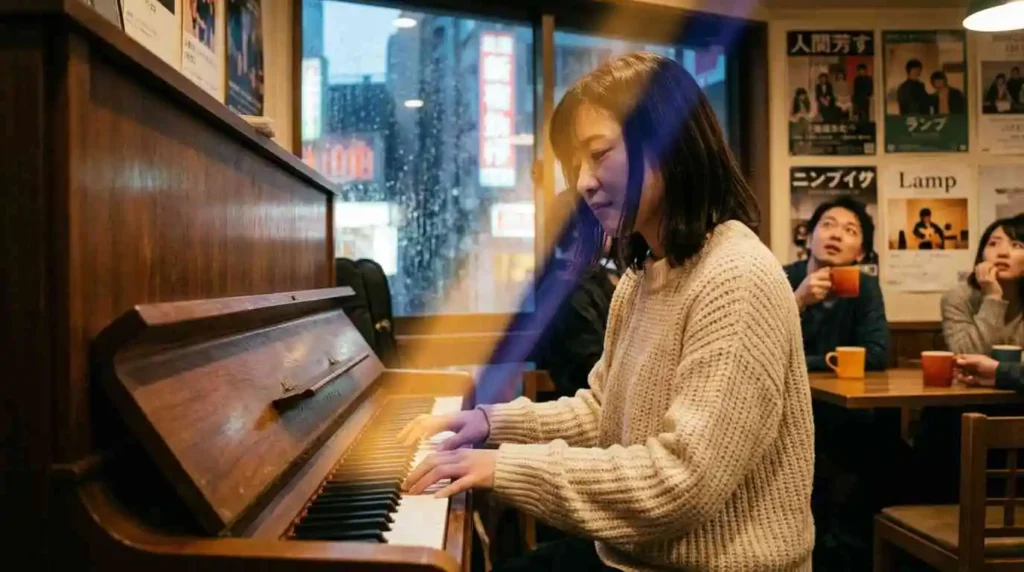
Seiji Katsu’s meticulous arrangement ensures that this piano resonance never declines into overly sweet sentimentality.
The placement of the strings and woodwinds remains entirely rational, maintaining a baseline of comfortable elegance between the listener and the music.
When the phonetic resonance of the words meets these perfectly calculated chords, our memories are quietly carried back to that summer. The landscape presented by this soundscape is not merely a place for indulging in simple nostalgia.
Rather, it quietly yet profoundly conveys the profound beauty of a time that can never be returned to.
The Unparalleled Depth of Emotion Woven by Japanese Phonetics
When discussing the beauty of this song, it is impossible not to touch upon the unique phonetic qualities of the Japanese language and the delicate emotional textures they bring forth.
The words Yosui spins do not serve merely as tools for transmitting literal meaning; they reach our ears carrying the distinct resonance of individual vowels and a rhythm deeply rooted in the Japanese psyche, baseline-derived from traditional poetic meters.
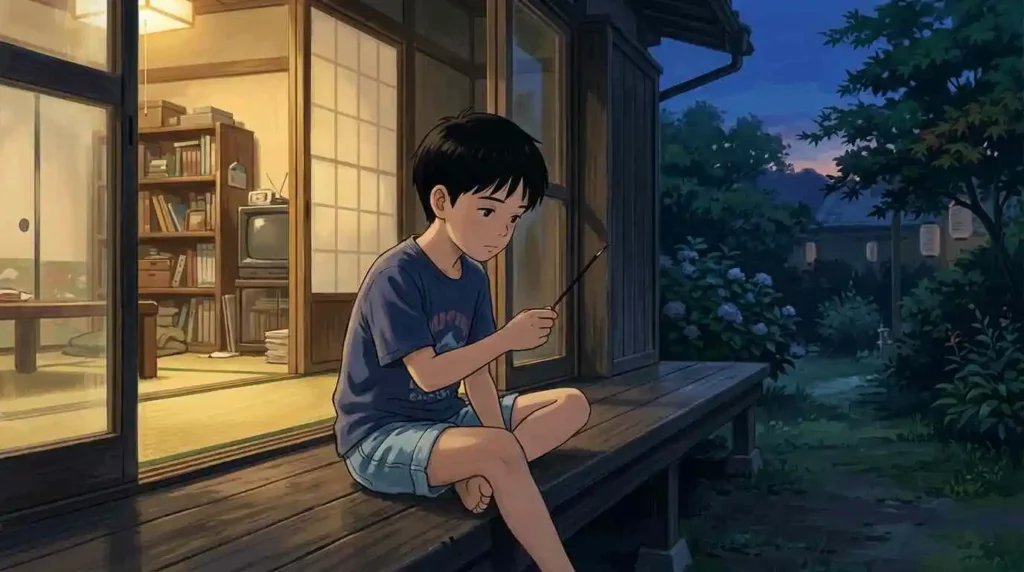
Looking at the arrangement of phrases like “Natsu matsuri, Yoi kagari” (Summer festival, evening bonfire) or “Hachigatsu wa, Yume hanabi” (August is a dream firework), one feels as if they are gazing at a delicate ink-wash painting or a postcard capturing the fleeting transitions of the seasons. It stands entirely apart from the dynamic beats or straightforward emotional expressions of Western music. Music that so flawlessly captures the damp temperature of the wind or the sudden hush of approaching dusk is surely rare on a global scale.
_202-1024x572.webp)
This inherent grace of the Japanese language and the subtle shadows cast between the words never make excessive demands on the listener. The song simply rests there, serving as a quiet vessel for listeners to project their own life memories upon.
This extreme refinement of language is likely the definitive factor that allows it to capture hearts across national borders and generations alike.
The realization that the Japanese language we casually use in our daily lives can sound so beautiful and noble is profound. Witnessing such a miraculous moment makes it easy to understand why this song is regarded as a pinnacle in the history of Japanese popular music.
The Universality of a Melody Resonating Beyond Eras and Performers
Another singular trait of this song is that its core elegance never wavers, regardless of how it changes its form.
The four distinct musical approaches introduced earlier carry completely different stylistic garments, yet each brilliantly validates the deep lyricism at the core of the song.
From the private tranquility of the studio recording to the rich expansive world of the orchestra, and further to Hikaru Utada’s introspective, modern interpretation, “Shonen Jidai” shines uniquely in every single rendition.
While revealing new facets each time the vessel changes, the profound worldview of the song is never compromised.
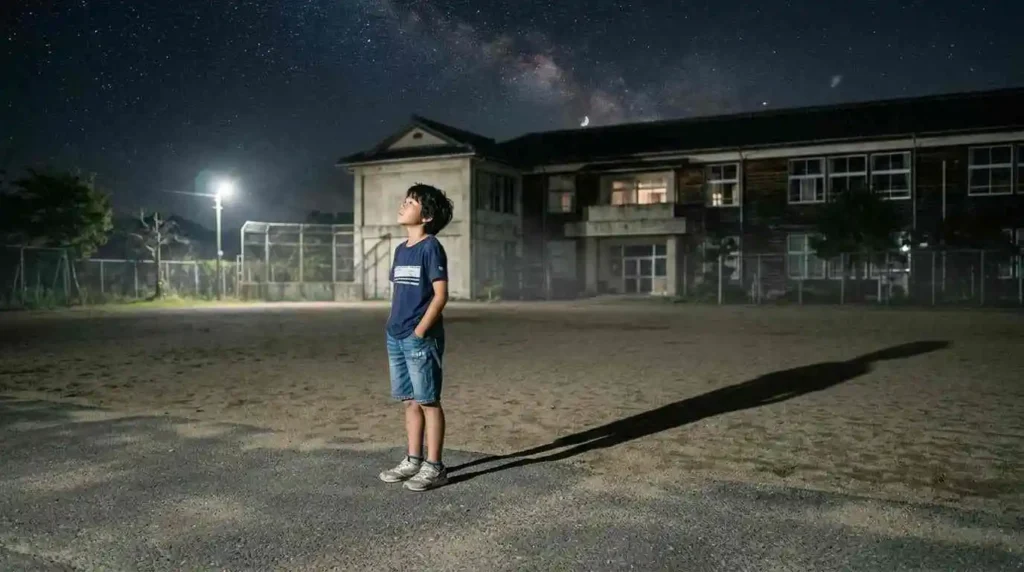
It is precisely because the song possesses the capacity to absorb such varied artistic colors that it continues to be cherished so long. Free from the constraints of a single interpretation, the beauty of this melody—which melts quietly into the depths of each listener’s heart—brings a fresh sense of wonder every time one encounters it.
In a quiet moment of daily life, tuning in to these different expressions of the same piece is a thoroughly engaging experience. Listening closely to the subtle nuances of each take might just be one of the finest ways to enjoy music.
Conclusion
Yosui Inoue’s “Shonen Jidai” is not merely a song for looking back on days gone by; it is a timeless masterpiece that gently embraces our hearts whenever we listen to it today.

When the beautiful piano introduction happens to play, we can always return to that calm, tender landscape of the heart. There, completely free from the need for logic or explanation, a genuine beauty that only music can reach remains vibrantly alive.

音楽ファン同士の交流・リクエストはこちら / Connect & Request Songs Here