
Click here for Yosui Inoue’s History!
- 🎧 Enjoy This Article via Audio
- Ranked 9th: “Kami Hikoki” (Paper Airplane)
- First, Please Listen to the YouTube Video
- The Crisp Acoustic Guitar Strumming and Katz Hoshi’s Uplifting Strings
- The Word “Propeller” Exposes the Destination of a Drifting Loneliness
- The Subtlety of Being “Track 3 on Side B” and the Rebellion Against Yojohan Folk
- The “Constructed Beauty” of the Studio Version vs. the “Abyss” of the Live Album “Modorimichi”
- The “Harsh Reality” of Rain and the End of Boyhood
- Something That Resonates Precisely in Today’s Accelerated Era
🎧 Enjoy This Article via Audio
You can quickly grasp the key points of this article through the narration.
Recommended for those who want to capture the atmosphere of the music and the overall flow before reading.
🎶 English Narration
Listen to the content of this article in English.
⌛ Duration: Approx. 2 min 30 sec
🎵 Japanese Narration
Listen to the content of this article in Japanese.
⌛ Duration: Approx. 2 min 40 sec
* Listening to the audio before reading will help you deeply understand the world of the song and the key points of the article.
Ranked 9th: “Kami Hikoki” (Paper Airplane)
In the early career of Yosui Inoue, “Kami Hikoki” (Paper Airplane), placed as the third track on Side B of his second album “Yosui II Sentimental” released in December 1972, remains a hidden masterpiece that continues to radiate a fresh, timeless brilliance.
During an era when the expression of folk music still held a raw, innocent energy, Yosui had already acquired a unique perspective, quietly observing human affairs as if looking down from a distant sky.
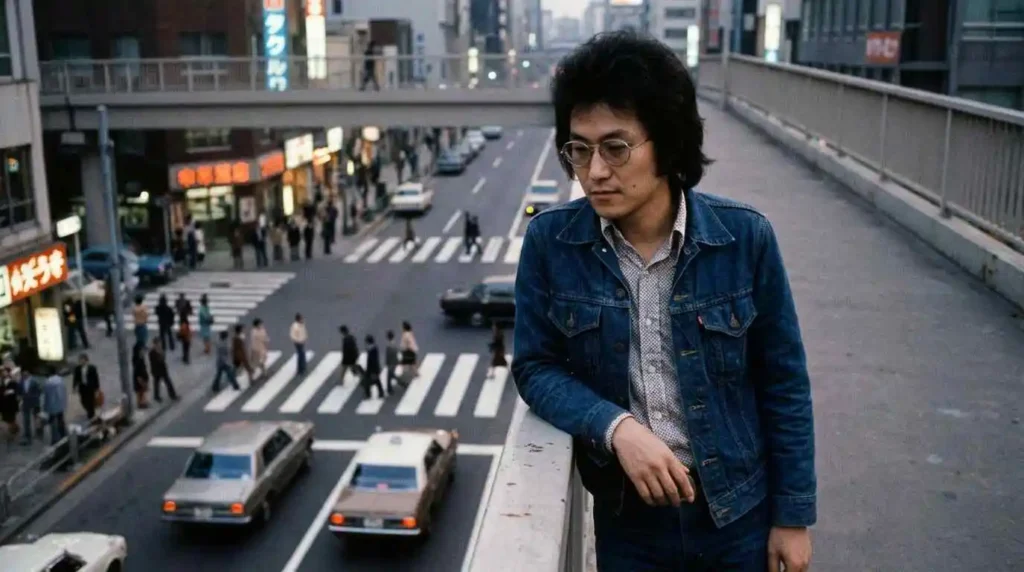
The reason I selected this song as number 9 in my personal Best 30 is that the “helpless beauty” and “transience of flight dancing in the vast sky” engraved in this piece breathe a nostalgic breeze back into our forgotten hearts.
Let us take a step forward into the core of this masterpiece, tracing the resonance of the acoustic guitar strings and the psychology hidden behind the words.
Poetic Translation: The World of the Lyrics
White wings with no power source dependently catch the wind, wandering aimlessly through the high sky.
Where is it heading, and where will it decay? Even the wings themselves do not know their destination.
Knowing that being struck by rain will instantly steal its freedom, it continues its fleeting flight as if mocking a harsh destiny.
Until the very moment it collides with the ground, it is an incredibly brief, incredibly pure trajectory of a soul.
First, Please Listen to the YouTube Video
Please click the image below.

(※Since this video is not an official release, out of consideration for copyright, we have adopted a format that links to an external site from an independently prepared image, rather than directly embedding the video.)
Credits
Yosui Inoue - "Kami Hikoki"
Lyrics & Composition: Yosui Inoue
Arrangement: Katz Hoshi
Album: "Yosui II Sentimental"
Source: 1972 Studio Album Track
2-Line Commentary
A fable-like song typical of early Yosui Inoue, overlapping youthful dreams, anxiety, and the sense of a brief life onto the fate of a white paper airplane.
The album version, within a more polished arrangement than the live version, quietly brings to light the transience of the paper airplane and the sensation of being drifted by destiny.
Next is the official live audio video. Please take a listen!
Credits
Yosui Inoue - "Kami Hikoki"
Source: Live at Shinjuku Kosei Nenkin Kaikan / April 14, 1973 / Remastered 2018
Album: "Yosui Live Modorimichi [Remastered 2018]"
Lyrics & Composition: Yosui Inoue
Original Arrangement: Katz Hoshi
Provider: Universal Music Group
℗: 1973 UNIVERSAL MUSIC LLC
YouTube: Official Art Track
2-Line Commentary
A live recording where the voice of a young Yosui Inoue overlaps dreams, anxieties, and the sense of a brief life onto the trajectory of a white paper airplane.
Within the quiet acoustic performance, the tense air of 1973 and the delicate loneliness unique to early Yosui are deeply engraved.
The Crisp Acoustic Guitar Strumming and Katz Hoshi’s Uplifting Strings
When you drop the record needle onto the vinyl of the album “Yosui II Sentimental,” there is no one who will not be captivated by the fresh soundscape radiated by “Kami Hikoki.”
The backbone of the song is formed by the rhythmic, yet somewhat anxious strumming of the acoustic guitar. This dry guitar tone directly conveys the tension in the fingertips as they launch the paper airplane into the vast sky.
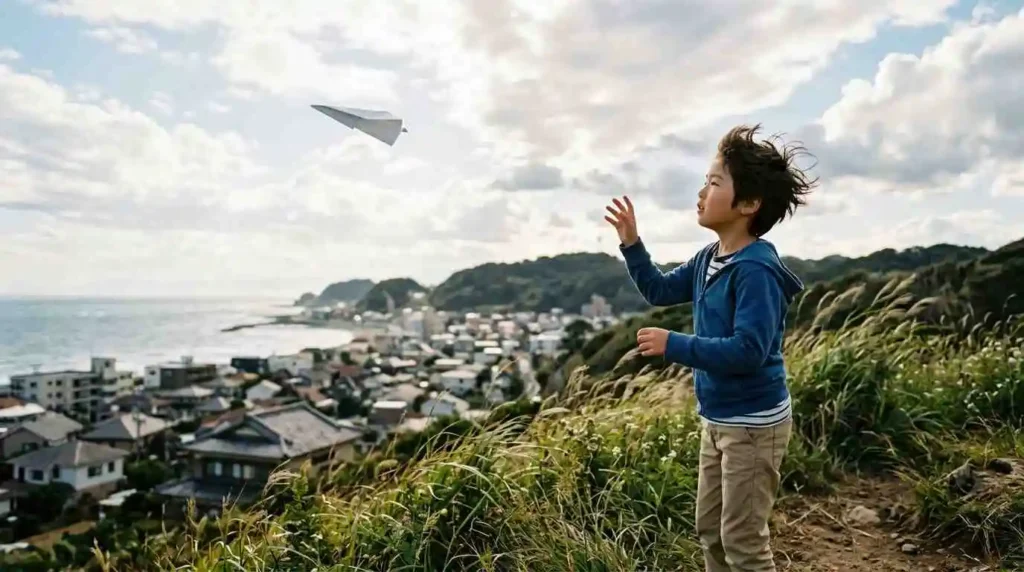
Katz Hoshi’s contribution to the early Yosui sound goes without saying, and his work on this track is equally brilliant. The strings swelling behind the acoustic guitar act not as a gentle breeze, but as a massive updraft that forcefully pushes the white wings to unknown heights.
By hiding unstable chords that constantly float a “presentiment of landing” beneath the beautiful melody, he brings a breathtaking, three-dimensional depth to the track.
Supporting this dynamic sonic imagery is a solid, yet remarkably funky rhythm section composed of world-class musicians who participated in the recording at the time, including Haruomi Hosono (bass: formerly of the Yellow Magic Orchestra) and Yuujin Harada (drums).
While maintaining the emotional quality of a folk song, its foundation beats with the undeniable pulse of psychedelic, Western-oriented rock, reminiscent of the early Mops.
The Word “Propeller” Exposes the Destination of a Drifting Loneliness
When reading the lyrics of this song carefully, a certain definitive phrase catches our thoughts. It is the question abruptly presented in the middle of the track: “Don’t you know about propellers?“
While birds and airplanes flying in the sky are often depicted as symbols of “freedom” or “hope,” the subject Yosui chose here is a “paper airplane,” which possesses no internal power source. Unlike an airplane that spins its own propeller to advance toward a destination, once a paper airplane leaves the hand, it can only surrender itself to the whims of the wind.

Yosui is not cold-heartedly pushing the listener away by asking, “Why don’t you have your own power source?” Rather, it sounds like an expression of a boyish, innocent gaze toward a society where carrying the heavy machinery of a propeller and moving toward a destination is taken for granted.
The message that moving accurately toward a destination is not everything is beautifully conveyed through the precarious elegance of these unpowered wings.
The Subtlety of Being “Track 3 on Side B” and the Rebellion Against Yojohan Folk
The placement of this song within the album “Yosui II Sentimental” hides Yosui’s critique of the contemporary folk scene, along with a meticulous structural design.
A Track Order That Achieves a “Psychological Reset” Within the Album
Side A of this work features dynamic numbers that evoke the heat of the ground and the scent of the mundane world, such as “Higashi e Nishi e” (East to West) with its impressive brass, and “Kankandori” (Blazing Sun), which depicts a languid daily life.
However, when the record is flipped over, the needle drops on Side B, and “Kannazuki ni Kakomarete” and “Natsu Matsuri” pass by, the presence of this third track, “Kami Hikoki,” stands completely apart from that earthly heat. It is precisely because the dry acoustic intro echoes in ears still lingering with mundane remnants that the reader’s gaze is instantly pulled up from the ground of daily life into the “helplessly vast sky.” Within the narrative of the entire album, this song functions as a decisive turning point designed to reset the listener’s mind and invite them into the purest realm of solitude.
A Surreal, Abstract World Rejecting the Earthiness of “Yojohan”
Speaking of the Japanese folk scene in the early 1970s, as represented by Takuro Yoshida, Kaguya-hime, or Nobuyasu Okabayashi, the mainstream trend—and the spirit of the era—was to sing of “grounded raw realities,” such as the realistic lifestyle of the youth and raw human drama.
Yet, within such a trend, Yosui’s choice of words in “Kami Hikoki” is distinctively unique. There is absolutely no scent of daily life or specific self-pity mixed in here.

What is depicted is simply “blue sky” and “a white paper airplane”—a highly abstracted contrast of colors creating an extremely pictorial and surreal spatial world. In an era when those around him were lyrically singing of daily life on the physical ground, he sublimated his own existential loneliness into the trajectory of a single piece of paper dancing in the air.
The “Constructed Beauty” of the Studio Version vs. the “Abyss” of the Live Album “Modorimichi”
The two audio tracks compared in the videos introduced this time share the same melody and words, yet the “structure of the environment” where the paper airplane is placed is inverted 180 degrees. Because of this clear contrast, we can capture the multi-faceted nature of this song more dimensionally through both takes.
A Perfectly Controlled “Cinematic Masterpiece”
The studio recording version represents a “constructed beauty” where various instruments are meticulously layered to paint a panorama of the great sky. The dramatic strings arranged by Katz Hoshi gently wrap around the white wings, functioning as the very updraft that carries them to unknown heights.
There is a pictorial, nostalgic soundscape here, as if observing a paper airplane dancing in the sky along a calculated, beautiful orbit from a safe, slightly detached distance.
The “Cry of Existence” Emerging Beyond the Elimination of Ornaments
On the other hand, how about the take from the 1973 live album “Yosui Live Modorimichi”? Without borrowing any support from an orchestral accompaniment, a young Yosui stands there, dominating the space solely with his voice while striking a single acoustic guitar.
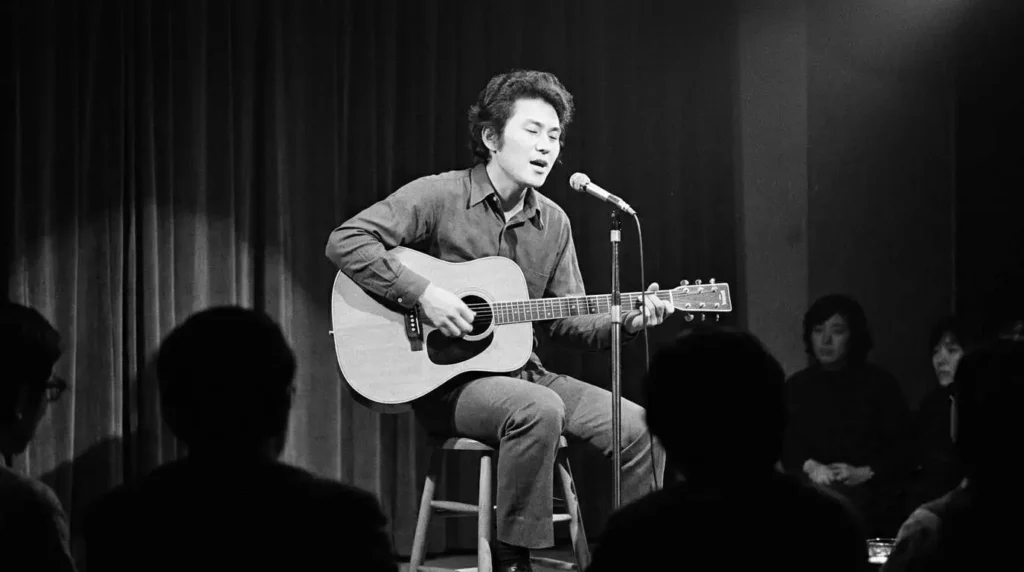
The salvation of the strings found in the studio version does not exist here. What remains is the metallic sound of the guitar strings fiercely scraping, the rawness of exhaled breaths, and a tense silence.
Precisely because the number of sounds has been narrowed down to the bare minimum, the transience of the unpowered paper airplane motif is conveyed clearly as the sharp outline of the words themselves.
When listening to this live version, an aspect of the song comes to light showing that it does not stop at the pictorial beauty of the studio version, but stands as an extremely raw document sustained entirely by the voice of a single singer.
The “Harsh Reality” of Rain and the End of Boyhood
In this manner, the story that has sung the aesthetics of wings without a propeller reaches a sudden, dramatic climax upon encountering an unexpected “rain” at the end of the lyrics. This development is the true essence of early Yosui Inoue, refusing to let the song end as a sweet fantasy.
For white wings crafted from paper, water droplets mean a literal fatal wound—an unavoidable, fated demise. Wings heavily weighed down by moisture can no longer catch the updraft and have no choice but to plunge toward the ground, pulled down by gravity.

The innocent time spent playing while possessing no propeller, simply drifting with the wind and believing only in the kindness of the world, comes to an abrupt end due to the reality of a sudden rainfall.
Yosui does not emotionally lament that process of crashing; instead, he depicts it with a gaze that is objective yet filled with deep sorrow, like watching a movie scene in slow motion.
Something That Resonates Precisely in Today’s Accelerated Era
More than half a century has passed since its release, and though the era has shifted to Reiwa, the theme carried by “Kami Hikoki” has not faded in the slightest.
Precisely in an age where only efficiency and results are demanded, the precarious elegance of a paper airplane flying as the wind commands might appear uniquely refreshing.

It is perfectly fine not to know the destination, and it is fine not to try to control the world with your own power source.
Even if it is a fragile white wing clumsily folded by someone’s hands, the fleeting freedom of dancing while feeling the wind and fully receiving the blueness of the sky certainly exists within this song.
Even after finishing this song, when the sound stops and silence returns, that nameless white paper airplane might still be quietly flying deep within our hearts.

音楽ファン同士の交流・リクエストはこちら / Connect & Request Songs Here