Click here for Yosui Inoue’s History!
🎧 Enjoy This Article in Audio
You can quickly grasp the main points of this article through narration.
Recommended for those who want to catch the vibe of the music and the flow of the article before reading.
🎶 English Narration
An English audio introduction to the contents of this article.
⌛ Duration: Approx. 4 mins
🎵 Japanese Narration
A Japanese audio introduction to the contents of this article.
⌛ Duration: Approx. 3.5 mins
Listening to the audio before reading helps you better understand the world of the music and the main points of the article.
No. 4 is “Kasa ga Nai” (No Umbrella)
Only four songs remain in my personal Best 30: Yosui Inoue Edition. The track I am introducing today at No. 4 is his early masterpiece, “Kasa ga Nai,” which was originally included in his 1972 debut album, “Danzetsu” (斷絶), and released as a single in the same year.
When this song was released, I was 14 years old, a second-year student in junior high school. To be perfectly honest, my 14-year-old self did not possess the high-minded intellect to comprehend complex social ideologies or rebellions against systemic structures.
To a completely ordinary boy like me, the next day’s club activities or catching the eye of a girl in my class were far more monumental concerns than the news of some incident splashed across a tiny corner of the morning paper.
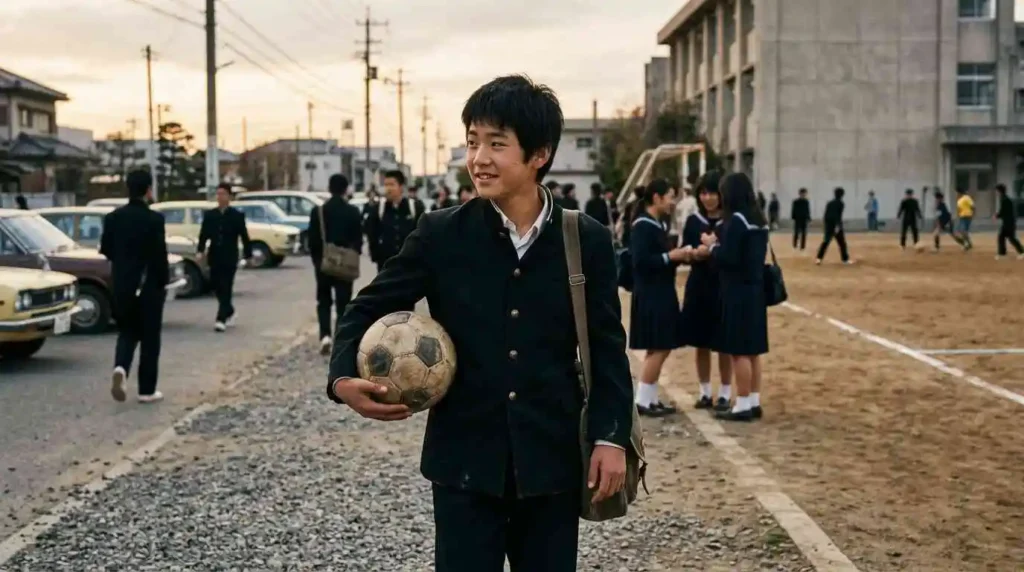
Yet, naturally, no ordinary artist would sing about such mundane, commonplace realities. That is precisely why I felt an indescribable shock when I first heard this song playing over the radio.
It was a raw fragment of unvarnished honesty, completely unlike any popular pop song or well-behaved folk tune I had listened to until then. Today, I want to vividly recreate the raw atmosphere that my 14-year-old self felt, while stepping back to deeply dissect the fierce, uncompromising reality that this track embodies.
Our Translation: The Worldview of the Lyrics
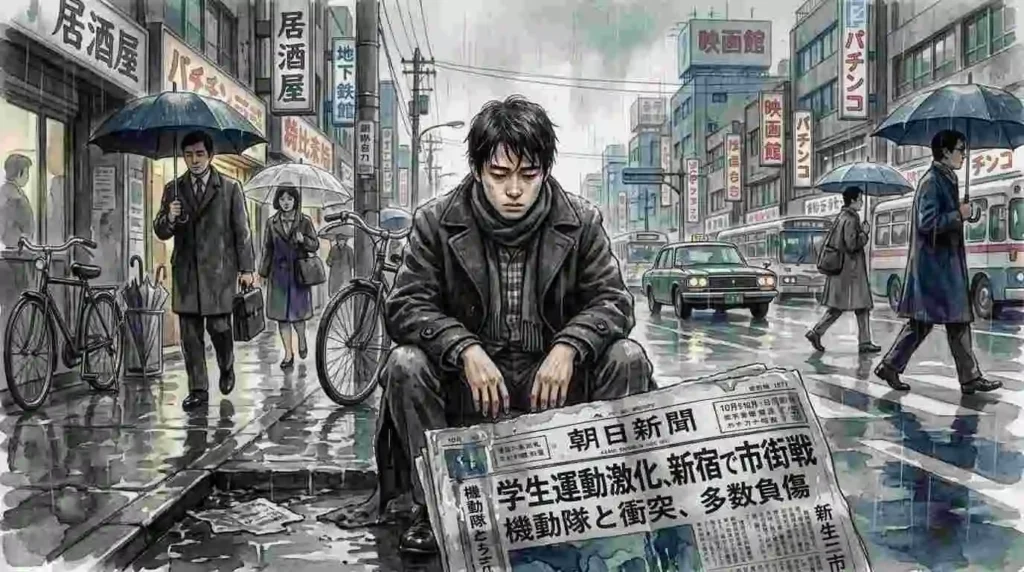
The television and newspapers keep reporting on monumental social events and the tragic, final decisions of young people as if they are merely cold symbols.
The public frowns at the news, creating an uproar about justice and the future, but to me right now, none of that matters at all.
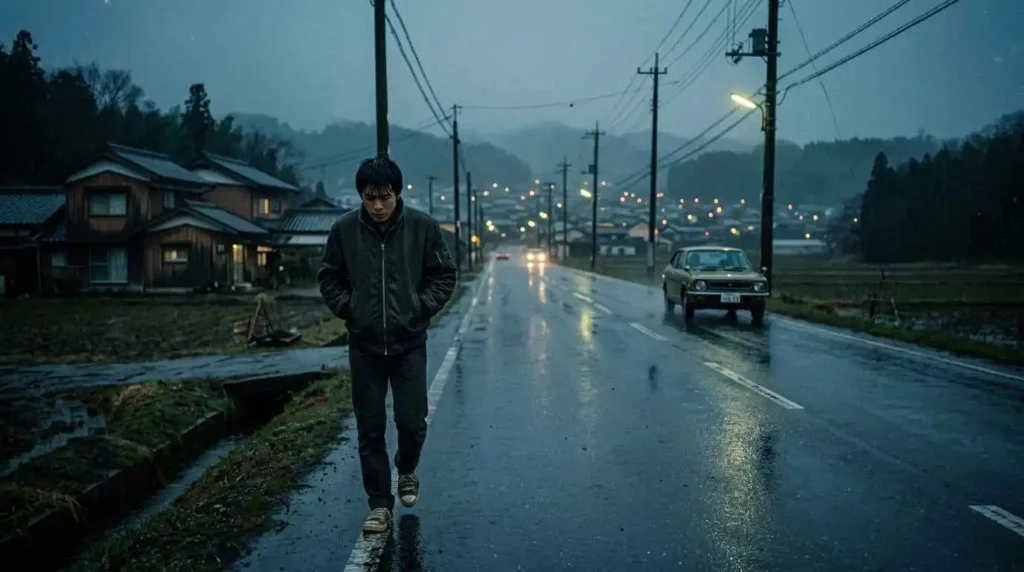
What is far more critical to me is the fact that it is pouring rain outside, and I don't have an umbrella to go see you.
It doesn't matter if I get drenched. Solely to see you, I step out into the freezing city rain.
💡 Read Also: Original Track Lyrics Official Site (External Link)
If the lyrics are displayed only in Japanese, you can use your browser’s translation feature or an AI translation tool to understand the general meaning.
First, Please Listen to These 5 YouTube Videos
Common Credits
Song Title: Kasa ga Nai (No Umbrella)
Artist: Yosui Inoue
Lyrics & Composition: Yosui Inoue
Arrangement: Katashi Hoshi
Original Release: Contained in the album "Danzetsu"
Release Year: 1972
Overview
"Kasa ga Nai" juxtaposes words of social unrest against the raw, deeply personal urge of simply wanting to go see someone, making it a definitive track of Yosui Inoue's early career.
While it frames a socially conscious landscape, it ultimately resonates not as a political statement, but as the urgent desperation of a lone man walking through the rain, getting soaked.
This is the original studio recording. Please click the image below.
Individual Credits:
The studio version allows you to appreciate the raw origin of "Kasa ga Nai" in its most unadulterated form.
The arrangement beautifully highlights the gap between society and personal longing, building tension as the restrained opening steadily escalates into pure desperation.
Live audio from Shinjuku Kosei Nenkin Hall on April 14, 1973 (Official Video).
Performance: April 14, 1973, Shinjuku Kosei Nenkin Hall
Audio Label: Live At Shinjuku Kosei Nenkin Hall / 14th April 1973 / Remastered 2018
Release Context: Live audio from the era of "Yosui Live Modorimichi"

The voice of a young Yosui Inoue echoes with a sharp, precarious, and raw edge.
It feels far more visceral than the studio version, capturing both the heavy atmosphere of the era and individual anxiety all at once.
1992 SPARKLING BLUE Nippon Budokan live audio. Please click the image below.
Performance: 1992 "SPARKLING BLUE" Tour
Venue: Nippon Budokan
Musical Feature: A powerful live version with a heavy band sound

The 1992 Yosui Inoue performs "Kasa ga Nai" on a grander scale, while preserving the piercing tension of his youth. A song that once captured a young man's anxiety transforms through mature expression into an timeless anthem of profound isolation.
2019 50th Anniversary Live Tour “Koin Ya no Goshi” live audio (Official Video).
Performance: Yosui Inoue 50th Anniversary Live Tour "Koin Ya no Goshi"
Concert Date: October 20, 2019
Venue: Tokyo International Forum Hall A
Product: Yosui Inoue 50th Anniversary Live Tour "Koin Ya no Goshi" ~ Shonen Oi Yasuku Gaku Nari Gatashi ~

Performed on his 50th-anniversary stage, "Kasa ga Nai" doesn't sound like mere nostalgia; it rings out as an ageless question that has survived half a century.
Unlike the frantic urgency of his youth, there is a quiet, profound depth as an artist looking back at his own roots.
August 25, 1991 Joint Concert at Uminonakamichi Seaside Park in Fukuoka.
Please click the image below.
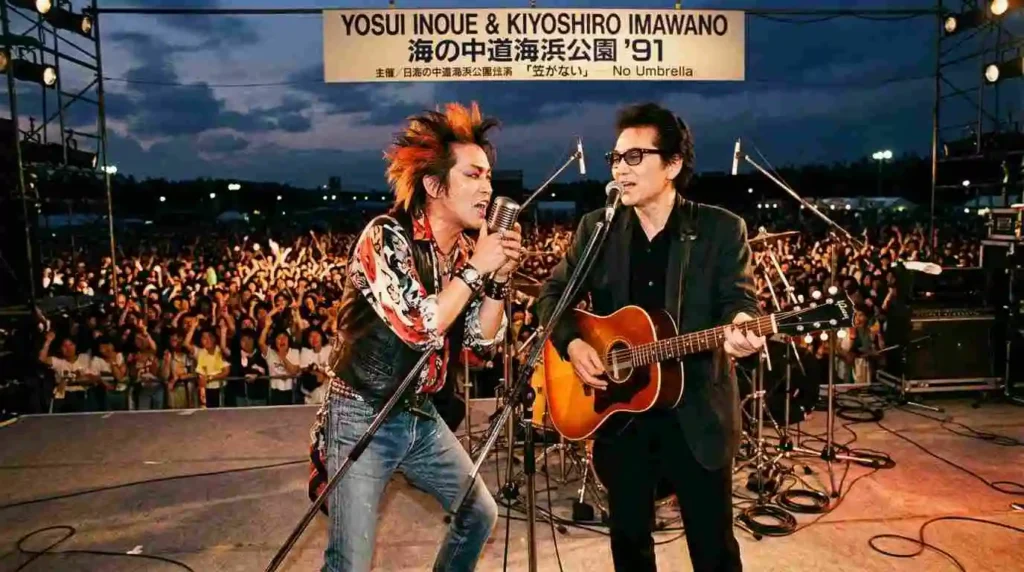
Performance: Fukuoka Uminonakamichi Seaside Park Joint Concert
Concert Date: August 25, 1991
Lineup:
Yosui Inoue: Vocal & Guitar
Kiyoshiro Imawano: Vocal & Guitar
Haruomi Hosono: Bass
Masayoshi Takanaka: Guitar & Ukulele
Tito Kawachi UNIT: Percussion
Two-line Commentary:
An incredibly luxurious open-air session featuring the twin vocals of Yosui Inoue and Kiyoshiro Imawano, backed by Haruomi Hosono, Masayoshi Takanaka, and Tito Kawachi UNIT. The internal gravity of "Kasa ga Nai" blends with rock, heavy grooves, and an almost tropical liberation, generating a unique heat absent from both the studio version and regular live sets.
(* Out of respect for copyright regulations, videos that are not distributed through official channels are linked via custom images leading to external sites rather than being directly embedded.)
Shattering Mainstream Ideals: A Deeply Personal Impulse
The Gap Between the “Nameless Narrator’s” Anxiety and the Evening News
No matter how grimly the television and newspapers report on the future of the nation or the tragedies of youth, there remains an unbridgeable chasm between the grand justice on the screen and the immediate reality beneath one’s feet. The protagonist of this song coolly lays bare the depth of that exact disconnect.
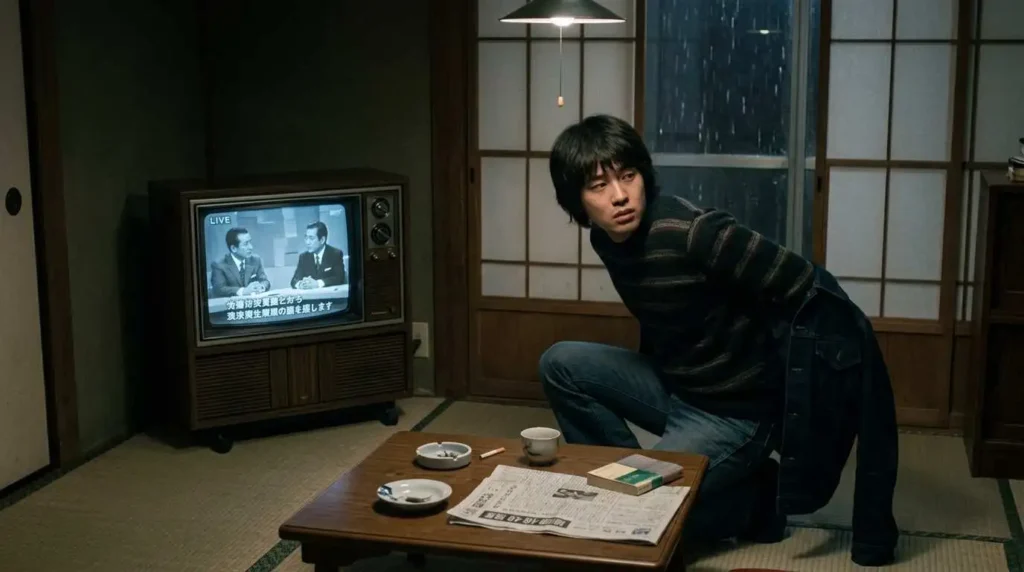
The only critical, immediately devastating issue that the protagonist must face is the profoundly localized reality that it is raining freezing rain outside, and he simply has “no umbrella.”
This massive friction between social obligations and an individual’s immediate reality forms the core dynamic of the entire track. No matter how intense the surrounding societal passions blaze, the protagonist refuses to look away from the inconvenient, basic truths right in front of him.
The Raw Reality of “Wanting to See You”
Isn’t that exactly where the genuine reality of our daily lives resides?
We might frown at tragedies unfolding in distant cities, but what genuinely rules our hearts and commands our immediate actions is always the primal, unvarnished urge of “wanting to see someone who matters to us.”
Yosui anchored this piece on the physical steps of a person walking forward, completely unprotected from the elements. The reason my 14-year-old self completely lost himself in this song was likely because I sensed an authentic human honesty within it—one completely divorced from the neat, pre-packaged answers adults always tried to hand down.
A Sonic Landscape of Cold Urban Rain
The second the intro of the studio version kicks in, a monochrome urban landscape of damp asphalt, overcast skies, and icy rain materializes vividly before our eyes.
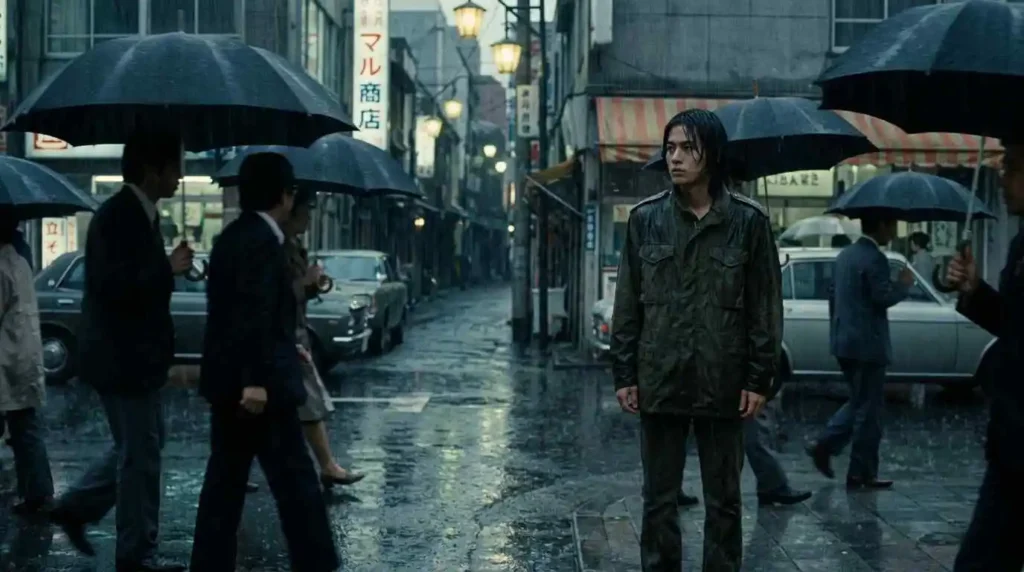
The heavy strumming of the acoustic guitar paired with a low, earth-crawling bassline creates an immersive atmosphere of profound isolation that breaks clean out of the folk genre. This restrained ensemble subtly magnifies the bottled-up, heavy energy hiding inside the protagonist’s heart.
A Dramatic Crescendo Signalling Emotional Collapse
The true brilliance of this track is found in the sudden emotional surge that completely overwhelms the latter half. The vocals, which initially paint the city landscape with a low temperature, steadily gather heat toward the chorus, gaining an urgency that leaves the listener breathless.
The frantic electric guitar solo and the swelling strings in the climax feel exactly like the moment the protagonist’s desperate urge to see “you” overflows and completely breaks through his internal dams.
The heavy footsteps of a lone man walking blindly through the rain lock into the drumbeat, raising the listener’s pulse alongside it. This dramatic sonic progression is exactly what grants the song an ageless vitality that refuses to feel dated, even half a century later.
Five Interpretations of “Kasa ga Nai” Evolving Across Eras
A Narrative Arc Told Through Five Distinct Audio Paths
Listening closely to the five YouTube videos listed at the top makes it abundantly clear that “Kasa ga Nai” is by no means a relic frozen in 1972.
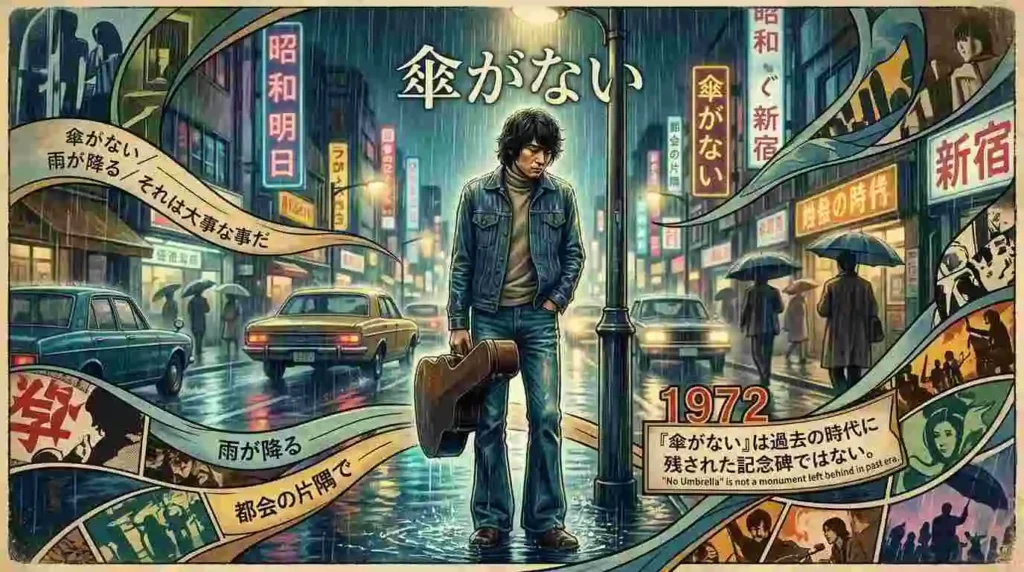
Through the evolution of Yosui’s vocal character and shifting generational arrangements, this song has transformed like a living organism over five decades. Let us untangle the distinct textures of isolation offered by each source:
- 1972 Studio Version: The genesis of everything, cutting into our 14-year-old hearts like a razor blade. The calculated progression from a cold, quiet delivery into escalating desperation is a pure distillation of individual anxiety bouncing inside a closed mind.
- 1973 Shinjuku Kosei Nenkin Hall Live: Culled from the iconic “Yosui Live Modorimichi” era, this captures the unvarnished essence of his early days. His vocal delivery is sharp, volatile, and deeply tense, exposing a raw friction between a troubled society and an individual’s survival instinct.
- 1992 Nippon Budokan Live (SPARKLING BLUE): Two decades later, the track sheds its youthful despondency to become a universal anthem of human isolation. Backed by a powerful band dynamic, Yosui’s voice gains incredible weight and presence, effortlessly commanding the arena scale.
- 2019 Tokyo International Forum (50th Anniversary Tour): Reaching his 70s after fifty years on stage, Yosui sings with a profound sense of acceptance and deep tenderness rather than the biting panic of his youth. It stands as a masterclass in artistic maturity, quietly gazing back at the rainy landscapes of his beginnings.
The Miraculous Chemistry of Uminonakamichi Seaside Park in 1991
Among these five documents, the performance from August 25, 1991, at Fukuoka’s Uminonakamichi Seaside Park stands out as an absolute anomaly.
A quick glance at the line-up on that stage reveals an almost unbelievable moment in Japanese music history:
The Incredible Uminonakamichi Lineup:
- Vocals & Guitar: Yosui Inoue / Kiyoshiro Imawano
- Bass: Haruomi Hosono
- Guitar & Ukulele: Masayoshi Takanaka
- Percussion: Tito Kawachi UNIT
A song that normally lives in the dark corners of a solitary room is completely re-engineered by Kiyoshiro’s raw rock-and-roll shouts and a locked-in, brilliant rhythm section driven by Haruomi Hosono and Masayoshi Takanaka. They launch the track into an explosive, celebratory open-air festival space.
Though it is fundamentally a heavy song about rain, this legendary session breathes with an almost tropical liberation, providing absolute proof of the infinite interpretive layers hidden within a truly great composition.
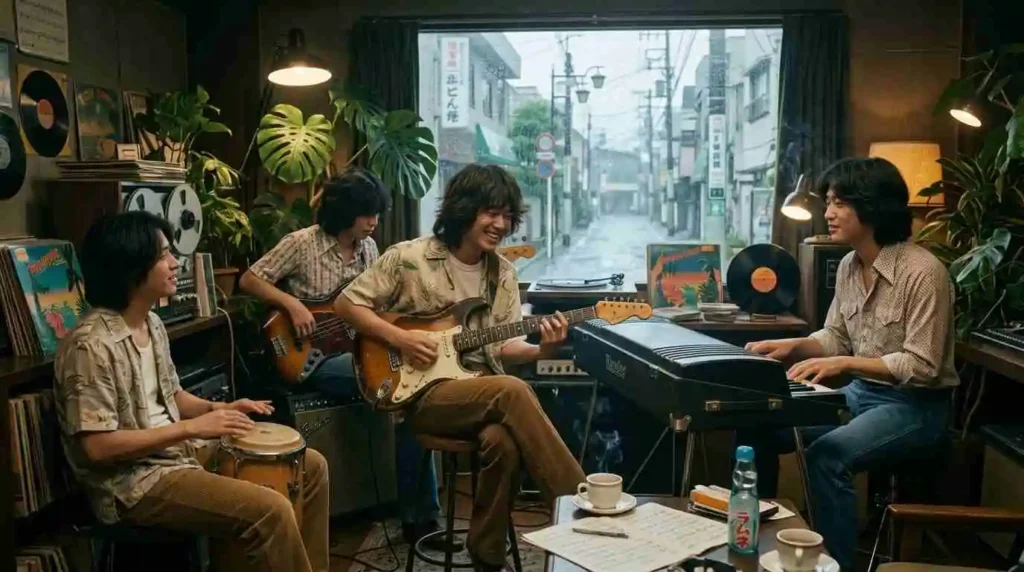
Conclusion: Why We Still Stand Frozen in the Rain
An Unfading Fragment of Truth Across Generations
Ever since that winter day at 14 when those ominous chords first shook me through a radio speaker, “Kasa ga Nai” has served as a permanent, high-tension compass in my life.
You don’t need to force yourself to fit into the grand ideas of justice dictating the era or adopt values decided by committee. Instead, remain fiercely honest to the grounded, raw realities right beneath your own feet. That message, delivered from a cold rainstorm, carries a far more immediate truth in our modern, hyper-saturated world than it ever did before.
Following the Silhouette Walking Toward “You”
No matter how drastically our social landscapes morph or how convenient technology makes our lives, the core of human isolation and the primitive drive to go see the one person who matters remains completely unchanged from that day in 1972.
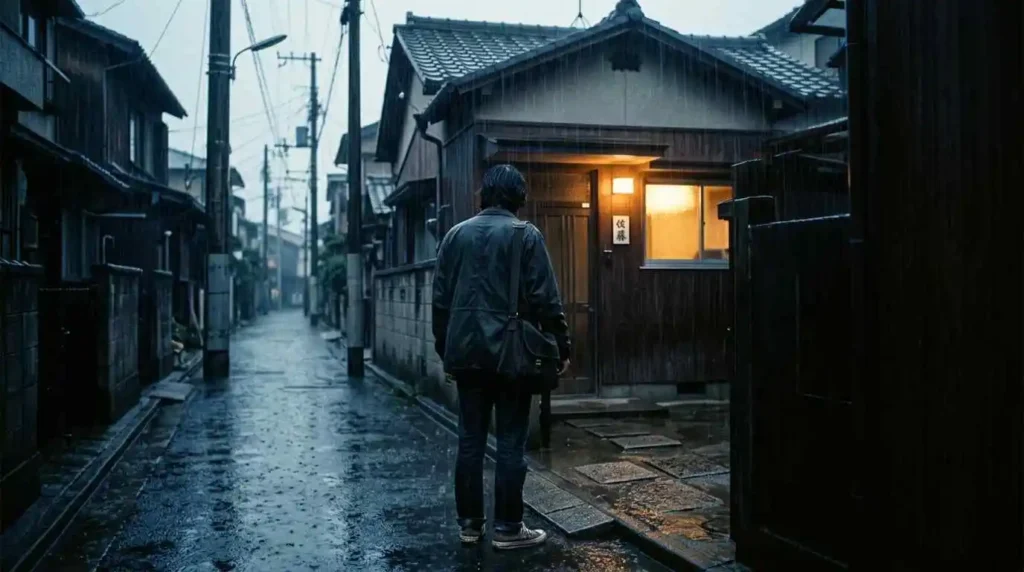
The silhouette of that man stepping blindly into the storm without an umbrella, determined to reach “you,” continues to walk unfiltered through the pouring rain inside our minds.
In closing…
While countless critics and listeners have dissected this piece over the years, there is a single, intuitive phrase someone once used to summarize it: “He got us!” That uncomplicated exclamation, which instantly blows away pages of dense commentary, feels like the absolute, bullseye truth.

音楽ファン同士の交流・リクエストはこちら / Connect & Request Songs Here