
Click here for Yosui Inoue’s History!
🎧 Enjoy This Article in Audio
You can quickly grasp the main points of this article through narration.
Recommended for those who want to catch the vibe of the music and the flow of the article before reading.
🎶 English Narration
An English audio introduction to the contents of this article.
⌛ Duration: Approx. 3 mins 15 secs
🎵 Japanese Narration
A Japanese audio introduction to the contents of this article.
⌛ Duration: Approx. 3 mins 15 secs
* Listening to the audio before reading helps you better understand the world of the music and the main points of the article.
Coming in at No. 14 is “Nokonoshima no Kataomoi” (Unrequited Love on Nokonoshima)
“Nokonoshima no Kataomoi” is a song featured on Inoue Yosui’s second studio album, “Yosui II Sentimental,” released in 1972. This track might not be the very first one that comes to mind when people think of Yosui’s signature hits.
To me, however, it is far more than just a regular album cut. It beautifully captures the delicate melancholy and the clumsy, restless emotions of early-career Yosui, all submerged within a quiet seaside landscape.
This song is deeply intertwined with my own memories of living in Fukuoka toward the end of my professional career. Every time I listen to it, the distant outline of Nokonoshima that I used to see across the water returns to me with quiet clarity.
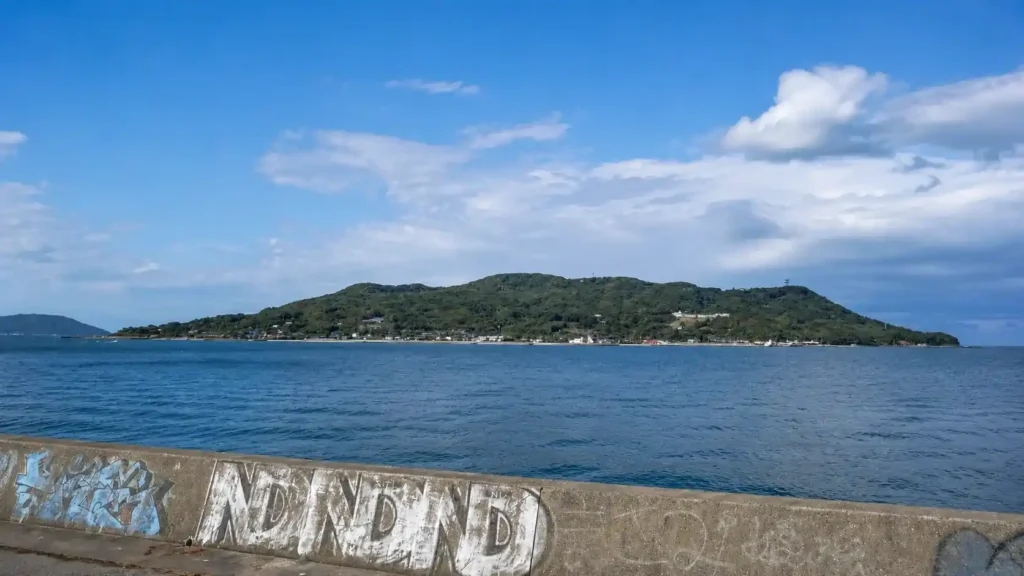
At the time, I lived in Nishi Ward, Fukuoka City. Nokonoshima actually belongs to the very same ward. Driving just under 20 minutes from my home would bring me to Odo Park. I would visit this park alone on occasion, but I also went there numerous times with my wife, my mother, and my daughters and grandchildren when they came to visit from Oita. Looking out from there, just two kilometers across the sea, lies Nokonoshima.
Mainly because of my fondness for this song, I made the trip to Nokonoshima several times. Taking the ferry across to the island, walking up toward the hilltop, and spending hours in a space that felt slightly detached from everyday reality—those memories still linger softly behind the music today.
The Worldview of “Nokonoshima no Kataomoi” (Poetic Translation)
Tonight, only the rustling sound of the waves stirs the air, and sleep evades me.
If only I could hear your voice, I know my heart would settle, but it is nowhere to be found.
Even when I gaze at the distant town lights and the stars, the sorrow does not fade in the slightest.
As long as my feelings for you remain, no sound of the waves will ever let me drift to sleep.
First, please listen to the track via YouTube
Please click the image below.
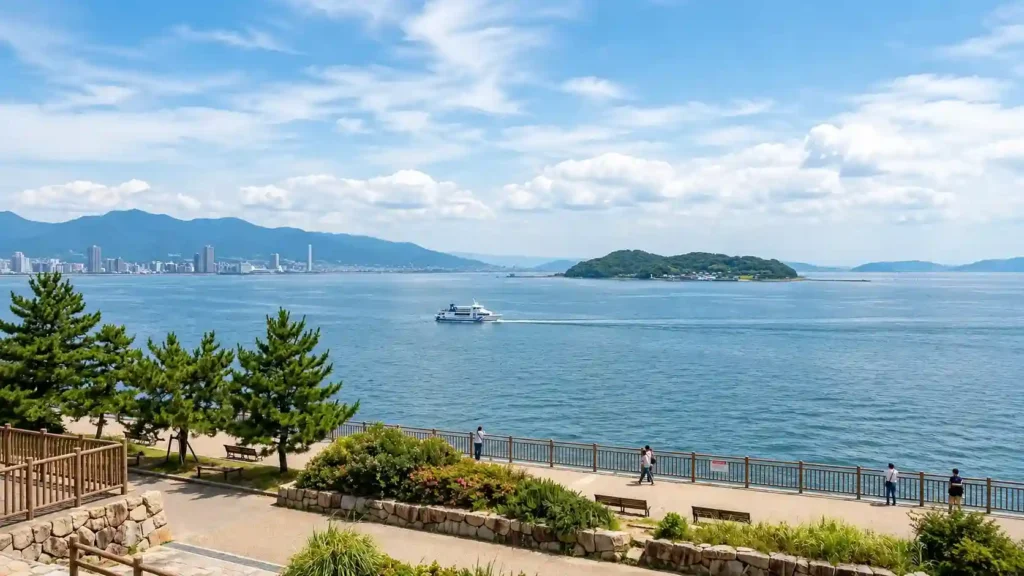
Inoue Yosui - "Nokonoshima no Kataomoi"
Lyrics & Composition: Inoue Yosui
Arrangement: Hoshi Katsu
Two-Line Commentary
The restlessness of a sleepless night and the heavy weight of a lingering love coexist beautifully within a calm, subdued melody.
Rather than raising his voice, Yosui relies on a restrained vocal delivery that sharply carves out the loneliness of the narrator standing by the sea.
Please click the image below.
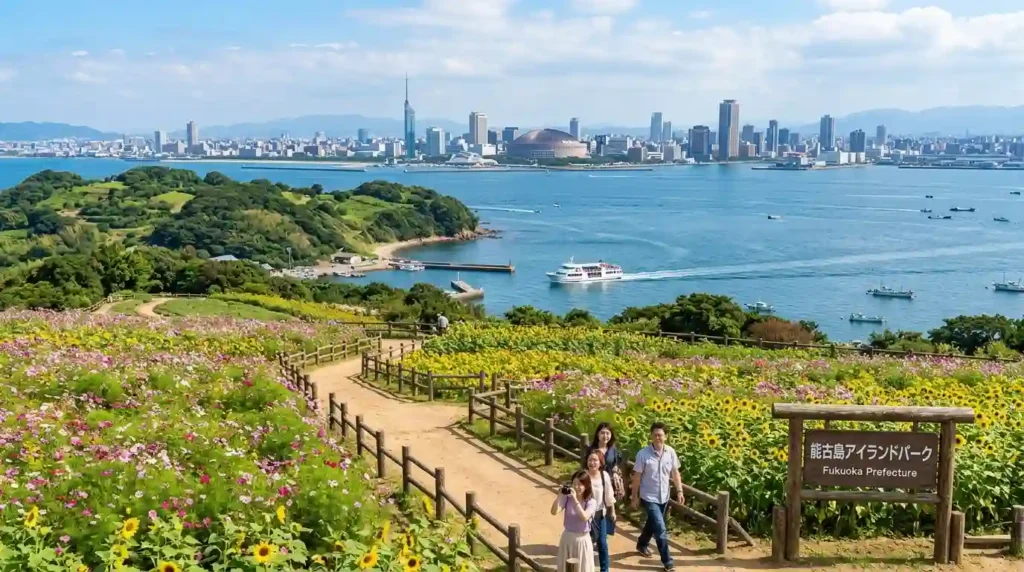
Inoue Yosui - "Nokonoshima no Kataomoi"
Lyrics & Composition: Inoue Yosui
Arrangement: Hoshi Katsu
Album: "Yosui II Sentimental" (1972)
Commentary
Before the music begins, you can hear a subtle "pop" sound reminiscent of a needle dropping onto vinyl, giving the track a warm, analog texture.
While carrying the weight of a very specific, real-world geographical name, the song doesn't dwell on tourist scenery; instead, it uses the setting to portray the inner turbulence of a young heart carrying an unreached love.
(*Note: Most audio sources for Inoue Yosui available on the internet are not official releases. Out of respect for copyright guidelines, this blog avoids direct video embedding and instead utilizes custom-made images that link directly to external video sites.)
The Beauty of “Psychological Distance” Cast by a Solitary Island
As I mentioned at the beginning, the reason I am so drawn to this song and hold such a special place for it in my heart is that the quiet presence of Nokonoshima, floating just across Hakata Bay, perfectly mirrors my own internal landscape.
When you look out at the sea from Odo Park in Fukuoka’s Nishi Ward, you are met with an expansive, unobstructed sheet of water and the lone silhouette of the island resting on the horizon.
This geographical reality—an unyielding barrier of water that keeps the island just out of easy reach—synchronizes flawlessly with the phase of unrequited love Yosui captures.
An island that you can only gaze at from the opposite shore, one you can never reach without stepping onto a ferry to cross the waves, serves as a perfect metaphor for the psychological distance between yourself and the “you” who feels so close yet remains utterly unreachable.
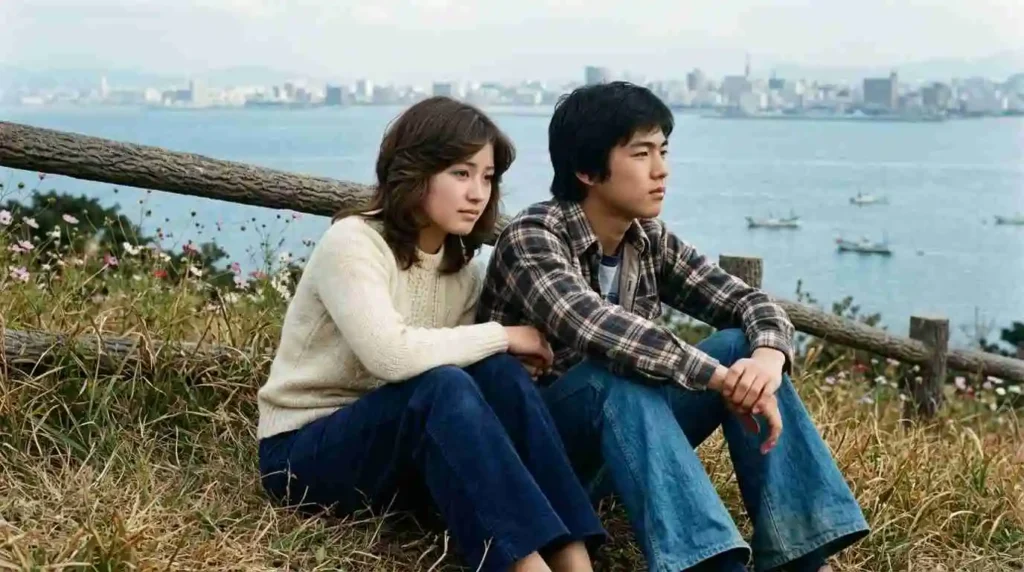
Furthermore, once you take the ferry and set foot on the island, winding your way up toward its higher ground, you find a distinct stillness completely severed from the bustling city across the water. The sound of the surf echoing through the night seems to erase all external noise, creating a dedicated space to quietly confront your own solitude.
Throughout our lives, we encounter these “unreachable distances” time and time again.
It is by no means limited to the romance of our youth. It mirrors the unbridgeable chasms we sometimes feel between ourselves and others—including former classmates, peers, or institutions—during our intense working years, or the gap between our idealized selves and the gritty reality of who we are.
The distant silhouette of Nokonoshima, which I used to look at from Odo Park as if to soothe my own loneliness, acted like a sanctuary that silently accepted that helpless frustration of being unable to communicate what matters most. Yosui’s melody leans gently into that faint ache lingering in an adult’s chest, carrying an undeniable sense of comfort.
An Internal Landscape Revived Within the Sound of the Waves
To me, “Nokonoshima no Kataomoi” is not merely an excellent folk song. It is bound tight to a specific flavor of loneliness from my time living on a solo work assignment in Fukuoka during my mid-50s.
On summer evenings after work, or to fill the empty gaps of a sudden weekend day off, I would frequently sit on a bench at Odo Park. Staring at the island parked across the water, a dense, profound quietude would wash over me, insulated from the city’s hum. It was during those precise moments that Yosui’s fragile melody would invariably play in the back of my mind.
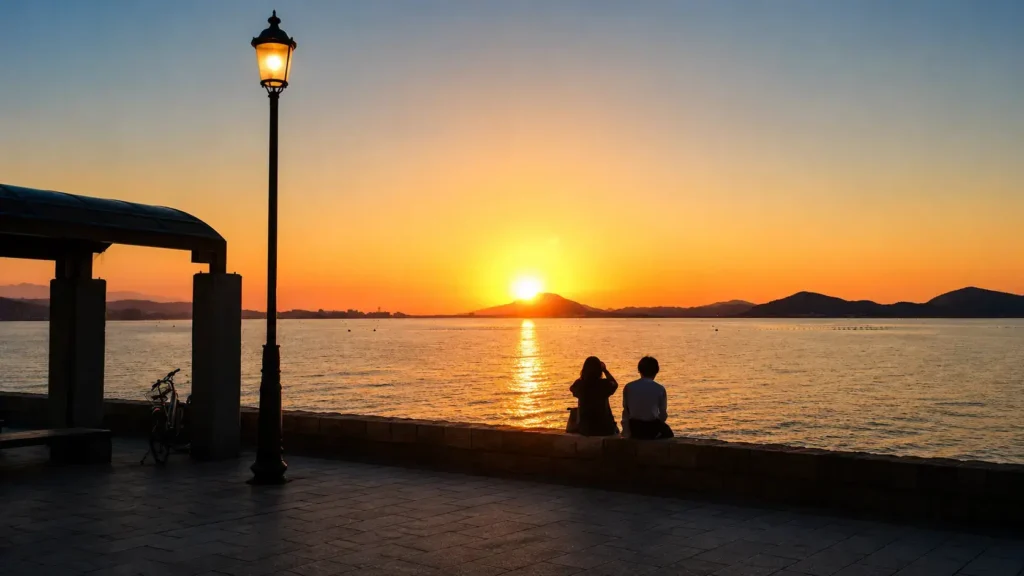
The scenery when I actually made my way to that little hilltop cafe on Nokonoshima remains burned into my mind. The stack of CDs for this very song proudly displayed inside the shop. The cold, local Nokonoshima cider cradled in my hand as I looked out at the view.

Those simple fragments of a short trip evolved beyond mere sightseeing memories; they became an important anchor that quietly validated the loneliness of being alone. Even now, the moment the song’s intro kicks in, the exact texture of the cool breeze that swept through Odo Park rushes back to life.
The Adult Innocence Extrusted to the “Softly Weeping Sand”
What fascinates me most about the lyrics is the process through which the narrator’s emotions entirely fuse with the signs of nature. Rather than shouting his sorrow in direct terms, Yosui expresses the depth of isolation through incredibly delicate imagery—the whisper of the wind that brushes past and flees, or the sound of the sand softly weeping.
In our younger years, we might have brushed these lines off as mere sentimentality.
Yet, as youth slips away and we reach an age where we look back fondly on the distant past, the phrase “morai-naki” (sympathetic crying) strikes an incredibly deep chord within us.
It doesn’t feel like childish self-pity. Instead, it comes across as a mature form of innocence—a quiet surrender to a massive current (nature, time, or the heart of another) that is entirely beyond one’s control. We, too, have likely navigated nights where we tried counting the stars, only to lose track as our tears blurred the view.
In Conclusion
Inoue Yosui’s “Nokonoshima no Kataomoi” is not a love song that hurls fierce passion at its subject. Rather, it is a song of quiet acceptance—about holding onto an unreachable affection just as it is, and passing a sleepless night alongside the sound of the waves.
Within the calm and fulfilling hours that arrive much like reaching the top of a long, steep hill, this music begins to emit a very special luster once more. Just as the view of Nokonoshima from Odo Park serves as my enduring personal landscape, everyone who listens to this track surely holds a personal “unreachable island” of their own.
Like a gentle yet poignant gaze wishing happiness from afar for a ship heading south, I think I would like to revisit this masterpiece tonight, listening closely to the tide turning inside my own heart.


音楽ファン同士の交流・リクエストはこちら / Connect & Request Songs Here