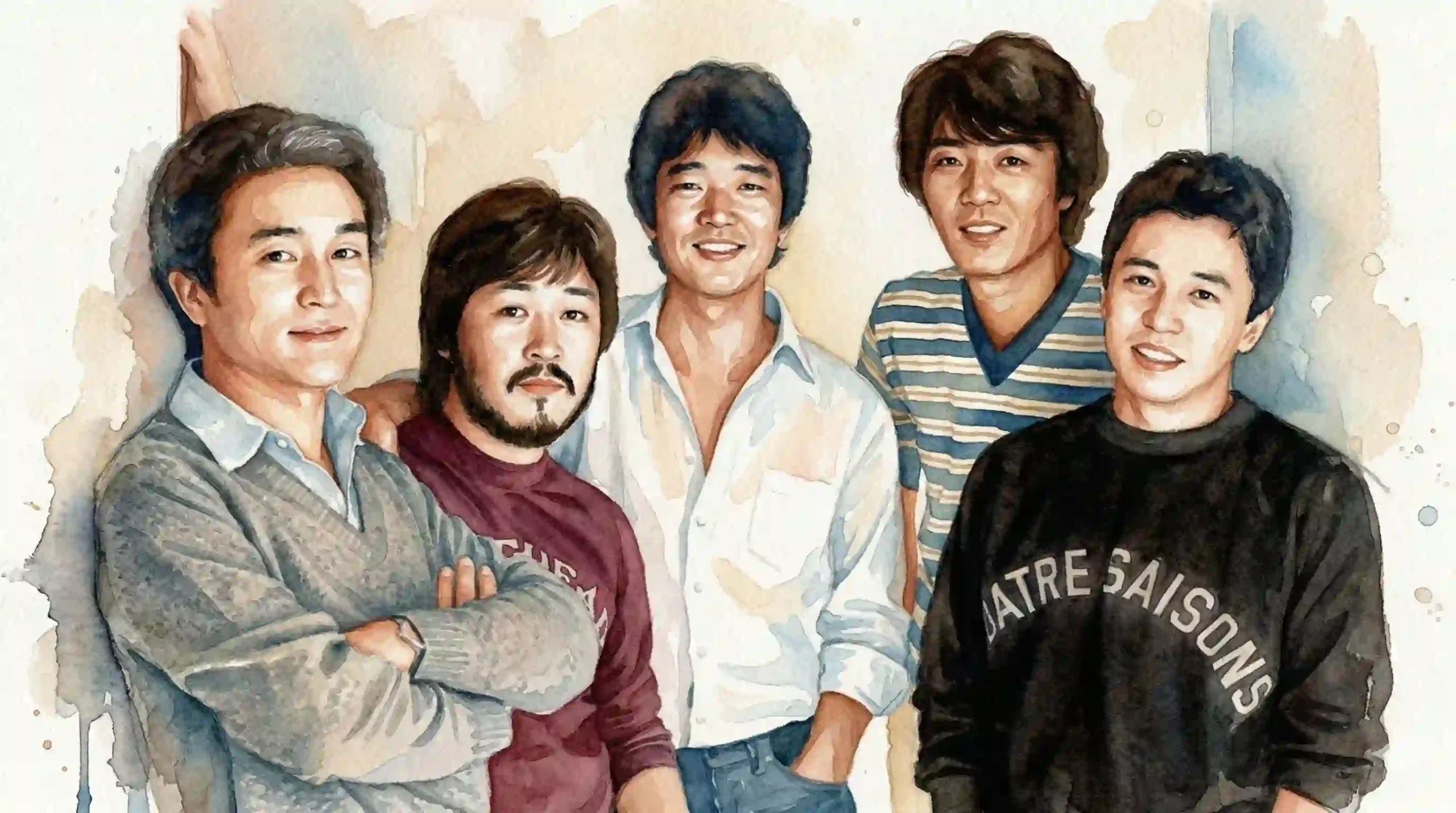
◆ Explore the History of [Off Course] Here — A Prelude to Ultimate Sonic Refinement
- 🎧 Enjoy this article in audio format
- No. 6: “Yes-No”
- First, listen to it via YouTube
- 1980: The Tokyo Wind and the Shock of the Synthesizer
- A Portrait of Our “Inability to Step In” Painted by the Lyrics
- “Don’t Ask Me Anything” — The Ultimate Self-Defense
- The Solitude of the Flugelhorn, Drawing the Outlines of Emotion
- The Heartbreaking Uncertainty of the Promise “See You Tomorrow”
- Conclusion: Why We Are Still Looking for Answers
🎧 Enjoy this article in audio format
You can quickly check the main points of this article via audio.
Recommended for those who want to grasp the essentials in a short time before reading.
🎶 English Narration
You can listen to the content of this article with an English narration.
⏳ Duration: Approx. 3 mins
🎵 Japanese Narration
A Japanese audio summary of this article is also available.
⏳ Duration: Approx. 3 mins
* Listening to the audio before reading the text helps you understand the world of the music and the key points of the article more deeply.
No. 6: “Yes-No”
When looking back at the history of the band Off Course, this song is absolutely essential.
1980 marked the moment they brilliantly transformed from a lyrical folk group into a sophisticated AOR (Adult Oriented Rock) band. “Yes-No” was the ultimate symbol of that metamorphosis.

The shock of a modern city beat suddenly being added to their previously introspective and quiet world—that excitement still flickers in my heart like a heat haze at the end of summer.
Interpretive Translation
Holding onto emotions I can't put into words, I find myself thinking only of you.
The desire to touch you, to fall for you, quietly grows within me.
Even the most casual moments or gestures feel precious; my heart is already turned toward you.
In the passing seasons, those feelings are the only things that remain gently behind.
First, listen to it via YouTube
*Since the official video has not been released, I have linked a video shared by fans. If there are any copyright issues, I will respond promptly by deleting the link. (Please click the image below!)

Credits
Song Title: Yes-No
Artist: Off Course
Lyrics/Composition: Kazumasa Oda
Arrangement: Off Course
Release Date: June 21, 1980
Album: "We are"
2-Line Commentary
A love song depicting a heart swaying in a "more than friends, less than lovers" relationship through a series of questions.
The semitone modulation at the start and the barrage of interrogative lyrics leave a powerful impression of urgent emotion.
1980: The Tokyo Wind and the Shock of the Synthesizer
Tracing back my memories, 1980 was my senior year of university.
There was a unique sense of time in the town where I spent my student days. The distant sound of the Inokashira Line trains, the smell of dinner being prepared at dusk—Off Course’s music melted perfectly into those everyday scenes.
Back then, the word “independence” was gradually gaining weight and closing in on us.
With the prospect of becoming a member of society the following spring, I felt both the anxiety of needing to “become someone” and the desperate desire to stay in this “moratorium” just as I was.
For me, holding such ambivalent feelings, the words Kazumasa Oda spun were incredibly sharp, yet kind.

The “8th Note” Beat that Pierced the Silence of Folk
When talking about “Yes-No,” that iconic intro is unavoidable. Led by the sparkling tones of a synthesizer, a tight drum marks an 8th-note beat. It was a sound that felt like the “body heat of a band,” standing in stark contrast to the delicate acoustic guitar sounds Off Course had cherished until then.
The sharpness of Yasuhiro Suzuki’s guitar cutting and Hitoshi Shimizu’s singing bassline—the soundscape that rushed in as one felt like a declaration: “We are no longer the quiet ones we used to be.”
Back then, listening to this song through the small speakers in my apartment in Higashi-matsubara, I was excited all by myself. However, the world of the lyrics was filled with a very fragile and delicate “hesitation,” quite contrary to the brilliance of the sound.
A Portrait of Our “Inability to Step In” Painted by the Lyrics
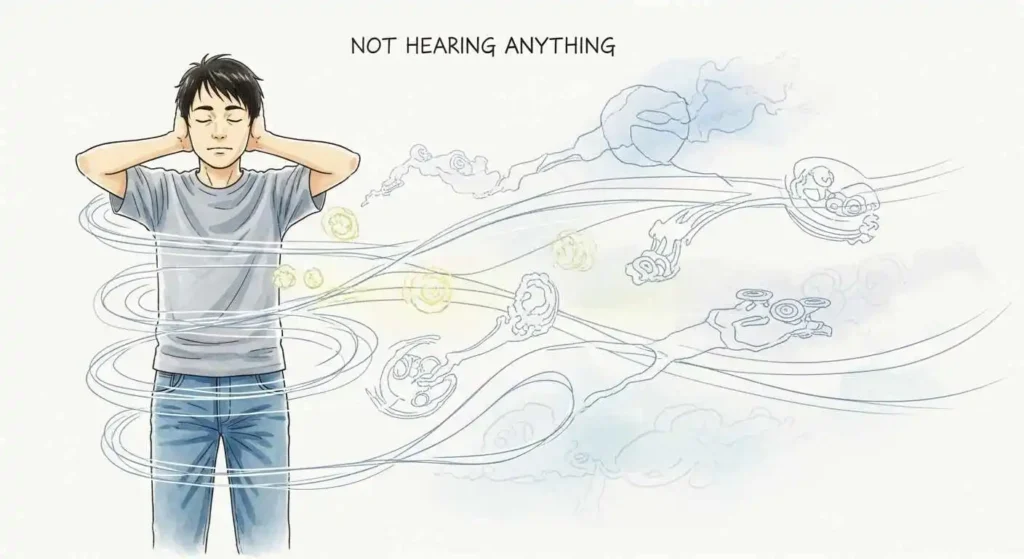
The scene at the beginning of the song, where he confesses he was “listening vaguely” to the other person’s words, is not just a lack of attention. It is a desperate “self-defense” born from the fear of touching the heart of the matter.

I, too, once made the same mistake in a conversation with someone important. The moment they were about to say something and the atmosphere shifted, I would purposely change the subject or pretend not to hear. Looking back, it wasn’t consideration to avoid hurting them, but an incredibly selfish act to avoid being hurt myself.
The Balance Between the Courage to Ask and the Fear of Rejection
“Can I hold you? Can I fall in love with you?”
This famous phrase might sound like part of a sweet love song if translated literally. However, as Kazumasa Oda sings it, it holds a much more layered meaning.
Before the physical contact of “holding,” he is asking for “permission” to step into the invisible territory of the heart. This incredibly humble yet earnest inquiry is, I believe, the essence of Off Course.

“I want you to say Yes, but I’m afraid of being told No.” Oda sings about the emotions swaying in that gap with a transparent voice, deliberately detached. That restrained expression stimulates the listener’s imagination and vividly revives “that evening” in our memories.
In the Speed of Summer Passing By
The dramatic development in the second half, along with the key change, suggests that time, cruelly, will not stop.
The description “Summer is passing by”…
It sounds like a lament for the “moment” when the relationship was either brightest or most precarious, being swept away to a place where it can never return.
In work and in relationships, while we postpone saying “Yes” or “No,” the situation itself changes, and even the meaning of giving an answer is lost. This song beautifully visualizes that “process of loss” using the magic of pop music.

“Don’t Ask Me Anything” — The Ultimate Self-Defense
As the song progresses, the world of the lyrics dives into even deeper introspection. The repeated phrase “Don’t ask me anything, don’t look at anything” carries a strong “rejection” of knowing the truth and a “fear” that the current balance will collapse, rather than the joy of love.
In a world where clearly choosing between black and white is always seen as the “correct answer”—in love or in future choices—Kazumasa Oda dared to affirm a kind of escape by saying “Don’t look” and “Don’t ask.” For vulnerable young people, those words were a very comfortable sanctuary.
Protecting the “Now” by Avoiding the Core
“Don’t look at anything that makes you sad.”
This sentence sounds full of kindness and consideration at first glance. However, if you look into the underlying psychology, our cowardly self-love—the desire “not to be hurt by seeing the other person sad”—shows through.
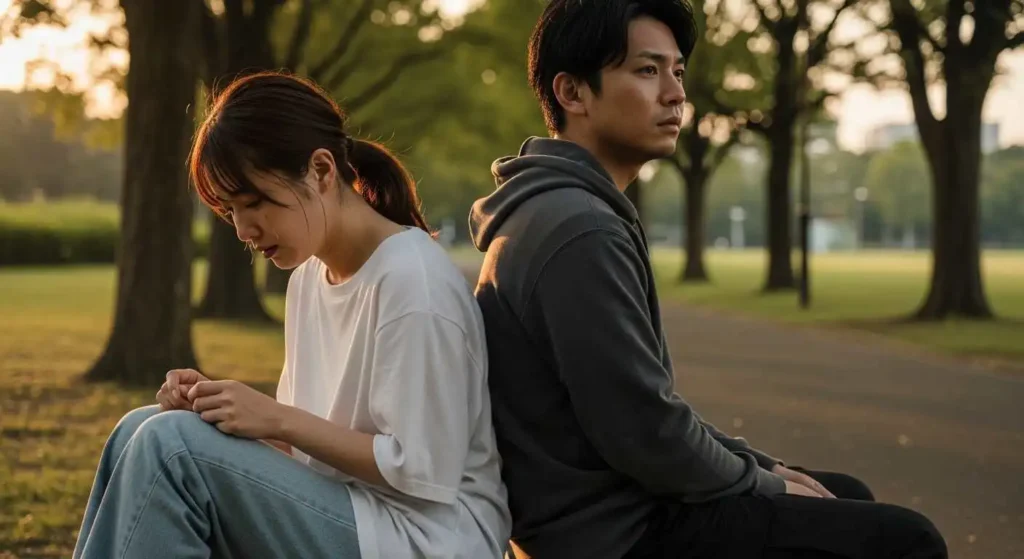
Walking through the quiet residential area away from the city’s hustle, I ruminated on this phrase over and over in my head. Back then, we must have realized it:
A relationship protected by not putting things into words will, sooner or later, change form and disappear. Still, for just this moment, I wanted to be in the illusion that it would last forever by “looking at nothing.”
The Solitude of the Flugelhorn, Drawing the Outlines of Emotion
When discussing “Yes-No,” one must mention the flugelhorn solo that echoes in the bridge and outro.

It’s not flashy like a saxophone or sharp like a trumpet. It’s a soft, slightly lonely tone, like looking at the sun through a cloudy sky. That melody seems to speak for the “emotions that aren’t logical” within this song.
The True Nature of the Humid Air at the End of Summer
While the urban 8th-note beat ticks the “present,” the flugelhorn weaves together indivisible emotions like the “past” and “regrets.” This dual-layered sound structure is precisely why Off Course was a peerless presence in the pop scene of that time.
The Heartbreaking Uncertainty of the Promise “See You Tomorrow”
At the end of the song, the words “See you tomorrow, right?” are suddenly inserted.
While this should be a reassuring phrase confirming the relationship continues, for some reason, it sounds incredibly fragile in this song.
We managed to get through today by “not asking” and “not looking,” barely connecting it to tomorrow. At the same time, it suggests an inescapable loop—having to face the same “Yes-No” question again tomorrow.
Conclusion: Why We Are Still Looking for Answers
It has been over 40 years since “Yes-No” was released. Yet, the song remains timeless because the “human instability” we carry doesn’t change with time.
“Can I hold you? Can I fall in love with you?”
If I were the “me” of today, what answer would I give to the “me” of that day, or to “you” of that day?
I suspect I would still mumble and “vaguely” look up at the sky. And I think that’s okay.
The beauty of life doesn’t lie in a resolute “Yes” or “No,” but in the clumsy process of swaying between them, stopping, and yet trying to believe in “See you tomorrow.” This song taught us such important things by sealing them inside a four-minute melody.
Off Course’s “Yes-No.” It might have been the most beautiful and painful “boundary” music that we, who were once young, had to pass through to become adults.

音楽ファン同士の交流・リクエストはこちら / Connect & Request Songs Here