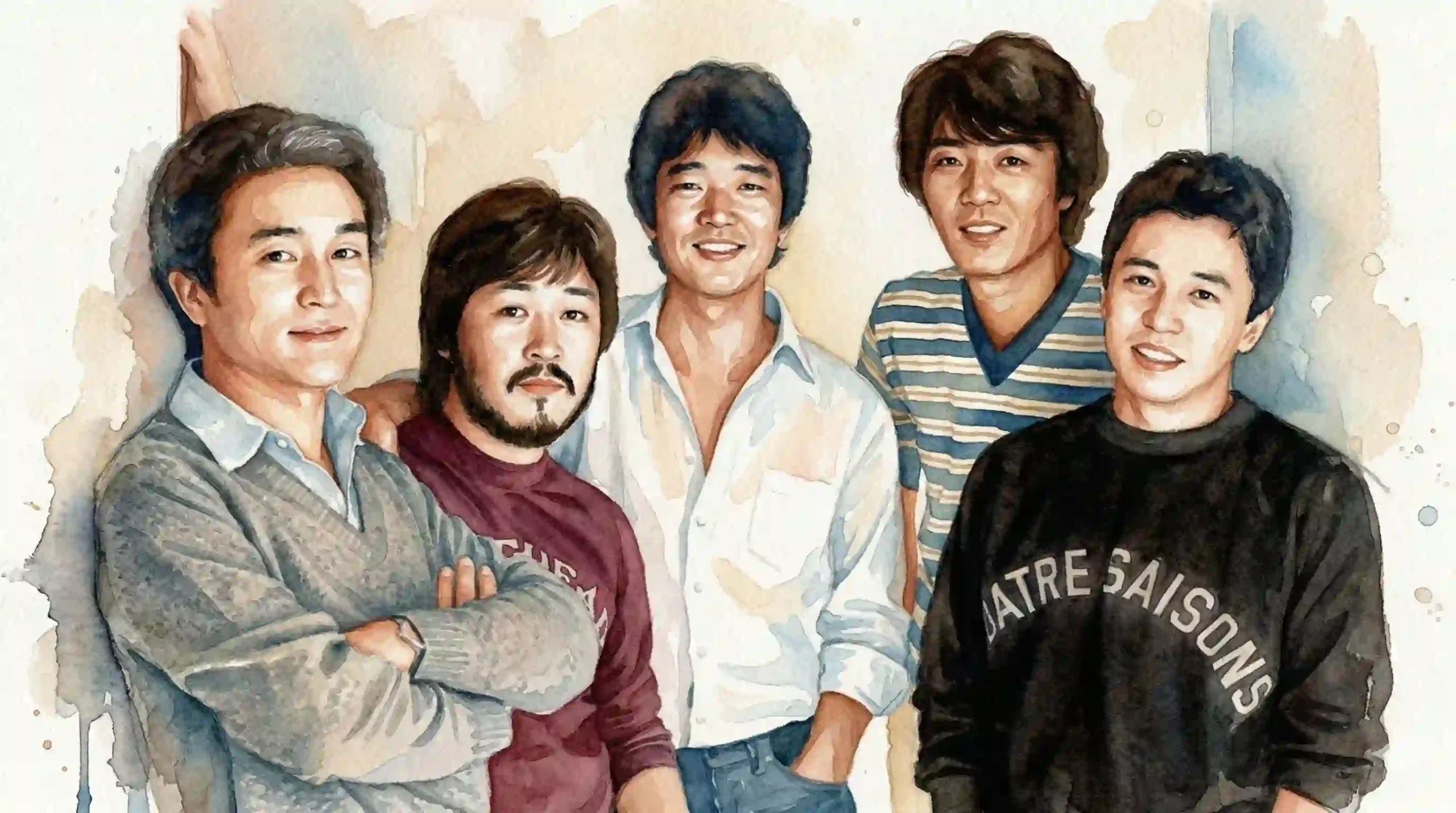
◆【オフ・コース】の歴史はこちらから ~洗練を極めたサウンドへのプレリュード~
- 🎧 Enjoy this article with audio
- 🎧 #8 is “Kotoba ni Dekinai” (Beyond Words)
- First, please listen to the official audio source
- A Place Reached Only by Losing Words
- An Outcry Named “La la la”
- Finding “I’m Glad I Met You” at the Edge of Loss
- Personal Memories that Refuse to be Categorized
- The Silence of Soundscapes Brought by Ultimate “Subtraction”
- Premonitions of the End in the Album “Over”
- Without Fear of Misunderstanding, This is a “Spell for Rebirth”
- Thoughts Behind Placing it at #8
🎧 Enjoy this article with audio
You can quickly check the key points of this article via audio.
Recommended for those who want to grasp the essentials before reading.
🎵 English Narration
The key points of this article are explained in English audio.
⌛ Playback time: approx. 3 min
🎶 Japanese Narration
You can also listen to the same content in Japanese.
⌛ Playback time: approx. 3 min
* Listening to the audio first will help you understand the world of the song and the key points more vividly.
◆ Explore the History of [Off Course] Here — A Prelude to Ultimate Sonic Refinement
🎧 #8 is “Kotoba ni Dekinai” (Beyond Words)
The reason I placed this song at number 8 is that I wanted to re-evaluate the “overwhelming power of silence” it possesses. It is an emotion that emerges not by speaking of love with many words, but at the very place where words have run out. I feel we need to receive that tremor once again with a completely fresh heart.

Poetic Interpretation of the Lyrics
Within a love that was fading, I was nearly crushed by loneliness and regret.
Time passed while I held onto the unspeakable sadness and my own weaknesses.
Yet now, meeting you has set my heart in motion once again.
A joy beyond words signals the beginning of a new love.
First, please listen to the official audio source
*Since the official video has not been released, we have linked a shared video by fans. If there are any copyright issues, we will respond promptly by deleting the link. (Please click the image below!)

♪ Credits
Song Title: Kotoba ni Dekinai (Beyond Words)
Artist: Off Course
Lyrics/Composition: Kazumasa Oda
Included Album: "Over" (1981)
Single Release: February 1, 1982
♪ Brief Commentary
A ballad depicting the heartache and hope of living with someone while facing fading love and one's own weaknesses. A masterpiece that leaves a deep impression with its quiet melody and recurring phrases expressing joy and sorrow beyond words.
Next is a live version. (It’s truly moving…)

♪ Credits
Song Title: Kotoba ni Dekinai (Live Version)
Artist: Off Course
Performance Date: June 30, 1982, at Nippon Budokan
Original Work: Live Album "Off Course 1982·6·30 Budokan Concert 40th Anniversary" (Released in 2022)
♪ Brief Commentary
A signature ballad performed during Off Course's peak at the Budokan. It remains a legendary performance for its earnest emotional expression and overwhelming vocals. This particular concert, the tour finale, has been highly re-evaluated through recent remastered releases.
A Place Reached Only by Losing Words
The words we use in everyday life are convenient, but at the same time, cruelly incomplete. No matter how passionately we speak of love or how deeply we describe sorrow, we might only be tracing the “outline” of the emotion. Everyone must have felt that frustration at least once.
The title “Kotoba ni Dekinai” (Beyond Words) itself is a ultimate declaration of defeat for an artist, and at the same time, a declaration of victory. Kazumasa Oda, a poet with an incomparable linguistic sense, sings that he “cannot put it into words.” There, we find the resonance of a naked soul that has stripped away all logic and rhetoric.

An Outcry Named “La la la”
The most distinctive feature of this song is the “La la la…” phrase repeated in the chorus.
In music, scat singing like “la la la” is often used for interludes, transitions, or to create a light mood. However, the “La la la” in this song is heavier than any word and pierces the heart more sharply than any cry.
That is because joy, sorrow, regret, and overflowing gratitude are all melted together and sealed within this “La la la.”
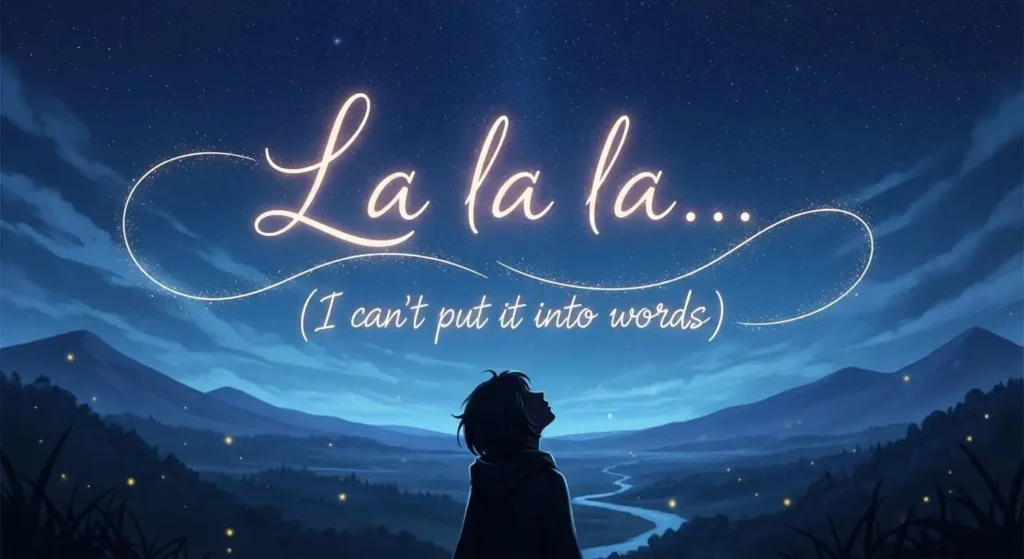
“So happy,” “so sad”—when opposing emotions reach their peak simultaneously, a person loses their words. To release that “indescribable moment” exactly as it is upon the melody—this is surely one of the summits reached by Off Course.
Finding “I’m Glad I Met You” at the Edge of Loss
It might be too superficial to view this song simply as a “song of gratitude.” When you examine the lyrics, there is a deep shadow of “loss” looming throughout.
“An endless love has been interrupted,” “The dream of those days that could not be fulfilled has already vanished.”
What these words show is not a hymn to a smooth life, but the figure of a human being who has experienced failure and parting, left in tatters.

Cursing one’s own smallness and swallowing excuses. Because I was in such darkness, the phrase “I’m truly glad I met you” in the latter half resonates like salvation.
It’s a feeling close to someone tapping you on the shoulder, saying, “Even with your patheticness and shortcomings, didn’t you have a precious encounter?”
I believe this song is the kindest song of “affirmation” for those who know despair.
Personal Memories that Refuse to be Categorized
Lately, this song is frequently used in TV commercials and dramatic scenes in dramas. Because of this, I sometimes feel a bit of sadness that it’s treated like a “symbol”—as if as soon as the intro plays, it says, “Okay, be moved here.”
Music should originally be something more personal and private. Something that stays with you in your solitary moments, shown to no one else.
The smell of the cold winter air as I walked through the quiet streets, or the feelings I deliberately kept unspoken while walking alongside someone precious.

When connected with such “personal memories,” “Kotoba ni Dekinai” recovers its true resonance, not just as a symbol.
The Silence of Soundscapes Brought by Ultimate “Subtraction”
In discussing this song, I must also mention the “negative space” depicted by the sound. In the early 1980s pop world, the “aesthetic of addition”—layering sounds with the spread of synthesizers—was becoming the mainstream. However, at the core of “Kotoba ni Dekinai” is a thorough spirit of “subtraction.”
At the beginning, the quiet strike of Kazumasa Oda’s piano keys. Layered there is the melody of strings, both sorrowful and dignified. There are no flashy drum fills or roaring distorted guitars. The “silence” that flows between the notes itself tells the story eloquently.
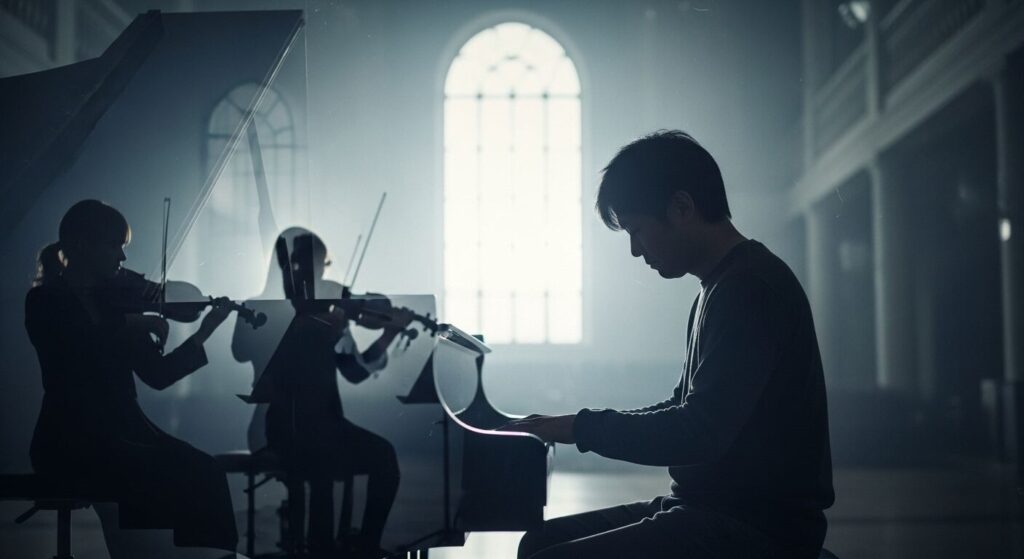
The greatness of Off Course as the band that handled the arrangement lies in this delicate control.
Premonitions of the End in the Album “Over”
A crucial piece to understanding this song is the existence of the album “Over,” where it was included.
Released in 1981, this work was filled with a heavy atmosphere that foreshadowed the end of the legendary five-member lineup of Off Course.
The phrase “beyond words” might not only represent the depth of love but also the complex emotions among the members and a silent message to the fans as an era was ending. Thinking of it this way, the tragic beauty of this song becomes even more multi-dimensional.

The legendary 1982 Nippon Budokan performance (the second YouTube video introduced). The sight of Kazumasa Oda singing while choking back tears against the backdrop of images on the screen has become a myth.
What was it that he “couldn’t put into words” then? It might have been gratitude to the comrades who ran alongside him, regret for the dreams he couldn’t protect, and a sense of helplessness against the unstoppable flow of time.
Through this four-minute song, we relive that massive vortex of emotion.
Without Fear of Misunderstanding, This is a “Spell for Rebirth”
To the general public, this song has become established as the “supreme love song” or a “moving ballad.” It’s often chosen as a standard for weddings. However, my perspective is slightly different.
I cannot help but feel that this song is a “spell for rebirth,” recited by a person who has once been thoroughly “broken” in order to stand up again.
Breaking promises you wanted to keep, hurting those you should love, and drifting away from your own ideals… Carrying such an “irreversible past,” one still has to put on a tie the next morning and go out with a straight face. There were certainly such days in our working lives.

“Kotoba ni Dekinai” is music like a sponge that absorbs all the “hidden tears” of such adults.
Admitting that “I am too small” is not a defeat. Rather, it is only by admitting one’s own weakness that one can reach a state of true gratitude to others—the feeling that “I’m glad I met you.” The quiet catharsis felt after listening to this song is close to the sensation of one’s fingertips touching a faint light at the bottom of despair.
Thoughts Behind Placing it at #8
It’s not a song for a special day, but a song to remember on an ordinary day to warm the depths of your heart. A junction for the past self and the present self to shake hands across time and space.
To continue living while cherishing emotions that cannot be put into words, exactly as they are.
That is by no means clumsy or lonely. Rather, how rich is a life where you can encounter someone or something that evokes such deep emotions?
Off Course’s “Kotoba ni Dekinai.”
This song will surely continue to give us the courage not to fill the gaps in our hearts, but to cherish those gaps “as they are.”

音楽ファン同士の交流・リクエストはこちら / Connect & Request Songs Here