
■For more details about [The Carpenters]…
➡🌈 The Siblings Who Changed the World with Gentleness — The Miracle of the Carpenters 💛
🎧 Enjoy This Article in Audio
You can quickly grasp the main points of this article through narration.
Recommended for those who want to catch the vibe of the music and the flow of the article before reading.
🎶 English Narration
An English audio introduction to the contents of this article.
⌛ Duration: Approx. 2.5 mins
🎵 Japanese Narration
A Japanese audio introduction to the contents of this article.
⌛ Duration: Approx. 2.5 mins
* Listening to the audio before reading helps you better understand the world of the music and the main points of the article.
🎸[The Carpenters Edition] No. 12 is “Goodbye To Love”.
No. 12 is “Goodbye To Love”.
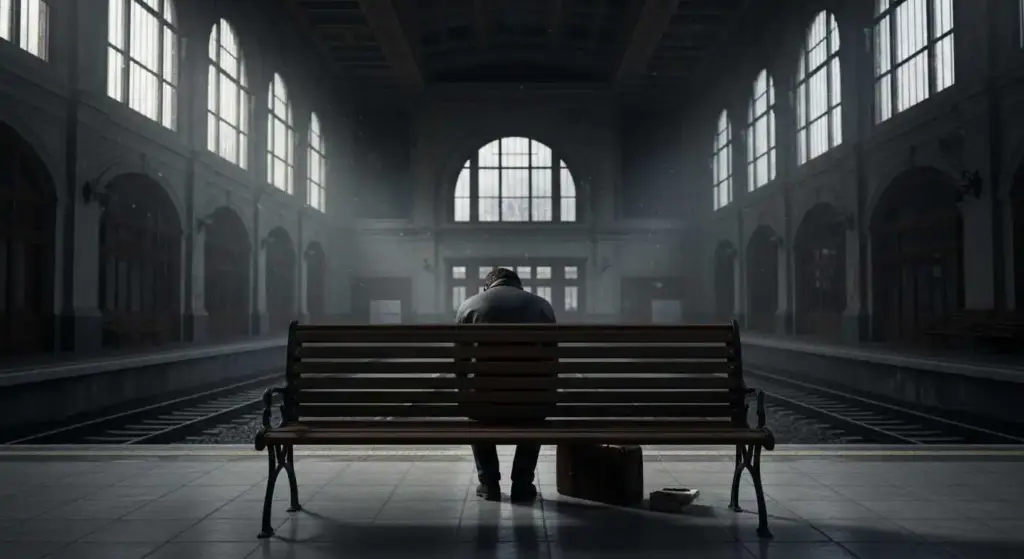
In 1972, amidst their successful career, The Carpenters reached a turning point, moving towards “deeper themes.” This work, which emerged during that time, steps into a completely different direction from their conventional style of portraying romance refreshingly. It confronts the loneliness, resignation, and quiet determination that people harbor head-on.
Karen’s voice, while maintaining its calmness, carries a tension as if standing at the entrance of a path of no return, leaving a strong impression on the listener.
Summary
The protagonist of this song has spent a long time searching for love but has not reached the desired form, firming their resolve to walk their life alone.
Behind this is the experience of being hurt as much as they expected, and the desire not to exhaust their heart any further.
Still, rather than completely denying the future, there remains a faint possibility somewhere that "someday a different scenery might be seen."
Resignation and hope are complexly mixed, depicting a figure quietly trying to choose their own path.

🎥First, as always, please watch the official YouTube video.
🎬 Official Video Credits (Official Audio)
Provided by: Universal Music Group
Title: "Goodbye To Love"
Artist: Carpenters
Featured Album: "Gold - Greatest Hits"
Label: A&M Records
© 1972 A&M Records
🎼Two-line Commentary
A deep ballad that depicts the quiet determination to move forward while accepting the end of love.
The guitar part in the middle and Karen's enveloping low tones vividly bring out the "acceptance of parting," which is the core of the song.
Basic Information of the Song
Release / Featured Album
“Goodbye To Love” was released as a single in July 1972 and is included in the album “A Song for You” of the same year.
This album is particularly highly rated in The Carpenters’ career, featuring a wide range of songs from pop tunes to ballads and works approaching inner feelings. Among them, this song stood out as a “song themed on deep loneliness,” leaving a strong impression on listeners at the time.
Lyrics and composition are by the classic duo Richard Carpenter and John Bettis.
In The Carpenters, who had many works depicting the joy of romance, this song is said to be “one of the earliest songs that intentionally stepped into dark themes.”

Chart and Historical Background
As a single, it missed the top 10 on the Billboard Hot 100, but considering the American music scene in the early 1970s, the fact that this song was heterogeneous is largely related.
At the time, upbeat pop and soft rock were mainstream on the radio, and a song with such a depressed theme was by no means the “royal road.” Still, the reason it gathered a certain amount of support was that Karen’s singing voice and the depth of the content had strong persuasiveness.
Also, what became a hot topic at the time was the bold introduction of rock guitar.
Unusually for a Carpenters song, a long guitar solo unfolds in the latter half of the song.
As a result, listeners were surprised, saying “we were shown a world different from the conventional image,” and it is also known that opinions were greatly divided.

Theme and Worldview of the Song
Protagonist’s Background
The protagonist was not necessarily active in romance but believed that somewhere in life, “someday someone compatible will appear for me.”
However, those expectations were not rewarded, and through accumulated disappointments, they head towards the choice of “letting go of seeking love itself.”
This figure is characterized by depicting the process of the heart gradually wearing out over many years, rather than a broken heart itself.
The feeling that “no one cared about my existence” is not just lonely, but a pain born from the gap with the image of life they had sought.

Introduction to the Story
In the first half of the song, the protagonist quietly begins to say, “I have decided to live my life alone.”
This is not a dramatic decision, but a conclusion that has gradually solidified over many years, not a momentary judgment left to emotion.
It is a very short quote, but
“I must live my life alone”
is an important part that symbolizes the protagonist’s feelings.
This short phrase contains the inner voice of “while fearing loneliness, I don’t want to expect and be hurt anymore.”
The protagonist is not rejecting love, but is trying to put an end to being swayed by love in their life.
That calm and quiet decision makes this song not just a sad song, but a “story of self-choice.”

Core Parts and Interpretation of the Lyrics
Symbolic Phrases
At the center of “Goodbye To Love” is the perspective that “a person who has let go of their expectations of love rationally re-examines the future.”
The protagonist is not devastated by a sudden broken heart, but is characterized by trying to accept the “reality of not reaching even if continuing to seek” over many years.
As a symbol of this, there is a short line
“All the years of useless search”.
It is extremely short as a quote, but the protagonist’s journey is condensed into this single phrase.
It plainly shows the process of continuing to place expectations on romance and simultaneously continuing to be hurt by those expectations, which is why this work is more than just a heartbreak song.
The attitude depicted in the middle of the song, “From now on, I will proceed at my own pace,” is closer to a “reconstruction of the heart” than an abandonment of romance.
It is not the coldness of giving up everything, but past experiences making the protagonist cautious and leading them towards protecting their own feelings.
Protagonist’s Psychological Changes
As the song progresses, the protagonist’s “resolution to accept loneliness itself” solidifies.
The process is gradual and carefully depicted.

- Decide to stop seeking love
- Consider loneliness to be the only stable place to belong
- Cannot decide anything about the future yet, but for now, the feeling of “wanting to protect myself” is prioritized
This flow seems like a resolution, but actually contains very “human wavering.”
The protagonist is not completely closing off the future.
From the expressions faintly inserted in the latter half of the lyrics, one can also read the soft possibility that “a moment might come someday when my mind changes.”
That is precisely why this song depicts “Goodbye” as a “temporary breakwater to protect one’s heart” rather than mere despair.

Charm of the Sound / Singing
Characteristics of the Arrangement
“Goodbye To Love” features a particularly heterogeneous arrangement among The Carpenters’ songs.
The symbol of this is the long distorted guitar solo that appears in the latter half of the song.
At the time, soft piano and calm orchestration were mainstream for The Carpenters.
There, the rock-style guitar played by Raven Hartman was boldly incorporated, and Richard intentionally created a “soundscape without sweetness.”
The guitar is not just a decoration, but functions as a symbol of the sudden release of the accumulated emotions the protagonist has harbored. The structure where thoughts that could not be expressed in words become the sound of the guitar and dominate the whole song is unique among The Carpenters’ works.

The arrangement has the following characteristics:
- The first half is a calm and orderly sound
- From the middle, the strings slightly recede, and the rhythm is emphasized
- In the climax, the guitar takes the lead role, and a “second story” separate from the song unfolds
This bold structure is a major factor that remains in the listener’s heart.
Karen Carpenter’s Singing
Karen’s singing voice emphasizes the “calmness of resolution” by not adding excessive emotion, naturally conveying how much thought the protagonist has put into it.
Her voice quality is characterized by the calmness of the low range, but in “Goodbye To Love,” that depth is used very compatibly with the stillness of resignation.

The singing style maintains a constant tension, intentionally not widening the range of intonation too much, simultaneously establishing the weight of the words and plainness.
It is also important that this moderate singing dramatically enhances the guitar solo in the latter half.
Reasons for Being in the Best 20 (Summary)
Differentiation from Other Songs
“Goodbye To Love” stands out in The Carpenters’ discography for the following reasons.
- Stepping into the heavy theme of “resignation” in romance
- Carefully accumulating the protagonist’s emotions and portraying it not as mere pessimism but as a “choice”
- By introducing rock guitar, it has become a challenging composition that overturns the image of the time
This song is still passed down today as a “work that went beyond the boundaries of the conventional Carpenters.”
A Word to Make the Reader Want to Listen Again
“Goodbye To Love” is a song that quietly depicts the protagonist’s choice of “taking a step back to protect the heart as a result of expecting too much from love.”
And whether that choice was right or not will only be known in the future — it has such a profound worldview. When listened to during a period when feelings cannot be sorted out, it is a song that gives an opportunity to re-examine one’s own way of walking.

音楽ファン同士の交流・リクエストはこちら / Connect & Request Songs Here