
■For more detailed information about 【Led Zeppelin】, click here・・・・➡️ 🎈(Zeppelin)
- 🎧 Listen to the Narration
- 🎸【Led Zeppelin Series】No.20 is・・・
- Basic Information on the Song and Its Placement Within the Album
- Fact Block: Focusing on One Point of the Production Reality
- What the Sound Creates Is Not “Emotion,” but Placement
- Deepening the Lyric Interpretation — A Structure Without a Destination
- The Listener’s Timeline — How I Have Listened to This Song
- Why It Is Ranked No.20
🎧 Listen to the Narration
This article is also available as an audio narration (about 2.5 minutes).
Following the flow of the text, it traces the weight, stillness, and placement of No.20 “When the Levee Breaks.”
Enjoy it before reading, or after you finish the article.
🇺🇸 English Narration
🇯🇵 Japanese Narration
🎸【Led Zeppelin Series】No.20 is・・・
No.20 is “When the Levee Breaks.”
At first glance, this ranking may seem a little surprising if judged purely by how striking or flashy the song is. On the other hand, when the album as a whole—and the Best 25 list itself—are considered as a single continuous “sentence,” this song is actually difficult to place anywhere else.
Its intensity is extremely high, yet it does not sit at the emotional center. Its presence is powerful, yet it never rushes the listener toward interpretation. That very difficulty in handling it defines the character of the song—and explains why it belongs at No.20.
Ultra-Short Summary
This song depicts a person who has lost the foundation of daily life due to a natural disaster and has been deprived of any place to remain.
Acts such as lamentation and prayer are shown, but they do not change reality.
What remains is only the act of moving, with no promise of salvation or recovery at the destination.
The story does not move toward resolution; instead, it ends by fixing the state of being “constantly driven onward.”
🎥 As always, please start by watching the official YouTube video.
🎬 Official Video Credits (Official Audio)
Title: When the Levee Breaks (Remaster)
Artist: Led Zeppelin
Album: Led Zeppelin IV
Release Year: 1971
Format: Official Audio (Remastered)
Source: Led Zeppelin Official YouTube Channel
Provided to YouTube by: Rhino Atlantic
🎼 Two-Line Commentary
A closing track where heavily repeated drums and a guitar crawling through the low register fix not emotion, but the “environment itself” into sound.
By rejecting resolution or uplift and leaving only the aftermath, the structure pulls the entire album downward.
Basic Information on the Song and Its Placement Within the Album
About the Song Featured Here
- Artist: Led Zeppelin
- Song Title: When the Levee Breaks
- Album: Led Zeppelin IV
- Release Year: 1971
The Fact That It Is Placed at the Very End of “Led Zeppelin IV”
“Led Zeppelin IV” is not simply an album that lines up representative songs.
The track order itself forms a structure that gradually alters the listener’s perception.
There are songs that push tension forward, songs that expand the scale, and songs that sink inward.
At the very end of that flow sits this track.

The album does not “close neatly” here.
Without offering uplift or recovery, it ends leaving only volume and density behind.
Because of this ending, the album feels less like a completed whole and more like something released mid-process.
I sense a strong intention in this placement.
With “When the Levee Breaks” as the final track, the album closes not as a recollection, but as an event.
What remains after listening is not a tidy impression, but an unresolved state.
Fact Block: Focusing on One Point of the Production Reality
The Recorded Space Defines the Character of the Sound
There are many facts and anecdotes surrounding this song, but here I will focus on just one.
That point is this: the space in which it was recorded determines the very character of the sound.
Drums recorded inside a large building clearly differ from those shaped in a studio.
Reflections and reverberation remain unprocessed, and rather than pushing the rhythm forward, the sound spreads out into the space.

As a result, the drums do not assert themselves.
There is no emphasis, no provocation.
The sound is simply placed at fixed intervals.
That alone determines how the entire song moves.
Here, environment dominates the music more than performance.
Choosing Not to “Tell” the Blues Form
This song draws from the blues tradition, but it does not place importance on reproducing the form.
There is no introduction–development–conclusion, no emotional整理, and no stated resolution.
What exists is only a structure in which the same situation repeats.
The same actions continue, the same judgments are repeated, and as a result, nothing changes.
By choosing not to tell, explanation is abandoned. What remains is only the situation itself.
This distance removes the song from narrative.
What the Sound Creates Is Not “Emotion,” but Placement
The Meaning of Drums That Do Not Push Forward
The drums in this song do not serve to propel the body forward.
The tempo is steady, but the sense of drive is deliberately suppressed.
They are struck, yet they do not accelerate.
They sound, yet they do not build excitement.
That condition is maintained from beginning to end.
This restraint prevents other sounds from pushing forward unnecessarily.
By refusing rhythmic leadership, the posture of the entire song is fixed.

The Positioning of Vocals and Harmonica
Robert Plant’s vocals do not organize or present emotion.
They sound like lament, yet they never move toward a conclusion.

The harmonica likewise avoids dominating the space melodically, instead clouding the gaps between sounds.
No part tries to become the lead.
As a result, the sound neither sways forward nor backward, maintaining the same density throughout.
Why the Sound Never Scatters Despite Its Size
Despite the massive sound image, there are few moments where parts compete.
The guitar does not push too far forward, the vocals do not attempt to unify, and the drums do not create flow.
By each staying within its own bounds, the song does not swell; it continues while maintaining posture.

Deepening the Lyric Interpretation — A Structure Without a Destination
Lament and Prayer Do Not Change the Situation
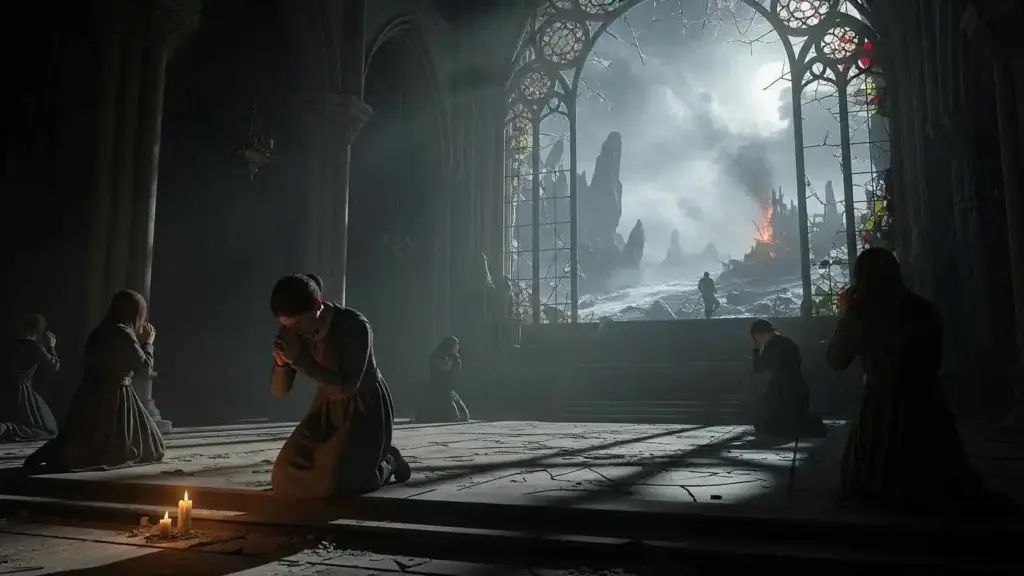
Within the lyrics, acts such as lament and prayer appear repeatedly.
However, they are never treated as sources of hope.
From the outset, they are positioned as things that lack the power to alter circumstances.
What matters is that despair is not exaggerated.
There is no anger, no protest, no dramatic emotional explosion.
Only the fact that nothing changes, no matter what is done, is repeated.
Why “Movement” Does Not Become Salvation
The movement described in the lyrics is not a journey with purpose.
There is no assumption that something will be gained by going somewhere.
What exists instead is simply the condition of being unable to remain where one is.
The brief English phrase “got to move” appears, but it feels less like resolve and more like being pushed.
It suggests that no room for choice remains.
As a result, even as the story progresses, it does not grow lighter.
Things move, yet nothing is resolved.
This structure never collapses, right up to the end.

What Is Lost Is Not Emotion, but Procedure
The lyrics include references to home and to a lover.
Yet what lies at the center is not emotional loss.
Where to sleep.
Where to go.
What to do next.
The song depicts a state in which the procedures of daily life are suddenly invalidated.
And it ends without resolving that state.
That is why, even after listening, nothing feels settled.
The Listener’s Timeline — How I Have Listened to This Song
What First Caught Me Was That Guitar Movement
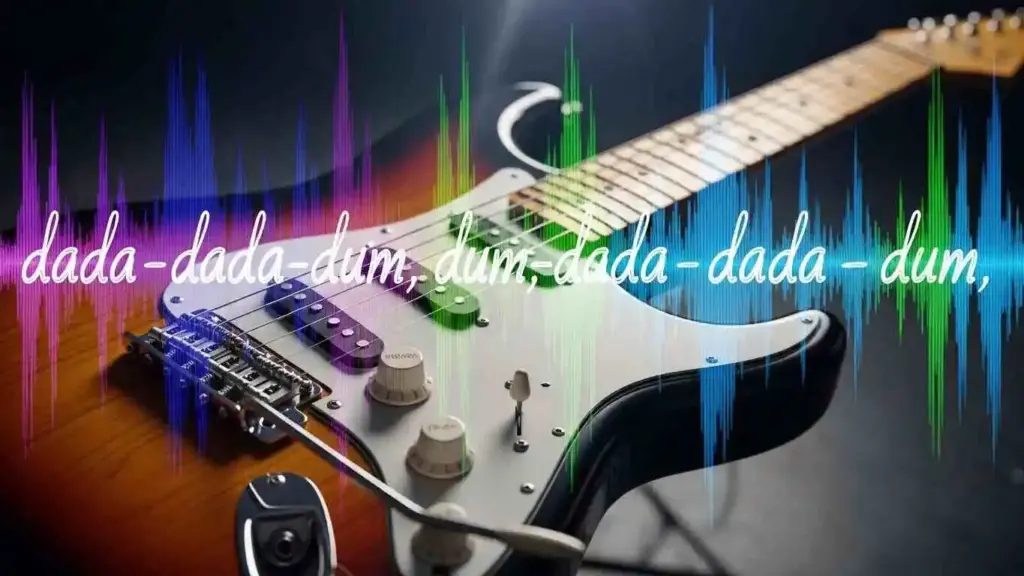
When I look back on this song, what shaped my impression from the very beginning was the guitar sound that starts around 1:08 in the YouTube audio introduced above—the “dadadadadan, dadadadadan” figure.
That “dadadadadan” movement is Jimmy Page’s guitar.
It is not a riff that asserts itself strongly, but a way of playing that stays low and subtly shifts the sound little by little.
I feel it is placed not to step forward, but to determine how the entire song proceeds.
It neither bounces nor flaunts momentum.
It moves as if carrying weight, shifting step by step.
That sensation alone remained vividly with me.
Why I Didn’t Try to Talk About It
At the time, I didn’t actively try to talk about this song.
No matter where I tried to attach words, they never explained more than that guitar movement.
It doesn’t build excitement, nor does it shift into new sections.
And yet, the course of the song becomes fixed right there.
Something that stands on that single point doesn’t need to be forced into language.
That was my judgment, and so I left it on hold for a long time.
What Became Visible When I Rearranged the List
This time, while reorganizing the Best 25, I found that I could no longer avoid this song.
When lining up songs that push forward with momentum, there comes a point where a sound is needed that simply aligns speed.
This song fit perfectly into that position.

Even without explanation, the moment that guitar begins, the way the space moves naturally falls into alignment.
The Fact That It Became Impossible to Remove
This song did not suddenly start sounding different at some point.
It’s just that when you try to remove it, the sequence won’t settle.
Without it, the flow becomes strained.
That’s all.
Once that “dadadadadan, dadadadadan” movement enters, the way everything progresses is decided.
For that single reason, this song was placed here.
Why It Is Ranked No.20
It would have been easy to place this song higher.
Considering its sonic weight and symbolic power, that would not have felt unnatural.
However, when placed at the center, this song works too hard.
It suits adjustment better than propulsion.
If placed too early, everything sinks; too late, and only heaviness remains.
The place in between was No.20.
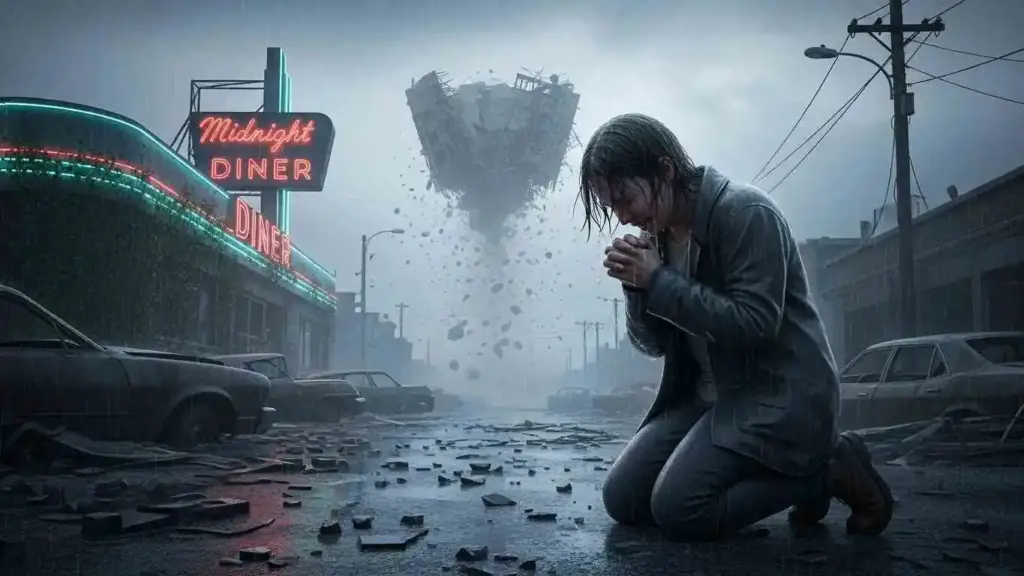
“When the Levee Breaks” is not a story about overcoming something.
There is no recovery, no resolution, no salvation.
What remains instead is the reality that continues after collapse.
A state in which one can only move.
A situation where time advances while emotion lags behind.
I think of this song as a work that places that reality not as exaggeration, not as interpretation, but simply as sonic density.
That is why it is No.20.
By being here, the movement of the entire Best 25 is stabilized. That is the role of this song.

コメント