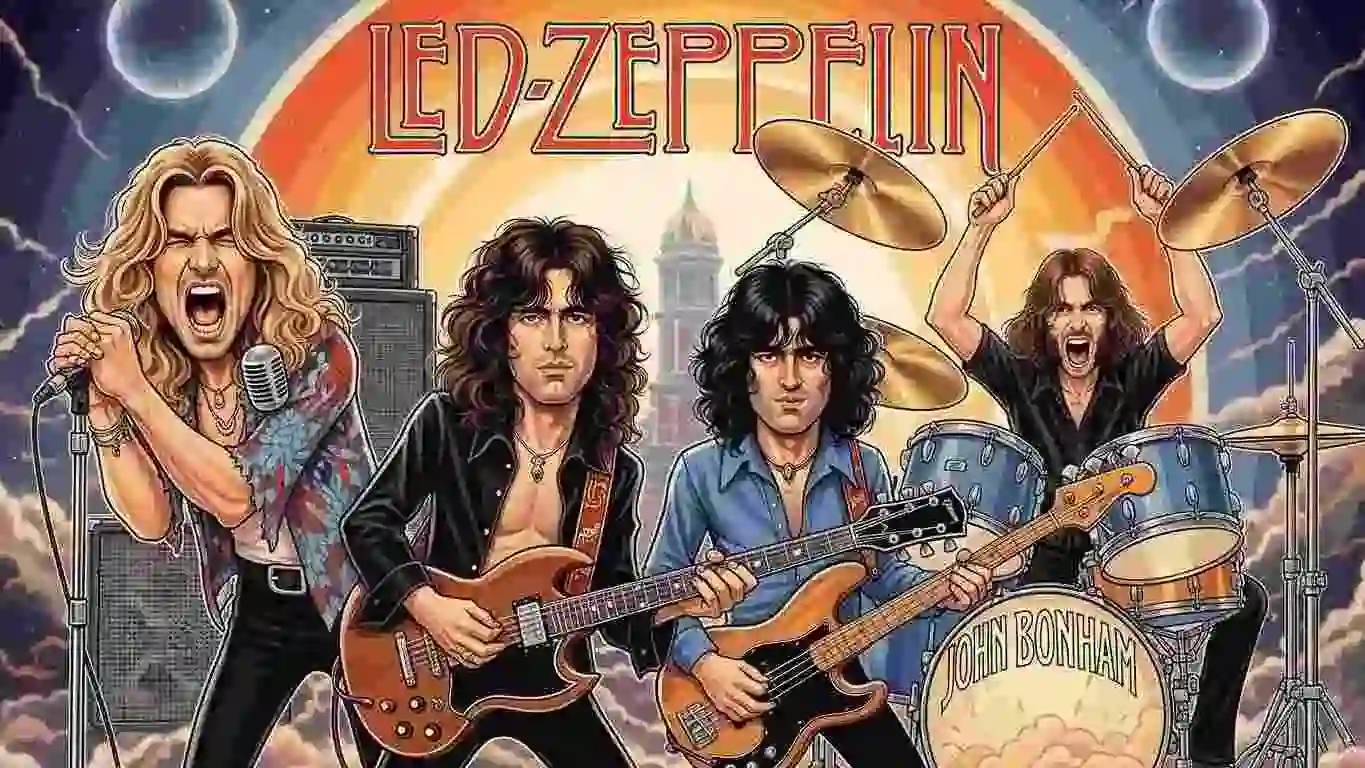
■For more details about 【Led Zeppelin】, click here・・・・➡ 🎈(Zeppelin)
🎧 Listen in Audio
This article is also available as an audio narration of about three minutes.
Following the flow of the text, it traces how “In My Time of Dying,” ranked at number 19,
stretches time without rushing toward an ending.
Please enjoy listening before reading, or after you’ve finished.
🇺🇸 English Narration
🇯🇵 Japanese Narration
🎸【Led Zeppelin Series】No.19 is・・・・
No.19 is “In My Time of Dying.”
When placing this song around the middle of the Best 25, what stayed with me most wasn’t flashiness or heaviness.
What lingered was the feeling of “continuing without ending.”
More than its sheer length, it feels as though the song’s shape is defined by its refusal to hurry toward a conclusion.
Ultra-Brief Summary
In this song, a figure facing death checks their position from multiple angles.
Words of prayer appear, but the mind never settles in one direction.
Fear, excuses, wishes, and rising intensity alternate, with the focus shifting each time.
The song offers no conclusion, ending instead by stretching out a span of unresolved time.
🎥 As always, please start with the official YouTube video.
🎬 Official Video Credits (Official Audio)
Artist: Led Zeppelin
Song: In My Time of Dying (1990 Remaster)
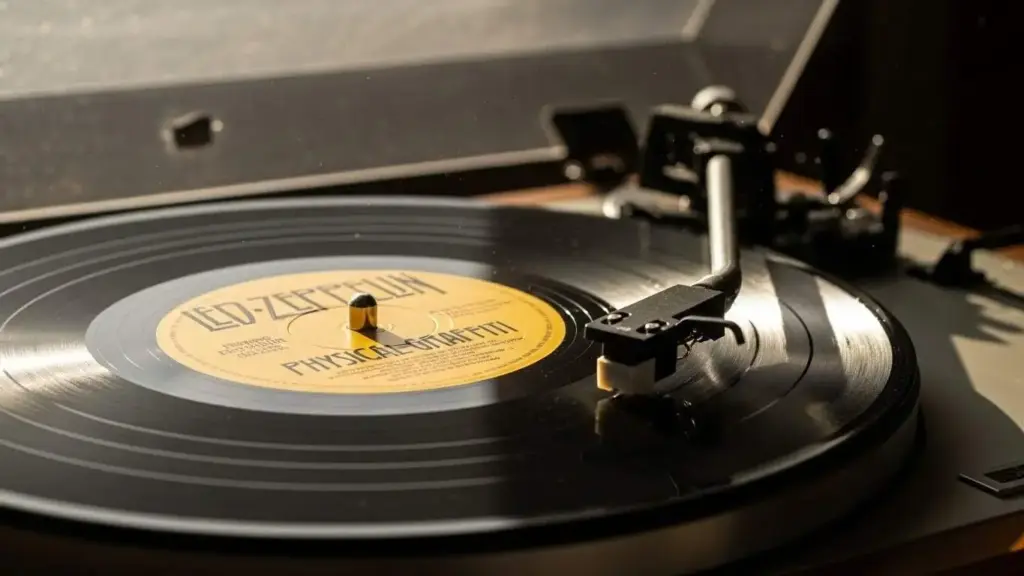
Album: Physical Graffiti
Original Release Year: 1975
Remaster Year: 1990
Format: Official Audio
Provided by: Atlantic Records
Source: Official Led Zeppelin YouTube Channel
🎸 Two-Line Commentary
This remaster preserves the raw edge of the original while clarifying the sound contours and tightening the low end.
The tension and stamina of the performance come forward, while the studio atmosphere and sense of space are more clearly conveyed.
🎥 Japanese Credits (Official Live Video)
Artist: Led Zeppelin
Song: In My Time of Dying
Concert: Live at Earl’s Court
Performance Year / Venue: 1975 / Earl’s Court, London
Original Album: Physical Graffiti (1975)
Format: Official Live Video (HD)
Source: Official Led Zeppelin YouTube Channel
🎼Two-Line Commentary
A live take that preserves the extended structure while gradually shifting only the density and tension of the performance.
Compared to the studio version, pauses and breathing come to the foreground, capturing the process of moving toward an ending in real time.
About the Track
Basic Information
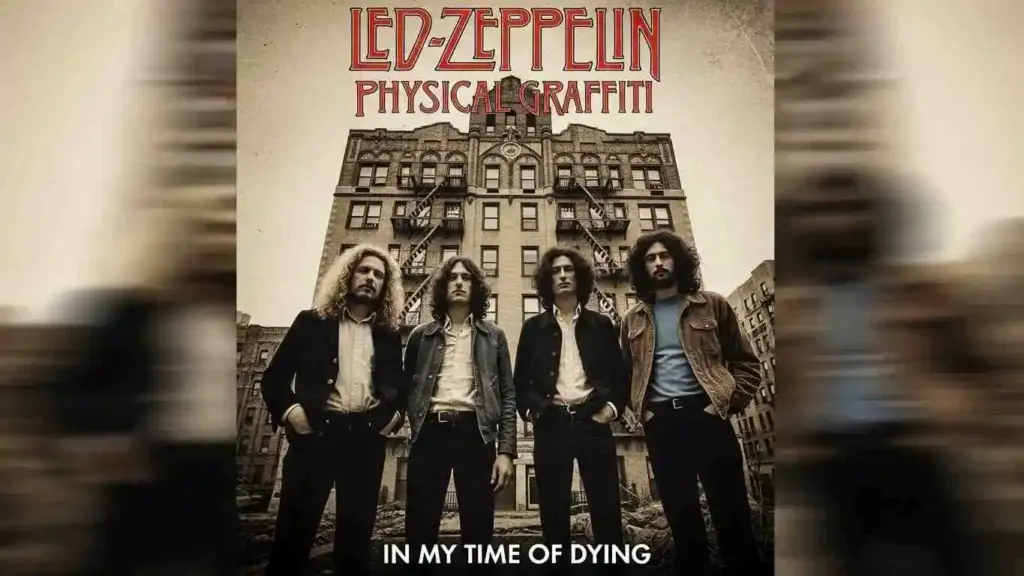
- Artist: Led Zeppelin
- Song Title: In My Time of Dying
- Album: Physical Graffiti
- Release Year: 1975
*This song draws on a traditional gospel/blues piece and reconstructs it through Led Zeppelin’s 1970s performance language. The credit is listed under the band’s name.
Within the Flow of the Album
Physical Graffiti is an album where each track has a markedly different character.
Some songs switch scenes sharply; others open up the landscape all at once.
When “In My Time of Dying” begins within that flow, the pace of the music suddenly slows.
Nothing fundamentally new happens; instead, the same materials are reused repeatedly in altered forms.
Rather than following developments, the listener is placed in a position of simply accepting how long this repetition will continue.

The State Depicted by the Lyrics
The Topic Keeps Drifting
The narrator in this song does not offer a consistent explanation.
Just as they seem about to make a definitive statement, the focus shifts elsewhere—then returns.
They start to say they were not at fault, then immediately ask someone for help, and moments later only the intensity of the voice rises.
What matters is not that these elements remain unorganized, but that there appears to be no attempt to organize them at all.
The story flows, but there is no destination prepared at the end of that flow.
What Remains Is the “Process,” Not the Verdict
Here, past actions are not judged, nor is salvation confirmed.
What occupies the narrator’s mind is not proof of righteousness, but the fact that “what comes next is unknown.”
As a result, the song does not close as a complete story.
Even though it is moving toward an ending, there is a persistent sensation that the emotions themselves have been left behind.
The Structure Supported by Sound
Buying Time Through Continuation, Not Development
This song does not maintain its length by piling up new events one after another.
The basic form remains largely unchanged, while the pressure of the sound and the amount of space gradually shift.
Clear divisions like “building up” or “settling down” are weak; instead, only physical sensations slowly transform.

A Performance That Does Not Explain Emotion
When the slide guitar comes to the forefront, the sound moves away from acting as a spokesperson for emotion.
What remains is not lamentation or enlightenment, but the simple fact that the body keeps moving.
Before words, the motion of hands and breathing comes across.
Why No.19?
This Time, I Thought in Terms of “Time-Based Weight”
Considering its length and density,
placing it just before the point where one truly settles in felt the least forced.
No.19 preserves the song’s presence while still leaving room to move forward.
What the Lyrics Leave Behind
The Gait Matters More Than the Destination
Each time I return to this song, what catches me is not “where it goes.”
It’s “how it is walking right now.”
The narrator prays and looks back on the past, but never tries to bind these acts into a single line.
Even when they seem ready to conclude something, the focus shifts, and only the tone of the voice changes first.
This movement feels less like emotional processing and more like a reflex to avoid standing still.
Time That Continues Without Promised Salvation
Even though religious language appears, the song does not move straight toward reassurance.
Prayer emerges, but there is no sense that it has changed the situation.
That is what feels important to me.
This is not a story about finding peace through belief, but about repeatedly drifting away even while trying to believe.
At times, the final surge sounds less like resolution and more like nothing more than a raised voice.
How It Sounds Different Along My Own Timeline
It Used to Be “A Song You Listen Through to the End”
When I first listened to this song seriously, my interest was simple.
Could I stay focused through a long track?
Receiving the sheer force and endurance of the performance itself felt like the experience.
At that time, I didn’t have the space to follow what was happening inside the song in detail.
At Some Point, It Became “A Song That Keeps Going Midway”
A story that continues without reaching a conclusion.
A feeling where circumstances move forward even as emotions lag behind.
Those sensations began to overlap with this song’s length and repetition.

Now, more than listening all the way through, what stays with me is how the “in-between state” is sustained.
Why It Isn’t Ranked Higher
Why I Didn’t Place It Near the Top
I could have placed this song higher.
Judging purely by intensity and presence, it wouldn’t have been strange.
But stacking it among the top ranks would have made the overall Best 25 feel heavier.
Too many songs demanding full commitment would reduce places to breathe.
That imbalance didn’t sit right with me.
Why I Didn’t Push It Lower

At the same time, I couldn’t place it in a lighter position.
There is simply too much that lingers to let it pass by.
Length, repetition, wavering voice.
All of these change meaning depending on the listener’s state.
That variability felt wasted if pushed too far down the ranking.
This Position Felt Right
No.19 allows engagement without over-bracing, while still carrying the impression forward.
You can listen with full focus, or receive it while keeping some distance.
Considering this song’s nature, I wanted to place it where both approaches remain valid.
Why This Order of Introduction
I Wanted to Pause on the Meaning of “Length” Here
As you continue through the Best 25, more long songs will appear.
But if each time we fall back on the idea that “long equals epic” or “long equals grand narrative,” listening becomes monotonous.
By introducing “In My Time of Dying” at this point, I wanted to establish that length serves more than one purpose.
With that in mind, the way the following songs sound may shift slightly.
In Closing
This is not music meant to wrap things up neatly.
Instead, it stretches out a span of time where the ending is visible, but emotions cannot catch up.
That’s why I didn’t place it at the center.
But I also couldn’t push it aside.
No.19.
A position that allows you to pause slightly while still moving forward.
For me, right now, this place feels the most natural.

コメント