
- 🎧 Enjoy this article with audio
- 🎸 [Yumi Matsutoya] Edition – Rank #13 is…
- First, please watch the official YouTube video
- The Scenery We Saw in the Winter of 1984
- Recollection: Light and Shadow of the Stadium
- The Question of “Sacrifice” and “Eternity” Posed by the Lyrics
- Passing Seasons and the Unchanging Jersey Number
- Reason for Choosing Rank #13
🎧 Enjoy this article with audio
🎶 English Narration
Listen to the English narration of this article.
🎵 Japanese Narration
Listen to the original Japanese content.
* Listening to the audio before reading the text will help you understand the background of the song and the evaluation points more three-dimensionally.
🎸 [Yumi Matsutoya] Edition – Rank #13 is…
Rank #13 is “No Side”.
When we talk about winter high school rugby, there is one song that inevitably comes to mind. That is “No Side”.
The story passed down as the background for this song is the final match of the 63rd National High School Rugby Tournament held on January 7, 1984—Tenri High School vs. Oita Maizuru High School.
This match continued with dramatic developments right up to the final kick scene. It is said that the kick Oita Maizuru faced at the end of the match would have tied the game and resulted in a shared championship had it been successful. However, that single kick missed the goal by a fraction.
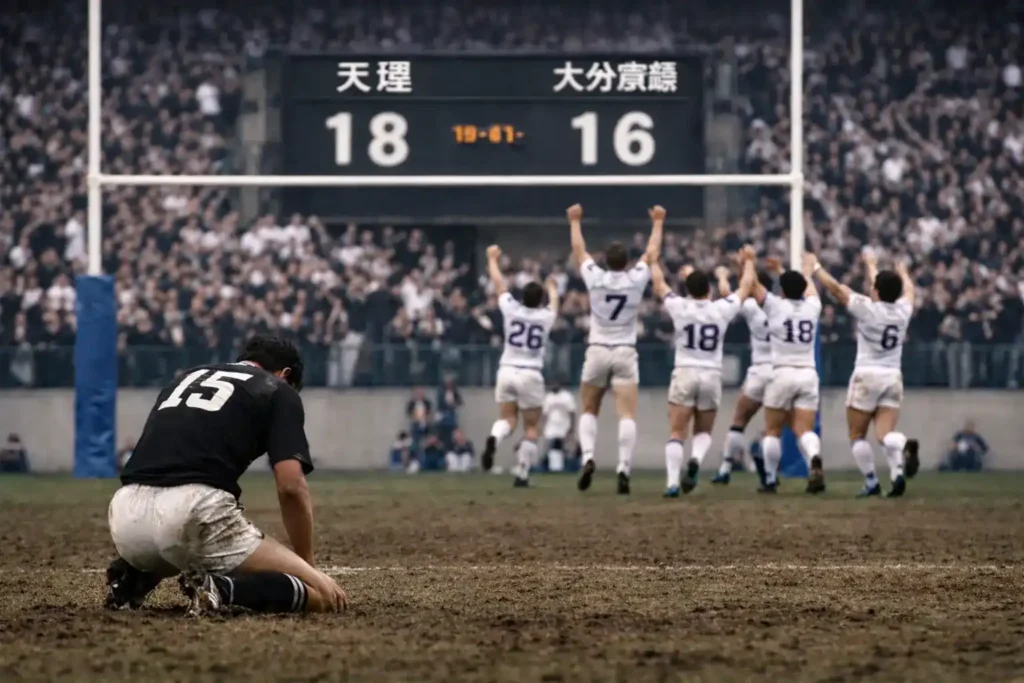
Giving everything in a fierce battle, only to have fate’s “one last step” fall short at the decisive moment. The silence of that instant, combined with the rugby spirit of “No Side” where players praise each other regardless of the outcome—I imagine Yumi Matsutoya deeply engraved this fusion of scenes into her heart.
As someone born in Oita Prefecture, the strength of Maizuru High School’s rugby team has always been a source of pride for me.
Every winter, their presence at Hanazono (the rugby stadium) was a given. The figures in pure black jerseys, moving forward even while covered in mud, were true heroes to local children. That final kick scene Maizuru showed in the final—the moment the cheers turned into total silence—is something I still cannot forget.
“No Side” is not a song simply about winning or losing. It is a song woven with joy, sorrow, and the serenity that comes after giving one’s all. Because of that stage on that day, and the pride I felt on my skin, this song resonates even deeper in my heart.
Listening to it again now in 2026, I feel a slightly different kind of tear running down my cheek than back then.
First, please watch the official YouTube video
Japanese Credits (Official Video)
Yumi Matsutoya — "No Side"
Album: "NO SIDE" (Released December 1, 1984)
2-Line Commentary
A representative ballad by Yuming titled after the word "No Side," which signals the end of a rugby match. Set against the backdrop of the 1984 High School Rugby Final between Tenri and Oita Maizuru, it depicts the silence after exhausting all efforts and hope for the future.
The Scenery We Saw in the Winter of 1984
The Winter Brought by the Album “NO SIDE”
I encountered this song when I had been working for a few years. I was getting used to the job, but I felt the “heat” of my student days gradually cooling down. On December 1, 1984, the album “NO SIDE” was released. On the jacket, Yuming was wrapped in a white knit, gazing somewhere far away.
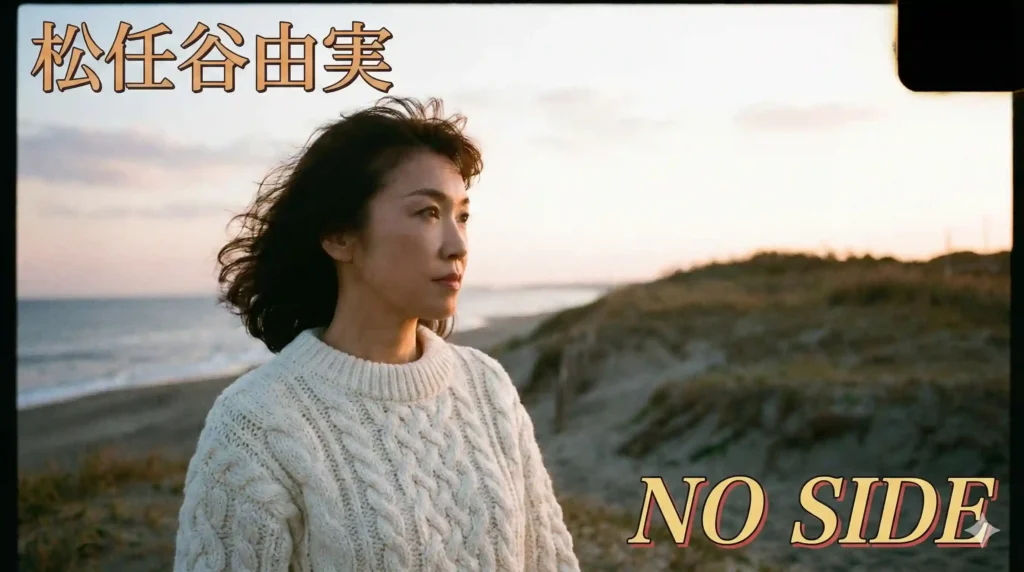
Japan at that time was entering the run-up to the bubble economy. The city was glamorous, and I think people were floating, seeking a more exciting future and a richer life. The hit charts were overflowing with bright, glittering idol songs and urban city pop. Amidst such hustle and bustle, the serene atmosphere emitted by this title track “No Side” felt like a foreign object of sorts, but at the same time, it had a mysterious gravitational pull that stimulated something “left behind” deep in the heart.
At the end of an exotic journey starting from the first track “SALAAM MOUSSON SALAAM AFRIQUE,” “No Side” flows at the very end. The composition itself felt like a ritual of returning from a distant world to the Japanese winter, specifically to the place where youth ends.
The Memory Awakened by the “Scent of Withered Grass”
At the beginning of the lyrics, “He closed his eyes and breathed deeply the scent of withered grass.” Just this one line pulls my consciousness instantly back to the winter stadium.

I didn’t actually play rugby. Still, the scenery under the Oita winter sky and the phrase “scent of withered grass” had intense reality. It is that unique smell of soil and grass tickling the nasal cavity, carried by the cold, dry wind. There is no vitality or moisture like summer grass there. What exists is a “dry sense of desolation” where a season is ending.
Yuming is terrifyingly skillful not only in visual descriptions but also in expressions that appeal to the sense of smell and touch. Through the figure of the protagonist closing his eyes and taking a deep breath, we listeners also fall into the illusion of inhaling that cold air into our lungs.
Recollection: Light and Shadow of the Stadium
The Weight of the Kick that “Missed the Goal”
What determines the drama of this song is the cruel description: “The kick that concludes the long league battle missed the goal.” This song begins not with a dramatic comeback victory, nor a draw, but from the moment of a decisive defeat.
In my 20s, listening to these lyrics, I accepted it as a tragedy beautified like a scene from a movie. Because of my youth, I captured even “losing” dramatically as a page of youth.
However, more than 40 years have passed since then, and now living the second half of my life, the meaning of this “kick that missed the goal” has changed significantly within me.

In life, chances for a miraculous recovery don’t come often. And in those few chances, the ball kicked with all one’s might heartlessly misses the goal post. We have piled up such experiences more than enough. Failures at work, breakdown of relationships, broken promises. It approaches the heart not as the “beautiful tragedy” felt in youth, but as a more poignant, irreversible “weight of reality.”
“He dropped his shoulders and brushed off the dirt.” The regret contained in that single gesture, and the karma of humans who must still look up. By turning the camera not on the winner, but on the loser, Yuming likely tried to affirm the “time of the end” that inevitably visits everyone’s life.
“The Wind He Would Never Smell Again”
Personally, the phrase that tightens my chest the most is “He breathed deeply the wind he would never smell again.”
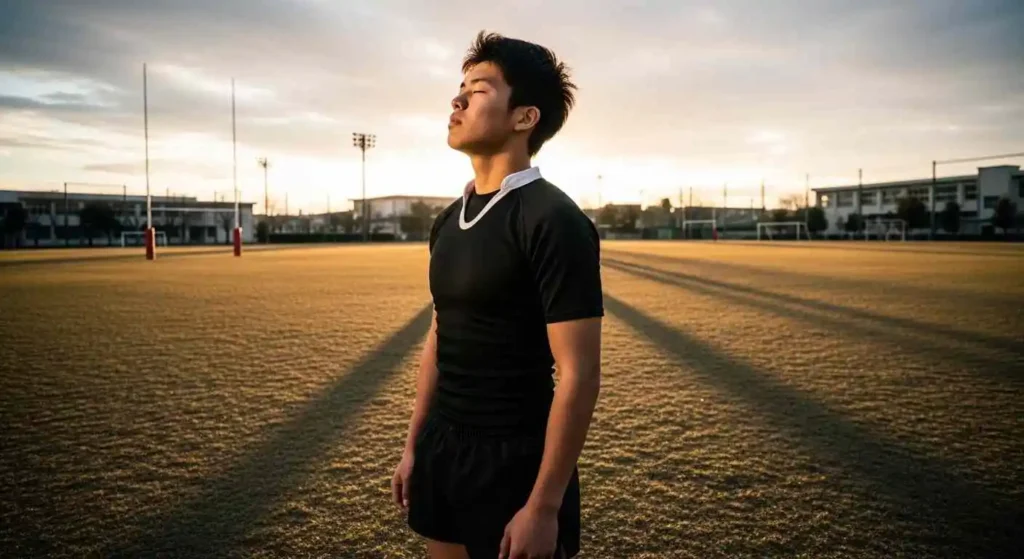
In student sports, the “No Side” whistle doesn’t just mean the end of the game. It implies the “complete end” of days wearing the same uniform and running toward the same goal with teammates. Graduation, employment, separate paths. Never again will this members stand on this ground. That irreversibility is thrust upon us with cruel precision by the words “the wind he would never smell again.”
Tracing my own memories, the smell of the wind I felt back then and the color of the sky I looked up at are clearly different from those of today. It’s not just a physical environmental change. Because my own sensibilities have altered with age, those sensations are crystallized in memory as “things that will never return.”
In the 1980s, an era when all of Japan was obsessed with moving “forward, forward,” Yuming had the perspective to stop, look back, and cherish things that are ending. I cannot help but marvel at her precocious spirituality even now.
The Question of “Sacrifice” and “Eternity” Posed by the Lyrics
The Question “What Did You Sacrifice?”
Entering the second half of the lyrics, the perspective shifts from “his” emotions to “my” thoughts watching him. “Deciding what the goal is, what did you sacrifice? No one knows.” This question gives the song “No Side” a profound philosophical meaning.
When trying to achieve one thing, or trying to run through one path, people always sacrifice something. It is not just time and effort, but sometimes relationships with loved ones, one’s own health, or “life with other possibilities” itself. The lonely selection and discarding known only to those who kept running behind the glamorous cheers. Yuming quietly sings of that pain as “no one knows.”
“You, who were trying to run longer than the cheers, faster than the excitement.” Here lies respect for his inner impulse that transcended the results of the competition and the evaluation of others. What he was fighting might have been himself and the flowing time itself, as well as the opponent.
After a long time in society, we get used to being evaluated by results and numbers. But this song reminds us. What is truly important is the “way of life” itself—what you thought, what you discarded, and how you ran in the process until the result came out. You, my fellow traveler, must have also walked this far paying “sacrifices” that you can’t tell anyone.

What Remains “Even After Everyone Has Left”
The most beautiful and saddest part of this song is the last chorus. “Even if everyone leaves, I am here.”
The game ends, winners and losers are decided, and the spectators return to their daily lives. The enthusiasm cools down, and the stadium is wrapped in the emptiness after the festival. In such a situation, the existence of “I” remaining alone beside him, who was defeated and fell to his knees.
Is this just “devotion” in a love song? I feel something slightly different. I think this is the ultimate form of approval that fully affirms the person’s “existence itself,” not a relationship connected by victory or defeat, gain or loss.
When I was young, I superimposed a faint desire that if I were in “his” position, I wish there were a woman watching over me like this. But now, I feel Yuming’s greatness in this “I” perspective. Not looking for words to say to him, not encouraging him, just “being there.” She knew that shared silence is the only salvation for the loser.
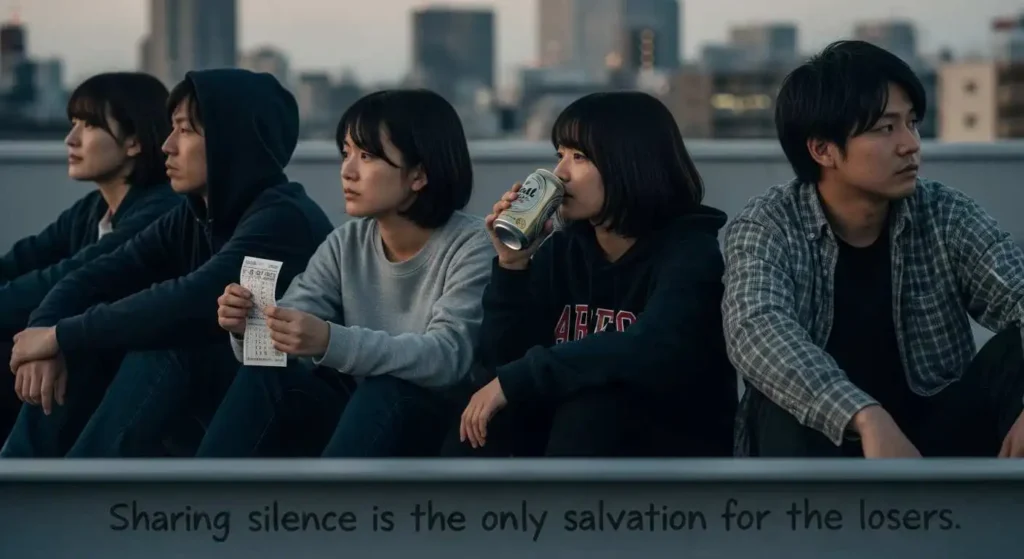
And the lyrics continue, “Even if everyone forgets you, I am here.” As time passes, that fierce battle and the tears he shed will be forgotten by the world. It might remain in records as a great match, but his personal pain will weather away. Still, if there is even one person who shares and remembers that pain, that past will not be in vain. I don’t know how many times I have been saved by this absolute sense of affirmation.
Passing Seasons and the Unchanging Jersey Number
“Someone Wears the Same Number”
In the latter half of the song, the description appears: “Someone wears the same number (Zekken) and runs through the next season again.” Here lies Yuming’s unique, cold-hearted realism.
No matter how great a player leaves, no matter how tragic a defeat occurs, the seasons turn, and a new player appears on the ground wearing the same jersey number. Organizations and society are the same. Even after I leave, someone will sit in my seat, and daily life will continue. A sense of impermanence that we are replaceable.
However, Yuming doesn’t sing it as “empty.” She expresses it like a cycle of life where “they run through the next season again.” The story of the individual ends, but something like the soul is inherited.
When I listen to this part, I am made to think about my own “withdrawal” or “succession.” Entrusting the position and role I desperately protected to the younger generation. There is a touch of loneliness there, but at the same time, there is also the reliability of seeing the baton I connected running toward the future. The season where I am the protagonist ends, and I become the side watching the new players from the spectator seats. I feel this song gently encourages that change in perspective.
Reason for Choosing Rank #13
To All Adults Who Know Defeat
Why did I choose “No Side” for the 13th place?
It is because this song was a textbook for me that taught the “beauty of losing.” There are plenty of “songs not to lose” or “cheering songs to grab victory” in the world. However, there are not many songs that teach “how to stand up after losing” or “how to love the season that has ended.”
In life, it is impossible to keep winning. Rather, the number of losses and losses is overwhelmingly higher. That is why we need this song, which wraps the hopeless despair of the moment watching the kick miss the goal in beautiful melody and story.
The National Stadium has become new, and rugby rules and tactics have changed. Our lifestyle has also changed incomparably from 1984. Still, the lonely feeling of standing in the cold wind at winter twilight does not change.

“Because I want to understand even a little.” Believing in the presence of someone who stays close with that wish, let’s run through the next season again in a different form. I want to chew deeply on this masterpiece that gives such quiet courage, now that I have reached the autumn of my life.

コメント