
🎧 Listen to This Article
🎵 English Narration
Press play to listen to the complete English narration.
🎵 Japanese Narration
You can also listen to the full Japanese narration of this article.
Listening to the narration first may help you better understand the background and key insights discussed in this article.
No.7: “ANNIVERSARY”
We have finally reached the Best 7 of the ranking.
At No.7 is “ANNIVERSARY.” I placed it here because, across Yuming’s entire career, there are few ballads that feel as overwhelmingly powerful as this one.
“ANNIVERSARY – Mugen ni CALLING YOU”
Released in 1989, the first year of the Heisei era. Included on the album LOVE WARS, this song became an anthem of a time when Japan’s bubble economy was at its peak—and when faint signs of its eventual collapse were beginning to surface.
It became so famous as a “classic wedding song” that some people may even feel a touch of embarrassment about it. Yet when you revisit it at this stage of life, its meaning transforms completely. This is not merely a song about happy lovers. It resonates more like a solemn declaration of one of life’s most significant decisions: the choice to live together with another person.
Unlike the tender romances of youth, this masterpiece carries the weight of adult resolve. That is why I present it here at No.7.
First, Listen to the Official Audio
Let yourself be immersed in its magnificent soundscape.
Credits
Song: ANNIVERSARY – Mugen ni CALLING YOU
Artist: Yumi Matsutoya
Lyrics & Composition: Yumi Matsutoya
Arrangement: Masataka Matsutoya
Release: June 28, 1989 (23rd Single)
Album: LOVE WARS (Released November 25, 1989)
Two-Line Commentary
A timeless grand ballad long cherished as a wedding classic, celebrating life’s milestones.
Its sweeping arrangement and enveloping vocals sing of eternal love and gratitude with majestic conviction.
A Sound That Echoed at the Turning Point of 1989
Bubble-Era Euphoria and the Search for the Eternal
The album LOVE WARS was released in 1989.
I was in my early thirties then, fully immersed in the turbulence of working life. Japan was in the midst of the economic bubble; the city glowed with neon lights and a restless, buoyant energy filled the air.
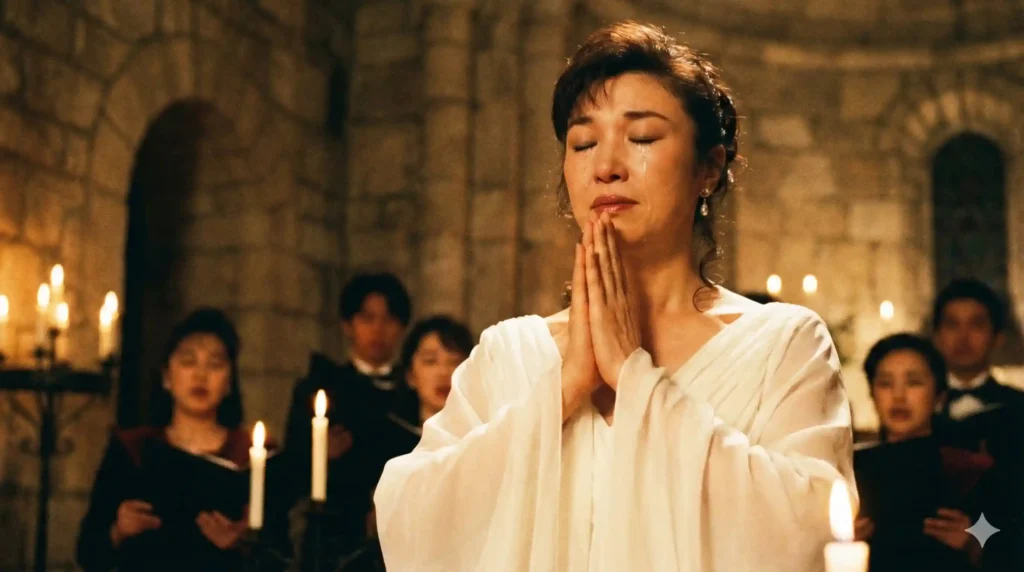
Amid that frenzy, Yuming released LOVE WARS, an aggressive album that framed romance as battle. Yet “ANNIVERSARY,” placed at the climax of the album’s sequence, stood apart from the noise of conflict. It radiated a solemn calm and strength—as if one were standing inside a cathedral.

The arrangement by Masataka Matsutoya is nothing short of sumptuous. The layered synthesizers in the introduction create the sensation of soaring above a sea of clouds, while the dramatic swell of strings lifts the listener’s emotions to great heights. It is as if the song vacuum-sealed the bubble era’s intoxicating sense of omnipotence—the illusion that this brilliance might last forever.
From “I Want to Protect You” to “I Will Protect You Through It All”
Another famous Yuming ballad is “Mamotte Agetai.” If that song expresses a gentle desire to stay by someone’s side, “ANNIVERSARY” feels more active—imbued with a distinct strength.
Rather than softness, this song carries resilience. During my working years, I was too consumed by my own struggles to notice it. Now I understand: it is a solemn declaration of dedicating one’s life to someone else.

An S-Rank Melody in Difficulty
Even Yuming Calls It “Hard to Sing”
Many of you may have tried to sing this at karaoke—only to give up halfway. The melody leaps dramatically; the chorus demands sustained high notes. More than volume, it requires expressive depth to fill the space.
Especially from the line “Even on an ordinary morning…” the chorus cannot succeed by merely following pitch. It requires moving fluidly between chest and head voice, pouring soul into every word. Yuming’s own vocal performance here departs from her usual cool, urban tone and becomes intensely emotional—almost prayer-like.
Painting the Portrait of the Future Together
One striking metaphor in the lyrics speaks of “painting a portrait of the future together.”
Rather than simply whispering “I love you,” the song expresses a desire to keep drawing the image of the beloved. It suggests engraving that presence onto the canvas of one’s life over time—completing it together.
When I was young, I heard it only as a romantic proposal. With experience, I now see something earthier and more precious. There are sunny days and rainy ones alike. Yet to continue gazing at the person beside you without turning away—that may be the true essence of “painting.”
The Deepening Truth of “ANNIVERSARY”
The Reach of the Word “Infinite”
The subtitle declares: “Mugen ni CALLING YOU”—Calling You Infinitely. At the time of release, “infinite” sounded like a grandiose bubble-era flourish. Today, it resonates differently.
“Infinite” may not refer merely to length of time. It suggests depth and resolve: even if reborn again and again, I would choose you each time. As the closing statement of an album that likens love to war, it stands as an unshakable vow.
Even if wounded or estranged amid life’s noise, there is a place to return. This sweeping ballad offers that reassurance.

What Is an “Anniversary” in Life?
In youth, anniversaries meant birthdays or Christmas—special calendar events. Yet this song seems to speak of something deeper.
An ordinary morning. An unchanged routine. The quiet after hardship. These “common days” are, in truth, a continuous chain of miraculous anniversaries. It recalls the idea that “every day is special,” yet in Yuming’s case, there is something almost devotional in tone—a sense of prayer woven into daily life.

Conclusion: Everyday as an Anniversary
Ranked at No.7, “ANNIVERSARY – Mugen ni CALLING YOU” transcends the category of wedding song. It is the ultimate expression of trust and gratitude toward a partner who walks beside us on life’s long journey.
Strip away the lavish bubble-era production and what remains is a simple yet powerful prayer: “I want to live my life with you.” That is why this song continues to be sung across generations, taking deep root in our hearts.

If you have the chance to listen again after some time has passed, try picturing the face of someone dear to you. You may find a warmer emotion rising within you—one that feels different from years ago.

コメント