
- 🎧 Enjoy this article via Audio
- My Personal Best 15: Yuming Edition – No. 5 is…
- Official Audio & Video Credits
- Why “Dolphin” Became a Sanctuary
- Conclusion: Climb the Hill, and You Can Always Meet That Afternoon
🎧 Enjoy this article via Audio
🎵 English Narration
Click the play button to listen to this article in English.
🎶 Japanese Narration
You can also listen to the original Japanese narration.
* Listening to the audio before reading will help you visualize the background and emotional depth of the song.
My Personal Best 15: Yuming Edition – No. 5 is…
“Umi wo Miteita Gogo” (The Afternoon I Was Watching the Sea).
Placing this song at number five is entirely “my personal choice.”
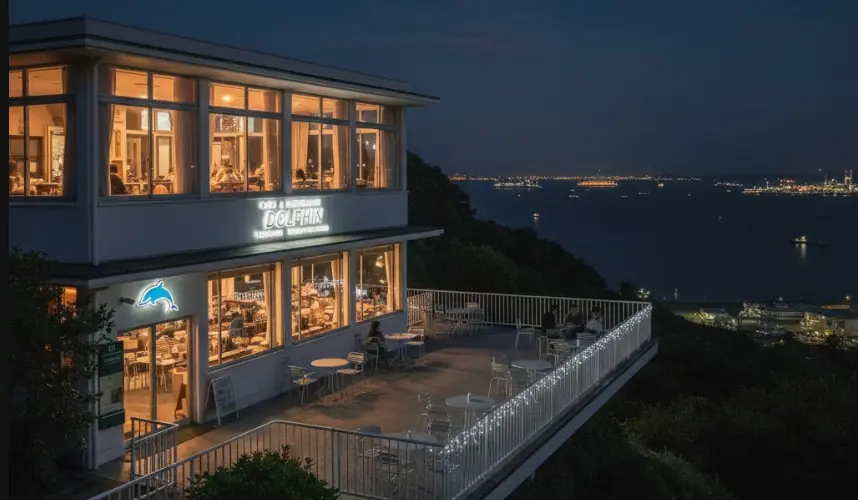
I vividly remember driving with a few friends during our student days to “Dolphin,” a cafe and restaurant perched on the heights of Negishi-Asahidai, Yokohama, under the cover of night.
That memory—Yokohama, the view overlooking the sea, and Dolphin—remains burned into my mind as a beautiful tapestry. If I hadn’t visited Dolphin back then, I’m not sure if I would have selected this song. Music always has a landscape at its core.
Released in 1974, Yumi Arai’s (now Yumi Matsutoya) masterpiece album “MISSLIM” features this song as the closing track of Side B. It transcends the boundaries of a simple breakup song, achieving the status of “literature.” The Yokohama scenery captured by her 20-year-old self has lost none of its freshness, even after nearly half a century.
Interpretation: A Portrait of Crystalline Loneliness
Once I climb that steep hill, I find a quiet place overlooking the sea. Today, I find myself sitting in this chair alone again.
The soda water in front of me. A cargo ship slowly crosses through its clear blue reflection. Every time a tiny bubble bursts and vanishes, I am reminded that our love faded away just like this.
If only I could have cried my heart out back then without pretending to be strong, would I still feel your warmth beside me? Your silhouette, chasing seagulls through the window, still flickers behind the glass on the table.
Official Audio & Video Credits
English Credits
Song: Umi wo Miteita Gogo (2022 Mix)
Artist: Yumi Matsutoya (Yumi Arai)
Lyrics & Composition: Yumi Arai
Arrangement: Masataka Matsutoya
Original Album: "MISSLIM" (1974)
Video from: "Yuming Banzai! ~Yumi Matsutoya 50th Anniversary Best Album~" (2022)
Phonographic Copyright: © 2022 Universal Music LLC
Brief Commentary
A timeless masterpiece reflecting on lost love, set in the "Dolphin" restaurant in Yamate, Yokohama. This video features the 2022 remix from her 50th-anniversary best-of album.
Why “Dolphin” Became a Sanctuary
There are few examples where the real name of a specific restaurant appears in lyrics and becomes so inseparable from the song’s world. “Dolphin,” nestled in the hills of Negishi, Yokohama. Since this song’s birth, it has become more than just an eatery; it has become a “chapel” for mourning lost love.
The Miraculous Imagery: “A cargo ship passes through the soda water”
It is no exaggeration to say that the greatest achievement of this song—and Yuming’s early work—is encapsulated in this single line. The bubbles in the glass and the massive cargo ship on the distant horizon. This cinematic sensibility captures extreme perspectives in one field of vision.

When I hear these lyrics, I fall into the illusion that I am sitting in the seat next to her, peering into the same glass of soda. By replacing the emotion of “sadness” with visual phenomena, she evokes personal pain within the listener’s heart. This is the true essence of the genius, Yumi Arai.
Layers of Color: The Contrast of Blue and White
The sunlight of a clear afternoon, the distant Miura Peninsula, and the pure white seagulls. The colors scattered throughout the lyrics are vivid yet somehow cool. This quiet tone accentuates the emptiness in the protagonist’s heart.
Masataka Matsutoya’s Ensemble of Silence
In the arrangement, the aesthetic of subtraction is thoroughly applied. The opening piano intro has a transparency like a single drop of water falling onto a still surface. The moment these notes ring out, we are detached from the noise of daily life and time-traveled to a quiet afternoon in 1974.
Rather than relying on flashy drums or thick strings, the space is woven solely by vocals, piano, and a restrained rhythm section. That “blank space” serves as a canvas for the listener to project their own memories.
The Sincere Prayer of the Analog Era: Entrusted to a “Paper Napkin”
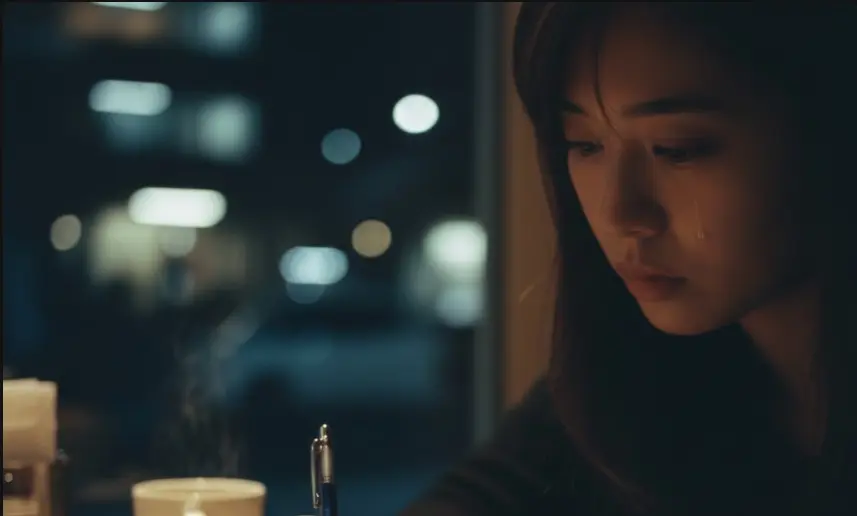
The depiction of “ink blurring on a paper napkin” at the song’s climax carries a poignant “physical lingering” unique to an era without digital communication.
Whether written with a fountain pen or a ballpoint, the words “I won’t forget” were penned by a trembling hand. It is a cruel act of confirmation to oneself, never intended to be handed to the other person. The way the damp ink spreads along the fibers feels like a metaphor for the tears about to overflow from the protagonist’s eyes.
The Magic of Perspective: “That Distant Day”
What is brilliant about the song’s structure is how the perspective shifts vividly from “the present” to “past recollection” in the final line: “That distant day when I finally wrote it.”
Is the sea she watches now at Dolphin the same color as it was that day? Or has it faded slightly with time? This single phrase transforms the song from a mere sketch of a “breakup moment” into a profound “acceptance of loss” that has fermented over many years.
The Moment Individual Emotion Ascends to the Universal
Why does this song remain unfaded nearly half a century after its release? It’s because the lyrics don’t just dwell on memories of a “specific place.” We all have “that hill” or “that window seat” in our own lives.
Yuming purified and visualized her personal experiences to the extreme. As a result, she created a “void” where listeners can overlay their own old loves or a page from an irrecoverable youth. Instead of drowning loneliness in sentimentality, the “steadfastness” of quietly watching soda bubbles vanish purifies the listener’s heart.

Perhaps because she didn’t cry her heart out in front of him then, this song was born—and has continued to cry on our behalf until today.
A “Dignified” Loneliness Loved Across Generations
Why am I so drawn to “Umi wo Miteita Gogo”? It is because the loneliness this song presents is utterly “dignified and beautiful.”
Rather than a screaming sorrow, it quietly observes soda bubbles and blurred ink. This restrained emotional presence embodies the “dignity of pop music” that withstands the scrutiny of mature listeners.
Conclusion: Climb the Hill, and You Can Always Meet That Afternoon
The slopes of Negishi, Yokohama, remain unchanged today. And every time we play this song, we are brought back to that seat in front of the soda water.

The “transparent sorrow” that a rare artist like Yumi Arai could only grasp in her twentieth year. It is music that gently scoops up the delicate emotions we have left behind in our daily lives, acting as a form of salvation.
If you are weary of something and long for a quiet place, take this song with you and look for a window seat in a high place. Surely, the cargo ship from that day will still be slowly crossing the horizon.

コメント