
- 🎧 Enjoy this article as audio
- No. 4 is “Ano Hi ni Kaeritai (Those Were the Days)”
- Start with the official audio
- Torn photos, tears—and the sting in your fingertips
- Tin Pan Alley and the “shadow of the city”
- Chorus arrangement as “another instrument”
- Listening again in 2026: “Ano Hi ni Kaeritai”
- Closing: a phrase that stays with you
🎧 Enjoy this article as audio
🎵 English Narration
Press the play button to listen to this article in English.
🎶 Japanese Narration
You can also listen to the Japanese narration of this article.
* Listening to the audio before reading can help you understand the background and key points more vividly.
No. 4 is “Ano Hi ni Kaeritai (Those Were the Days)”
My personal “Best 15” Yuming list is entering the final stretch, and today it’s time to reveal No. 4. The song I chose is “Ano Hi ni Kaeritai,” released in 1975—a decisive track that carried Yumi Arai (Yuming) beyond the music scene and into everyday living rooms across Japan.
This isn’t just a hit single. It’s also a historical document—capturing the moment Japanese pop began shedding the skin of “kayōkyoku” and moving toward “new music” (and, in a sense, the roots of what would later be called city pop). More than anything, the song acts like a device that exposes—beautifully, almost cruelly—the irretrievable past sleeping inside all of us.
Back then, I was a second-year high school student. A cloudy sky seen through the gap in a cheap curtain. The “student me,” overflowing with nowhere-to-go passion, still lives inside this song. Let me talk—just a little sentimentally—about this sepia-toned masterpiece.
Start with the official audio
First, let your ears confirm just how refined this sound is. The performance by Tin Pan Alley hasn’t faded at all—even nearly half a century later.
■ Credits (JP release info)
Title: Those Were The Days / あの日にかえりたい (2022 Mix)
Artist: Yumi Arai
Lyrics: Yumi Arai
Music: Yumi Arai
Album: “Yuming BANZAI! ~Yumi Matsutoya 50th Anniversary Best Album~”
Release date: Oct 4, 2022
Label: UNIVERSAL MUSIC LLC
Provided by: Universal Music Group

■ Two-line note
A 1975 signature song rebuilt in a 2022 mix.
A clear, luminous melody and nostalgia-tinged lyrics—an enduring ballad that lands in the heart across eras.
Torn photos, tears—and the sting in your fingertips
The moment “Yumi Arai” became “Yuming”
Let’s briefly return to 1975, the year this record was released. I was still nobody—just living through days where vague anxiety and vague hope overlapped. The city still carried the lingering scent of folk music, but people were beginning to crave something more urban, more dry, more modern—something else.
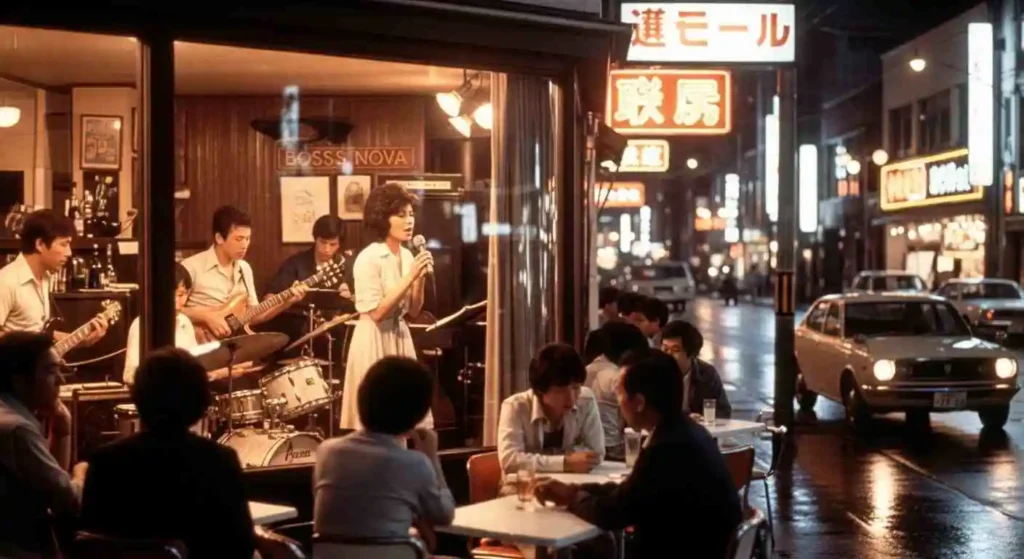
And then this song arrived. Alongside the astonishing songwriting she had already shown on Hikōki-gumo and MISSLIM, this track carried an unmistakable “hook” that turned the general public’s head. With the boost of a drama tie-in, the melody spilled beyond record shops—into cafés and the loudspeakers of shopping streets.
Yet even as it became a hit, it never “went cheap.” That’s what makes her formidable. The languid sound—borrowing a bossa nova rhythm—removes the damp melodrama typical of kayōkyoku and presents even sorrow as a kind of style.
How the lyrics “film” their own images
Now, I want to sink deeper into the lyrical world. From the very first line, an intensely vivid scene begins.
The narrator tears a photograph while crying—and then tries to piece it back together in the palm of her hand. There’s no undo button in the act of tearing. Once something is broken, it never truly returns, even if you reconnect the pieces. The smile becomes a smile full of seams. The fact that the song paints this cruelty in just a few lines is almost shocking.
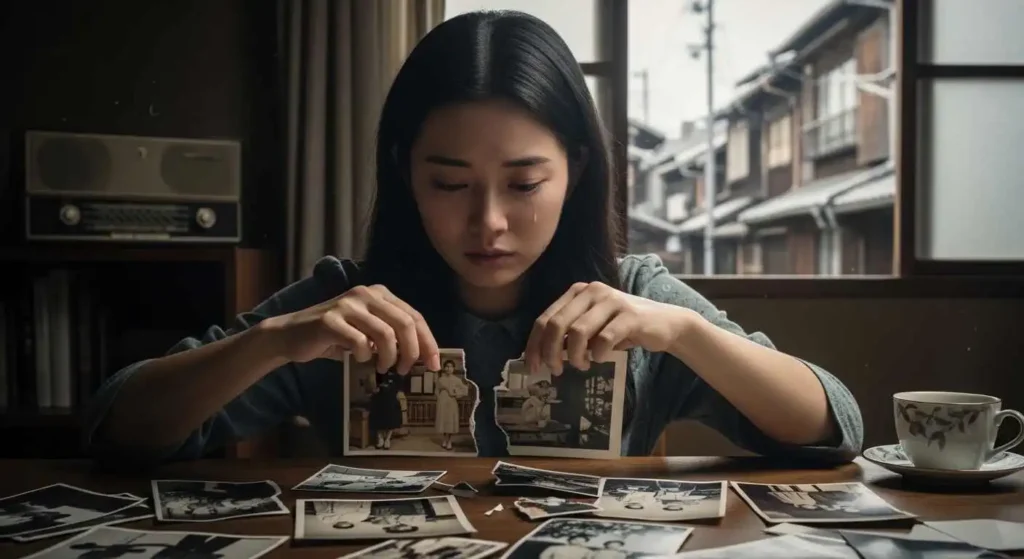
“Worried tears—yesterday’s smile.” “For no reason, you feel hateful.”
The emotional swing here feels painfully real. It’s easy to label this a “breakup song,” but I hear it as something broader: a song about loss. Not only the grief of losing a lover, but also the farewell to the “yesterday self” who could still be innocent.
The invention of “youth from behind”
There’s a phrase in these lyrics that made me stop—no, that felt like it carved something out of me: “the back of youth.”
Usually, you don’t recognize “youth” while you’re living it. You only realize later: “So that was it.” But she makes it visible—as a back view.
Everyone forgets that back. And yet, at some unexpected moment, you remember it. You want to go back to who you were then—and meet you again.
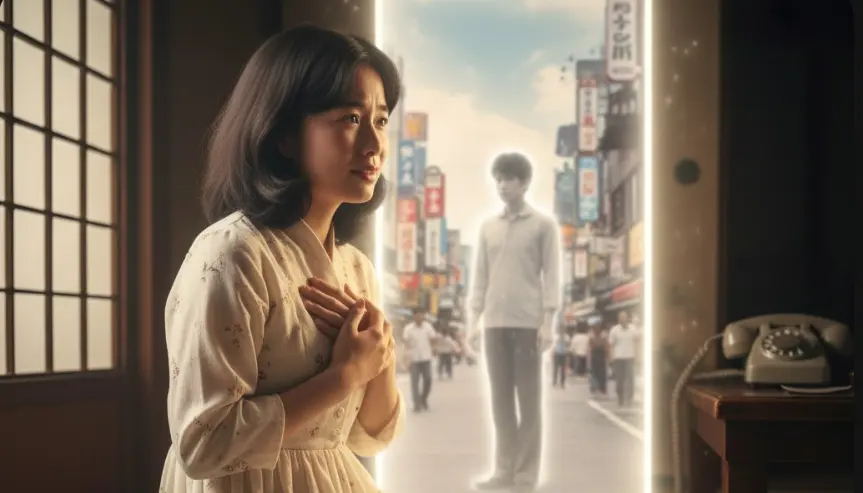
It’s not necessarily a specific person you want to meet, but the air of that era itself. Yuming strikes that universal nostalgia with frightening accuracy.
Tin Pan Alley and the “shadow of the city”
A bossa beat that evaporates humidity
We can’t avoid the sound itself. One of this song’s major achievements is bringing a genuinely bossa nova flavor into Japanese pop.
Up to that point, so many Japanese heartbreak songs carried an enka-like dampness: regret, tears, rain, night… But “Ano Hi ni Kaeritai” is different.
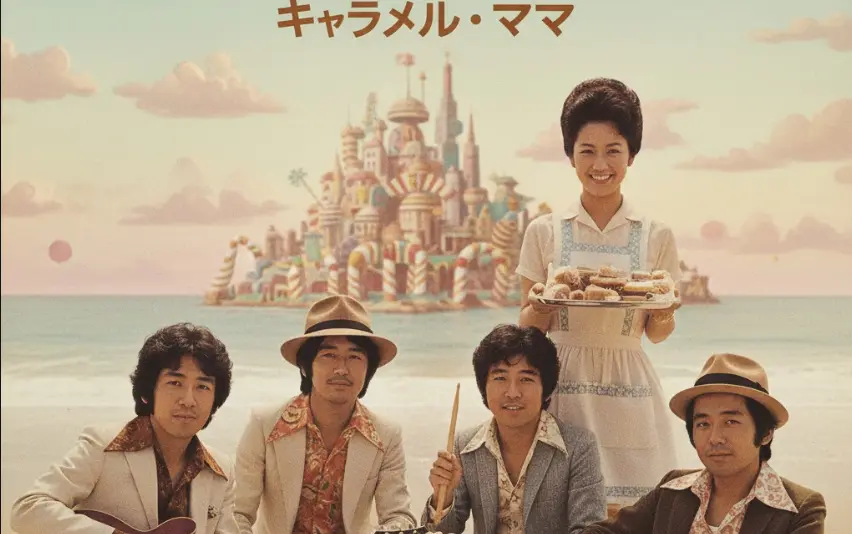
Tatsuo Hayashi on drums, Haruomi Hosono on bass, Shigeru Suzuki on guitar, and Masataka Matsutoya on keyboards—the core players of Caramel Mama (Tin Pan Alley). The performance is dry, cool, and modern. Especially that acoustic guitar tone: the plucked strings drift out of the speakers like a crisp autumn wind. There’s no moisture. What you feel instead is a chilled loneliness—like shadows falling between city buildings.
“Shining wind” vs. “waves of grass”
In the second verse, the viewpoint shifts from indoors to outdoors: “the city sky at dusk,” “my memories wander on.”
Even that verb—“wander”—is perfect: memories that don’t settle, but float. Then appear images like “shining wind” and “waves of grass,” evoking a landscape that feels almost suburban.
The contrast is clear: the city’s noise against an inner original landscape. The line about being able to see herself running creates a strange buoyancy, as if the present self is watching the past self from above—like a film camera capturing a girl sprinting across a field in a long shot.
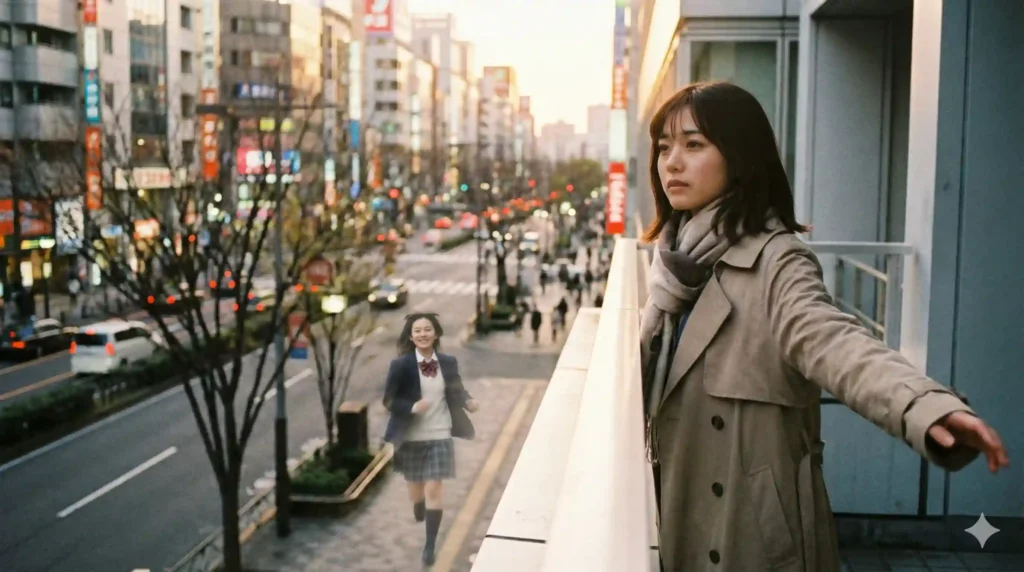
That visual power is exactly why she’s called a “cinematic songwriter.” When we listen, we’re not only hearing music—we’re watching a short film in the mind.
Chorus arrangement as “another instrument”
Junko Yamamoto’s harmony and its clarity
Another essential element is the backing chorus. It’s well known that Junko Yamamoto of Hi-Fi Set (link) participated, and her voice adds transparency and depth to the entire track.
Yuming’s slightly husky, distinctive voice and Yamamoto’s clear, expansive tone—those two timbres meet and balance each other beautifully.
In the chorus—“go back to who I was then,” “I want to see you”—the harmony feels like more than simple backing vocals. It’s as if the “past self” and the “present self” are speaking to each other.

Or perhaps it’s the overlap of “what you really feel” and “what you say you feel.” This chorus work may be one of the most refined moments in Japanese pop.
Listening again in 2026: “Ano Hi ni Kaeritai”
Once more, at the level crossing in Higashi-Matsubara
Every time I hear this song, I suddenly want to return to who I was back then: the clatter of the Inokashira Line trains, the smell of a shopping street at dusk, and the sky I stared up at from the window of a cramped apartment.

I had nothing—yet it felt like everything was there. Now, with age, I may have acquired a few things.
But at the same time, I’ve realized how much I’ve lost: youth, passion, recklessness, and purity. They never come back. They’re the “back of youth.”
And maybe that’s fine. Because you can’t return, the memories shine. And music is a kind of magic that can seal that beauty forever.
Yuming, as a magician of that sort, keeps protecting the precious memories hidden in the deepest part of our hearts.
Showa, Heisei, Reiwa—and beyond
Times change, but the essentials of the heart don’t: lingering regret for a lost love, affection for days that are gone.
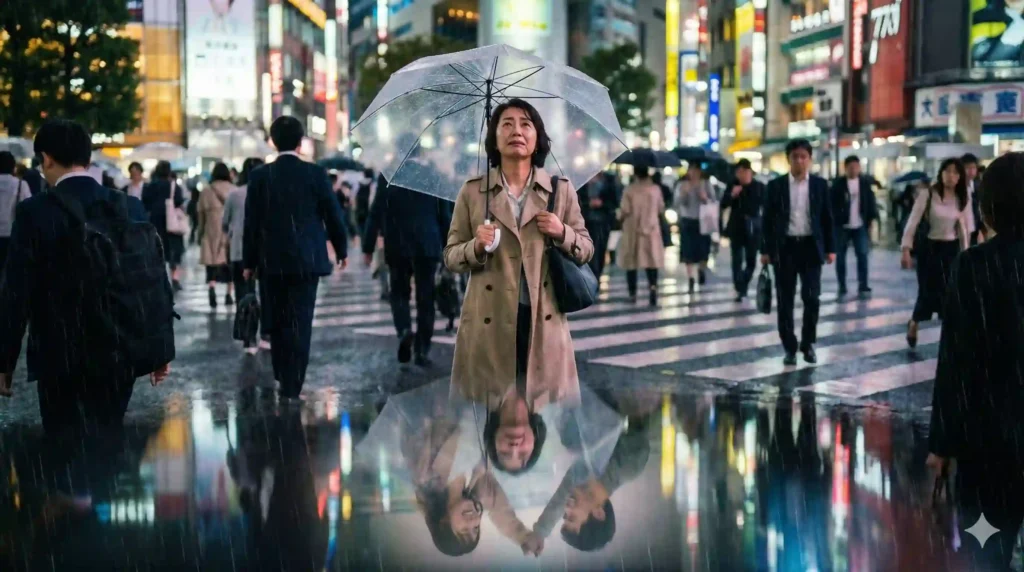
These feelings are universal. That’s why “Ano Hi ni Kaeritai” will keep being heard as a standard, in every era.
In 2026, I don’t know what scenery younger listeners picture when they hear this song.
But I’m sure each of them has their own “that day,” and their own “you.” And decades from now, perhaps they too will find themselves in tears when this song comes on.
Closing: a phrase that stays with you
People all forget the back of youth
I want to go back to who I was then—and see you again
With these words in mind, I think I’ll open an old photo album tonight—just for a little while.


コメント