
🎸 【Kaze】Edition — No1
🎸 This is the final song in the 【Kaze】 edition.
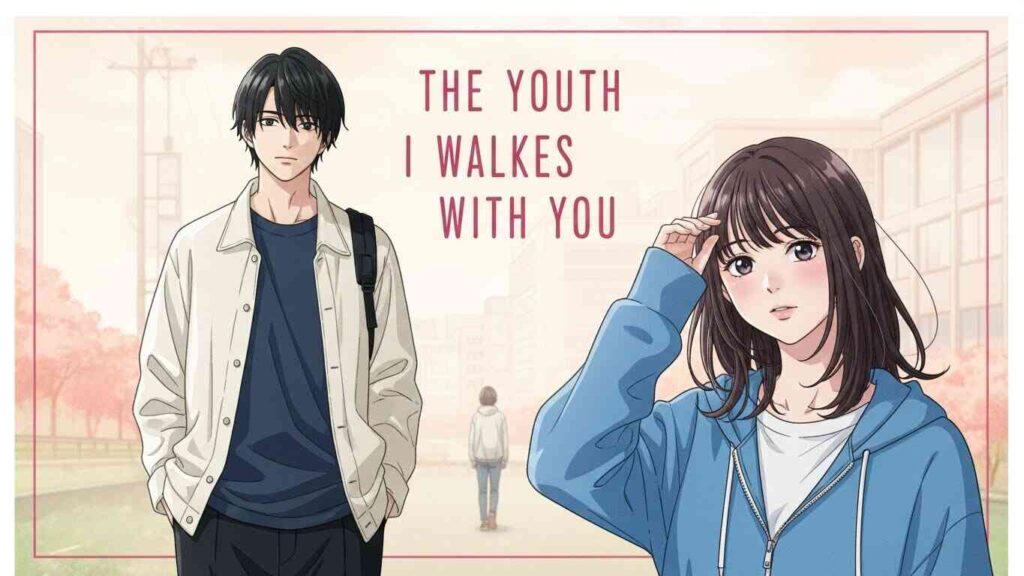
My No.1 choice is “Kimi to Aruita Seishun” (The Youth I Walked With You).
Out of all their songs, this is the one I love most.
It is a quiet and unadorned song, yet within that simplicity lies a powerful emotional current. There are no dramatic turns or flashy arrangements, but the song naturally draws memories and sensations out of the listener. Themes such as farewell, friendship, and the end of youth are depicted with restraint, free from excessive decoration.
Ultra-Condensed Summary
This song portrays a man seeing off someone who is leaving the shared world of youth behind and returning alone to their hometown. He does not try to stop them. Instead, he entrusts messages to the friends who remain and quietly hopes that someday they will all laugh together again.

They once shared everything—arguments, tears, and imperfect days. Yet at the moment of parting, the narrator realizes once more that “you” were different from everyone else. He begins to acknowledge that youth, including the regret of feelings left unspoken and the bravado he used to hide his embarrassment, accepting that it was undeniably precious.

As he accepts that their shared youth ends here, he reaches one final conclusion: simply meeting “you” was not just part of his youth—it was an irreplaceable beginning in his life.
Official Video
✅ Official Video Credits
Kaze – Kimi to Aruita Seishun (2021 Remaster) Official Audio
Provided by: Nippon Crown Co., Ltd. / PANAM Label
Originally released in 1975 on the album “Toki wa Nagarete…” (Time Flows…)
📝 Two-Line Note
This is the officially remastered audio of a classic by the folk duo Kaze, released as part of Nippon Crown’s historical reissue project “The World of Shozo Ise – The PANAM Label Era.”
With its restrained arrangement and lyrical depth, it continues to resonate as a timeless song about the end of youth.
Basic Information
Release / Album
“Kimi to Aruita Seishun” was released in 1975 by the folk duo Kaze and included on their album “Toki wa Nagarete…” (Time Flows…). Kaze consisted of Shozo Ise and Kazuhisa Okubo, and this period marked Ise’s turn toward more introspective and personal expression following the breakup of Kaguyahime.
“Toki wa Nagarete…” is effectively Kaze’s debut album. Rather than emphasizing overt social messages, it was praised for carefully portraying personal emotions and relationships. Within the album’s structure, “Kimi to Aruita Seishun” appears in the latter half, serving as a symbolic turning point representing farewell and the passage of time.

It was never released as a single, nor was it a major chart hit. Nevertheless, within the flow of the album it carries one of the strongest emotional weights, and its reputation has only grown with time. Its lasting appeal lies in its ability to depict love, friendship, and the end of youth without relying on exaggerated drama.
Cultural Context
Folk music of this era was closely tied to youth culture. As Japan’s period of rapid economic growth slowed, attention shifted toward inner life and human relationships. Kaze’s music resonated because it focused on everyday emotions rather than overt political or social messages.
“Kimi to Aruita Seishun” was not designed to climb the charts. Instead, its presence spread through album listening, live performances, and radio. More than numbers, it proved itself as a song that remains deeply lodged in listeners’ memories.
Themes and Worldview
The Protagonist’s Position
The protagonist is not recalling youth from a distant future. The song stands firmly in the present—the exact moment when “you” say you are going home. The farewell has not yet happened, yet it is already shared between them as something unavoidable. The story unfolds within this suspended moment in time.
“If you really must go back, I won’t stop you, but…”
This unfinished sentence contains the entire emotional core of the song. He does not stop you, not because he doesn’t want to, but because he cannot finish the thought. Within that hesitation lies all of his conflict.

The relationship is never clearly defined as romantic. They shared the same friends, the same place, the same laughter. Everyone liked “you”—that much is true. But for him, that feeling went beyond friendship, which is why he struggled for so long.
The Final Line
The song ends with the line: “Why weren’t you born a man?”
This line is not logical. It is an impulsive cry—years of pain slipping past reason. It expresses a longing for a world that never existed, and at the same time a lament for a reality that can never be undone.

This song offers no easy consolation. Youth does not end simply because people part ways, but because the most important feelings are left unspoken. Only at the very end does the protagonist face that truth directly.
That is why “Kimi to Aruita Seishun” is not a song that beautifully closes youth. It is the song of a man who only understands—after it is over—that his youth has truly ended.
Because of this uncompromising honesty, this song deserves to stand as No.1 at the conclusion of the Kaze edition.

That is why “Kimi to Aruita Seishun” is not a song that beautifully closes youth.
It is the song of a man who only understands—after everything is over—that his youth has truly ended.
Because of this brutally honest sincerity, I believe this song has to be No.1 at the conclusion of the Kaze edition.
Sound and Vocal Expression
Arrangement
Musically, the song is built around a simple acoustic-guitar-centered arrangement. Decorative phrases and big crescendos are deliberately restrained so that the melody and the lyrics can lead. Because of that, the listener is never overwhelmed by sound and can receive each line as a line.
The vocal performance follows the same philosophy. It does not show off technique or push emotion outward. It moves forward with a steady emotional temperature. Precisely because of that restraint, the quiet sense of acceptance that arrives near the end feels all the more convincing.
Why I Ranked It No.1 in the Best 15
What Sets It Apart
Kaze has many songs that are lyrical and beautiful. The reason I chose “Kimi to Aruita Seishun” as No.1 is the remarkable maturity with which it portrays emotion. While it deals with love and friendship, it never collapses into sentimentality. The passage of time is built into the song’s very structure.

It is not merely a “song about parting.” It affirms the act of continuing to live while carrying the past. And it has the kind of depth that changes its meaning depending on your age, your experiences, and where you stand when you hear it.
A Final Word That Might Make You Listen Again
If you have recently found yourself thinking about an old friend—or someone who once mattered deeply to you—try listening to this song again. It will not give you answers or conclusions. But it may quietly help you acknowledge what still remains inside you.
That quiet honesty is why “Kimi to Aruita Seishun” continues to be loved even now—and why it deserves to stand as No.1 in this Kaze edition.


コメント