🎧 Enjoy “Northbound Train” with Audio Narration
🎵 Japanese Narration
You can listen to the full Japanese narration of this article.
🎶 English Narration
You can listen to an English narration / summary of this article.
※ Listening first and then reading the article helps you experience the world of “Northbound Train” more vividly.
🎸 Kaze Best 15 – No.13 “Northbound Train”
No.13 in my Kaze Best 15 is “Northbound Train.”
This song focuses on a protagonist who continues a journey while facing memories of the past, and it stands out as a work that showcases Kaze’s gift for vivid scene-setting. As the journey unfolds, fragments of time once shared with someone gradually come back to life. A clear, winter-like atmosphere and a quiet, introspective mood exist side by side. The closed space of the train functions as a screen for the protagonist’s inner landscape, drawing listeners naturally into the flow of the story.
Ultra-Short Summary
The protagonist boards a northbound train, carrying memories he would rather forget. Yet the further he travels, the more vividly scenes from a past trip with someone special return to him, creating a paradox in which his memories grow sharper instead of fading. Snowy townscapes and dawn skies from that earlier journey stir up emotions that never fully disappeared, turning this new trip into a space where he can quietly sort through his feelings.
First, check out the official video
✅ Official video credits
Title: 北国列車 (Northbound Train) (2021 Remaster)
Artist: 風(Kaze)
Label: Nippon Crown Co., Ltd. (PANAM label)
Words & Music: Shozo Ise
Included on: “The World of Shozo Ise – The PANAM Years” (2021 remaster compilation)
※ The original version first appeared on the 1976 album “時は流れて…” (Toki wa Nagarete…)
📝 Two-line overview
Originally the opening track on the 1976 album Toki wa Nagarete…, “Northbound Train” portrays a journey to the snowy north undertaken while still carrying the pain of a broken relationship. The image of a night train heading for a winter town and the sky before dawn overlaps with the lingering presence of a lost lover, and Shozo Ise’s lyrical melody leaves a deep impression.
Basic information about the song
Release and album details
“Northbound Train” is included on Kaze’s third album Toki wa Nagarete…, released on January 25, 1976. At this point, Kaze was working as a duo of Shozo Ise and Kazuhiko Okubo, maintaining their roots as a folk group while gradually incorporating the more polished sensibility that would later be labeled “new music.”
Following the 1975 hit “22-sai no Wakare,” Ise’s songwriting drew a great deal of attention, and around this time his lyrics and compositions show clear signs of further maturity. Toki wa Nagarete… is filled with themes that Kaze handles especially well—travel, seasons, and parting—so the album as a whole can be heard as tracing the flow of time along a single line.
Within that structure, “Northbound Train” opens the album and plays a key role in establishing the sequence of
“the journey begins” → “the past resurfaces.”
The year 1976 also sits right at the transition from classic folk to the emerging new music scene, and in terms of arrangement the track successfully balances restraint with emotional depth.
Charts and Kaze’s situation at the time
Although Toki wa Nagarete… itself did not leave a strong mark on the big national charts, steady live activity and media appearances helped Kaze establish themselves as a reliable acoustic duo.
Ise’s ability to depict travel scenes and inner feelings was highly regarded, and as the opening track of the album, “Northbound Train” is remembered as a song that quietly drew attention in concert settings as well.
Themes and worldview
The protagonist’s background
The protagonist sets out on this trip in order to “leave the past behind” after a major turning point in life. The lyrics never spell out exactly what happened, but the atmosphere of the song strongly suggests a relationship that ended, or emotions that remain unresolved.
The choice to head north also carries its own meaning. Northern landscapes in Japanese pop culture often symbolize both quietness and harshness, making them a fitting backdrop for someone confronting their own feelings. Kaze’s songs rarely lean too heavily on local color. Instead, they draw a line between scenery and emotion and let the two run in parallel, and this song is a clear example of that approach.

How the story begins
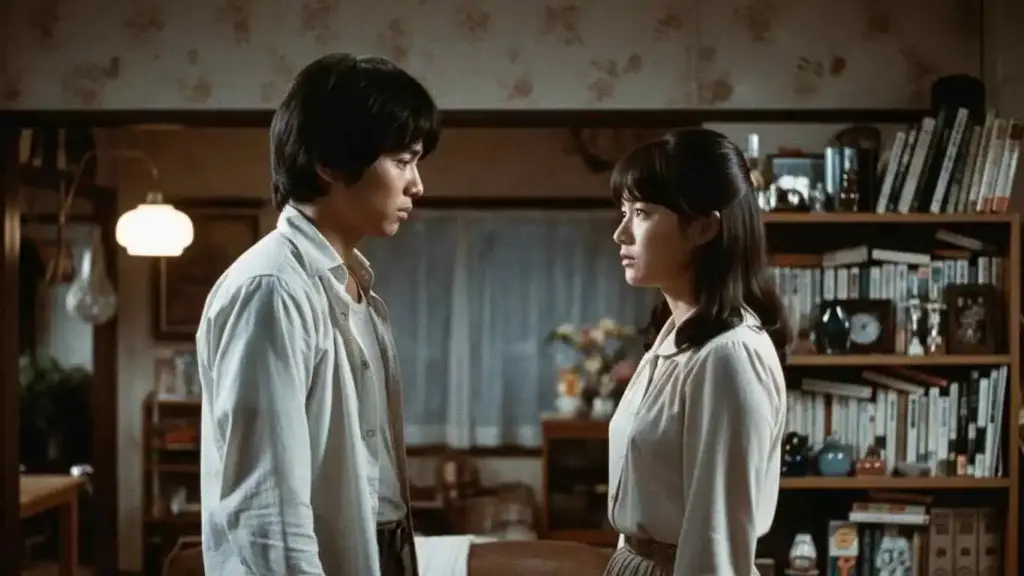
In the opening lines, we see the protagonist on a night train, continuing the journey in the early hours before sunrise. As the sound of the wheels on the tracks repeats, the emotions that had sunk to the bottom of his mind slowly begin to move again.
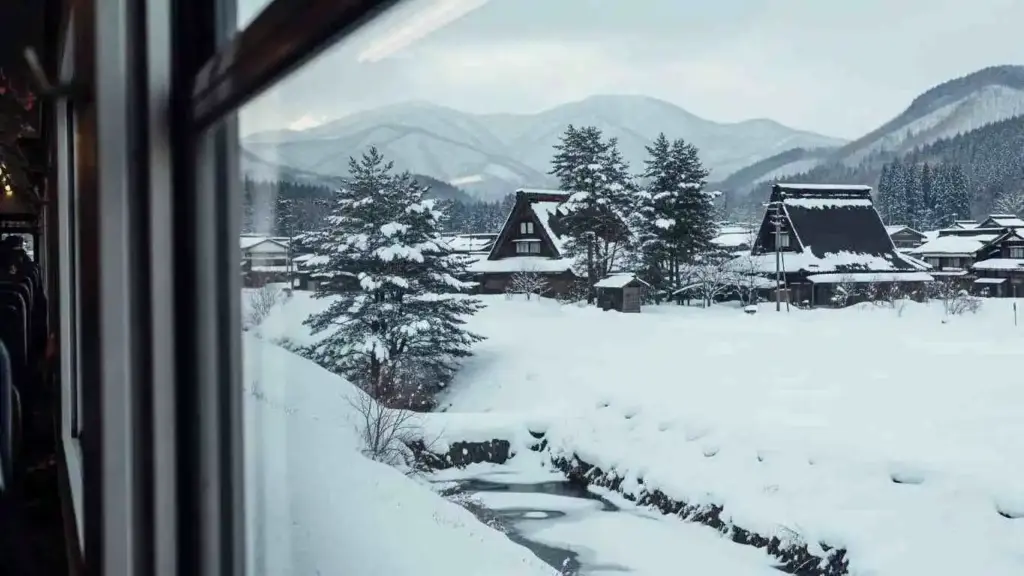
Before long, memories of a past trip to the north with someone special naturally return, and white snowy landscapes emerge as a powerful image.
The fact that these memories “follow the journey instead of disappearing” is one of the central ideas of the song, and it leads directly to the psychological developments in the latter half.

Key lyrics and interpretation
A symbolic phrase
Several lines in the lyrics act as symbols for the protagonist’s unresolved feelings. One of the most striking is:
“Your constellation is still shining.”
The constellation that continues to shine in the same position in the night sky becomes a metaphor for a memory he wants to forget but cannot. By contrasting the movement of the train and the progression of the journey with this “unchanging light,” the song highlights the part of his feelings that refuses to move.

How the protagonist changes
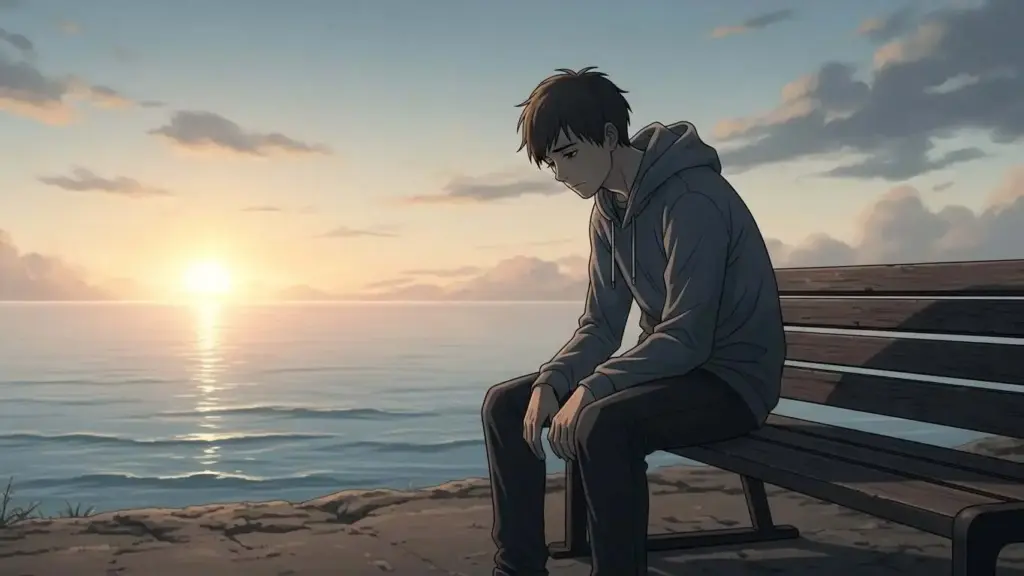
At the beginning of the story, the protagonist boards the train with a strong determination to “forget.” But the farther he travels, the more clearly the outlines of past memories return, and his emotions actually grow stronger rather than weaker.
The northern scenery they once visited together left such a vivid impression that it is not easy for him to let go of those memories.
Toward the latter part of the journey, his mindset gradually shifts—from trying to erase the past completely to accepting it as something that really happened. The speed of the train, the changing color of the sky, and the snowy landscapes all work as triggers that help him sort out his thoughts, nudging him toward treating the past as one chapter of his life that he can finally file away.
Sound and vocals
Arrangement highlights
The arrangement of “Northbound Train” is typical of Toki wa Nagarete… in the way it avoids excessive ornamentation. An acoustic guitar forms the core, supported by a lean backing track. The steady rhythm suggests the regular motion of the train and quietly carries the story forward.
Shozo Ise’s vocal delivery is marked by the precision with which he places each word. He avoids dramatic emphasis and instead sings in a calm, measured tone, which allows the protagonist’s subdued emotions to surface naturally.
Why it deserves a place in the Best 15
What sets it apart from other songs
Kaze wrote many songs about traveling, yet “Northbound Train” is distinctive for the way it moves deeper into the protagonist’s inner world even as the journey continues forward. This dual structure—physically going somewhere while emotionally returning to the past—is drawn with remarkable clarity.
Its position as the opening track also plays a big role in pulling listeners straight into the narrative of the album.
It is also significant that the song was created during Kaze’s transitional period in 1976. Works from this era retain the warmth of their folk roots while adding a hint of urban sophistication associated with the coming new music scene. In many ways, this is when Kaze’s musical identity reached one of its best-balanced forms.

One last thought that makes you want to listen again
“Northbound Train” is memorable not only for its travel scenes but also for the subtle emotional temperature that shifts beneath the surface.
The sway of the train, the snowy streets, and the air before dawn unfold almost like film cuts, letting us experience the journey through the protagonist’s eyes.
Listening again today, you may find that what lingers most is not where the story ends, but the way each landscape carries a slightly different feeling—and that sense of depth makes the song worth returning to.

“`

コメント