
- 🎧 Enjoy this article with audio
- No. 6 is “Mother, Father”
- First, please listen to the official audio
- The “Vocal Landscape” Drawn by Overwhelming Vocals
- The Profound Drama Hidden in the Lyrics: Family Collapse and the Yearning for Rebirth
- A Fierce Soundscape and the Resonance of the Members’ Souls
- A Universal Portrait of “Family” that Strikes the Heart Across Eras
- Conclusion: A Requiem of the Soul Beyond the Bounds of Stadium Rock
🎧 Enjoy this article with audio
🎵 English Narration
Press the play button to listen to the content of this article in English.
🎶 Japanese Narration
You can also listen to the Japanese narration of this article.
* Listening to the audio before reading the text will help you gain a deeper understanding of the song’s background and key points.
No. 6 is “Mother, Father”
When talking about the band Journey, everyone around the world probably thinks of the hopeful intro of “Don’t Stop Believin'” or the sweet, grand melody of “Open Arms.” Released in 1981, the monster album “Escape” pushed the band to become the world’s stadium rock champions. Among this masterpiece with no filler tracks, there is one song that stands out with an overwhelming intensity, gripping the listener’s heart.
That song is my choice for No. 6: “Mother, Father”.
Though it tends to hide behind their glamorous hit songs, the dramatic nature of this track and Steve Perry’s fierce performance—arguably his true essence as a vocalist—make it a “hidden masterpiece” still talked about among core fans. It’s not just a love song or an anthem; this time, I want to unravel this song that depicts the deep anguish and prayers swirling inside human beings.
First, please listen to the official audio
Credits
Song Title: Mother, Father (2022 Remaster)
Artist: Journey
Album: Escape (1981)
Songwriters: Jonathan Cain / Neal Schon / Steve Perry
Label: Columbia Records (Sony Music Entertainment)
Brief Commentary
A rock number with a strong message among Journey's works, themed around the collapse of family relations and social anxiety.
The heavy guitar and dramatic vocals symbolize the perfection of early 1980s arena rock.
The “Vocal Landscape” Drawn by Overwhelming Vocals
What absolutely cannot be left out when discussing this song is Steve Perry’s god-like vocals.
Starting with a quiet arpeggio, it gradually builds up heat.
His singing transcends merely hitting high notes or having excellent technique. His high tones—like screams, yet perfectly controlled note by note—directly shake the listener’s soul.

The moment Neal Schon’s sobbing guitar solo intertwines with Perry’s heaven-piercing vocals is enough to give you goosebumps no matter how many times you listen. I remember it like it was yesterday, falling into the illusion that my small room in Higashimatsubara had become a front-row seat in a grand theater.
The Profound Drama Hidden in the Lyrics: Family Collapse and the Yearning for Rebirth
The true greatness of this song lies in the “heavy theme” sung over its epic sound. If you enter the lyrical world of this song holding onto the public image of melodious corporate rock, the gap will strike your heart profoundly.
A Broken Home and the Fate of the “Seventh Son”
What is sung here is the image of a family that has collapsed so much it seems irreparable.
An exhausted mother, staring into nothingness, wondering where she went wrong.
A father whose dreams are shattered, who has lost his pride, and who wastes his life drowning in alcohol.
The warm memories of the past are cruelly shattered like a photograph in broken glass.
In such a desperate situation, the figure of the protagonist trying to stand up alone is depicted.
He calls himself the “Seventh Son.”
In Western folklore, a “Seventh Son” is considered a being endowed with special powers or destiny. He pleads that he is alive to piece this broken family back together.

No matter how much they hurt each other or how many bitter tears were shed over the years, the days they once shared and their blood ties can never be erased. So don’t turn away. He wants them to believe once more. To his father, mother, and sisters, he cries out in a heartbreaking, blood-spitting plea.
Steve Perry’s piercing high-tone voice was not just a melody line, but a soul-deep entreaty to a family on the brink of collapse: “Please believe.”
A Fierce Soundscape and the Resonance of the Members’ Souls
The reason this track doesn’t end as a mere “sad ballad” lies in the overwhelming performance skills Journey boasts and the meticulously calculated song structure.
The first half opens with a quiet acoustic guitar arpeggio and Steve Perry’s conversational vocals. From there, the song suddenly transforms into a heavy, intense hard rock, as if representing the very tragedy striking the family.
Looking at the credits for this song, we see that not only guitarist Neal Schon, but also his father Matt Schon (who was also a jazz musician) and his brother are listed as co-writers.
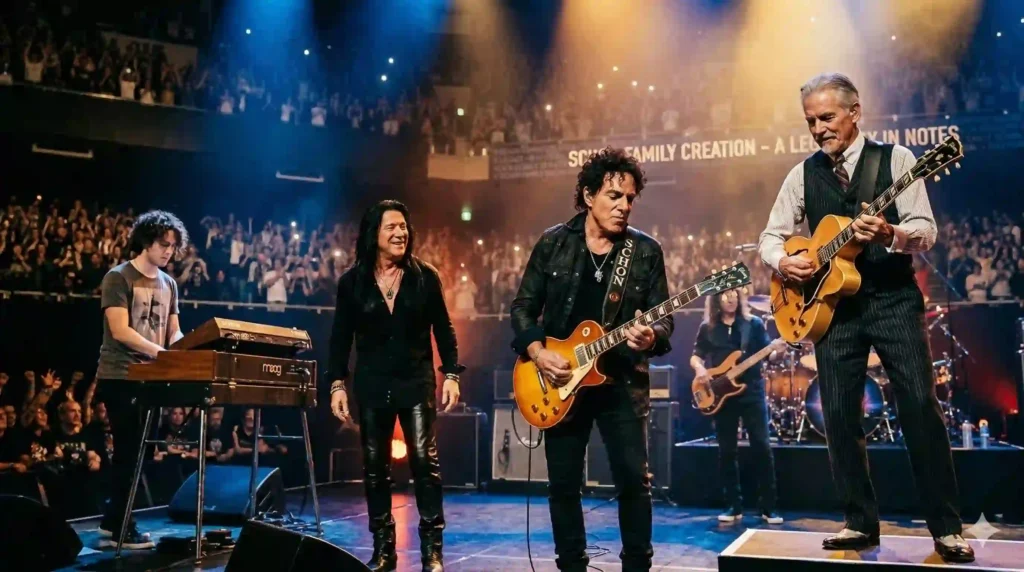
To me, the fact that the Schon family was involved in this song, which carries the heavy theme of “family,” deepens the rawness and reality of the track. The love and hate inherent in blood ties, and the human karma from which one cannot escape, rush forward as a surge of sound.
A Storm-like Interlude and the Meaning of “Lightning”
As we reach the middle section, Steve Smith’s dramatic, busy drumming and Ross Valory’s ground-crawling bass intertwine, plunging into an interlude that feels like a raging storm. Neal Schon’s guitar solo sounds like a scream, like anger, and like sobbing.
In the lyrics, the protagonist pleads with his family that they must hold onto their faith, especially when “lightning strikes the family.”
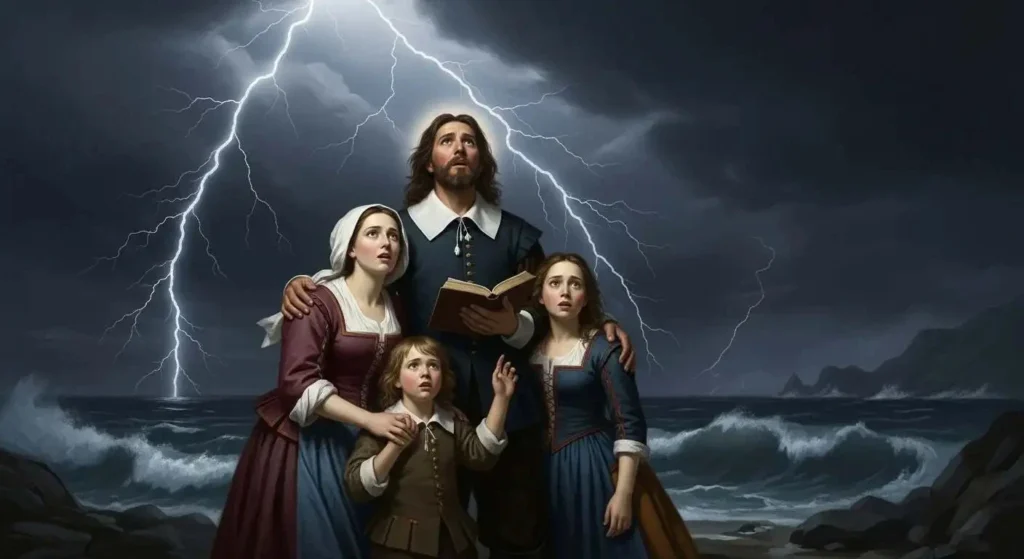
This “lightning” likely metaphorically represents a tragedy that suddenly tears apart a peaceful daily life, or an irreparable, decisive rift.
When faced with such overwhelming destructive power, how much reason can humans maintain, and can they continue to believe in their bonds?
The intensity of the sound seems to directly visualize the harshness of that trial. As heavy chorus work echoes, Perry’s vocals soar even higher, as if breaking through limits.
A Universal Portrait of “Family” that Strikes the Heart Across Eras
As a theme sung by rock bands, “the collapse of a family” is by no means rare. However, I feel there is a special significance in the fact that Journey—the champions of stadium rock who were at the peak of their career at the time—depicted such raw, unvarnished human pain.
Behind the glamorous spotlight, or in the closed rooms of everyday life to which everyone must return, relationships silently break down. What Steve Perry embodies in this song is not the tragedy of someone special, but a universal “portrait of a family” that exists countless times across eras and borders.

In life, no matter how much people love each other, there are feelings that miss each other due to a slight misunderstanding.
The human weakness of destroying what we supposedly wanted to protect with our own hands.
When faced with such “insurmountable walls of reality,” people are pushed to the brink of despair.
The Will to Piece Together What is Breaking
“Through bitter tears and wounded years, those ties of blood were strong.”
The protagonist’s desperate plea highlights the reality of a family that cannot be dismissed with mere platitudes. There are countless memories in the days gone by, which is why the cry of “Oh, so now don’t you turn away” rings with truth.
A family is not something that simply exists by being together; there are moments when it must be tied together with a strong “will.” The phrase the protagonist repeats over and over—”Have faith, believe“—sounds like a prayer for his family, and at the same time, like a spell to rouse himself when he is about to collapse.

Conclusion: A Requiem of the Soul Beyond the Bounds of Stadium Rock
The band Journey swept the 80s music scene with catchy melodies and refreshing sounds. However, the reason they are not just consumed as a “commercial band” and still remain in the hearts of many today is entirely due to their underlying strength in singing songs that peer into the human abyss with overwhelming expressive power.
“Mother, Father” is by no means a song that promises a happy ending. Until the very end, it remains unknown whether the family was saved, and the song closes leaving only an intense thirst for “believing.” That stinging resonance is what makes this song an eternal masterpiece.

Steve Perry’s soul-shredding performance and the heavy groove the band creates as one. The reason I placed this song in this position in my personal Journey Best 10 is that every time I listen to it, my soul is deeply shaken, and it makes me think about the fragility and hope of life.
I encourage everyone to listen to the overwhelming energy and earnest prayers of this song on a quiet night. Surely, something sleeping deep in your heart will be fiercely knocked upon.

コメント