
- 🎧 Listen to This Article in Audio
- Prologue — The Beginning of an “Endless Journey”
- The Formative Years (1973–1977) — Breaking Away from Santana and Leaning into Prog
- The Dawn of the Golden Era (1977–1980) — Steve Perry Joins and Everything Evolves
- Becoming a Global Stadium Band (1981–1986) — Peak, Frenzy, and the First Cracks
- Hardship and Stagnation (1987–2006) — A Phantom Reunion and Vocalists Fighting an Impossible Shadow
- The Miracle Comeback (2007–Present) — Hope, Named Arnel Pineda
- The Core of the Sound (Summary)
- Peers and Cultural Impact
- Timeline (Key Topics — Quick Version)
- How to Listen — A Practical Guide
- Conclusion — The Power of Melody That Transcends Time
- Next Time — Toward My Personal “Journey Best 10”
🎧 Listen to This Article in Audio
🎵 English Narration
Listening first helps you feel the overall atmosphere before reading, so you can enjoy the article more deeply.
🎶 Japanese Narration
You can also listen to the Japanese narration version of this article.
Prologue — The Beginning of an “Endless Journey”

The instant the intro to “Don’t Stop Believin’” begins—those unmistakable piano chords—stadiums around the world seem to breathe as one. Journey are more than “just” an American rock band: they’ve created anthems that cross generations, languages, and borders.
But the road they’ve traveled has never been smooth. Early on, they wrestled with their musical direction. They met—and later lost—an era-defining vocalist. And then came a miracle worthy of a movie: discovering an unknown singer on YouTube and elevating him to frontman of a legendary band. The reason Journey’s music hits so hard is simple—the band’s own history is a dramatic journey. In this article, I want to trace how the world’s most beloved melodic rock band reached the summit, fell into the depths, and pulled off a stunning comeback.
The Formative Years (1973–1977) — Breaking Away from Santana and Leaning into Prog
A Gathering of Elite Musicians
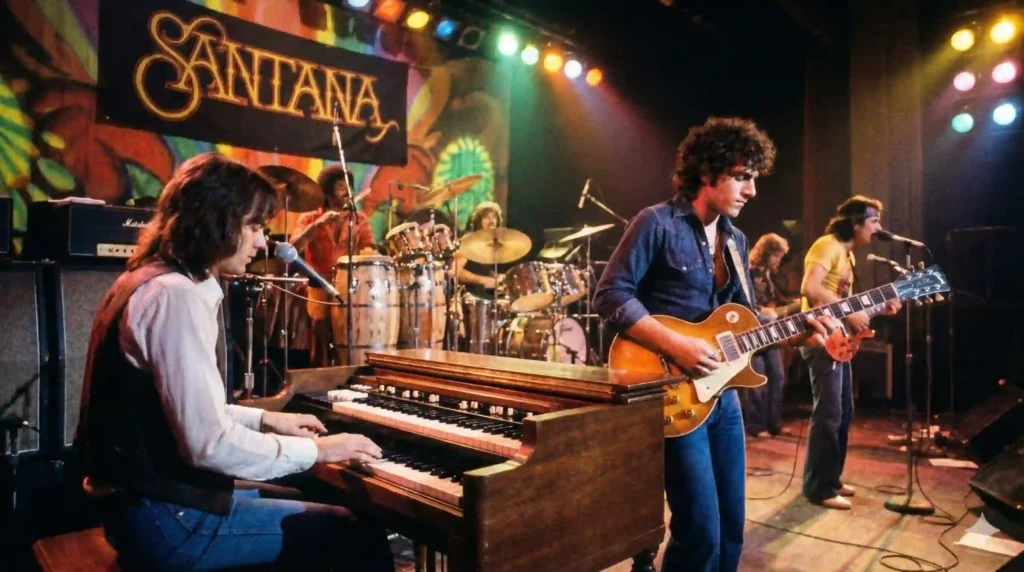
Journey’s starting point can be found in the backing band of Latin-rock giants Santana. Formed in San Francisco in 1973 around guitarist Neal Schon—who joined Santana at just 15—and keyboardist/vocalist Gregg Rolie, the group’s early sound was nothing like the pop-friendly stadium rock they would later perfect. Instead, it leaned heavily toward progressive rock and jazz fusion, putting world-class musicianship front and center.
A Course Correction After Years of Limited Success
Despite their staggering skill, the first three albums—Journey, Look into the Future, and Next—earned respect from dedicated music fans but did not become major commercial hits. Under intense pressure from their label (Columbia) to make songs that would land on radio more easily, the band faced a hard decision: bring in a dedicated lead vocalist and pivot toward a more melodic, accessible approach. That painful choice would ultimately open the heavy door to their future golden era.
The Dawn of the Golden Era (1977–1980) — Steve Perry Joins and Everything Evolves
A Fateful Encounter with “The Voice”
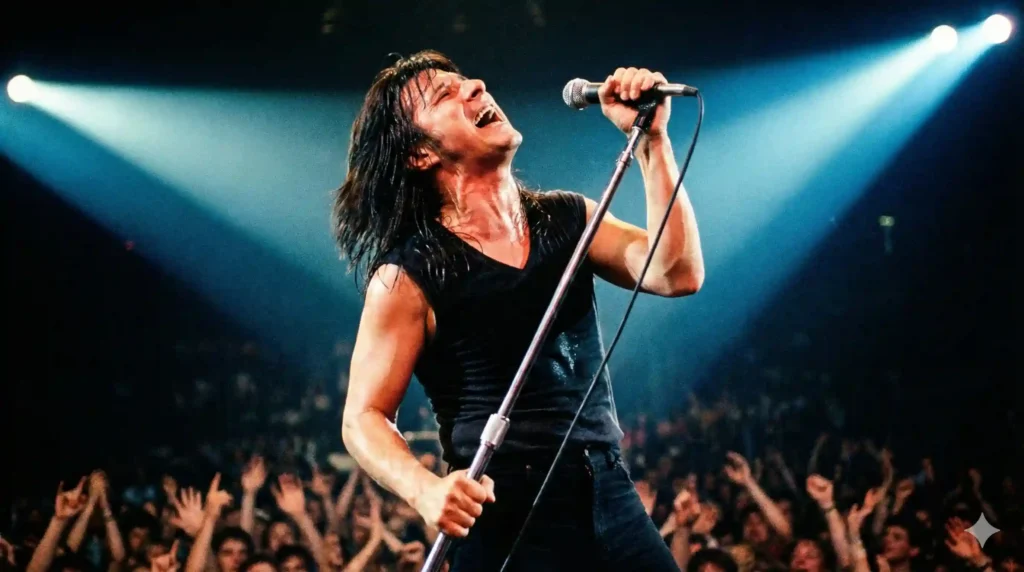
In 1977, the man who would change Journey’s destiny arrived: Steve Perry. The band had briefly tried another singer (Robert Fleischman), but it didn’t click. Then, after hearing a demo recommended by management, Neal Schon reportedly raved about Perry’s voice. His soaring high register and soulful expressiveness—shaped by influences like Sam Cooke—created a near-miraculous chemistry with Schon’s hard-edged guitar.
A “Wall of Voices” Built by Queen’s Producer
Starting with 1978’s Infinity, Journey began their ascent as hitmakers.
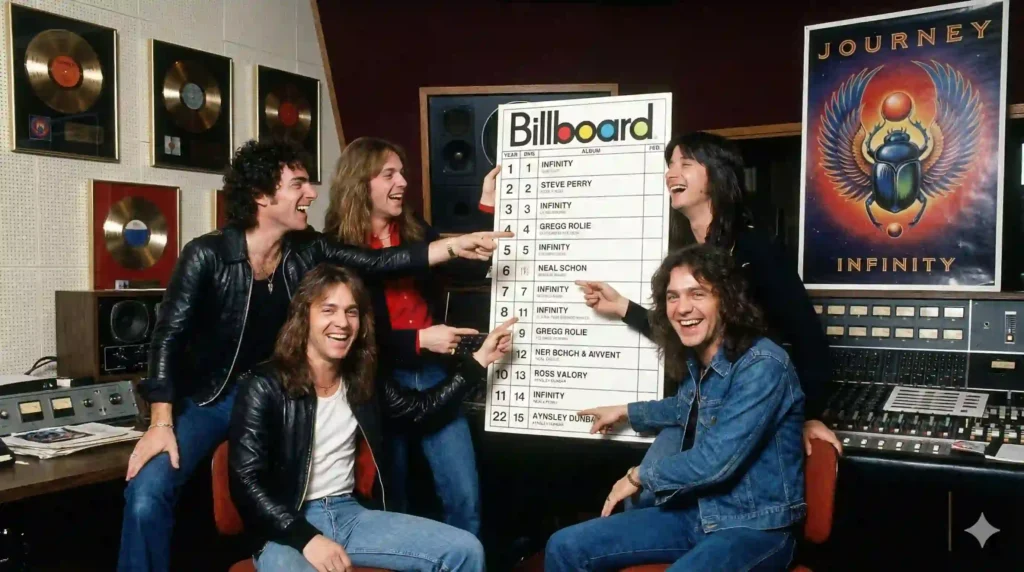
One crucial factor was the decision to bring in Roy Thomas Baker, famed for his work producing Queen.
Under Baker’s direction, Perry’s powerhouse lead vocals were layered with thick choral harmonies, completing Journey’s signature sound: grand, glossy, and emotionally explosive.
As heard on “Lights” and “Wheel in the Sky,” the focus shifted decisively—from instrumental solo showcases to vocal-driven melody. With Evolution and Departure following in quick succession, Journey stacked hit after hit and joined the ranks of America’s top bands.
Becoming a Global Stadium Band (1981–1986) — Peak, Frenzy, and the First Cracks
Jonathan Cain Joins, and Escape Explodes
In 1980, founding member Gregg Rolie—worn down by years of touring—announced his departure. The band’s crisis became an opportunity thanks to Rolie himself, who recommended The Babys’ keyboardist Jonathan Cain. Cain’s elegant piano touch, modern synthesizer textures, and sharp songwriting pushed Journey into a higher orbit.
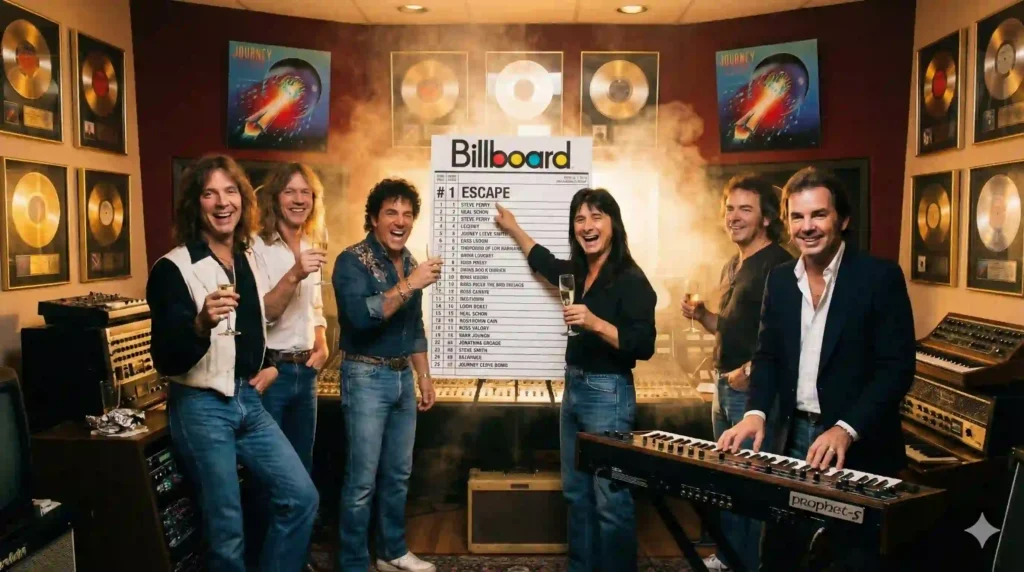
The 1981 masterpiece Escape hit No. 1 on the U.S. charts. It delivered eternal classics: “Don’t Stop Believin’”, the exquisite ballad “Open Arms”, and “Who’s Crying Now”. The album became a monster success, selling more than 10 million copies worldwide.
The MTV Era, Frontiers, and Internal Fracture
1983’s Frontiers was another mega-hit. The music video for “Separate Ways (Worlds Apart)” was a staple on MTV, while “Faithfully” captured the melancholy of life on the road with rare precision. Journey became the definitive kings of ’80s stadium rock—both in reputation and in reality.
But relentless touring and outsized success also bred tension. During the making of 1986’s Raised on Radio, Steve Perry took complete control and ultimately dismissed original members Ross Valory (bass) and Steve Smith (drums). Perry himself was pushed to the edge physically and mentally, and after the tour for this album, the band entered a long sleep.
Hardship and Stagnation (1987–2006) — A Phantom Reunion and Vocalists Fighting an Impossible Shadow
A Long-Awaited Reunion—and a Cruel Twist of Fate
After 1987, Journey fell into a state that was essentially a breakup. But in 1996, the long-awaited reunion of the classic lineup (Perry, Schon, Cain, Valory, Smith) finally happened. They released Trial by Fire, and the single “When You Love a Woman” earned major acclaim, including a Grammy nomination.
Then, just as a tour was about to begin, Steve Perry injured his hip while hiking in Hawaii. Surgery and rehabilitation would take time. The other members—eager to hit the road—delivered an ultimatum: if he wouldn’t proceed with surgery, they would find another vocalist. Perry ultimately left, and Journey permanently lost the single greatest piece of their identity: that voice.
Searching for a New Voice
Journey then recruited Steve Augeri, a gifted singer with a timbre reminiscent of Perry’s. He carried the band for years under immense pressure, but the brutal touring schedule damaged his throat and forced him out. Jeff Scott Soto stepped in as a stopgap, among others—and the band entered a harsh era defined by constant combat with “the ghost of Steve Perry.” The sound fans wanted from Journey simply demanded that piercing, sky-high tone. (I’m one of those fans, too.)
The Miracle Comeback (2007–Present) — Hope, Named Arnel Pineda
Destiny, Discovered on YouTube
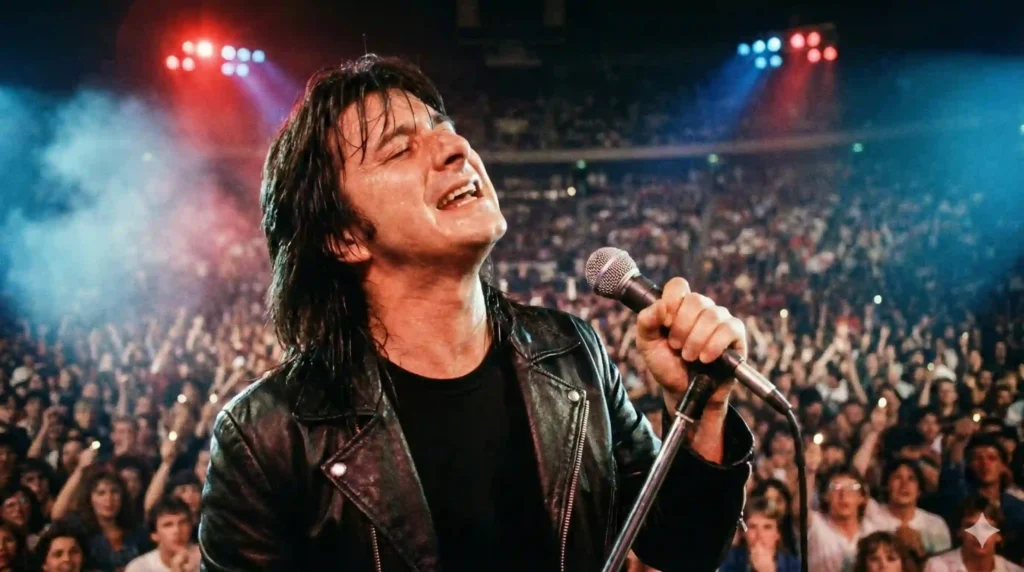
In 2007, Journey’s fate shifted once again. While searching for a new singer—and browsing online night after night—Neal Schon discovered an unknown Filipino vocalist on YouTube singing Journey covers. His name was Arnel Pineda. Shocked by Arnel’s power, range, and unreal energy—so evocative of Steve Perry—Schon emailed him immediately. There’s even an episode where Arnel assumed it was a prank and ignored the message at first.

A Living Cinderella Story
Arnel lost his mother at a young age and survived by singing—sometimes while sleeping on the streets of Manila. From extreme poverty, to club singer, to frontman of a global rock institution: it’s a Cinderella story stranger than fiction, and it was reported by media around the world.
Even fans who had drifted away from Journey heard Arnel and thought, “Journey is back!” With Arnel, 2008’s Revelation became a major success, reaching No. 5 in the U.S. And in 2017, Journey were inducted into the Rock and Roll Hall of Fame—proof that their comeback was complete.
The Core of the Sound (Summary)
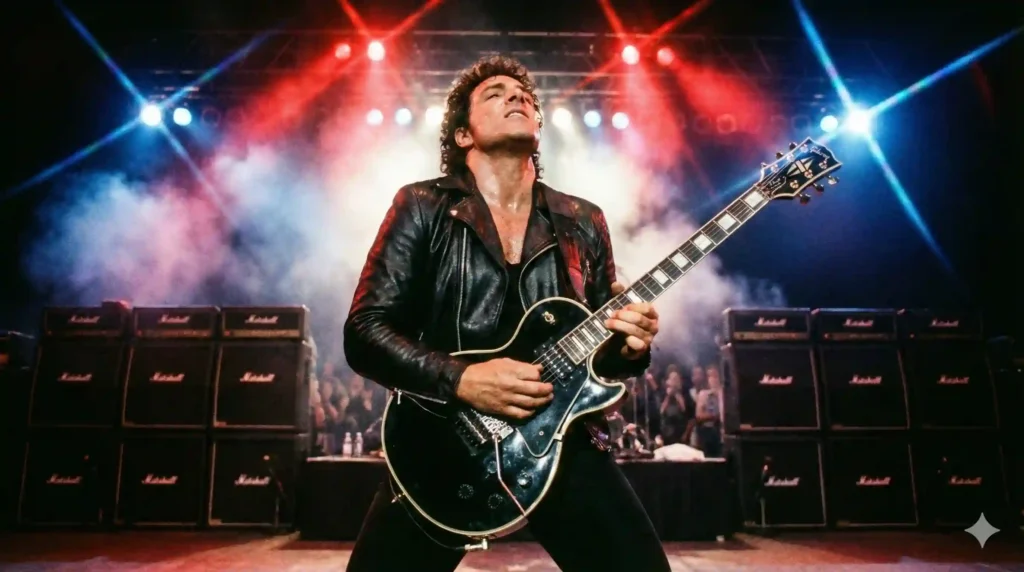
Neal Schon’s “Singing” Guitar
The backbone of Journey’s sound is unquestionably Neal Schon’s guitar—the only constant member from the beginning. His solos aren’t just technical fireworks; they lean into the vocal melody, and sometimes “sing” even more intensely than the lead vocal itself. That melodic, emotional approach pushes the drama of each song to its limit.
Majestic Keys and an Iron Rhythm Section
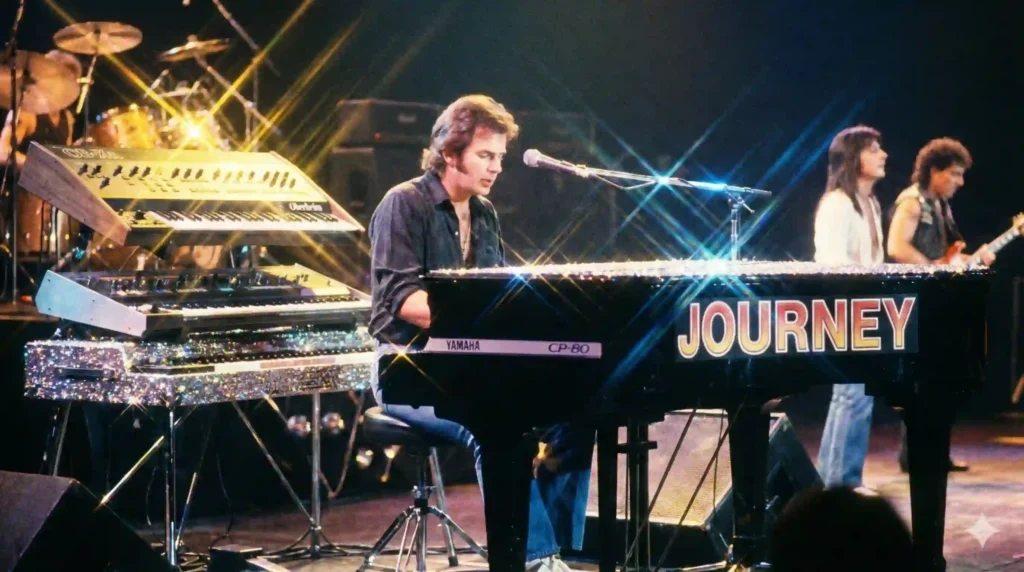
In the Gregg Rolie era, bluesy organ sounds were central. But after Jonathan Cain joined, sparkling synths and piano moved to the front. Just as important, the rhythm section—especially Steve Smith’s jazz-fusion-rooted, technical drumming—gave pop melodies a foundation of “real rock” weight and propulsion.
Peers and Cultural Impact
Beyond the “Corporate Rock” Label
In the ’80s, some critics mocked Journey—alongside bands like Boston and Foreigner—as “corporate rock,” suggesting their music was too calculated for mass appeal. But the ultra-catchy melodies and meticulous arrangements they built have survived the era and outlasted the label.
A Revival Through Subculture and Pop Media
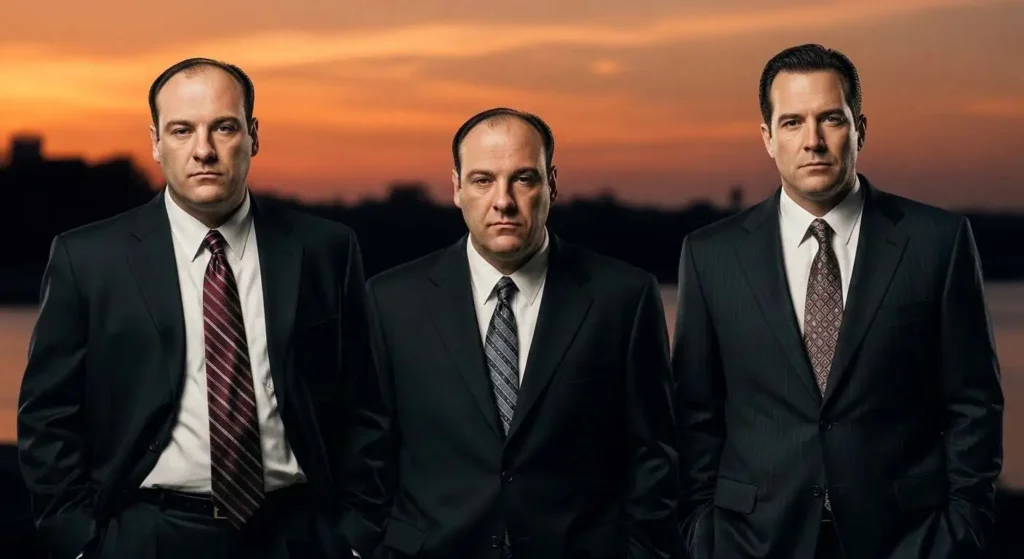
The defining moment of their modern reappraisal came in 2007, when the final episode of the hugely popular American TV drama The Sopranos used “Don’t Stop Believin’” as an iconic closing statement. The song suddenly surged back onto the U.S. iTunes charts. After that, it kept resurfacing—covered on shows like Glee, adopted as a rallying anthem in pro sports, and continually rediscovered by younger listeners who weren’t there in real time.
Timeline (Key Topics — Quick Version)
【1973】
Formed in San Francisco around former Santana members Neal Schon and Gregg Rolie.
【1977】
Steve Perry joins. The band begins shifting from prog tendencies toward melodic rock.
【1981】
Jonathan Cain joins. The landmark album Escape hits No. 1 in the U.S., launching Journey’s peak era.
【1986】
After Raised on Radio, exhaustion and conflict push the band into an effective hiatus.
【1996】
The classic lineup reunites and releases Trial by Fire, but Perry’s injury causes a renewed split.
【1998–2006】
With vocalists such as Steve Augeri, the band continues touring—through a prolonged difficult period.
【2007】
Journey discovers Filipino singer Arnel Pineda via YouTube, setting up a miraculous revival.
【2017】
Inducted into the Rock and Roll Hall of Fame. Steve Perry also appeared at the ceremony, electrifying fans.
How to Listen — A Practical Guide
Enjoy the Evolution Across Eras
Journey’s catalog is especially rewarding when you compare three major phases: the early prog-leaning period, the Steve Perry golden era, and the Arnel Pineda reboot era.
Feel the first true fusion of rock and pop bloom on Infinity. Savor the “completed form” of stadium rock on Escape. Then experience the moment Journey’s spirit is convincingly carried forward on Revelation. Listening with the story in mind makes the drama inside each album hit even harder.
Conclusion — The Power of Melody That Transcends Time

Journey’s history is a chain of glory and setbacks, encounters and separations. Yet even as members changed and eras shifted, the core of their sound never wavered: universal melodies that reach anyone’s heart.
“Don’t Stop Believin’.”
What started as the title of a hit song was transformed—through their own dramatic path—into a true message. Because Journey have kept embodying it, their music still pushes people forward, all over the world. That’s what I believe.
Next Time — Toward My Personal “Journey Best 10”
We’ve looked back at Journey’s turbulent history—vocalist changes, near-breakups, and a miracle comeback. But for me, the original landscape of Journey will always be Steve Perry’s overwhelming voice.
So in the next “Journey: Personal Best 10” installment, I plan to feature only songs from the Steve Perry era, intentionally and unapologetically.
I’ll dig deep into that sky-splitting high register and the “timeless melodies” that defined their peak—so after reading this background, I hope you’ll look forward to the ranking article as well!

コメント