◆ Explore the History of [Off Course] Here — A Prelude to Ultimate Sonic Refinement
- 🎧 Enjoy this article via audio
- And the Number One is…
- First, please listen to the audio via this YouTube video
- 1982: The Legendary Song That Defined Our “Answer”
- The “Spark” Within a Meticulously Calculated “Architecture of Sound”
- The 10-Day Budokan Concert and the Meaning of Those “Tears”
- “Tokyo” as a Symbol Hidden in the Depths of the Lyrics
- The Destination of the “YES” We Entrusted to This Song
- Closing: Our Eternal, Unfading Anthem
🎧 Enjoy this article via audio
You can quickly check the main points of this article through audio first.
Recommended for those who want to grasp the essentials in a short time before reading.
🎶 English Narration
You can listen to the content of this article in English.
⏳ Playtime: Approx. 3 min
🎵 Japanese Narration
The same content is also available in Japanese audio.
⏳ Playtime: Approx. 3 min
* Listening to the audio before reading the text will help you gain a more three-dimensional understanding of the song’s world and the key points of the article.
And the Number One is…
Finally, the moment has arrived. At the very top of “My Favorite Best 15” of Off Course songs, there stands none other than “YES-YES-YES.”
For me, talking about this song is not just about “introducing a favorite track.” It represents the highest peak reached by the five-member era of Off Course. It is a special “ritual” that symbolizes the unique heat and the hint of loneliness that the year 1982 possessed.
Core Interpretation of the Lyrics
I love you more deeply than you could ever imagine, and for me, there is no one else but you.
When you feel lonely, remember the love I gave you, and look only forward without looking back.
Even this city you hate can surely become a wonderful place as long as we are together.
So, hold my hand tightly; from now on, I will take you with me into the future I walk.
First, please listen to the audio via this YouTube video
*Since the official video has not been released, I have linked a video shared by fans. If there are any copyright issues, I will respond promptly by deleting the link. (Please click the image below!)
Song Credits
Lyrics & Composition: Kazumasa Oda
Arrangement: Off Course
Produced by: Off Course
Two-Line Commentary
This is a passionate love song representative of Off Course, where the narrator strongly tells a worried lover, "Let's go into the future together without looking back." Kazumasa Oda's crystal-clear vocals and the impressive, repeated "YES-YES-YES" phrase strongly captivate the listener's heart.
1982: The Legendary Song That Defined Our “Answer”
Why is this song number one? I believe it’s because it elevates the balance between “light” and “shadow”—a hallmark of Off Course—to the highest possible level.
The year 1982 was an incredibly dense period for Off Course and for us fans. As a second-year professional at the time, with memories of my student days in Tokyo still vivid, this song crashed into my ears with enough impact to completely shatter the existing framework of “New Music.”
Japan at that time was filled with the exhilaration of racing toward the peak of prosperity, yet there was a mysterious chill—a cold draft that would suddenly blow through the individual heart. I was one of those living within that atmosphere.
The Intro’s Rainfall: Awakening Scenes of Yesteryear
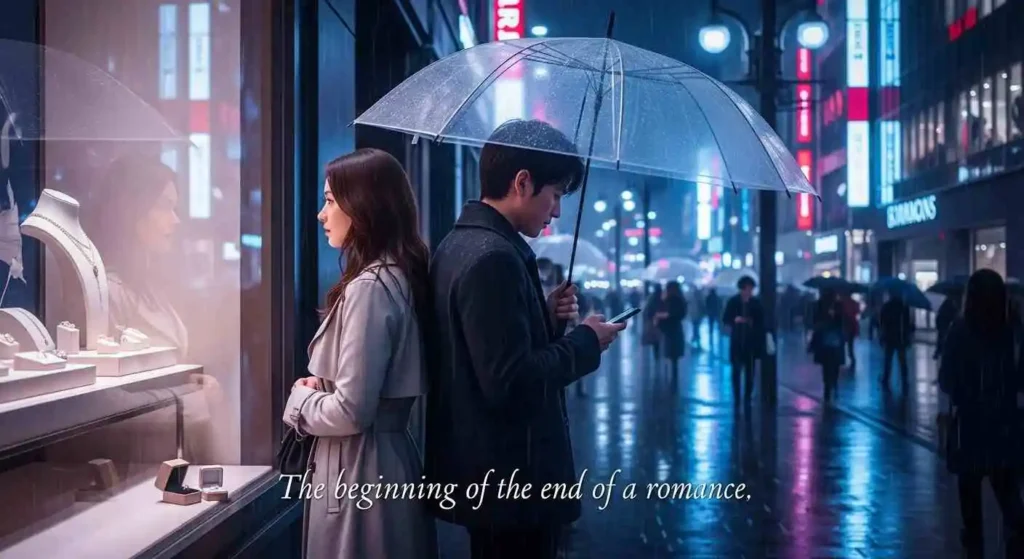
At the beginning of the song, the sound of falling rain overlaps with a heavy chorus. The moment that intro plays, my consciousness is instantly pulled back to a street corner smelling of damp asphalt after the rain. That rain sound isn’t just a sound effect. It is the silence before a “decision” begins, and a poignant prologue that foreshadows the “beginning of the end.”

The rain stops, and the song unfolds dramatically as if light is breaking through the clouds.
When Kazumasa Oda’s transparent voice begins singing, “I love you much more than you think,” the sophisticated and dense chorus work approaches like an overwhelming wall of sound. While it is a man’s monologue, it possesses a gentleness that embraces a trembling “you” alongside a strength that cuts through hesitation, seemingly speaking for the entire era.
The “Spark” Within a Meticulously Calculated “Architecture of Sound”
One reason this song remains timeless even after 40 years is the astounding quality of its arrangement. During this period, Off Course was undoubtedly a group of top-tier artisans in the Japanese pop world.
A Miraculous Ensemble Woven by Five Artisans
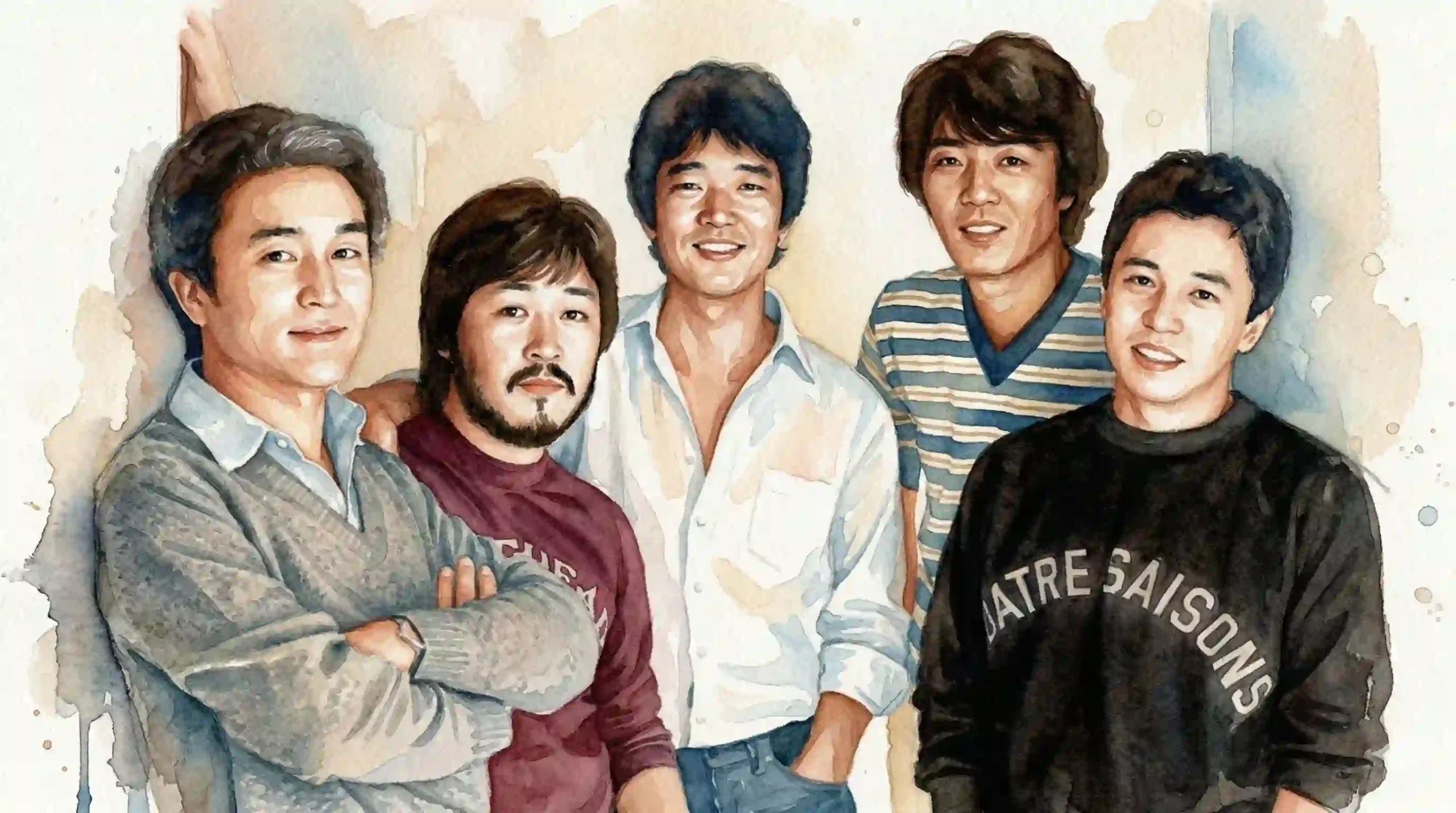
- Yasuhiro Suzuki’s guitar sometimes leans in gently and at other times sharply cuts through the emotions.
- The rhythm section of Hitoshi Shimizu on bass and Jiro Oma on drums provides a powerful skeleton for the track.
- Kazuhiko Matsuo’s keyboards and harmonica add deep lyricism and color to the song.
It is often said that there was strong friction—both musical and personal—between Kazumasa Oda and Yasuhiro Suzuki during this time. Yet, ironically, it is undeniable that this friction gave the songs of this era an incomparable energy.

Against the sweet and grand melody drawn by Kazumasa Oda, Yasuhiro Suzuki’s guitar stands in sharp, powerful opposition. Amidst the rising exhilaration toward the chorus, the guitar phrases don’t just accompany; they maintain the edge of a rock band.
Each instrument is placed with pinpoint precision to maximize Oda’s melody. Together, they create a perfect narrative, starting from the quiet rain, gradually heating up, and finally leading to an explosive sense of euphoria—much like watching a film. Had this song been a solo performance by Oda, such a heavy sense of depth would have been difficult to achieve.
Five personalities clashing and sparking, yet still racing toward a single “YES.” This precarious balance is the major factor that makes this song number one.
The 10-Day Budokan Concert and the Meaning of Those “Tears”
When discussing “YES-YES-YES,” there is a historical moment that cannot be ignored: the legendary 10-day concert at the Nippon Budokan in June 1982.
At the time, Off Course’s popularity was a true social phenomenon. Tickets sold out instantly, and the area surrounding the venue was overflowing with fans who couldn’t get in, creating an extraordinary fever pitch. During the final show’s encore, while singing this song, Kazumasa Oda’s voice faltered, and he shed tears.

The Collapse of a Perfectionist and the Naked Truth
In our eyes, Kazumasa Oda was always a stoic artist seeking perfection—meticulous sound production and flawless chorus work. To see such a man lose his composure and become unable to sing in front of tens of thousands of people signified that the massive project of Off Course had reached a critical threshold.
Were those tears of accomplishment? Or were they a premonition that these five people would never see the same view together again?
I believe both are correct. There was the joy of having created the finest music and perfectly resonating with the fans. On the other hand, there was the sorrow of knowing the inevitable future—Yasuhiro Suzuki’s departure—and the end of the band as a shared destiny. I believe those two conflicting emotions resonated with the dynamism of “YES-YES-YES” to produce that miraculous moment.

“Tokyo” as a Symbol Hidden in the Depths of the Lyrics
In the latter half of the song, a particular line appears that shakes my heart intensely:
“Even Tokyo, which you hate, is a wonderful city in autumn.”
I consider this phrase the most beautiful, yet the most cruel, in the entire Off Course discography.

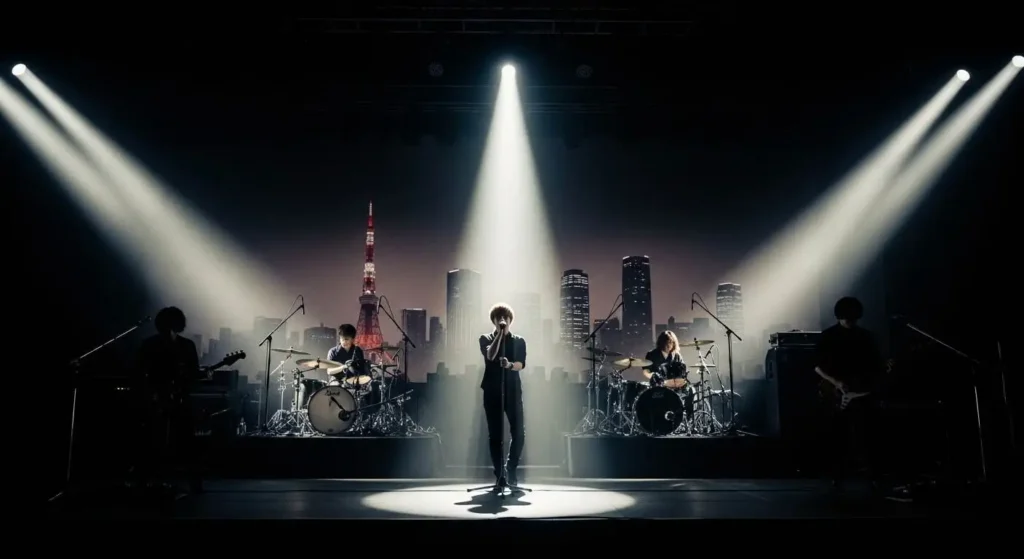
Overlapping with Higashi-Matsubara, Setagaya
I spent my own student days in Higashi-Matsubara, Setagaya. Every time I hear these lyrics, my memories instantly fly back to the scenery of those days. “You,” exhausted by the city’s power to isolate people and the sense of being consumed. Yet, even in a “hated city,” when the seasons turn and autumn arrives, it can suddenly reveal its beauty.
This isn’t just a description of scenery. It sounds like Oda’s way of encouraging us: no matter how difficult the situation or how much you want to deny reality, if you change your perspective, you can still find “something wonderful.”
The Polysemy of the Season “Autumn”
And why “autumn”? Not the bursting brightness of summer, nor the freezing isolation of winter. It is a season of abundance that simultaneously carries the sadness of something ending.
For Off Course in 1982, and for us fans, that period shone exactly like the “autumn of life.” It was the most beautifully colored and complete, yet a destiny of falling leaves awaited. I cannot help but feel that the ephemeral beauty is condensed into this single line.
The Destination of the “YES” We Entrusted to This Song
Let’s consider the message this song radiates once more. The phrase “YES-YES-YES,” repeated three times, is by no means optimistic. It is a declaration of “will”—trying to look forward even while your feet are caught in the mud under a downpour.

To Move Forward Without Looking Back
If you live long enough, regrets and lingering attachments are inevitable. However, with this song, Off Course cut through them all, singing that the affirmation of “now,” this very moment, is everything. To dispel the lover’s anxiety, the narrator first decides to look forward and never let go of their hand. The phrase “To the place I go / I will take you with me”—which could be seen as forceful—is the ultimate resolution of a man who has burned his bridges.
Closing: Our Eternal, Unfading Anthem
“YES-YES-YES” by Off Course.
It is a miracle born from the era of 1982 and a crystal created by five men who poured their lives into it.
Starting with the sound of rain, passing through a heavy chorus, and finally that melody inviting us into a shining future.
More than 40 years have passed, and our environment has changed drastically. The way we listen to music and the popular sounds have evolved. However, the “essence” of this song hasn’t faded at all.
I love you much more than you think.
To the place I go, I will take you with me.
This is the most proud anthem that continues to ring at the top of my life’s soundtrack.


コメント