
◆ Explore the History of [Off Course] Here — A Prelude to Ultimate Sonic Refinement
- 🎧 Enjoy this article with audio
- No. 9 is “Umarekuru Kodomotachi no Tameni” (For the Children Yet to Be Born)
- 2. First, Please Listen on YouTube
- “An Overwhelming Sense of Scale” That Leaves Personal Sentiment Behind
- The “Sense of Helplessness” Echoing Across Eras, and the “Hope” That Must Still Be Spun
- Conclusion: From a Love Song to a Song of Prayer, the Giant Guidepost Left by Off Course
🎧 Enjoy this article with audio
You can quickly grasp the main points of this article through audio first.
Recommended for those who want to understand the key points in a short time before reading.
🎶 English Narration
Explaining the content of this article in English audio.
⏳ Playback time: Approx. 3 minutes
🎵 Japanese Narration
You can also listen to the same content with a Japanese narration.
⏳ Playback time: Approx. 3 minutes
* Listening to the audio before reading the text will help you understand the worldview of the song and the main points of the article more comprehensively.
No. 9 is “Umarekuru Kodomotachi no Tameni” (For the Children Yet to Be Born)
A song that cannot be ignored when talking about the history of Off Course, towering like a giant monument. That is “Umarekuru Kodomotachi no Tameni” (For the Children Yet to Be Born), which I chose as the 9th place this time. Released in 1979, this masterpiece is a magnificent number that closes the album “Three and Two”.
This song elevates the perspective from “personal feelings” to “society, the country, and the future” all at once, violently shaking the listener’s soul.
This time, I would like to carefully unravel the profound and heavy gravity of this song, which cannot be contained within the boundaries of a mere hit song.
Super Translation of the Lyrics
While harboring many mistakes and doubts, I still want to continue believing in the future of this country.
Even if we don't know where we stand right now, there are thoughts that must be passed down to the next generation.
If each and every one of us joins hands, eventually hope will gather and become a great power.
Let's embark on a new voyage, moving forward while giving each other courage and strength.
2. First, Please Listen on YouTube
*Since the official video has not been released, I am linking a video shared by fans. If there are any copyright issues, I will promptly take actions such as deletion. (Please click the image below!)

♪ Japanese Credits
Song Title: Umarekuru Kodomotachi no Tameni (For the Children Yet to Be Born)
Artist: Off Course
Lyrics & Composition: Kazumasa Oda
Release: 1980 (Single)
♪ 2-Line Commentary
A social message song that questions what we can leave for the next generation, even while harboring mistakes and doubts.
It quietly sings of hope and prayers for the future, overlapping personal love with a sense of responsibility to the times.
“An Overwhelming Sense of Scale” That Leaves Personal Sentiment Behind
Until now, many of Off Course’s songs beautifully captured the “subtleties of the heart” completing within a highly personal world of a few meters in radius, such as a rainy windowsill or a street corner at dusk. I am sure that you, the readers, have also superimposed your own memories of love onto such life-sized sorrow.
However, the space presented in “For the Children Yet to Be Born” was overwhelmingly vast.
The boundlessness of the sky looking up, and the extremely large subject of “this country.” When I first encountered this song, thinking I was listening to a usual Off Course album, I felt a pleasant bewilderment, as if I had suddenly been thrown into the very center of humanity’s universal truth and the swell of history.

Thinking of someone you love and thinking of the nameless children of the future. At first glance, they seem like stories on completely different dimensions, but in the hands of Kazumasa Oda, they are connected by a single thick line. This song teaches us quietly but powerfully that it is precisely on the extension of the micro love of wanting to protect one’s precious person that the macro love of worrying about the world and the future exists.
Regret for a Past That Cannot Be Returned To, and the “Prayer” to Still Look Forward
What envelops this entire song is by no means unreserved positive hope. Rather, the foundation is a strong “sense of loss” and “regret.”
We cannot always choose the right path, and we are creatures who sometimes make irreversible mistakes. As a result, we lose something that was supposed to be beautiful and experience the decisive despair that we can no longer return to those days. What flows at the root of the lyrics is a poignant reflection on such human foolishness.

However, the true worth of this song lies in the fact that it does not end sitting at the bottom of despair. Precisely because we have made irreversible mistakes, what words can we leave behind for the pure white lives that will be born from now on? What kind of world can we hand over? That self-questioning is the very heart of this song.
We cannot undo the past. There are days when we are crushed by a sense of helplessness. Still, the figure longing for “courage” just to protect loved ones and row out the boat together harbors an energy of sacred prayer, similar to hymns or requiems of religious music.
The Turning Point of the Late 1970s and the Profound Persuasiveness of the Sound
The year 1979, when the song was released, was a transitional period when society as a whole ended a season and headed towards a new decade. An era when the enthusiasm for high economic growth had settled down, and people began to realize the “sense of emptiness” behind material wealth and “what is truly important.” In such an atmosphere, this song echoed like a requiem calming the very soul of the era itself.
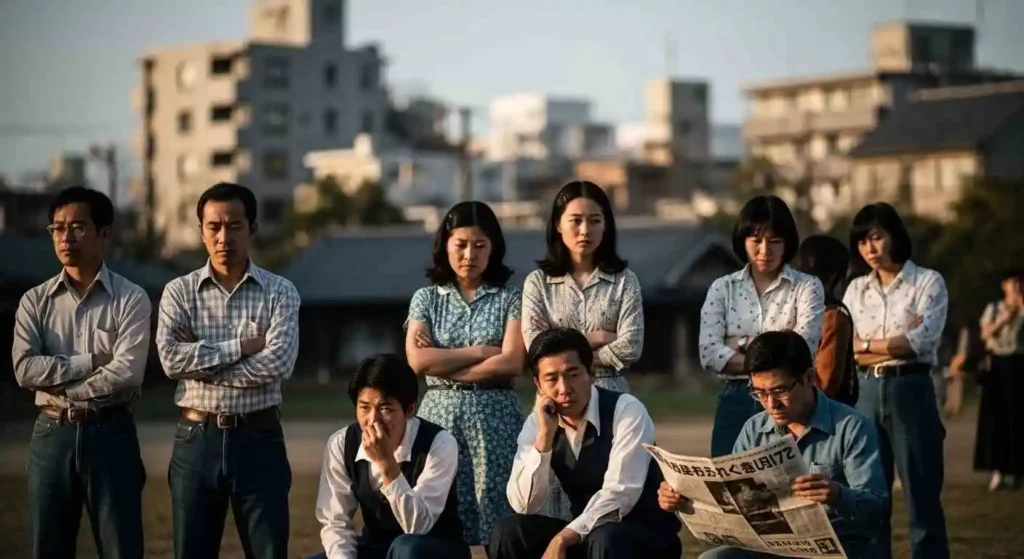
What is noteworthy is its profound sound approach. An orchestration that begins with a quiet piano intro, gradually layers strings, and eventually develops into a dynamic band sound. It perfectly sonifies a scene where a solitary whisper gradually evokes the sympathy of many people, becomes a huge swell, and rows out into the great ocean.
The beauty of the vocal line, where emotions rise especially towards the second half, and the chorus work supporting it, stood out in the Japanese pop scene at the time. Precisely because it is not just a beautiful melody, but contains a desperate cry squeezed from the depths of the soul, it ruthlessly pierces the softest parts of our hearts even when listening to it now, decades later.
The “Sense of Helplessness” Echoing Across Eras, and the “Hope” That Must Still Be Spun
Many years have already passed since Off Course sent this song out into the world. However, when looking over the current world we live in, can we proudly say that it has become a better place than “back then”? Rather, I feel that the issues we face, such as various divisions, conflicts, and environmental changes, weigh on us more complexly and heavily.
When chased by the busyness of daily life, we inevitably become preoccupied with managing the life in front of us, making it difficult to exercise our imagination toward the distant future or the larger world. We adults may have repeated too many mistakes and unknowingly hurt this world we love.

What on earth can we pass down to the pure white children who will be born from now on? The fundamental question posed by this song pierces our hearts as an even sharper blade in today’s era of extreme uncertainty, rather than the late 1970s when it was released. This is not just a masterpiece of the past, but holds weight as an “ongoing issue” thrust upon all of us living today.
“Raising a Pure White Sail”—A Quiet Resolve to Row Out into the Sea of Despair
Towards the end of the song, the words “raise a pure white sail” are repeated over and over and sung powerfully. This is the greatest salvation of this magnificent song and a symbol of the resolve we should hold in our hearts.

Daring to hoist a “pure white” sail in a wounded, fully stained world. That is a manifestation of a strong will to never give up, no matter how much at the edge of despair one stands. As long as there is strength, even if initially a minority, even just the two of us will row out the boat. Eventually, friends will gather there, moving forward even little by little.
That scene strikes my heart like a single ray of intense light shining into the darkness. The depiction of gathering “one by one,” instead of leading a large crowd from the beginning, harbors an Off Course-like delicacy and thus a reality. It never loudly shouts slogans, but rather quietly lights a fire in the “goodwill” and “courage” deep inside each person’s heart; such overwhelming persuasiveness is packed into this phrase.
The Cruel Beauty Brought by Kazumasa Oda’s Transparent High Tones
And the biggest factor that brilliantly establishes this all-too-large theme as music is none other than the penetrating expressiveness of the vocals and the fully calculated chorus work.
Even while singing about heavy themes such as human sinfulness and historical mistakes, that voice is transparent to the end, crystal clear as if rising straight toward the heavens. This “cruel beauty” makes the listener deeply introspective. Instead of earthily imposing emotions, it just quietly shakes the soul with an irresistible gravity.

Coupled with the dramatic orchestration in the second half, while creating a dynamism like pushing through a stormy sea, the core of the vocals at the center never wavers. Precisely because the weight of the words and the transparency of the voice fuse in a miraculous balance, I am convinced that it has been sublimated into an eternal work of art, without falling into a mere preachy message song.
Conclusion: From a Love Song to a Song of Prayer, the Giant Guidepost Left by Off Course
I have introduced “Umarekuru Kodomotachi no Tameni” (For the Children Yet to Be Born), ranked No. 9 in My Arbitrary Best 15 [Off Course Edition].
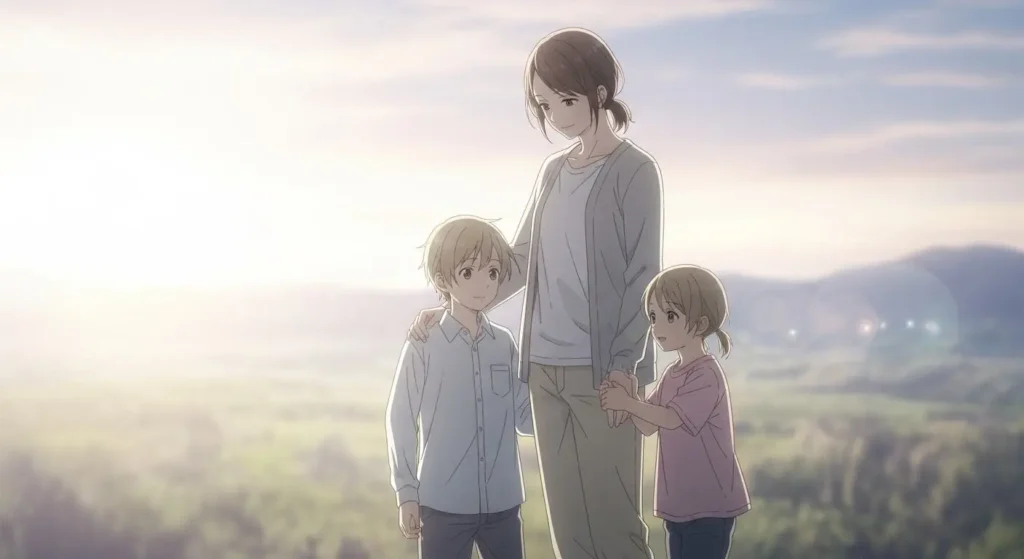
To be honest, the presence of this song is so large that I even hesitated a little to include it in the ranking on the same level as other love songs. However, this song, which lightly jumps over the framework of romance between men and women and sings a prayer for humanity itself and the future of humankind, is the greatest proof that Off Course was an exceptional group of musicians, not confined to the framework of a mere pop band. I placed it in this position because I absolutely wanted you, the readers, to experience this “shift in perspective” within the series.
From now on, we will probably have nights when we lose our way, stop, and lament our own helplessness. There must be times when we feel like we are going to be swallowed by the uncontrollable waves of society. At such times, I believe this song will always be by our side, continuing to be a giant guidepost that quietly and powerfully gives us the courage to “raise a pure white sail.”


コメント