🌐 English|🌐 日本語
🎧 Listen to This Article
This narration opens a Queen series marking 35 years since Freddie Mercury’s passing.
Hear the personal inspiration behind the series and follow the original four members from their first connections to A Night at the Opera.
🎵 English Narration
Listen to the article’s key points in English.
🎶 Japanese Narration
Listen to the article’s key points in Japanese.
Remembering Freddie Mercury on November 24
Today marks 35 years since Freddie Mercury passed away on November 24, 1991.
Nearly two years after starting this blog, I’m launching a series on Queen—a band I’ve always wanted to feature.
The Best rankings will cover three separate categories. Together with the introductory articles, they will make this the longest series I’ve published on the blog. Queen means a great deal to me, so I hope you’ll indulge a little extra time in their company.
We’ll explore the music alongside the band’s history, taking time to appreciate both. I hope you’ll enjoy the journey.
Discovering Queen Through “Killer Queen”
As memory serves, “Killer Queen” was the song that first introduced me to Queen. It appears on their 1974 album, Sheer Heart Attack.
What made the strongest impression was the sound: layers of voices and a strangely shifting resonance. Even then, it seemed clear that singing alone could not produce those effects. Yet the music felt almost as though it were bending time and space. “Killer Queen” remains a personal favorite.
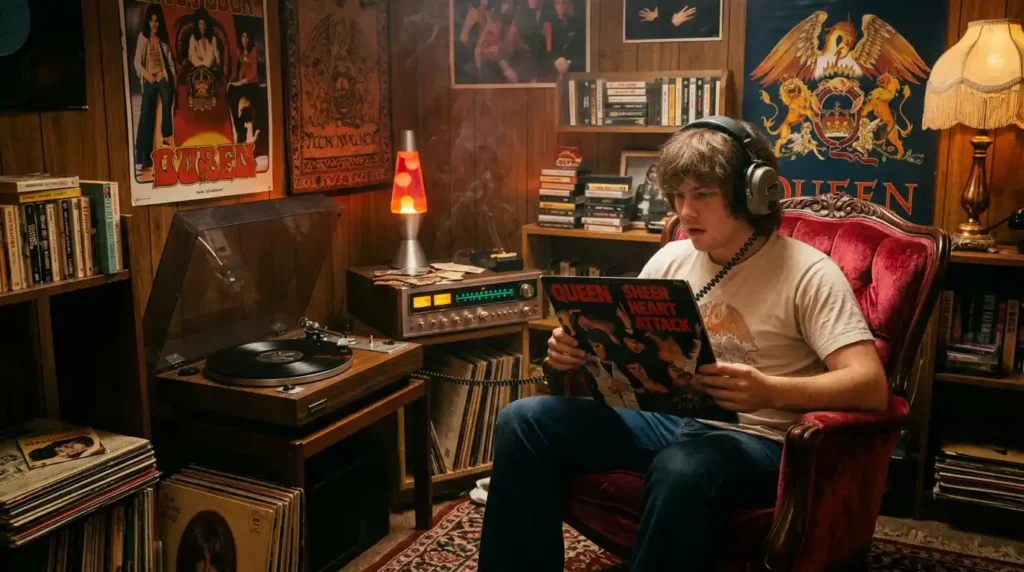
Queen have been a constant musical companion over the years and hold a particularly special place in my affections.
The upcoming Best series will feature separate rankings in three broad categories: ballads, hard rock, and rock ’n’ roll, pop, and experimental songs. There will be no overall ranking.
First, though, let us look back at the four original members’ backgrounds, how they met, and the development of their early albums.
Four Different Backgrounds, One Meeting Place: London
Freddie Mercury — From Zanzibar to Britain
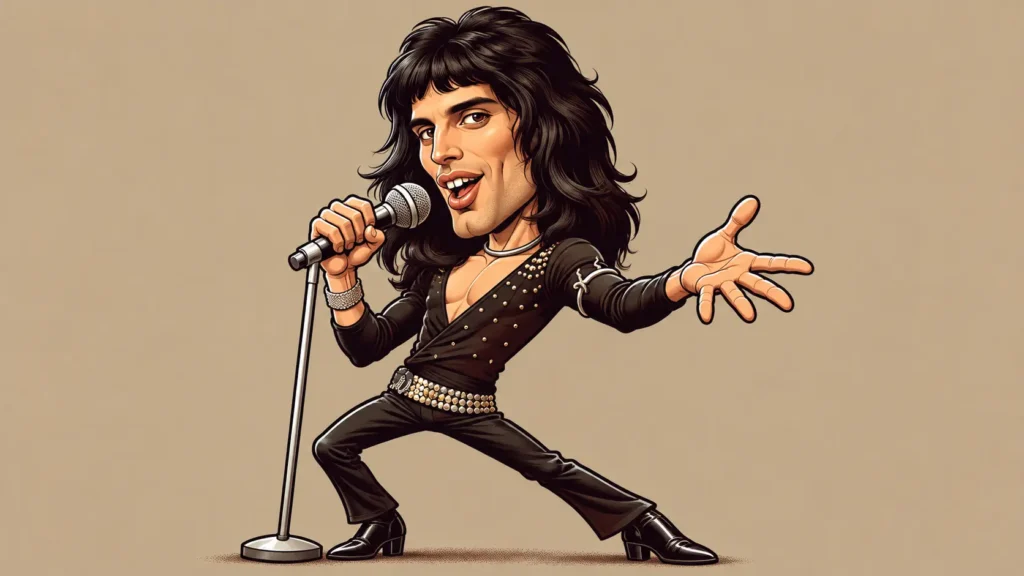
Freddie was born on September 5, 1946, on the island of Zanzibar, off the east coast of Africa. The island is now part of Tanzania. His birth name was Farrokh Bulsara. He spent much of his boyhood in India, attending boarding school and learning to play the piano.
In 1964, Freddie moved to Britain with his family. He later studied graphic design at Ealing College of Art in London while pursuing his musical interests.
In Queen, Freddie did more than sing lead vocals and play the piano. His costumes, gestures, and stage presence helped captivate audiences. His songwriting brought an equally broad range of ideas, from ballads to compositions with operatic structures.
Brian May — A Homemade Guitar and a Scientific Mind
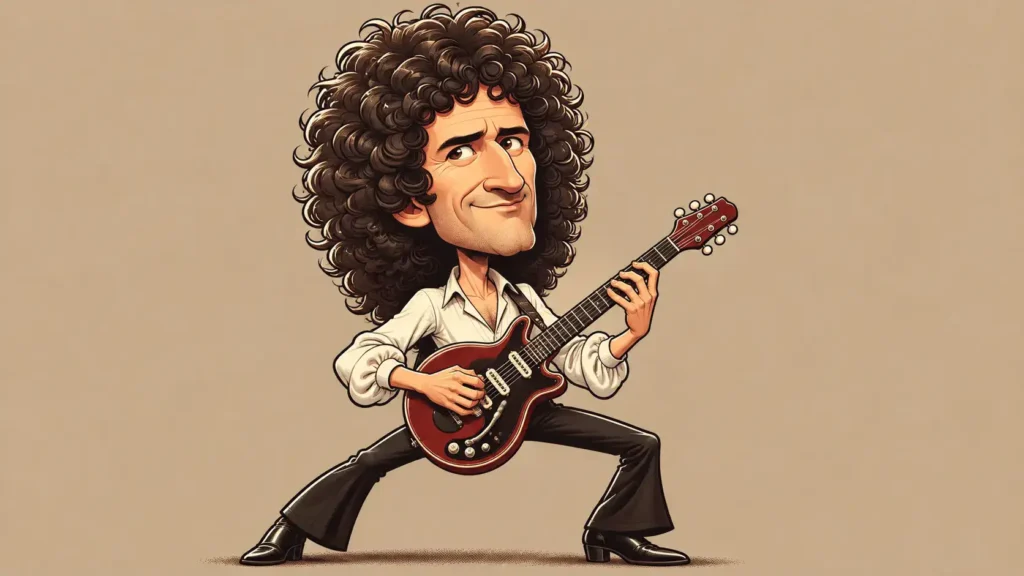
Brian was born on July 19, 1947, in Twickenham, England. He studied physics at Imperial College London before moving into astronomical research.
His beloved guitar, the Red Special, was built with his father, Harold, while Brian was still a teenager. They began work in 1963, using wood from an old fireplace mantel for the neck. The instrument they developed together would become a mainstay of Queen’s music.
Brian excelled at both powerful riffs and singing melodic lines. By overdubbing separate guitar parts, he also created passages that sounded like instruments conversing with one another. His guitar tone became a defining part of Queen’s identity.
Roger Taylor — A Drummer with a Voice of His Own
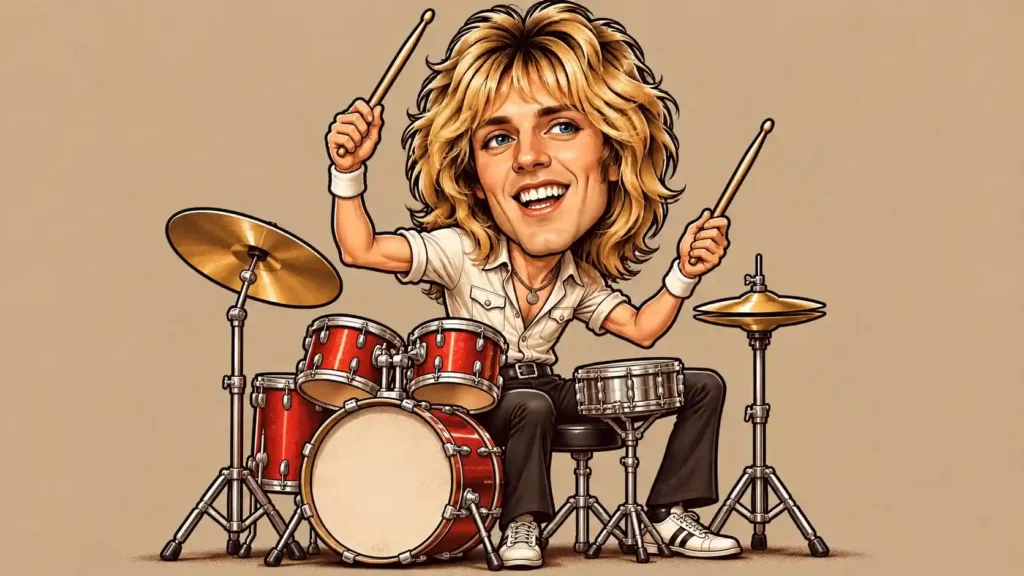
Roger was born on July 26, 1949, in King’s Lynn, Norfolk, in eastern England. His family moved to Cornwall when he was young. After trying instruments including the guitar, he took up the drums and also sang lead vocals in a local band, the Reaction.
In 1967, Roger moved to London to study dentistry. He later switched to biology, continuing his studies alongside his musical activities.
In Queen, Roger contributed not only forceful drumming but also distinctive high harmonies. He sometimes sang lead on his own compositions, his raspy voice offering a different texture from Freddie’s.
John Deacon — The Youngest Member, with a Talent for Electronics

John was born on August 19, 1951, in Leicester, England. He was the youngest of the four. Interested in both electronics and music from an early age, he switched from guitar to bass while playing in a local band.
In 1969, John moved to London to study electronics at Chelsea College. His technical knowledge also found a musical outlet: the small amplifier he built, known as the Deacy Amp, was used in Brian’s recordings.
John’s bass playing provided a foundation for the songs while adding melodic lines that responded to the vocals. As a songwriter, he excelled at accessible pop and rhythm-driven music.
1968–1971 — From Smile to Queen
The Drummer Advertisement That Brought Brian and Roger Together
Queen’s predecessor was Smile, formed in 1968. Brian and singer-bassist Tim Staffell began the group, with Roger joining after responding to an advertisement for a drummer.
Tim had met Freddie at Ealing College of Art. Through Tim, Freddie became acquainted with Brian and Roger and began attending Smile’s performances.
Freddie Joins, and John Completes the Lineup
When Tim left Smile in 1970, Freddie began a new band with Brian and Roger. At Freddie’s suggestion, they adopted the name Queen.
After several changes of bassist, an acquaintance introduced John to Brian and Roger in early 1971. John joined following an audition, completing the lineup: Freddie on vocals and piano, Brian on guitar, Roger on drums, and John on bass.
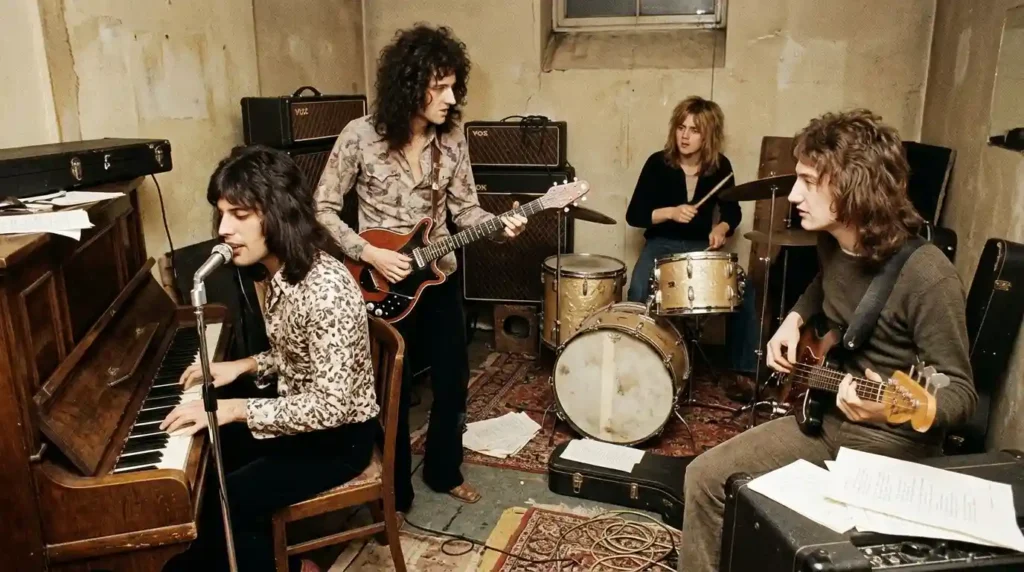
The four musicians who came together in 1971 continued making records without a lineup change until Freddie’s death in 1991.
1973–1975 — Expanding Their Sound Across Four Albums
1973: Queen — Variety from the Very Beginning
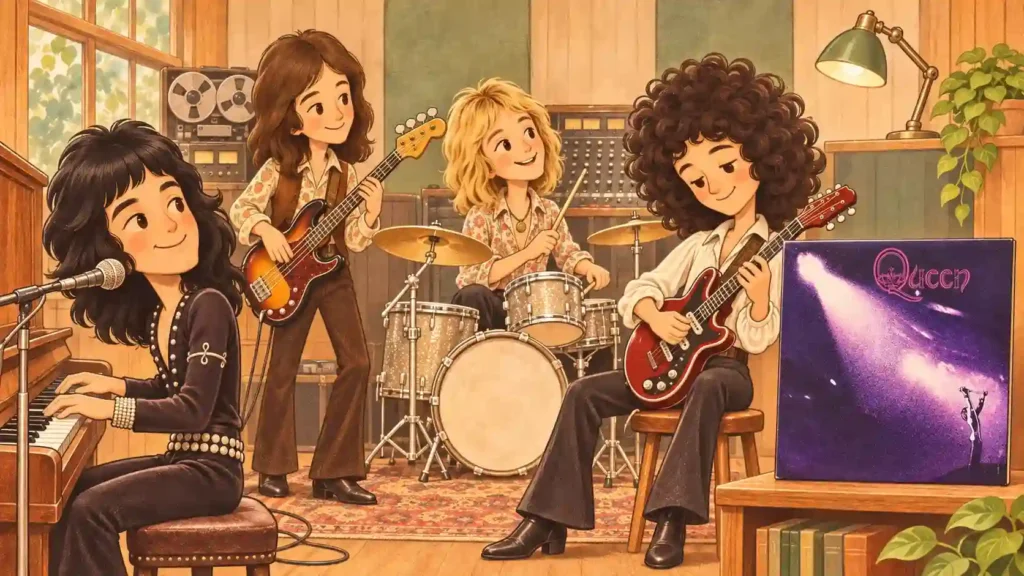
The debut album, Queen, was released in Britain in 1973. It reached Japan the following year under the Japanese title Senritsu no Ōjo. A record deal and release had not come immediately; the members spent time performing and recording before securing the opportunity to release an album.
“Keep Yourself Alive” drives forward with energetic guitar and vocals, while “My Fairy King” weaves together piano and harmonies. “Doing All Right,” co-written by Brian and Tim during the Smile years, was also included, now with Freddie singing.
The shifts in dynamics and tempo within individual songs already reveal ideas that would develop further in Queen’s later work.
1974: Queen II — A Record Divided into White and Black
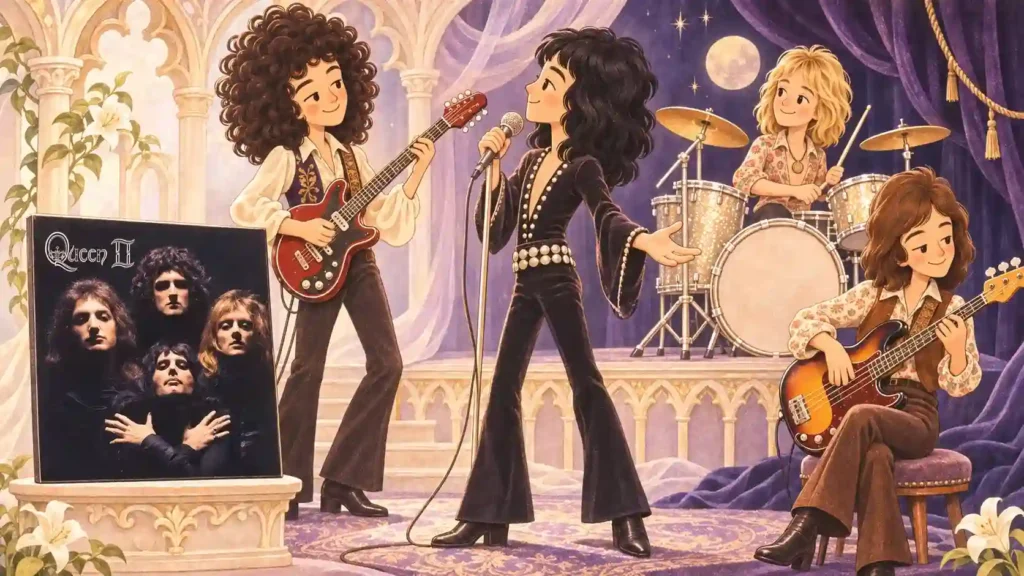
On Queen II, the two sides of the record were named “Side White” and “Side Black.” Side White contains four Brian compositions and one by Roger; Side Black consists of six songs written by Freddie.
“White Queen (As It Began)” pairs delicate vocals with expressive guitar, while “Ogre Battle” delivers a more forceful attack. “The March of the Black Queen” moves through intricate changes, and the connections between tracks add to the pleasure of hearing the album as a whole.
Repeated vocal and guitar overdubs brought greater depth to the arrangements and sharper contrasts between sections. “Seven Seas of Rhye” reached No. 10 in Britain, becoming Queen’s first UK Top 10 single.
1974: Sheer Heart Attack — Songs from All Four Members
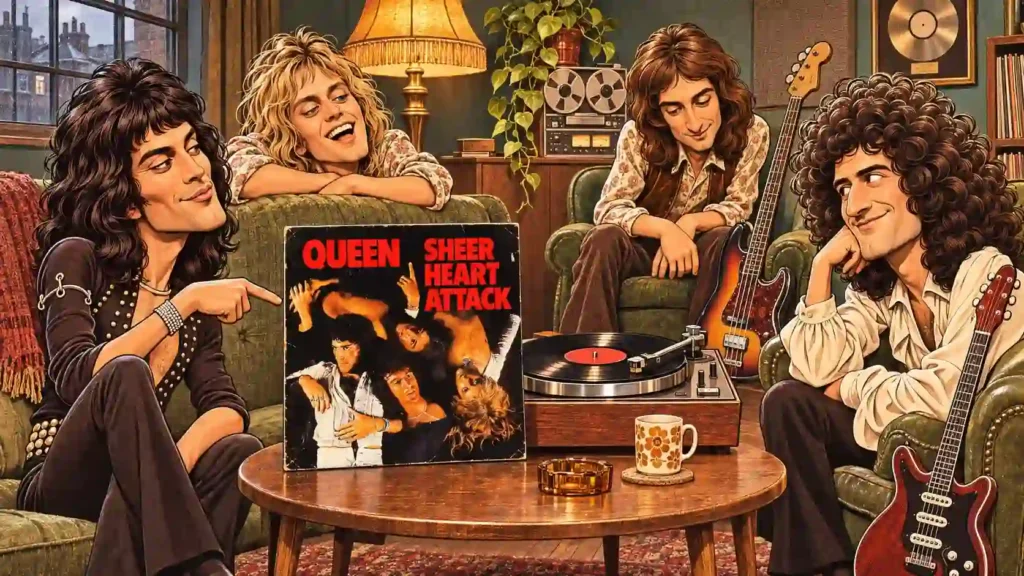
Their third album, Sheer Heart Attack, followed later that year. Before recording began, their American tour had been cut short after Brian contracted hepatitis.
The album offers striking contrasts: the guitar work of “Brighton Rock,” the headlong rush of “Stone Cold Crazy,” and the brief ballad “Lily of the Valley.”
“Misfire” marked the first appearance of a John Deacon composition on a Queen album, making this the first album to feature songs written individually by all four members.
Written by Freddie, “Killer Queen” was released as a single in Britain ahead of the album and reached No. 2. It packs intricate vocal harmonies and guitar arrangements into a pop song of around three minutes.
The Recording Techniques Behind “Killer Queen”
The song’s shifting sound owes something to recording techniques as well as to the singing and playing. According to co-producer Roy Thomas Baker, effects were recorded onto tape during the “laser beam” passage, while tape-based phasing was applied at the end of the song. Phasing combines an original signal with a phase-shifted version to create a sweeping effect.
1975: A Night at the Opera — Four Distinct Songwriting Voices
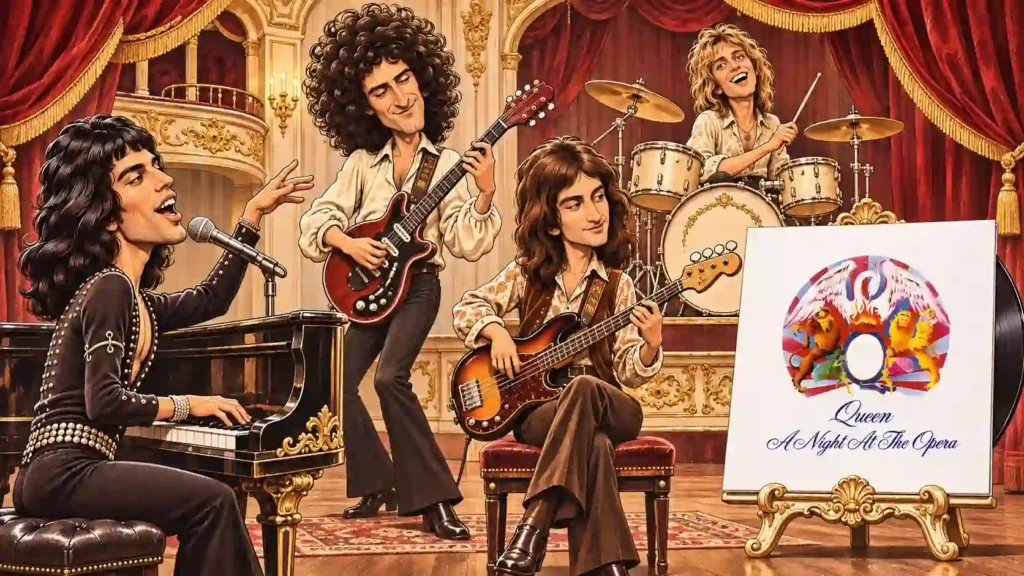
Queen first visited Japan in April 1975. Large crowds of fans welcomed them at the airport, and their Japanese tour opened at the Nippon Budokan on April 19. The enthusiastic reception made a lasting impression on the band.
Their fourth album, A Night at the Opera, appeared later that same year. Freddie contributed songs including “Death on Two Legs” and “Love of My Life.” Brian’s “’39” and Roger’s “I’m in Love with My Car” featured their respective composers on lead vocals. John’s “You’re My Best Friend” paired Freddie’s singing with the inviting sound of electric piano.
Freddie’s “Bohemian Rhapsody” combines a quiet ballad, densely layered operatic harmonies, and hard rock in a single composition. On its original release in 1975, it spent nine consecutive weeks at No. 1 on the UK singles chart.
Freddie, Brian, and Roger recorded the vocal harmonies in repeated overdubs. By layering different parts, they transformed three voices into something resembling a large choir.
The next article will explore the albums from 1976 onward and revisit the April 1979 Nippon Budokan concert attended during my university years.
音楽ファン同士の交流・リクエストはこちら / Connect & Request Songs Here