🌐 English|🌐 日本語
- 🎧 Listen to This Article
- Remembering Hiromi Ohta: Listening to “Momen no Handkerchief”
- About Hiromi Ohta
- First Hearing the Song: A Winter in High School
- Reading the Lyrics: A Story Told in Four Exchanges
- The Final Request That Gives the Title Its Meaning
- Buoyant Music and Two Characters in One Voice
- Closing Thoughts: Gratitude for a Song That Accompanied My Youth
🎧 Listen to This Article
Remember Hiromi Ohta through “Momen no Handkerchief,” with a narrated introduction to the song and the memories it holds.
Listen before reading for an introduction to the song’s story and the article’s main themes.
🎵 English Narration
An English narration of this article’s main themes.
🎶 Japanese Narration
A Japanese narration of this article’s main themes.
Remembering Hiromi Ohta: Listening to “Momen no Handkerchief”
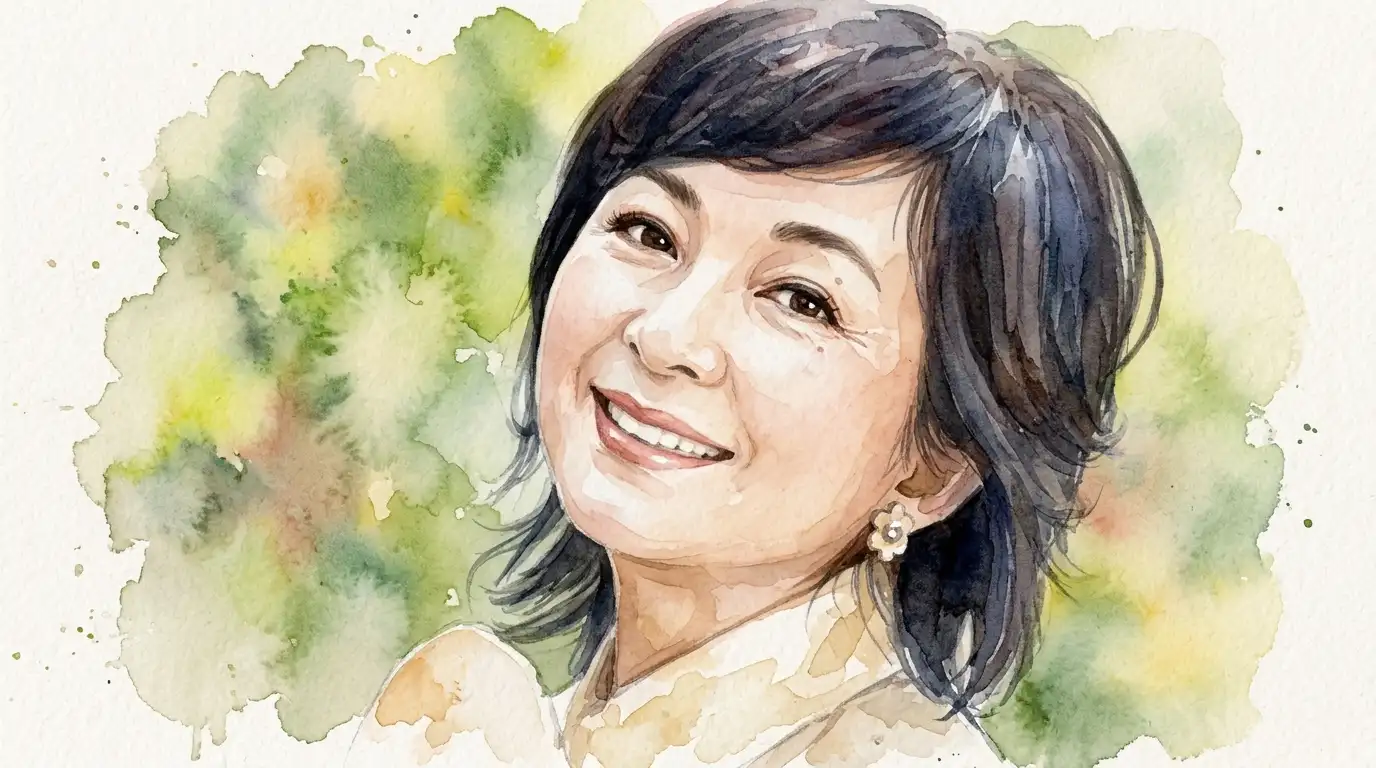
Hiromi Ohta passed away on November 12, 2026, at the age of 71. After publicly revealing her breast cancer diagnosis in 2019, she continued her singing career while receiving treatment. Sony Music announced her passing on its official website on November 18.
This is the first time I have introduced a song on this blog as a tribute to an artist who has passed away. Finding the right words has not been easy, but I wanted to revisit a song that accompanied my youth, with gratitude for the voice that brought it to life. That song is Hiromi Ohta’s “Momen no Handkerchief” (“A Cotton Handkerchief”).
A Free Interpretation
As you built a new life in the city, I kept looking forward to seeing you again.
What I missed was not a gift, but your smile, just as it used to be.
Now I understand that there is no longer a place for me in your future.
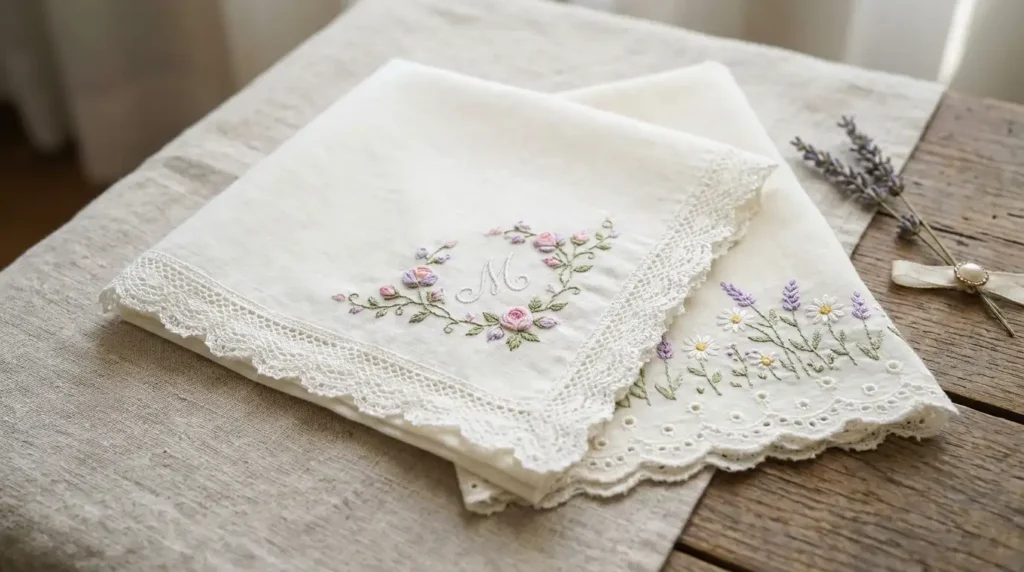
I have one last request: please send me something to wipe away these tears.
💡 You might also like: View the original Japanese lyrics (External site)
If the lyrics are available only in Japanese, you can use your browser’s translation feature or an AI translation tool to understand their general meaning.
Begin with the Official Music Video
🎵 Official Video Credits
Hiromi Ohta — “Momen no Handkerchief” Official Music Video
Lyrics: Takashi Matsumoto / Music: Kyohei Tsutsumi
Animation: Niina Ai
Full version released: November 1, 2022
About the Video
Niina Ai created the animation for this signature song about two lovers drifting apart while living at a distance.
The official video gives the 1975 recording a new visual interpretation, following the couple toward their eventual separation.
About Hiromi Ohta
Hiromi Ohta made her recording debut in 1974 with “Amadare.” Her songs, including “Momen no Handkerchief,” “Akai High Heel,” “Kugatsu no Ame,” and “Saraba Siberia Tetsudō,” earned her a devoted audience across the boundaries of folk and Japanese popular song.
Her youthful charm and clear voice were memorable, but her emotional range extended well beyond brightness. She could also convey a character’s loneliness and hesitation with remarkable naturalness.
First Hearing the Song: A Winter in High School
| My Age | Elementary School | Junior High | High School | University | 20s | 30s | 40s | 50s | 60+ |
| Release Year | 1975 | ||||||||
| First Heard | ● |
My first encounter with this song was probably around its release in December 1975, during the winter of my second year of high school. Life revolved around playing soccer and studying when the mood struck.
As the song became a hit, Ohta seemed to appear on television more often. She was twenty when the single was released. Her youthful face became associated with the woman in the lyrics, leaving a lasting impression of a girl who never quite grew older in my memory.
The song began to feel personal after a girlfriend and I started living far apart. The words of the woman who stayed behind seemed to express how my girlfriend might have felt. She had never actually said those things, though.
Looking back, I was probably projecting the woman in the song onto her, creating an ideal partner who suited my own wishes. While moving forward with life somewhere new, I wanted her to remain unchanged and keep waiting. At the time, I did not fully recognize how selfish that expectation was.
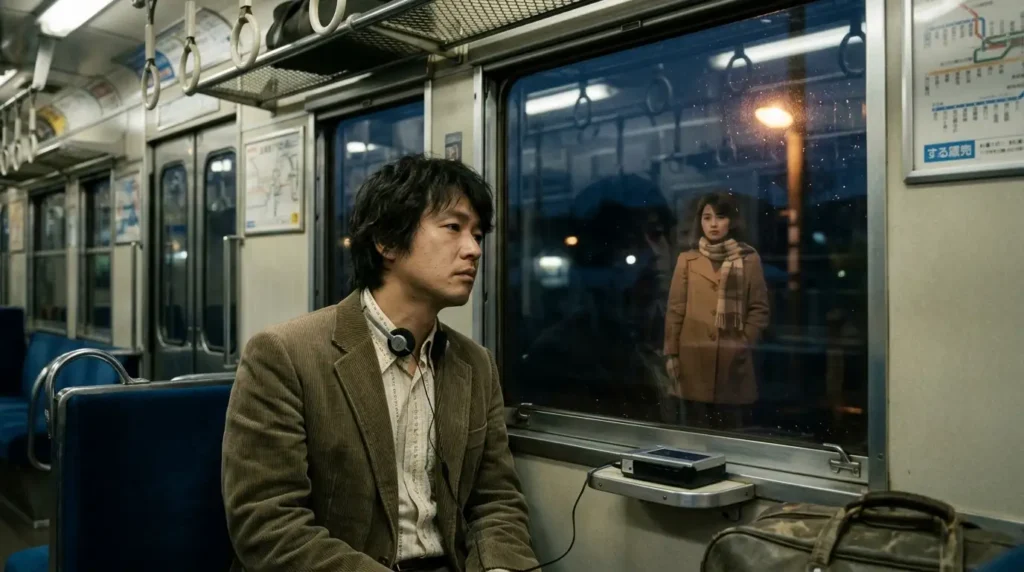
As city life became familiar, my letters to her grew less frequent. Eventually, our correspondence stopped, and thoughts of her occupied less and less of my everyday life. The behavior of the man in the song is not something I can regard as someone else’s problem.
There were one or two similar partings later in life. Even when affection remains, long periods without seeing each other can have a considerable effect. This song recalls both the weight of distance and the immaturity of failing to ask how the other person really felt.
Reading the Lyrics: A Story Told in Four Exchanges
“Momen no Handkerchief” was released as a single on December 21, 1975, with lyrics by Takashi Matsumoto and music by Kyohei Tsutsumi. Across four verses, the man addresses his lover and the woman replies, carrying the story from his departure to their separation.
A Story Told Entirely Through Their Words
Their exchanges unfold like letters between lovers living far apart. The man describes his new life, and the woman responds with her own wishes. Through those responses, the lyrics convey the passage of time and the changes in their feelings.
Hearing each offer alongside the woman’s reply reveals how differently they understand the same situation. There is no third-person narrator to explain events, so listeners must follow the changes through the couple’s own words.
Gifts as Affection, and the Wish for His Return
As he leaves, the man speaks of finding a gift for her in the city. There is no reason to assume that his affection has already faded at the moment of departure. Excited about his new life, he probably wants to share some of that happiness with her.
The woman, meanwhile, wants him to come home as the person she has always known. He tries to express affection through gifts; she hopes to see him again. Already, their ways of seeking reassurance in the relationship are beginning to differ.
In the exchange after six months have passed, he offers to send a fashionable ring. She replies that his kisses mean more to her than the sparkle of jewels. Even when his offer becomes something as specific as a ring, her answer remains unchanged.
His Present in a Photograph, Her Memories of the Past
Next, the man describes himself wearing a suit. His attention has shifted from gifts to showing her how the city has changed him. Perhaps he wants his lover to recognize the person he feels he has grown into.
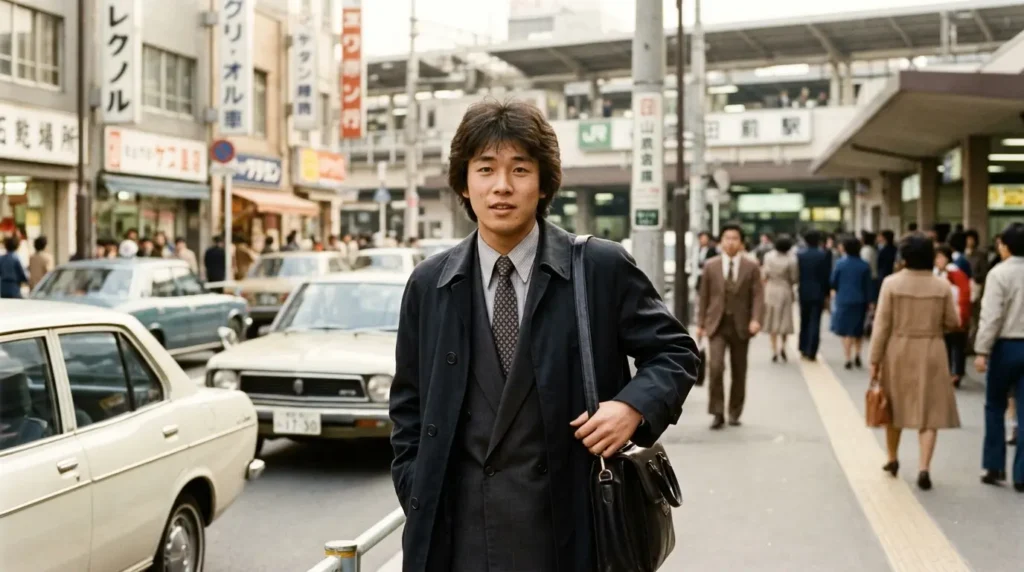
What she remembers fondly is the man who used to relax on the grass. He speaks proudly of his present appearance, while she recalls the time they spent together. The scene reveals more than different tastes in clothing: it shows that the moments they value are no longer the same.
Yet she still asks him to take care of himself. Despite her uncertainty about his changed appearance, she worries about his health in the cold city. Her reply expresses a tenderness that reaches beyond her own loneliness to consider his everyday life.
Resisting a Single Explanation for the Breakup
The lyrics describe neither a major argument nor the arrival of another lover. In the final verse, the man acknowledges that he is changing and forgetting her, and says he cannot return. The precise reasons his feelings have drifted so far are left unexplained.
That makes it seem too simple to say the city has merely corrupted him. Adjusting to a new environment is natural, and her longing for the man she knew is understandable too. Perhaps the sadness lies in their inability to find a way to accommodate that change together.
There is selfishness in his words and actions. But simply condemning him would mean avoiding the implications of my own experience. The person who moves away has a new daily life; the person left behind has the hours spent waiting. The song seems to reveal the danger of underestimating that difference.
The Final Request That Gives the Title Its Meaning
The Woman Who Never Asked for Gifts
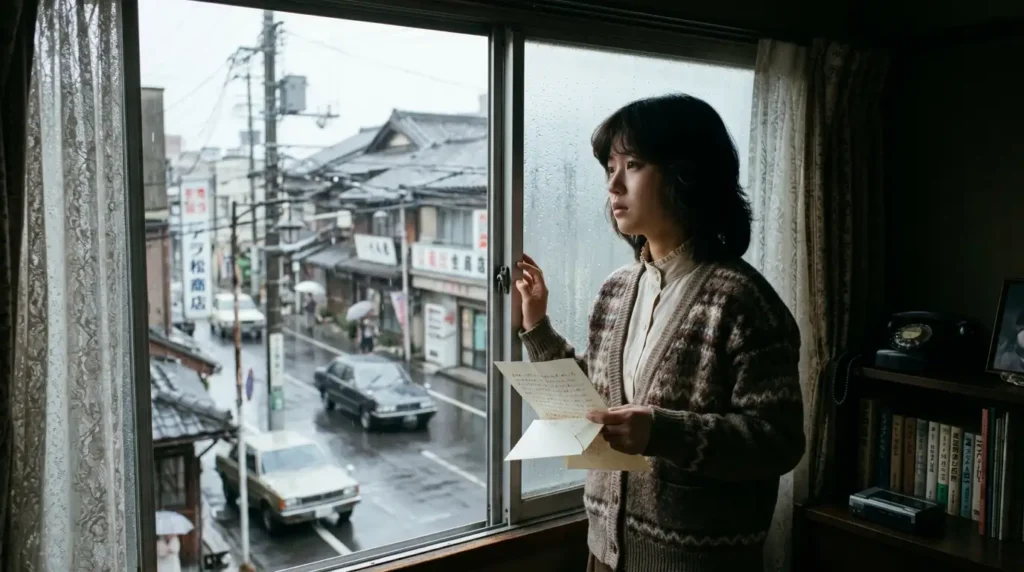
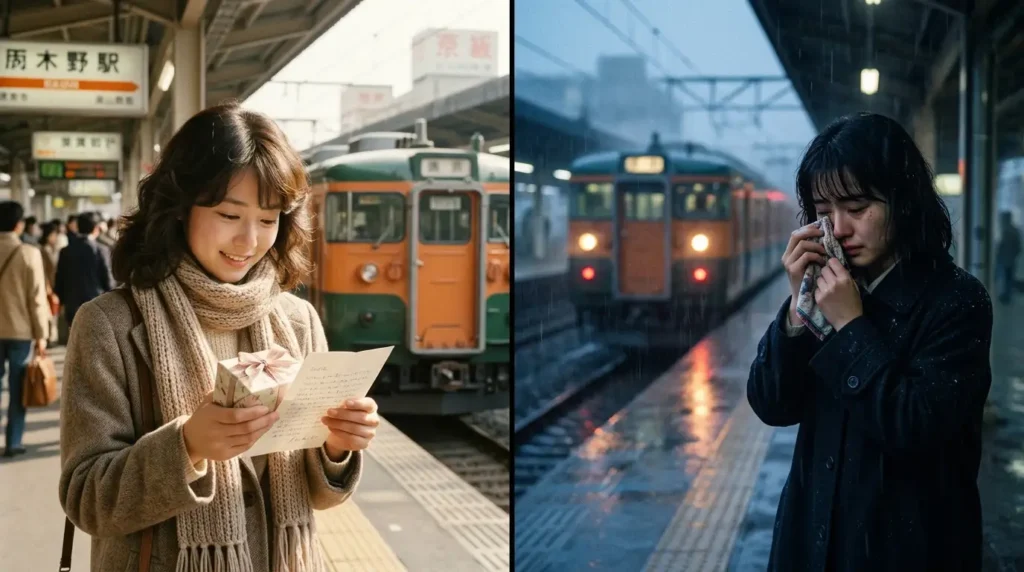
Only after he tells her they must part does the woman, who has not asked for gifts before, request a handkerchief. The subject he introduced at the beginning finally returns in her own words.
The earlier gifts were intended to express his affection. The final handkerchief is needed to wipe away the tears caused by their separation. Matsumoto’s skill lies in using the same subject—giving a gift—to connect the departure with the farewell.
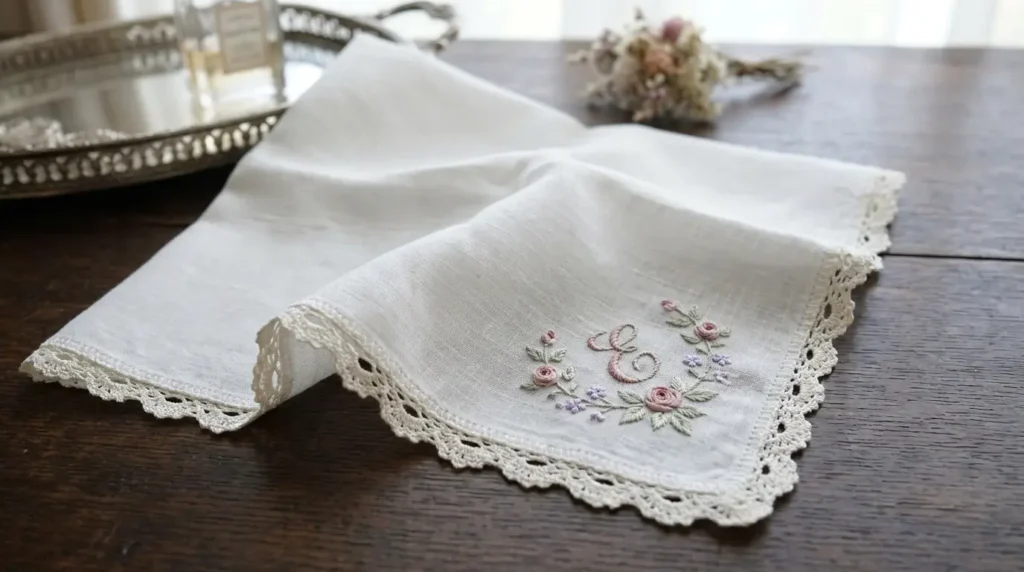
A cotton handkerchief is an ordinary, useful object. When a woman who wanted no expensive presents asks for that one simple item, her grief takes a tangible form. The title has such force because it lets us picture the very act of wiping away her tears.
An Ending Without His Reply
The woman makes her final request without bitterly accusing him or insisting that he come home. Yet choosing restrained words does not mean she accepts the breakup without pain. Holding back what she might say to him cannot make her sadness disappear.
After she asks for the handkerchief, the man’s reply is never sung. We do not know whether it arrives or whether they ever meet again. The story closes with the words of the hurt woman. By ending there, rather than explaining his circumstances, the song leaves her request in the listener’s mind.
Buoyant Music and Two Characters in One Voice
A Melody That Also Carries the Hope of Departure
Tsutsumi’s melody has an inviting, singable quality. Although the story ends sadly, the music does not cast a somber mood over it from the outset. Drawn along by its buoyant movement, we gradually realize that the two lovers are no longer imagining the same future.
That lightness also suits the man’s anticipation. The opening conveys the excitement of beginning life somewhere new, making us feel as though we are seeing him off. Even knowing the ending, there is a brightness in his first words that makes it possible to imagine a path on which they might have stayed together.
As the basic melody returns in each verse, the lyrics move steadily toward separation. The music grows familiar while the couple’s circumstances change. That combination helps the four verses unfold naturally as one continuous song.
Hiromi Ohta’s Singing: Sorrow Without Exaggeration
Ohta sings both the man’s words and the woman’s replies herself. Even with one voice, the shifts between the two speakers are clear and natural, allowing listeners to follow both perspectives. Her performance makes the conversational structure work effortlessly as a song.
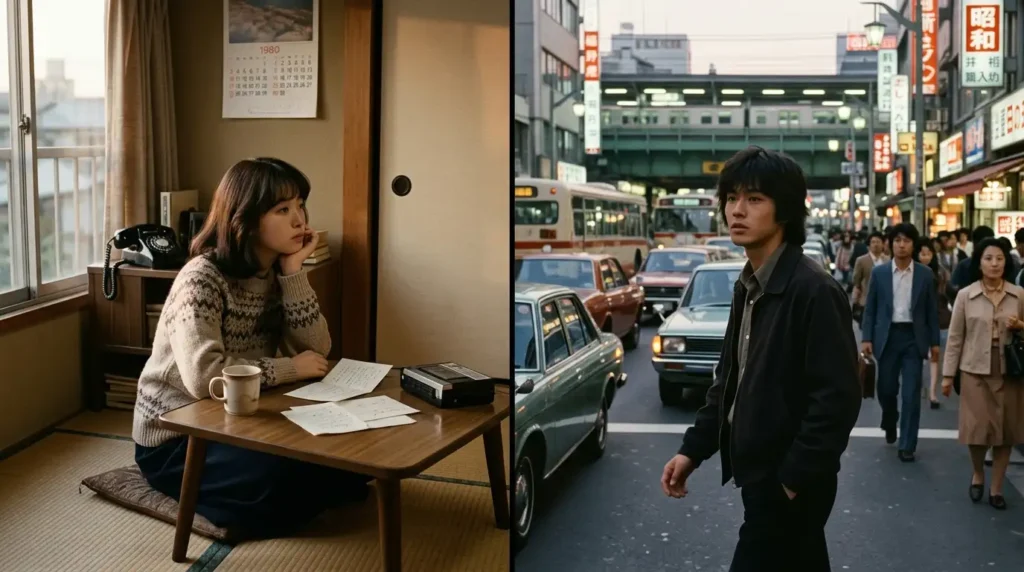
What stays with me most is the absence of exaggerated sorrow. Her clear delivery allows listeners to respond for themselves to the affection and uncertainty in the woman’s replies. The final request is deeply affecting without any need for a dramatic appeal to our tears.
By giving voice to both his anticipation and her wishes, Ohta does not place the performance entirely on one character’s side. Both are addressing the person they love, yet they want different things. Her ability to make that relationship audible within a single song is a measure of her expressive skill.
Closing Thoughts: Gratitude for a Song That Accompanied My Youth
When I was young, the woman’s devotion was what moved me. Now the song also brings into view the part of myself that took someone’s kindness and willingness to wait for granted.
This was the first song that came to mind on hearing of Ohta’s passing. A recording first heard during a high school winter acquired a different meaning after the experience of loving someone at a distance. Even today, it offers a reason to reflect on how we treat the people close to us.
Hiromi Ohta, thank you for giving us a song that accompanied the days of our youth. I will continue returning to it from time to time. May you rest in peace.

音楽ファン同士の交流・リクエストはこちら / Connect & Request Songs Here