🌐 English|🌐 日本語
The Stylistics: Their Story and Musical Journey
- 🎧 Listen to This Article
- No. 2: “Can’t Give You Anything (But My Love)”
- First, Enjoy the Official YouTube Video
- Why Does a Poor Man’s Confession Sound So Joyful?
- 1975: The Stylistics Were Entering a New Musical Era
- Russell Thompkins Jr.: A Voice That Makes Every Word Believable
- Can Love Alone Sustain a Life Together?
- A British Chart Triumph and a Lasting Connection with Japan
- Final Thoughts
🎧 Listen to This Article
Discover the key points of this article through a short audio narration.
Before reading, enjoy an introduction to “Can’t Give You Anything (But My Love)” and the story behind its enduring appeal.
🎵 English Narration
Listen to an English narration highlighting the main themes of this article.
🎶 Japanese Narration
Listen to a Japanese narration introducing the main themes of this article.
Listening before reading offers a deeper appreciation of the song’s heartfelt message and the distinctive musical charm of The Stylistics.
No. 2: “Can’t Give You Anything (But My Love)”
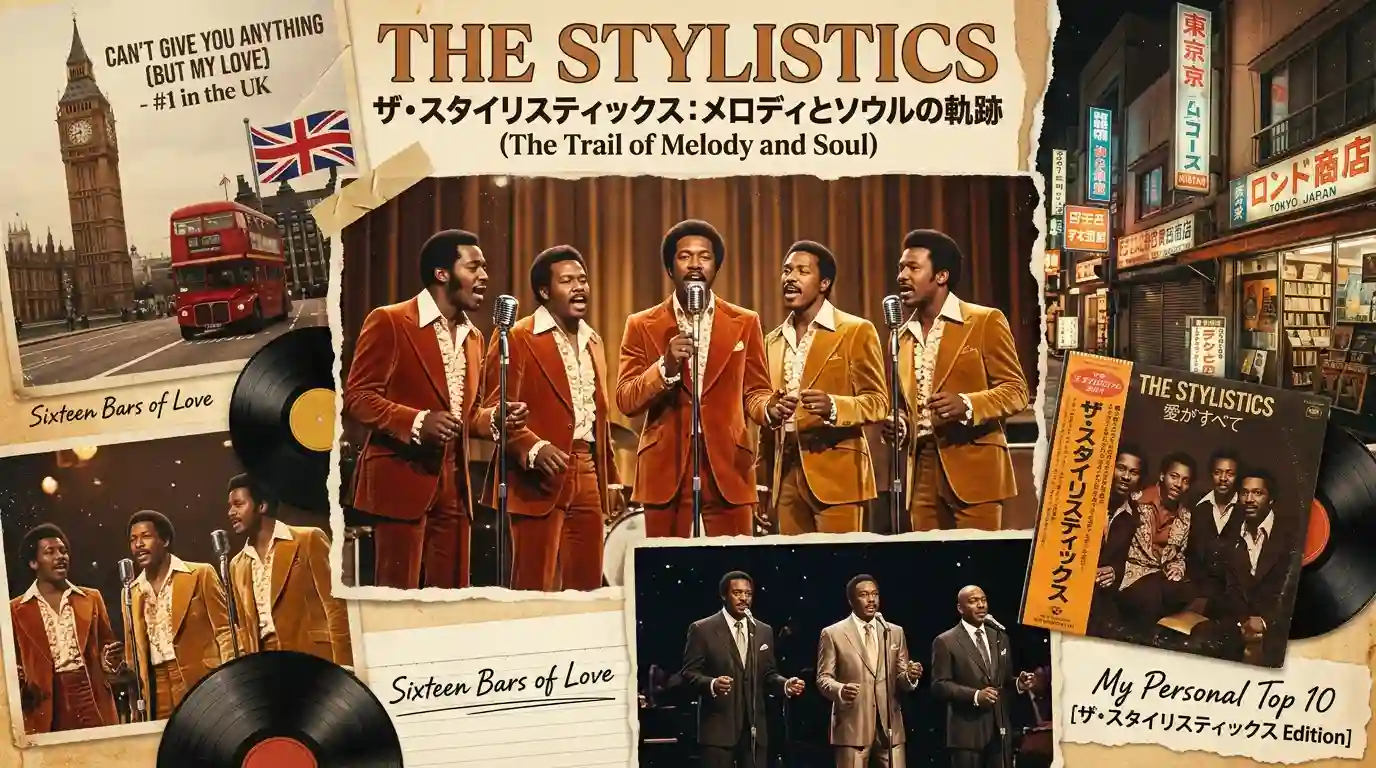
At No. 2 in My Personal Best 10: The Stylistics is “Can’t Give You Anything (But My Love),” known in Japan as “Ai ga Subete” (“Love Is Everything”).
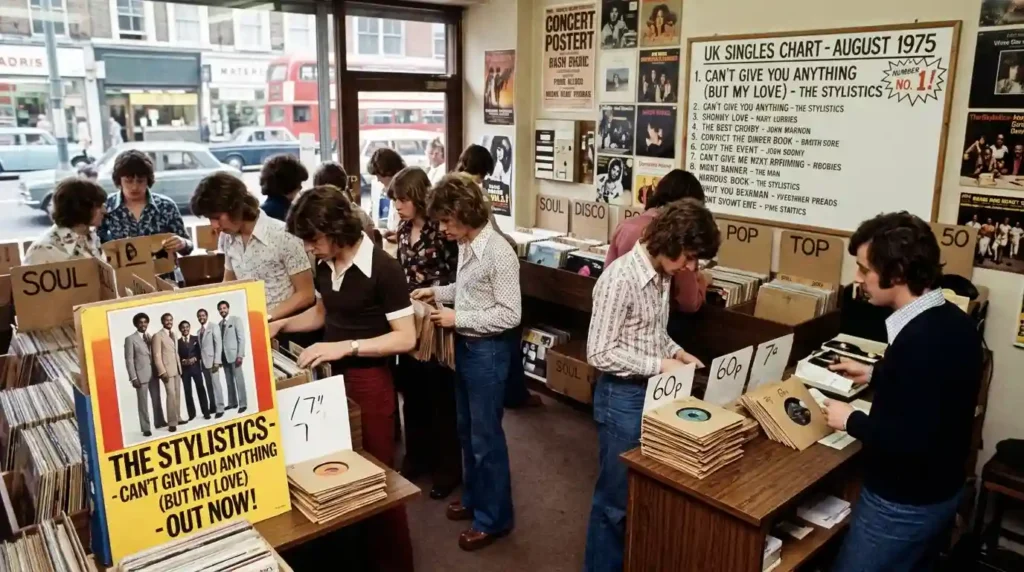
The song appeared on the album Thank You Baby, released in May 1975, and was issued as a single that July. Beginning with the chart dated August 16, it spent three consecutive weeks at No. 1 on the UK Singles Chart. It became The Stylistics’ only UK No. 1 single.
In the United States, however, the single reached No. 51 on the Billboard Hot 100 and No. 18 on the R&B chart. It also became popular in Japanese discos and remains one of the group’s best-loved recordings.
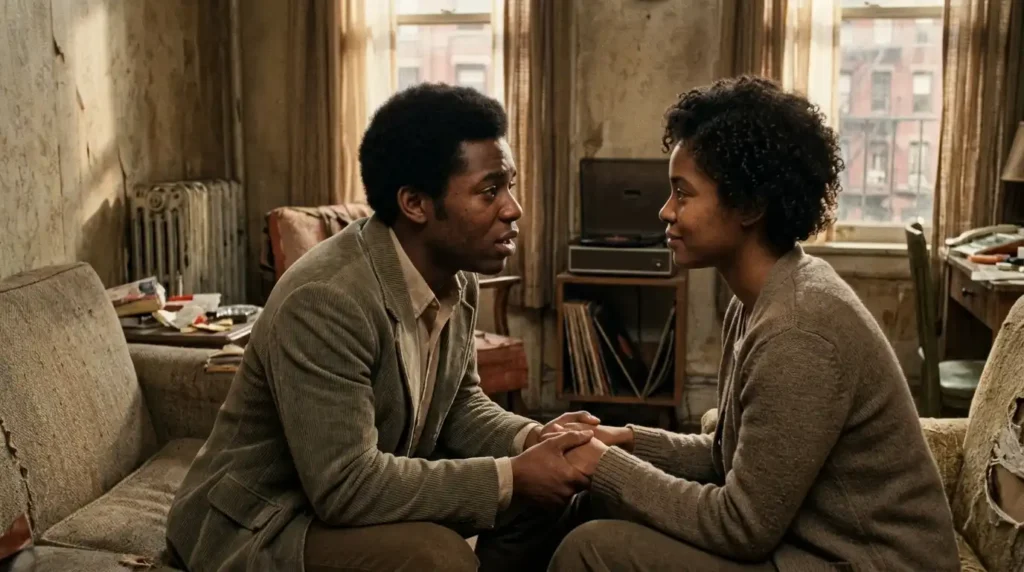
The Japanese title, “Love Is Everything,” sounds like a confident declaration about the importance of love. The original English title, however, carries a more personal meaning: the singer has little of material value to offer, but he can give the woman he loves his devotion.
It is a remarkably candid confession from a man who is far from wealthy. Yet the music surrounding his words is surprisingly bright and exuberant.
A Free Interpretation of the Lyrics
I wish I could surround you with luxury and beautiful gifts.
I'd love to make you feel like royalty wherever we go.
But I'm an ordinary man without much money to spare.
What I feel for you is something no fortune could measure.
And I intend to cherish you for every day of my life.
First, Enjoy the Official YouTube Video
Credits
🎵 The Stylistics – "Can't Give You Anything (But My Love)"
Video courtesy of Unidisc Music (Official YouTube Channel)
About the Song
Released in 1975, this Stylistics classic spent three consecutive weeks at No. 1 on the UK Singles Chart.
With sweeping strings and an infectious rhythm, it celebrates enduring devotion over material wealth.
Why Does a Poor Man’s Confession Sound So Joyful?
One of the first things that strikes the listener about “Can’t Give You Anything (But My Love)” is the sheer brightness of the arrangement. A buoyant rhythm carries layers of strings and brass, while an irresistible melody moves effortlessly through the song.
Reading the lyrics alone, one might expect a quiet, melancholy ballad. Instead, the recording has an energy that makes it almost impossible to sit still. The words describe financial limitations, while the music seems to overflow with abundance. That contrast gives the song much of its distinctive character.
A Song of Pride Rather Than Sorrow
The narrator makes no attempt to conceal his financial circumstances. He openly acknowledges that he cannot afford expensive jewelry, luxurious clothing, or a chauffeur-driven limousine for the woman he loves.
Yet there is nothing particularly self-pitying about his confession. He is neither asking for sympathy nor complaining about his situation. Instead, he concentrates on the commitment he believes he can make.
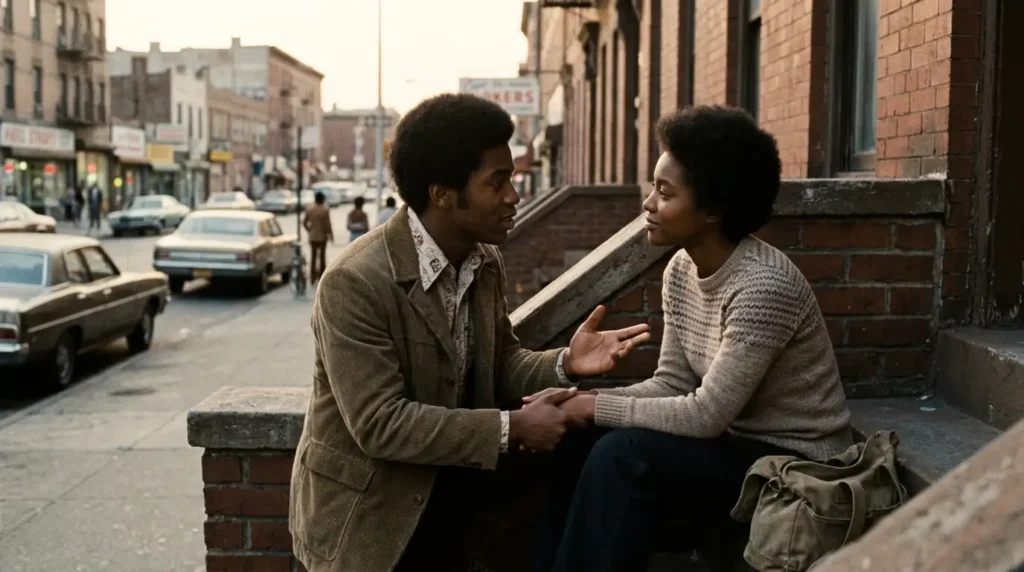
What makes his attitude compelling is that he refuses to measure his own worth entirely in terms of possessions. He may lack money, but he believes he can still take pride in how deeply he cares for another person. That quiet self-respect fits beautifully with the recording’s cheerful character.
Two Titles, Two Different Perspectives
The Japanese title, “Ai ga Subete,” literally means “Love Is Everything.” It is short, memorable, and emphatic, suggesting a universal statement about what matters most in a romantic relationship.
The original title, “Can’t Give You Anything (But My Love),” is more specific. Rather than expressing an abstract ideal, it places us directly in the circumstances of a man speaking honestly to his partner about what he cannot provide.
The Japanese title emphasizes the value of love itself, while the English title introduces a particular human predicament. Understanding both perspectives brings the song’s central character into sharper focus.
1975: The Stylistics Were Entering a New Musical Era
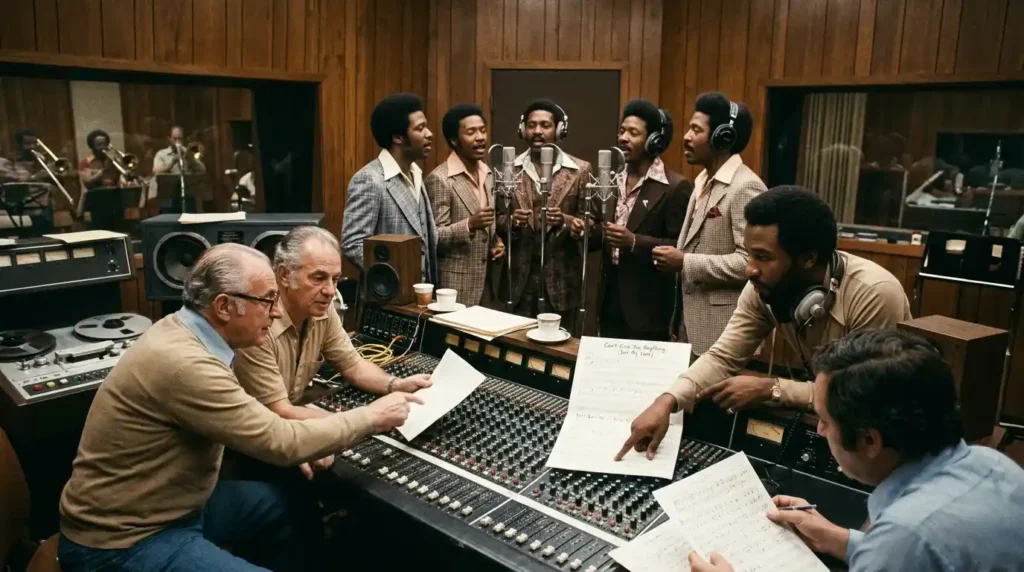
By the time “Can’t Give You Anything (But My Love)” appeared in 1975, The Stylistics were undergoing a significant musical transition. Having moved beyond their earlier working relationship with producer Thom Bell, the group was recording with a different team of producers and arrangers.
The single was produced by Hugo Peretti and Luigi Creatore, collectively known as Hugo & Luigi. The pair also shared songwriting credits with George David Weiss, while Van McCoy handled the arrangement.
The Energy Van McCoy Brought to the Recording
Van McCoy was a composer and arranger whose instrumental hit “The Hustle” became a major success in 1975. Closely associated with the development of disco, he was particularly skilled at combining dance-oriented rhythms with orchestral arrangements.
Those qualities are unmistakable in “Can’t Give You Anything (But My Love).” Over the steady pulse of drums and bass, strings and brass create a lively musical conversation that keeps the performance moving forward.
How the Strings and Rhythm Work Together
The strings are far more than decorative accompaniment. Short phrases embellish the melody, sometimes seeming to answer the lead vocal. Bright brass accents introduce further variety and help give the arrangement its distinctive sparkle.
Meanwhile, the bass and drums maintain a consistent rhythmic foundation. Even when several instruments are playing at once, the music never loses its sense of direction. The clarity of that underlying groove holds the arrangement together.
How It Differs from the Thom Bell Years
Many of the group’s earlier recordings with Thom Bell were ballads built around delicate emotional expression. Songs such as “You Are Everything” and “You Make Me Feel Brand New” used the relationship between the voices and the orchestra to explore the complexities of romantic love.
In “Can’t Give You Anything (But My Love),” the dance element takes a much more prominent role. Nevertheless, the change in production personnel did not erase the group’s identity. Their melodic appeal and polished vocal harmonies provided a natural bridge between the earlier sound and this new direction.
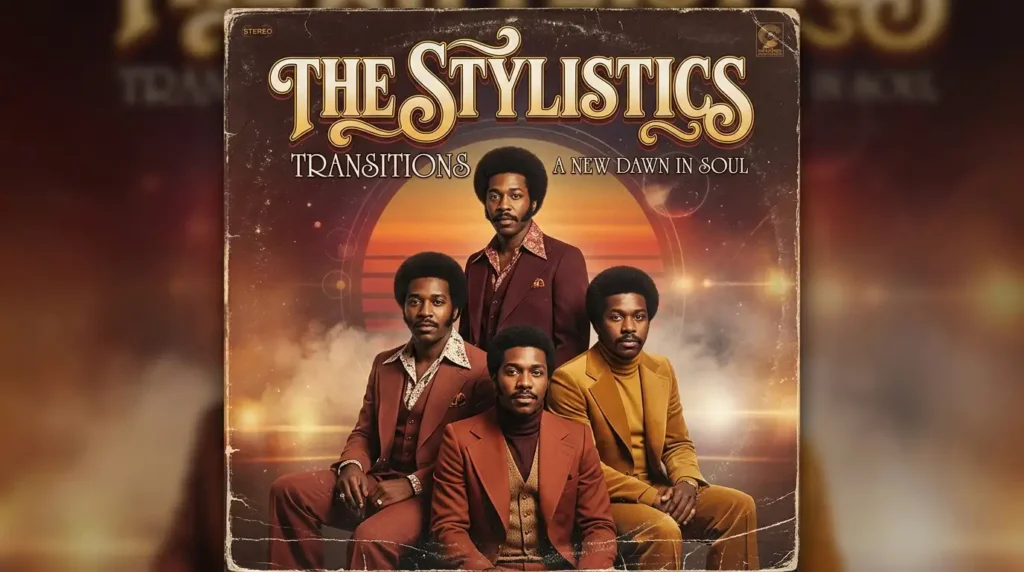
Russell Thompkins Jr.: A Voice That Makes Every Word Believable
At the heart of “Can’t Give You Anything (But My Love)” is the unmistakable voice of Russell Thompkins Jr. His gentle, high-register delivery retains its characteristic beauty, standing out clearly even against the song’s energetic instrumental backing.
What is particularly interesting is that his performance never becomes unnecessarily solemn. Although the lyrics describe a difficult personal situation, Russell sings with a lightness that feels perfectly at home within the upbeat arrangement.
Expressing Emotion Through Melody, Not Volume
Singing in a high register is not the same as expressing emotion through sheer intensity. Even as the melody rises, Russell maintains the softness of his tone, allowing one phrase to flow smoothly into the next.
The chorus repeats its central message, but he never seems to be forcing the listener to accept it. Instead, his natural phrasing and clear melodic delivery give the narrator’s feelings an understated sincerity.
The Unity Created by the Backing Vocals
The backing harmonies also play an essential role. As the voices come together, what begins as one man’s private confession grows into something that listeners can share and enjoy collectively.
The chorus is especially memorable because of the direct relationship between its words and melody. The combination of a distinctive lead singer and carefully blended harmonies remains one of The Stylistics’ defining strengths.
Can Love Alone Sustain a Life Together?
There is another way to consider the message of this song: from the perspective of everyday reality.
The narrator promises lifelong devotion. Yet in the real world, affection cannot solve every practical difficulty. Housing, food, healthcare, and preparation for the future all require financial resources. Building a life together involves responsibilities that cannot be met through emotion alone.
Still, dismissing the song as unrealistic romantic idealism would miss its point. The lyrics are not intended as a plan for managing a household. They concern what one person can honestly communicate to another about his intentions and feelings.
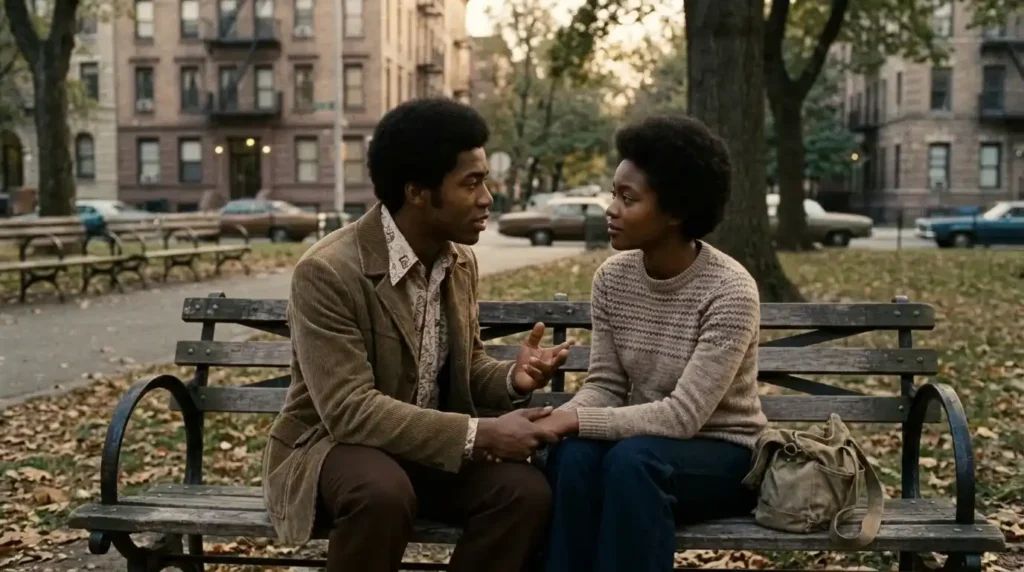
The Honesty of Not Promising What You Cannot Provide
The narrator does not promise a luxurious lifestyle that he has no realistic prospect of providing. He acknowledges his limitations while speaking confidently about his devotion to his partner.
Of course, even a promise of everlasting love cannot guarantee what the future will bring. Nevertheless, there is value in communicating what matters most to us and the kind of relationship we hope to build.
The Price of a Gift and the Depth of Affection
A gift can express a genuine desire to make someone happy. There is nothing inherently wrong with giving an expensive present. Its price, however, cannot reliably measure the depth of the giver’s affection.
Financial stability is essential to everyday life, but it is not the only measure of a meaningful relationship. The narrator’s words invite us to distinguish material comfort from emotional commitment.
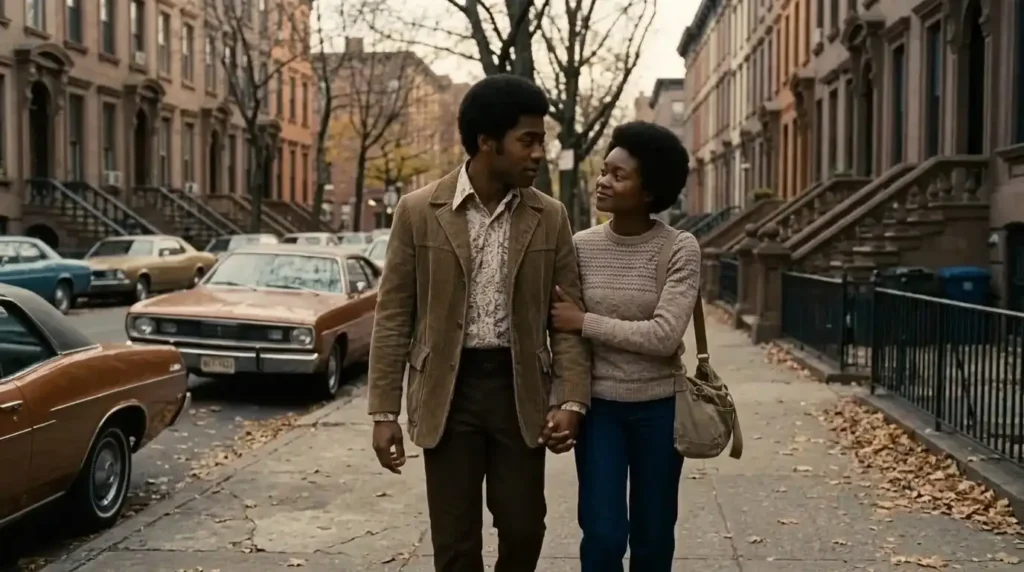
A British Chart Triumph and a Lasting Connection with Japan
In Britain during 1975, dance music influenced by soul and disco was attracting considerable attention. “Can’t Give You Anything (But My Love)” was particularly well suited to that musical climate.
Its success on the UK chart demonstrated that British audiences continued to embrace The Stylistics even as the group’s sound moved beyond the ballad-oriented style of their early years.
A Dance Favorite in Japan
Disco culture was also gaining momentum in Japan during the mid-1970s. The Japanese single release of “Can’t Give You Anything (But My Love)” reportedly featured illustrations showing how to perform the Hustle, the dance that was fashionable at the time.
More than three decades later, in 2006, a version with modified lyrics appeared in a Japanese television commercial for Gatsby men’s hairstyling products, featuring actor Takuya Kimura. The advertisement introduced the familiar melody to another generation of listeners.
Rather than remaining a recording associated exclusively with the 1970s, the song has continued to find a place in the everyday cultural experiences of different generations.
Final Thoughts
“Can’t Give You Anything (But My Love)” captures The Stylistics exploring new musical possibilities in the mid-1970s. Van McCoy’s arrangement and Russell Thompkins Jr.’s distinctive vocals create a recording that combines the excitement of a dance number with the melodic beauty for which the group had become famous.
The man portrayed in the lyrics is equally memorable. He has neither wealth nor social status to boast about, but he wants to remain faithful to his feelings. There is something deeply human about that desire, and it continues to resonate across generations.
Perhaps what matters most is not what we possess, but what we promise another person—and how faithfully we honor that promise.
“Can’t Give You Anything (But My Love)” expresses that simple but meaningful question through a melody that is almost impossible not to sing along with.

音楽ファン同士の交流・リクエストはこちら / Connect & Request Songs Here