🌐 English|🌐 日本語
The Stylistics: Their Story and Musical Journey
- 🎧 Listen to This Article
- No. 4: “You Are Everything”
- First, Listen to the Official YouTube Video
- The Psychology Behind a Case of Mistaken Identity
- Why Does He Compare Other Women to Her?
- The Emotional Power of the Repeated Chorus
- Thom Bell and the Sound of Philadelphia Soul
- Russell Thompkins Jr.’s Falsetto and the Recorded Harmonies
- The Debut Album and Changes in the Production Team
- Final Thoughts
🎧 Listen to This Article
Enjoy an audio introduction to the key themes of No. 4 in My Personal Best 10: The Stylistics, “You Are Everything.”
Before reading, discover the emotions behind the lyrics, Russell Thompkins Jr.’s distinctive falsetto, and Thom Bell’s elegant arrangement.
🎵 English Narration
Listen to an English-language overview of this article.
🎶 Japanese Narration
Listen to a Japanese-language overview of this article.
Listening before reading offers a helpful introduction to the song’s emotional complexity and the musical qualities explored in the article.
No. 4: “You Are Everything”
No. 4 in My Personal Best 10: The Stylistics is “You Are Everything.”
Featured on the group’s self-titled debut album, The Stylistics, released in 1971, the song was also issued as a single that year. In January 1972, it reached No. 9 on the Billboard Hot 100 and peaked at No. 10 on the R&B singles chart. Its success helped establish The Stylistics as a significant presence in the American pop music scene.
Written by Thom Bell and Linda Creed, the song begins with a man spotting a woman who resembles someone he loves and instinctively calling out her name. Through this ordinary incident, the writers explore the complicated emotions that can accompany love.

The title seems to express a straightforward declaration of devotion. Yet the lyrics reveal more than the happiness of loving someone. They also portray a man struggling with the realization that one particular woman continues to occupy his thoughts.
A Personal Interpretation of the Lyrics
Today, I saw a woman who looked so much like you. Even the way she walked was familiar, and before I knew it, I called your name.
When I realized she was a stranger, embarrassment washed over me, followed by an overwhelming longing for you.
Every face seems to bring back memories of our time together. No one else can fill the emptiness you have left in my heart.
No matter how hard I try, I cannot forget you. To me, you are everything.
First, Listen to the Official YouTube Video
Credits
Song: "You Are Everything"
Artist: The Stylistics
Released: 1971
Album: The Stylistics (1971)
Songwriters: Thom Bell and Linda Creed
Producer: Thom Bell
YouTube Channel: The Stylistics (Official Artist Channel)
Video Format: Official Lyric Video
🎼 About the Song
This romantic ballad portrays a man who mistakes a stranger for the woman he loves. Russell Thompkins Jr.'s distinctive falsetto and Thom Bell's graceful arrangement transform the emotionally charged story into a memorable soul recording.
The Psychology Behind a Case of Mistaken Identity
One of the song’s most effective qualities is the way it reveals the protagonist’s feelings through a simple action rather than an abstract explanation.
He calls out the woman’s name before confirming her identity. He was not deliberately searching for her, yet the sight of someone familiar provokes an immediate reaction.
How a Familiar Walk Can Awaken Memories
We recognize people close to us through more than their faces. The length of their stride, the movement of their bodies, and the way they stand can all become familiar through years of shared experience.

The reference to the woman’s walk is therefore significant. Rather than merely describing a resemblance in appearance, it suggests how deeply the protagonist remembers the smallest details of the person he loves.
What His Embarrassment Reveals
When the man realizes his mistake, he feels embarrassed. The lyrics acknowledge that reaction without explaining precisely why he feels that way.
Perhaps his discomfort comes not only from calling out to a stranger but also from discovering how strongly the woman still occupies his mind. An insignificant mistake has exposed feelings he may not have fully recognized in himself. This interpretation gives the brief encounter an additional psychological dimension.
Why Does He Compare Other Women to Her?
Later in the song, the protagonist admits that he continually compares the women he sees with the one he loves.
This does not necessarily mean that the other women lack attractive qualities. He is not searching for an ideal partner in any general sense. He is searching for one particular person, and no one else can become that individual, regardless of her qualities.

The Real Person and the Person Preserved in Memory
When people look back on a past relationship, they do not necessarily remember every experience with equal clarity. Certain moments remain especially vivid, and those memories may make the person involved seem increasingly exceptional.
The protagonist may be comparing the women around him with an image he has carefully preserved in his mind. Yet it is impossible to compare a real person in the present with an idealized figure from the past on entirely equal terms.
The Boundary Between Devotion and Attachment
Continuing to love someone over a long period can be understood as genuine devotion. However, when those feelings begin to affect how a person relates to others, they may also suggest a form of emotional attachment that is difficult to overcome.
The lyrics do not explain why the two people are apart or how the woman currently feels about him. It would therefore be misleading to describe the protagonist definitively as a man unable to recover from a breakup.
What the song portrays is an emotional state in which affection for someone cannot easily be brought under conscious control. Whether listeners regard that condition as admirable or troubling remains open to interpretation.

The Emotional Power of the Repeated Chorus
The chorus of “You Are Everything” is built around remarkably simple language. The protagonist does not list the woman’s virtues or explain in detail why he loves her. Instead, he repeatedly expresses how essential she is to him.
Because the words are so economical, the melody and vocal performance become especially important. Even when the same phrase returns, changes in pitch and accompaniment can alter the emotional impression it creates.
The contrast between the verses, which describe a specific incident, and the chorus, which directly expresses the protagonist’s feelings, gives the song a clear dramatic shape. Thom Bell and Linda Creed convey a complicated state of mind without burdening the composition with excessive explanation.
Thom Bell and the Sound of Philadelphia Soul
Thom Bell, who produced and arranged “You Are Everything,” was one of the defining figures of Philadelphia soul. By combining the rhythmic foundations of R&B with orchestral instrumentation, he created recordings that were both immediately accessible and meticulously constructed.
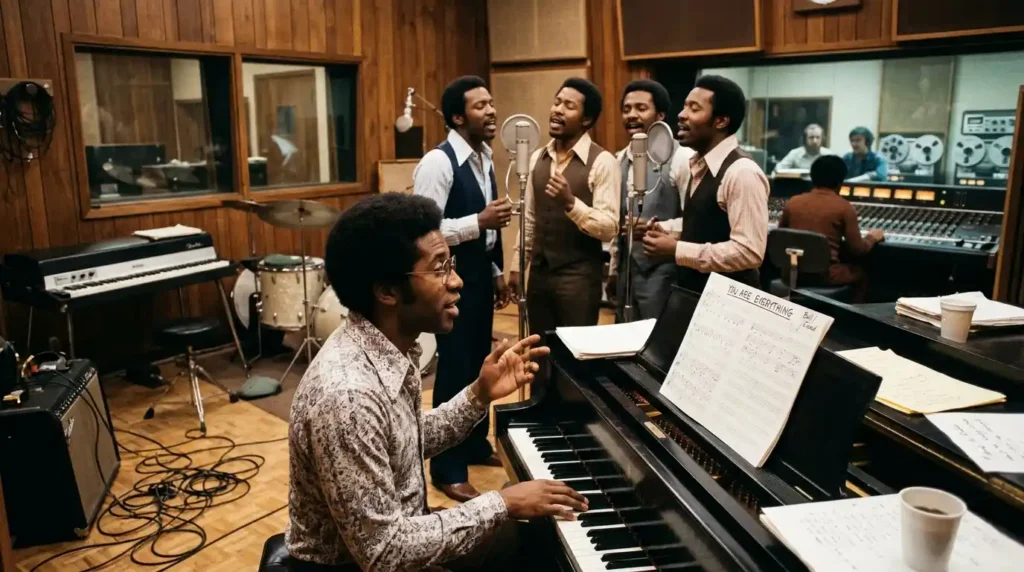
In this recording, the sadness suggested by the lyrics is not expressed through dark instrumental textures alone. A steady rhythm and elegant accompaniment keep the music moving without allowing it to become excessively sentimental.
The Contrast Between the Opening Verse and the Chorus
At the beginning, Russell Thompkins Jr. sings almost as though he were confiding an experience to someone nearby. The melody follows the natural movement of the words, drawing listeners into the story.
As the chorus arrives, the vocal line rises and the accompaniment becomes fuller. The musical development mirrors the change in the lyrics, moving from a description of events toward a direct expression of emotion.
The Role of the Strings
The string arrangement connects the spaces between melodic phrases and supports the voice as it moves into a higher register. Rather than serving merely as luxurious decoration, the strings help maintain the continuity of the performance.
Equally important is the clarity of the lead melody, even when several instruments are playing together. Bell’s arrangement allows individual parts to become prominent at carefully chosen moments without overwhelming the singer.
The Stability Provided by Bass and Drums

Although the song moves at a relaxed ballad tempo, its underlying pulse remains distinct. The bass and drums provide a dependable rhythmic foundation, preventing the orchestral layers from obscuring the composition’s structure.
This combination of orchestral richness and R&B rhythm became one of the recognizable characteristics of Philadelphia soul during the 1970s.
Russell Thompkins Jr.’s Falsetto and the Recorded Harmonies
Lead vocalist Russell Thompkins Jr. is celebrated for his clear, high-register singing. In “You Are Everything,” his voice becomes increasingly prominent as the melody rises, yet he never relies on sheer vocal force.
His smooth phrasing and gentle tone allow him to communicate powerful feelings while retaining the intimacy of someone speaking directly to the person he loves.
The Urgency of a High Voice Without a Shout
Thompkins’s falsetto is far more than a technique for reaching high notes. Even as the chorus climbs, his tone remains controlled, preserving the melodic elegance of the performance.
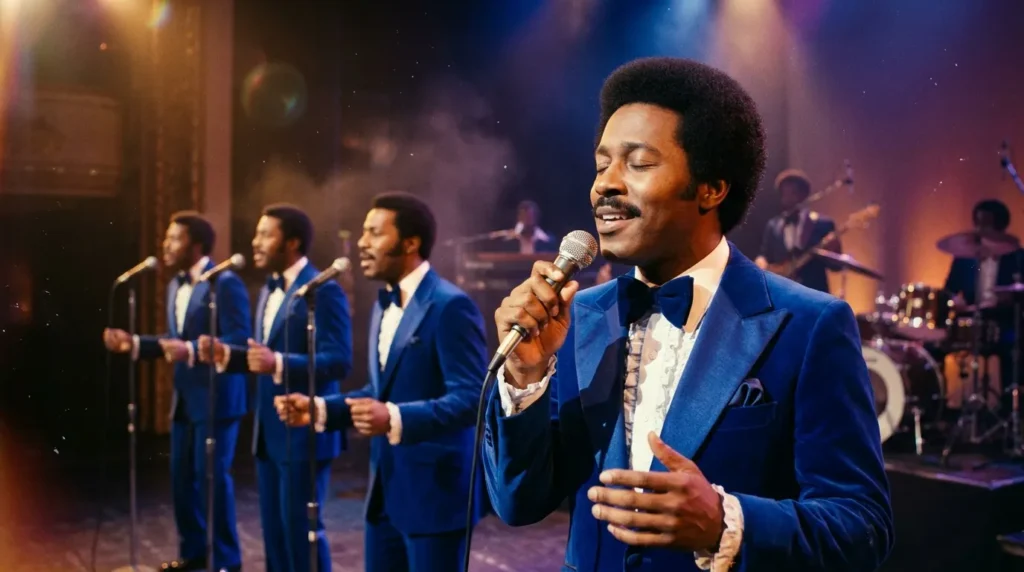
His delivery suggests a man examining his own emotions rather than confronting someone with an impassioned outburst. The sense of urgency comes from his handling of tone and melody, not from volume alone.
The Background Vocals of the Early Recordings
The harmonies supporting the lead vocal are another essential part of the recording. Several vocal parts combine to give the chorus greater depth and resonance.
It is worth noting that early Stylistics recording sessions sometimes involved backing singers and production personnel who were not members of the group. It would therefore be inaccurate to assume that every harmony heard on the records was performed exclusively by the group’s original members.
Such studio practices also contributed to the carefully developed sound that became associated with Philadelphia soul.
The Debut Album and Changes in the Production Team
The Stylistics formed in Philadelphia in 1968, emerging from two earlier vocal groups. After their early single “You’re a Big Girl Now” attracted attention, the group signed with Avco Records and began working with Thom Bell.
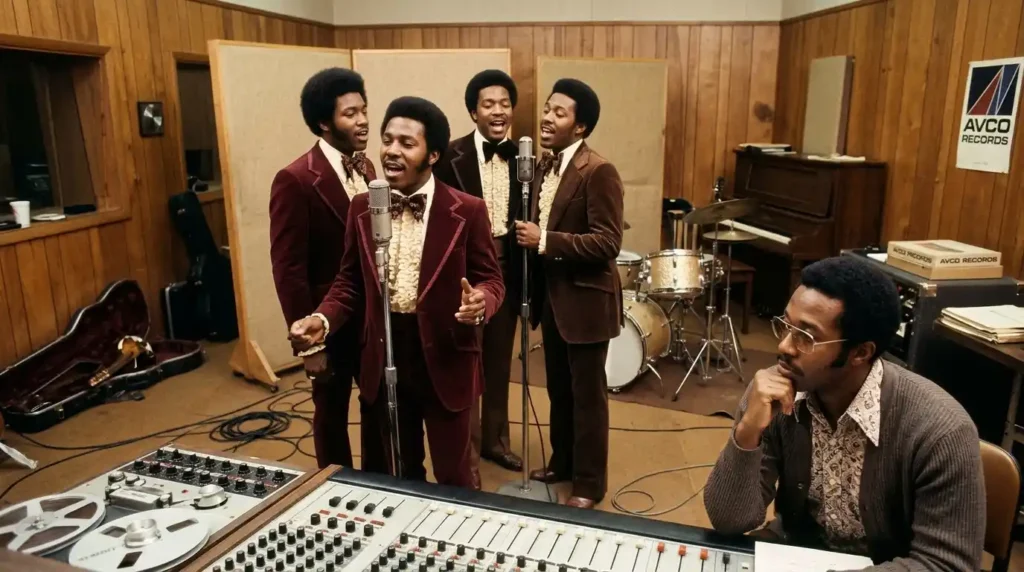
The Early Musical Identity Created by Bell and Creed
The group’s 1971 debut album, The Stylistics, included songs that would become widely recognized, among them “Stop, Look, Listen (To Your Heart)” and “Betcha by Golly, Wow.”
Bell and Creed combined lyrics about familiar romantic experiences with sophisticated melodies and arrangements. “You Are Everything” stands as a particularly strong example of how their songwriting partnership contributed to the group’s early success.
“You Make Me Feel Brand New” and the New Production Team in 1974
Bell and Creed continued their collaboration, and “You Make Me Feel Brand New” reached No. 2 on the Billboard Hot 100 in 1974. That recording was also produced by Thom Bell.
Meanwhile, on the 1974 album Let’s Put It All Together, Hugo & Luigi handled production of the newer recordings, with Van McCoy contributing arrangements and conducting. The album also included the Bell-produced “You Make Me Feel Brand New,” making it a useful example of the transition between production teams.
Comparing the early Bell and Creed recordings with the group’s later material offers an opportunity to hear how The Stylistics’ musical approach developed over time.
Final Thoughts
“You Are Everything” captures some of the defining qualities of early 1970s Philadelphia soul with remarkable clarity.
The lyrics begin with a recognizable human experience, the melody follows the growing intensity of the protagonist’s feelings, and Thompkins’s falsetto gives the song its unmistakable identity. Together, these elements create a ballad that is easy to remember yet continues to reward attentive listening.

The title itself can be understood either as a joyful declaration of love or as an expression of feelings the protagonist cannot fully resolve.
Is loving someone deeply the same as being unable to forget them?
Behind its captivating melody, “You Are Everything” explores an emotional experience that cannot be explained by a simple celebration of romance alone. That complexity remains one of the song’s most compelling qualities.

音楽ファン同士の交流・リクエストはこちら / Connect & Request Songs Here