
- 🎧 Listen to This Article
- September 14 Is GAO’s Birthday
- “Sayonara” — Realizing the Weight of Lost Time Only After Letting Go
- When I First Heard This Song
- A Farewell Song That Keeps Moving Forward
- The Unmistakable Individuality of GAO
- 1992 — A Major Hit Carried Far Beyond a TV Drama
- Listening to “Sayonara” Again More Than 30 Years Later
- Happy Birthday, GAO!
🎧 Listen to This Article
You can quickly explore the key points of this article through narration.
Recommended if you would like to get a feel for “Sayonara” and the overall flow of the article before reading.
🎵 English Narration
Listen to an English narration introducing the content of this article.
🎶 Japanese Narration
Listen to a Japanese narration introducing the content of this article.
Listening first can help you better understand the atmosphere of “Sayonara” and the key points of the article.
September 14 Is GAO’s Birthday
September 14 is GAO’s birthday. (Birth year undisclosed)
GAO is from Tokuyama, Yamaguchi Prefecture, now part of Shunan City. In 1990, GAO won the Grand Prix on NHK’s BS Young Battle and later made a solo debut.
Short hair, an androgynous look, and above all, a husky voice you could never forget once you heard it. GAO had an unmistakable presence in the Japanese music scene of the early 1990s.
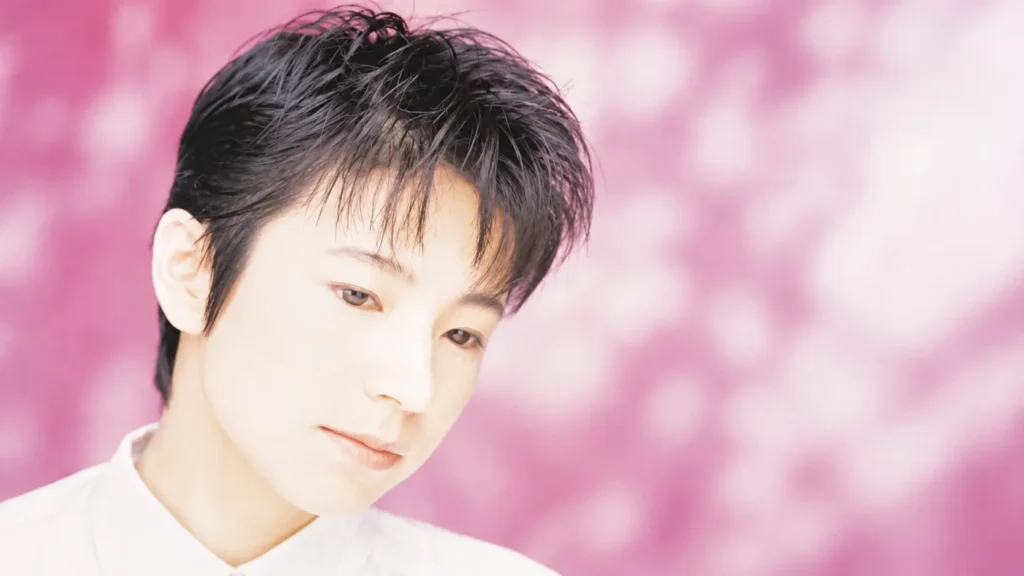
Whenever I think of GAO, the first song that comes to mind is “Sayonara.”
Released on April 21, 1992, it was GAO’s second single and was used as the theme song for the Nippon TV drama Suteki ni Damashite!. The single reached No. 3 on the Oricon weekly singles chart and remained on the chart for 47 weeks, becoming a long-running hit.
The lyrics were written by GAO, the music was composed by Kazuki Kai, and the arrangement was by Kaoru Yamauchi, Tokuo Inoue, and GAO. Despite the quiet sense of farewell suggested by the title “Sayonara,” the song has a strong forward momentum beneath its sadness.
“Sayonara” — Realizing the Weight of Lost Time Only After Letting Go
My Interpretation
I thought that if I went far enough away, I could forget you.
But the farther I go, the more vividly I remember the time we shared.
Our promises and memories must now be left in the past.
And yet, somewhere deep inside, I still long to return to those days.
Beyond our goodbye, the time we lost continues to shine in my heart.
💡 You might also like: View the original Japanese lyrics (External site)
If the lyrics are available only in Japanese, you can use your browser’s translation feature or an AI translation tool to understand their general meaning.
First, Watch the Official Music Video on YouTube
Official Video Credits
GAO — "Sayonara"
Lyrics: GAO
Music: Kazuki Kai
Arrangement: Kaoru Yamauchi, Tokuo Inoue, GAO
Original release: April 21, 1992
Theme song for the Nippon TV drama Suteki ni Damashite!
Video: GAO - Sayonara [OFFICIAL MUSIC VIDEO]
Source: VAP OFFICIAL MUSIC CHANNEL
In Two Lines
A major 1992 hit that combines the pain of farewell with a rock-tinged arrangement and GAO's distinctive voice.
Rather than sinking into sentimentality, GAO's forceful delivery gives the song a powerful, lingering impact.
When I First Heard This Song
| My Age | Elementary School | Junior High | High School | University | 20s | 30s | 40s | 50s | 60+ |
| Release Year | 1992 | ||||||||
| When I First Heard It | ● |
I probably first heard “Sayonara” around the time it was released in 1992. I was in my thirties then, in my eleventh year of working life.
Unlike my student days, work and family had become the center of everyday life. Even so, I continued listening to music whenever I could. It was during those years that I came across GAO’s “Sayonara.”
What First Drew Me In Was the Sound and the Voice
What caught my attention first was not so much the meaning of the lyrics, but the sound and the voice that reached me before the words did.
GAO’s vocal cuts sharply through the rock-tinged backing. It is not simply a matter of volume. There is both weight and edge in that slightly raspy voice. Its rough, unpolished texture makes the emotion of the song feel more immediate and real.

I have always had a weakness for voices like this. The contrast between the quiet impression created by the title “Sayonara” and the energy you actually hear in the song may also be one reason it stayed so firmly in my memory.
A Farewell Song That Keeps Moving Forward
The Farther You Go, the Clearer the Memories Become
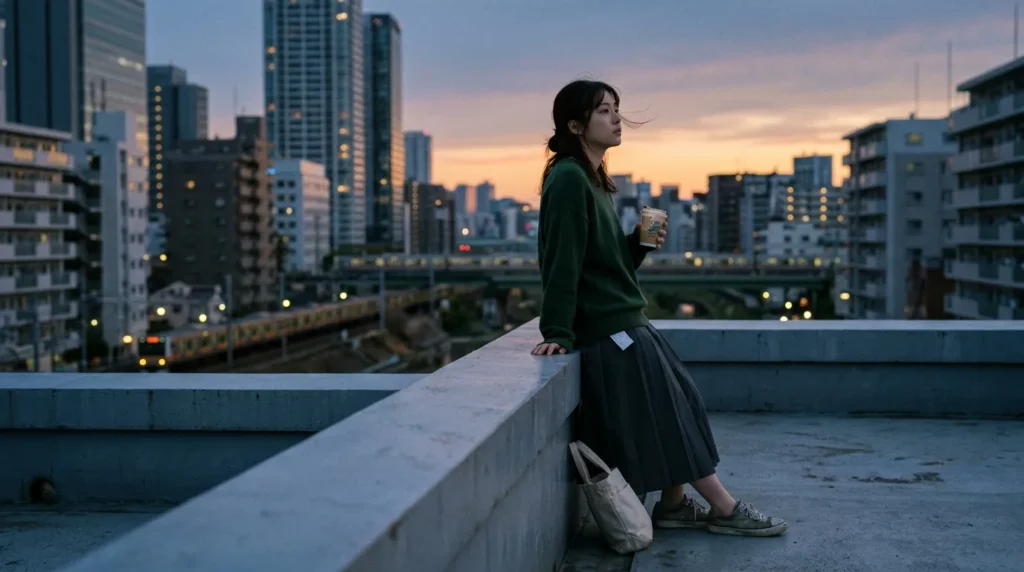
“Sayonara” is about a love that has ended and a heart that cannot completely let go. You tell yourself that distance will help you forget, only to find that the farther away you go, the more vividly you remember the time you shared. That contradiction lies at the heart of the song.

You know there is no going back. Yet your heart still turns toward the past. Deciding to end a relationship and losing your feelings for someone are not the same thing.
A Sound That Refuses to Sink into Sadness
The music itself, however, never stands still in grief. The rhythm pushes forward, and the arrangement keeps the emotion from becoming overly heavy. GAO does not hold those feelings inside, but sings as though releasing them into the open.
It is a song about farewell, yet loss is not the only feeling that remains when it ends.
There is sadness in holding on to the past, but also a determination to move beyond it. That contrast gives “Sayonara” a character quite different from a conventional heartbreak ballad.
The End of a Relationship and the End of a Feeling
A relationship can end long before the feelings do.
Sometimes it is only after parting that we realize how much the ordinary time we spent together actually meant. That is the emotional space “Sayonara” captures. Because this is not an extraordinary experience but something almost anyone can understand, the song still feels relevant decades after its release.
The Unmistakable Individuality of GAO
A Husky Voice You Recognize Instantly
The word “husky” alone does not fully describe GAO’s voice. There is depth in the lower register and tremendous energy when the vocal opens up, while its raspy texture brings out the shadows within the melody.
In “Sayonara,” that vocal character becomes an essential part of the song itself. Sung in a smooth, polished voice, even the same melody would have created a very different impression.
GAO’s voice is not simply performing “Sayonara” — it is part of what makes the song “Sayonara.”
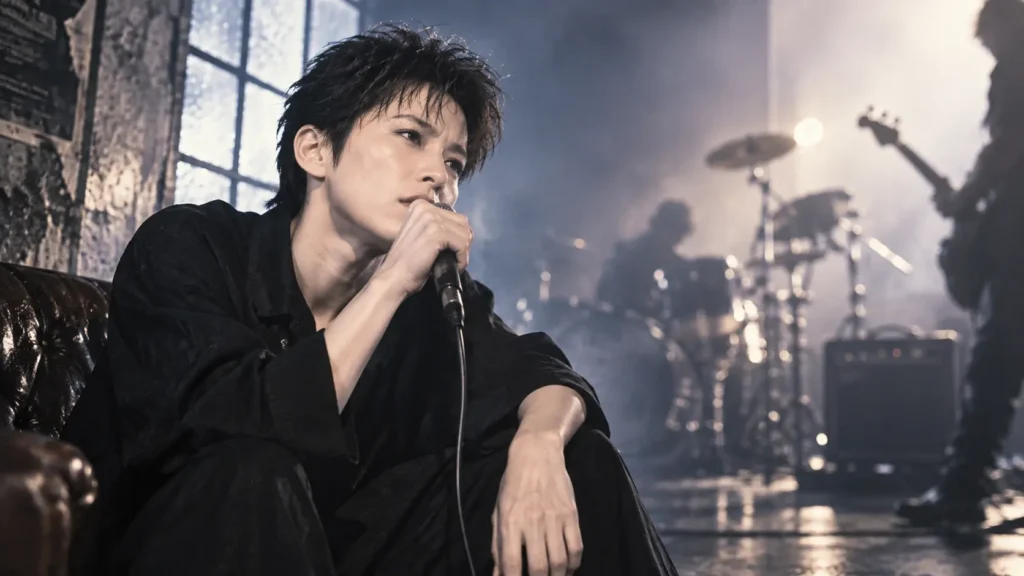
Even decades later, you know it is GAO almost as soon as the singing begins. Few singers have a voice distinctive enough to identify them before you even hear their name.
An Androgynous Look That Was Equally Striking
When GAO first appeared, the androgynous visual style was almost as striking as the voice. The short haircut and unisex fashion stood out immediately on Japanese television in the early 1990s.
Listening to “Sayonara” today, however, makes it clear that GAO’s appeal went far beyond appearance. The song works even without the visuals. That is where GAO’s real strength as a singer lies.
1992 — A Major Hit Carried Far Beyond a TV Drama
In 1992, Japanese television dramas and popular music were closely connected. A theme song could introduce an artist to millions of viewers and turn a single into a nationwide hit.
“Sayonara” was used as the theme song for the Nippon TV drama Suteki ni Damashite!. Its peak at No. 3 on the Oricon chart and its 47-week chart run show that the song became far more than a short-lived tie-in hit.
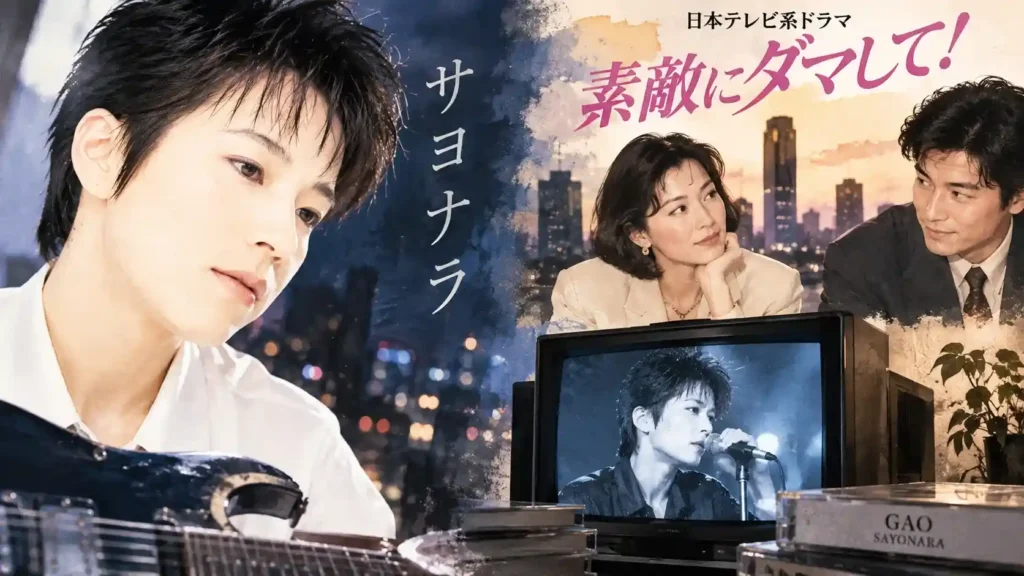
That same year, GAO made a first appearance on the 43rd NHK Kohaku Uta Gassen, performing “Sayonara.” There is little doubt that 1992 was a breakthrough year in GAO’s career.
Listening to “Sayonara” Again More Than 30 Years Later
I was in my thirties when I heard this song in 1992. Back then, what struck me first was GAO’s voice and the sound of the record itself.
Today, I also hear something I did not feel quite as deeply then: the sense of time that can never be recovered.
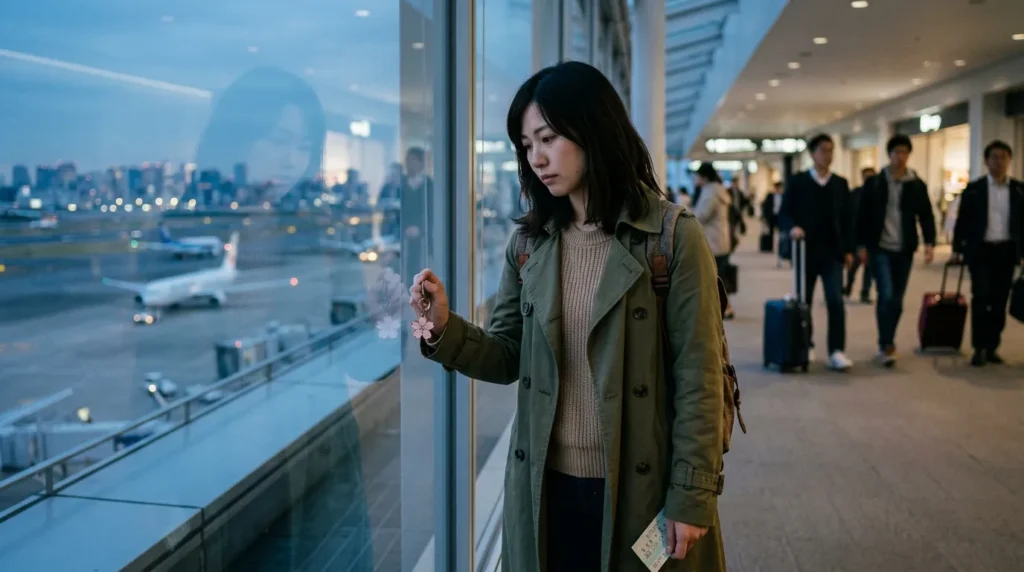
There are people and places in life that once seemed permanent simply because they were part of everyday existence. Before we realize it, they have become distant memories. Music, however, can bring the atmosphere of those days back within a few seconds.
Whenever I hear “Sayonara,” GAO’s voice brings the memories of 1992 back with it. I think this is one of the pleasures that comes from having listened to music for so many years.
Happy Birthday, GAO!
September 14 is GAO’s birthday. Today, I want to listen once again to the signature song “Sayonara.”
The impact I felt when I first heard it in 1992 has not faded after more than three decades. Today, the song does something more: it brings back the time in which I first heard it.
A song called “Sayonara” — goodbye — that somehow refuses to disappear from memory.
For me, that is GAO’s “Sayonara.”
Happy Birthday, GAO!


音楽ファン同士の交流・リクエストはこちら / Connect & Request Songs Here