- 🎧 この記事を音声で楽しむ
- My Personal Top 10: No. 1 — “It Never Rains in Southern California”
- Failure Beneath the Blue Sky — “It Never Rains in Southern California”
- 1972 — A World Beginning to Shift
- A Rich Era Where Folk, Rock, and Pop Intersected
- Albert Hammond — Born in London, Raised in Gibraltar
- Why Does Such a Bright Melody Feel So Sad?
- The Lyrics Reveal the True Feelings of Someone Whose Dream Has Failed
- The Appeal of the Japanese Title “California no Aoi Sora”
- From Father to Son — Another Albert Hammond
- That Blue Sky From Long Ago Has Never Really Changed
🎧 この記事を音声で楽しむ
この記事の要点を、ナレーションで手軽に確認できます。
本文を読む前に、『カリフォルニアの青い空』の雰囲気や記事全体の流れをつかみたい方におすすめです。
🎵 日本語ナレーション
この記事の内容を日本語で紹介する音声です。
🎶 英語ナレーション
この記事の内容を英語で紹介する音声です。
音声を先に聴くことで、『カリフォルニアの青い空』の世界観と記事の要点をよりつかみやすくなります。
■Want to learn more about Albert Hammond? ➡ Wikipedia
My Personal Top 10: No. 1 — “It Never Rains in Southern California”
We have finally reached the last song in my Albert Hammond Top 10.
My choice for No. 1 is “It Never Rains in Southern California”, released in 1972.
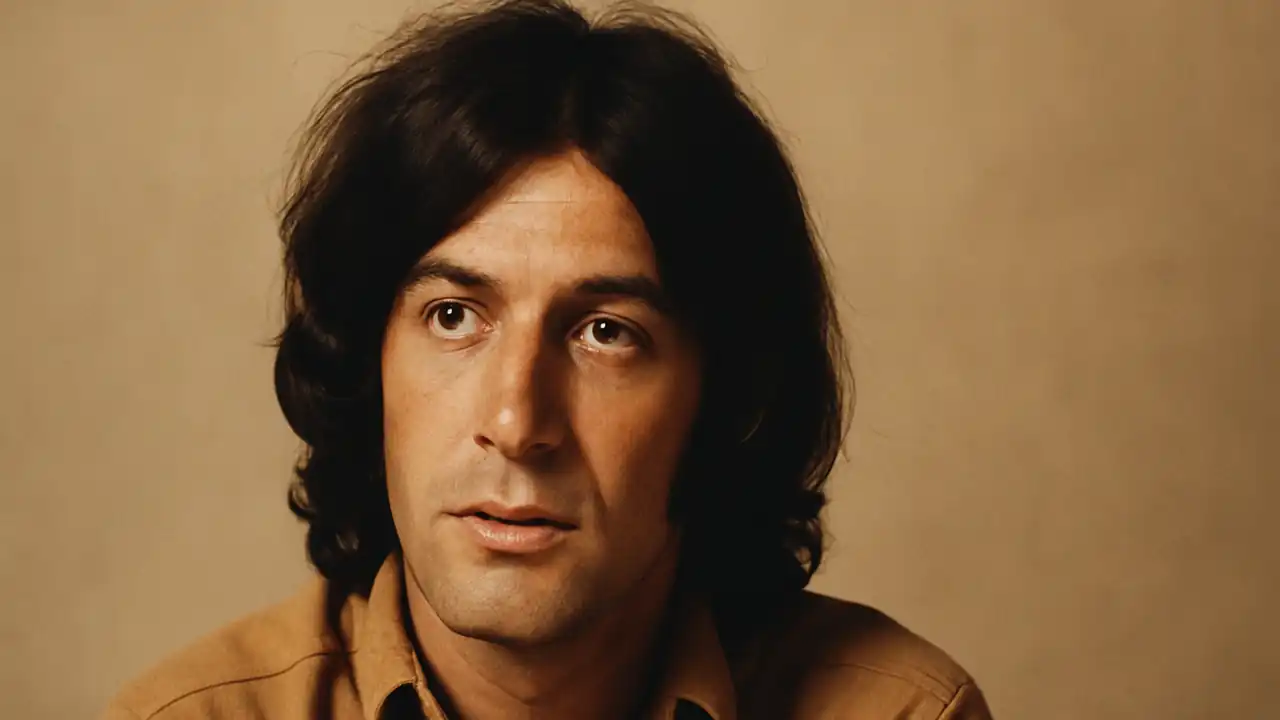
For me, there was hardly any doubt about placing this song at the top. I first heard it when I was in my second year of junior high school, and even after more than half a century, the feeling I had when I first encountered it has never really faded.
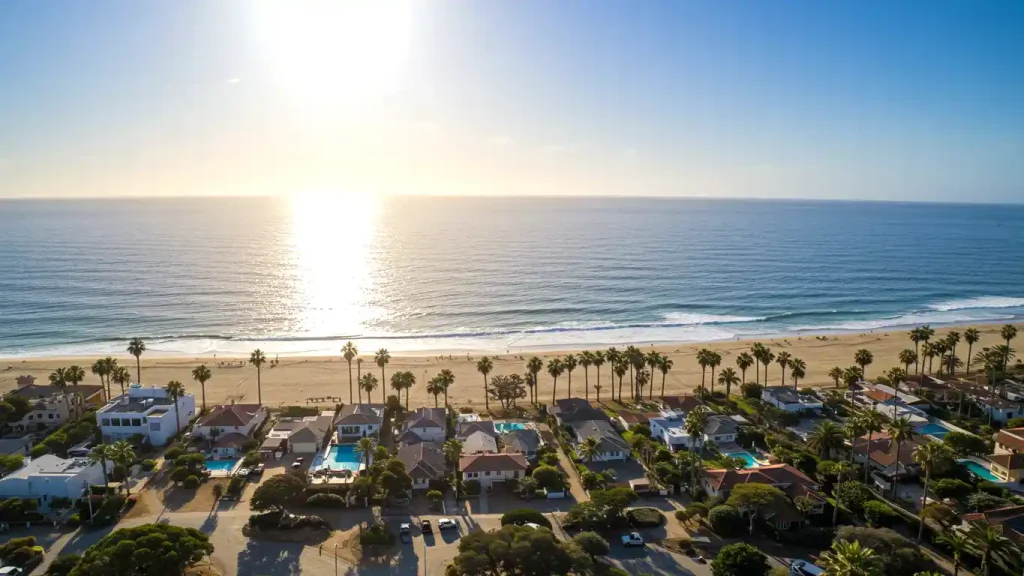
The melody evokes the bright, dry atmosphere of Southern California. Yet beneath that surface lies the disappointment of a young man who leaves home in pursuit of success. The coexistence of a refreshing sound and a bittersweet story may be the very reason this song has remained in my heart for so long.
🎥 Let’s begin with the original recording
An official audio version that lets us fully appreciate Albert Hammond’s voice and melody
🎵 Credits
Video: Albert Hammond Official
Audio: Epic Records / Sony Music Entertainment
Song: Albert Hammond “It Never Rains in Southern California”
Released: 1972
Written by: Albert Hammond, Mike Hazlewood
URL: https://www.youtube.com/watch?v=meDpNwem0Vo
Hammond does not sing in an overly dramatic way. Instead, his voice has a slightly dry texture that gives the story exactly the sense of loneliness it needs. If you listen only to the melody, it sounds like a bright pop song. The moment his voice enters, however, a feeling of solitude appears behind the scenery. That delicate balance is one of the song’s greatest strengths.
It is also worth seeing Albert Hammond himself perform the song
Here we can actually see Albert Hammond performing the song. His unadorned singing style and calm presence fit the song’s simplicity perfectly. For me, seeing footage of Hammond in his younger days brings the voice I once heard on the radio vividly back to life as a real person.
📺 Video Credits
Channel: Albert Hammond Official
Song: Albert Hammond “It Never Rains in Southern California”
Written by: Albert Hammond, Mike Hazlewood
URL: https://www.youtube.com/watch?v=FEMJ2AnEg6s
And then there is the symphonic version, reborn across the decades
In the symphonic arrangement, the original song’s restrained sound is expanded with rich orchestration. Even so, the central melody never loses its identity. If anything, the arrangement makes it even clearer just how strong the song’s melodic foundation has always been.
🎬 Credits
Video Title: Albert Hammond - It Never Rains in Southern California (Lyric Video)
Channel: Albert Hammond Official
Version: Symphonic arrangement
URL: https://www.youtube.com/watch?v=Mplc5c02JP8
Failure Beneath the Blue Sky — “It Never Rains in Southern California”
This is not a conventional success story. The song follows a young man who heads west, drawn by the glamorous world of show business, only to find that success does not come as easily as he imagined. He runs out of money and begins to lose even his sense of pride. That reality is set against the bright image of Southern California.
The phrase “it never rains in Southern California” is not simply a statement about the weather. A place that looks like paradise from afar can still become overwhelming once the rain of life begins to fall. That irony runs through the entire song.
Released in 1972, the song climbed to No. 5 on the Billboard Hot 100. It became the recording that introduced Albert Hammond to a much wider audience and remains the song most closely associated with his name.
1972 — A World Beginning to Shift
Vietnam, the U.S.–China rapprochement, and Watergate
The year 1972, when “It Never Rains in Southern California” was released, was also a year of major political and social change around the world.
While the Vietnam War continued, U.S. President Richard Nixon visited China from February 21 to 28. It was a historic visit by a sitting American president and marked a significant shift in Cold War international relations.
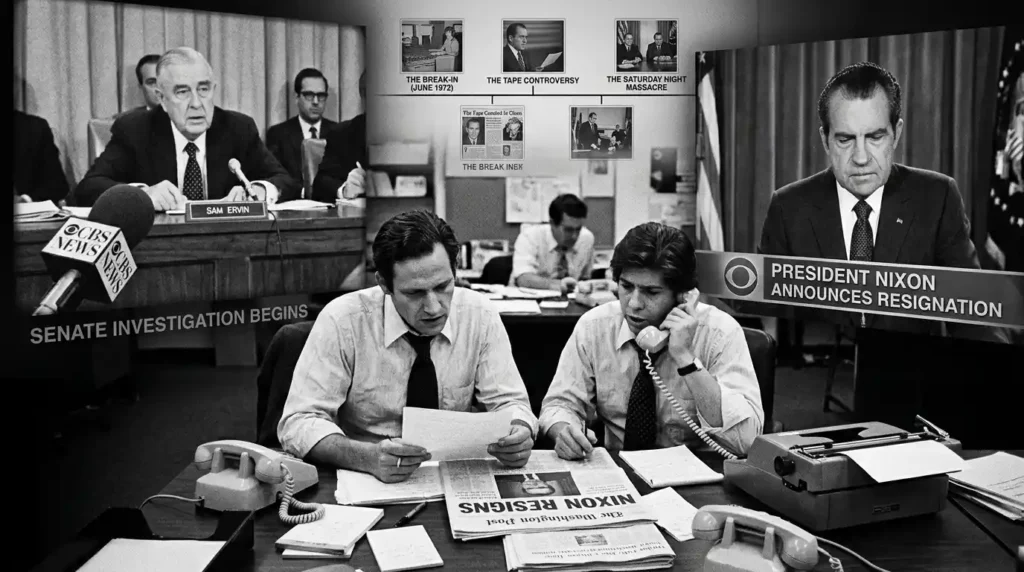
Just a few months later, on June 17, five men were arrested after breaking into the Democratic National Committee headquarters in the Watergate complex in Washington, D.C. The investigation eventually uncovered connections to the Nixon administration and efforts to conceal what had happened, leading ultimately to Nixon’s resignation in 1974.
Japan also experienced a series of unforgettable events
In Japan, the Sapporo Winter Olympics were held in February, with Japanese ski jumpers sweeping the gold, silver, and bronze medals in the 70-meter event. At the same time, the Asama-Sanso incident, which unfolded from February 19 to 28, shocked the entire country.
Then, on May 15, Okinawa was returned to Japanese administration. It was a year in which hopeful news and deeply troubling events existed side by side. I was a junior high school student at the time, and the memories of 1972 still carry a distinctive atmosphere for me.
A Rich Era Where Folk, Rock, and Pop Intersected
The music scene of 1972
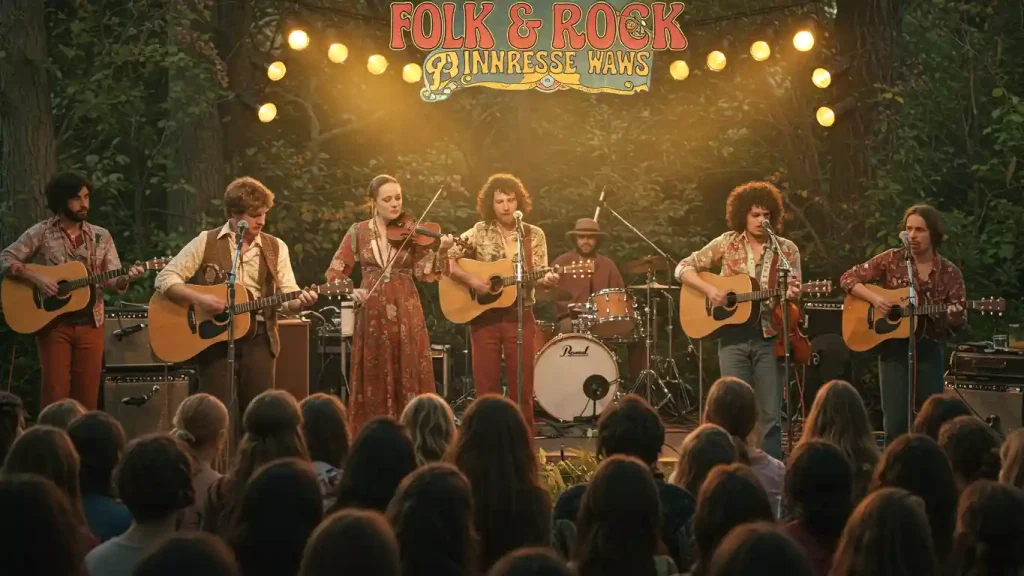
Musically, 1972 was an exceptionally rich year. Introspective singer-songwriters were reaching wide audiences, while rock music continued to branch out in many different directions.
Artists such as Carole King and James Taylor helped define a more personal, reflective style of pop music, while Elton John released “Rocket Man” in Britain. On the rock side, Deep Purple released Machine Head, while Pink Floyd were working on The Dark Side of the Moon, which would appear the following year.
Amid all of that musical variety, Albert Hammond created an international hit not through spectacle, but through an accessible melody and the story of one young man.
Albert Hammond — Born in London, Raised in Gibraltar
The road to becoming a musician
Albert Hammond was born in London on May 18, 1944. His parents were from Gibraltar, and the family was in Britain because of the wartime evacuation. After World War II, the family returned to Gibraltar, where Hammond grew up.
He began his musical career around 1960 and formed The Diamond Boys. He later moved to Britain and performed with groups including The Family Dogg, gradually developing his abilities not only as a singer but also as a songwriter.
An even more remarkable career as a songwriter
The success of “It Never Rains in Southern California” made Hammond widely known as a recording artist in his own right. But when we look back over his career, his achievements as a songwriter are just as impressive.
With Mike Hazlewood, he co-wrote “The Air That I Breathe,” which became a worldwide hit for The Hollies. Years later, he also co-wrote Starship’s “Nothing’s Gonna Stop Us Now” with Diane Warren.
In other words, Albert Hammond cannot be reduced to a single major hit. He was both a singer-songwriter performing his own music and a composer who helped shape popular music behind the scenes for decades.

Why Does Such a Bright Melody Feel So Sad?
A light sound carrying a heavy story
One of the most interesting things about the song is that it never becomes a dark ballad simply because its story is painful.
The guitar-led introduction is light, and the rhythm moves with an easy sense of momentum. Strings and backing vocals gradually enter, creating a soft and approachable pop sound.
Yet the situation of the narrator is anything but bright. He has gone to a glamorous place full of expectation and encountered poverty instead. The song communicates that contrast not through explanation alone, but through the music itself.
The voice turns the story into something real
More than anything else, I love Hammond’s voice.
He never pushes the emotion too hard. He sings almost as though he is keeping a slight distance from the story. That restraint makes the narrator’s humiliation and pride feel even more real. If the song had been sung in a more theatrical style, I doubt I would have wanted to keep returning to it for so many years.

The Lyrics Reveal the True Feelings of Someone Whose Dream Has Failed
A young man heads west in search of success
The narrator believes he might find success in television and movies, so he heads west. Reality, however, proves far less generous than he expected.
He cannot find work, he is running out of money, and even his self-respect is beginning to collapse. Still, he does not want the people back home to know that he has failed. He wants them to believe that he came close to making it.
This is what prevents the song from becoming nothing more than a simple criticism of the American Dream.
People often put on their bravest face when they fail
For the narrator, having his failure known back home may be even more painful than the failure itself. That emotion is profoundly human.
Anyone who has tried seriously to achieve something will probably recognize at least part of that feeling. Perhaps that is why a song about a young man in 1972 can still feel so immediate more than half a century later.

The Appeal of the Japanese Title “California no Aoi Sora”
In Japan, “It Never Rains in Southern California” was released under the Japanese title “California no Aoi Sora,” meaning “The Blue Sky of California.”
It is not a literal translation. In fact, much of the irony contained in the original title disappears. Even so, I think the Japanese title captures the song’s first impression remarkably well.
For many of us in Japan at the time, California meant blue skies, sunshine, wide roads, and young people living freely. That dazzling image makes the reality inside the song feel even more stark by comparison.
Now that I understand the meaning of the original title, even the brightness of the Japanese title carries a certain sadness.
From Father to Son — Another Albert Hammond
For listeners of 21st-century rock, the name Albert Hammond may also be familiar for another reason.
His son, Albert Hammond Jr., is the guitarist for The Strokes. The band became one of the defining acts of the garage rock revival of the early 2000s.
Father and son have very different musical styles. Even so, there is something fascinating about seeing the same family name written into the history of popular music across two very different generations.
That Blue Sky From Long Ago Has Never Really Changed
I first heard “It Never Rains in Southern California” in 1972, when I was in my second year of junior high school.
At the time, I did not understand every detail of the lyrics. Even so, there was something in Albert Hammond’s melody and voice that felt different from other songs I was hearing.
As I grew older and came to understand the story behind the lyrics, my impression of the song became even deeper. Going somewhere bright does not guarantee happiness. Chasing a dream sometimes ends in failure. Even then, people still try to preserve a little dignity.
This is a pop song that manages to contain even that kind of human weakness within just a few minutes.
My Personal Top 10: Albert Hammond — No. 1.
For me, it simply had to be this song.
Even after more than half a century, whenever I hear “It Never Rains in Southern California,” the atmosphere of 1972 returns — along with the junior high school student I once was.

Note: What Was the Watergate Scandal?
On June 17, 1972, five men were arrested after breaking into the Democratic National Committee headquarters in the Watergate complex in Washington, D.C. As the investigation continued, links to members of the Nixon administration and efforts to cover up the incident came to light, turning the break-in into one of the most serious political scandals in American history.
In 1973, Senate hearings were held, and the existence of the White House taping system became public. As the possibility of impeachment grew, President Nixon announced his resignation on August 8, 1974, and formally left office the following day. He remains the only U.S. president to have resigned from office.
Note: The Asama-Sanso Incident — I Was Glued to the Television as a Junior High School Student
The Asama-Sanso incident was a hostage crisis carried out by members of the United Red Army at the Asama-Sanso lodge in Karuizawa, Nagano Prefecture, from February 19 to 28, 1972.
Five armed members took the lodge manager’s wife hostage and held out against the police for ten days. On February 28, police stormed the building, rescued the hostage safely, and arrested all five perpetrators. The final assault was broadcast live on television for hours, with much of Japan watching the events unfold.
I was a junior high school student at the time, and it remains an unforgettable event for me. Whenever I think back to 1972, memories of the music and memories of these major social events return together.
音楽ファン同士の交流・リクエストはこちら / Connect & Request Songs Here