- 🎧 Listen to This Article
- 🎤 May 18 — Happy Birthday, Akira Terao!
- The Sound That Made “Ruby no Yubiwa” So Distinctive
- The Story of a Broken Relationship, Written by Takashi Matsumoto
- 1981 — The Year “Ruby no Yubiwa” Was Heard Across Japan
- A Song That Dominated the Japan Record Awards
- Akira Terao the Actor, Akira Terao the Musician
- Why “Ruby no Yubiwa” Still Does Not Sound Old
- For Me, “Ruby no Yubiwa” Is the Song of My First Year in the Working World
🎧 Listen to This Article
You can quickly grasp the key points of this article through narration.
If you would like to understand the appeal of “Ruby no Yubiwa” and the overall flow of the article before reading, start with the narration.
🎶 English Narration
This audio introduces the content of the article in English.
🎵 Japanese Narration
This audio introduces the content of the article in Japanese.
Listening first will help you understand the appeal of “Ruby no Yubiwa” and the main points of the article more easily.
🎤 May 18 — Happy Birthday, Akira Terao!
May 18, 2025. Today marks the birthday of Akira Terao, an artist who has enjoyed a long and distinguished career both as an actor and as a musician. Born on May 18, 1947, he is the son of acclaimed actor Jukichi Uno. Terao himself has appeared in numerous films and television dramas while also leaving a remarkable legacy in Japanese music.
When people hear the name Akira Terao, one song immediately comes to mind: “Ruby no Yubiwa” (“Ruby Ring”). Heard everywhere across Japan in 1981, the song remains Terao’s signature recording more than four decades later.
First, Listen to the Song on the Official YouTube Channel!
Credits:
Title: Ruby No Yubiwa(ルビーの指環)
Artist: Akira Terao(寺尾聰)
Lyrics: Takashi Matsumoto
Music: Akira Terao
Arrangement: Akira Inoue
Album: Reflections
Single Release Date: February 5, 1981
Album Release Date: April 5, 1981
Provided to YouTube by: Universal Music Group (UMG)
In Two Lines:
Akira Terao’s biggest hit, “Ruby no Yubiwa” became the No. 1 single on Oricon’s 1981 year-end chart.
Takashi Matsumoto’s lyrics, Terao’s deep voice, and Akira Inoue’s sophisticated arrangement combine to create one of the defining Japanese songs of the early 1980s.
When I First Heard This Song… ♫
| My Age | Elementary School | Junior High | High School | University | 20s | 30s | 40s | 50s | 60+ |
| Year Released | 1981 | ||||||||
| When I Heard It | ● |
1981, the year I first heard “Ruby no Yubiwa,” was also the year I graduated from university and began my working life.
I had just left Tokyo, where I had spent four years as a university student, and returned to my hometown in Oita. I was excited about beginning a new life as a working adult, but at the same time I felt a certain sadness about leaving Tokyo behind. Standing right on the boundary between student life and the working world, 1981 became a major turning point in my life.
Against that backdrop, “Ruby no Yubiwa” sounded different from much of the Japanese popular music I was hearing at the time. It did not push its emotions dramatically to the surface. Instead, Terao’s deep voice and the restrained performance seemed to bring back the atmosphere of the four years I had just spent in Tokyo.
Sometimes a song brings back not only a place, but even the age you were when you heard it. For me, “Ruby no Yubiwa” is exactly that kind of song.
The Sound That Made “Ruby no Yubiwa” So Distinctive
The first thing that stands out in “Ruby no Yubiwa” is Terao’s low, slightly dry vocal tone, surrounded by a sophisticated urban arrangement.

The arrangement was created by Akira Inoue. Guitars, keyboards, rhythm instruments, and horns are carefully balanced so that none overwhelms the others, allowing Terao’s voice to remain at the center of the recording.
Understated, Yet Impossible to Forget
The song has very few moments in which the chorus explodes dramatically or Terao raises his voice. Yet after hearing it once, both his voice and the melody stay with you.

Terao’s singing style is equally distinctive. Rather than relying on sheer vocal power, he delivers each word calmly in his low register. That approach, combined with Inoue’s arrangement, gave the song a character unlike almost anything else on the Japanese charts at the time.
The fact that such a refined and restrained recording could become a million-selling single in 1981 is one of the most fascinating aspects of the song.
The Story of a Broken Relationship, Written by Takashi Matsumoto
The lyrics were written by Takashi Matsumoto. At the center of the story is a man who, even two years after a breakup, has still not completely forgotten the woman he once loved.
“Beyond the cloudy glass lies a city swept by the wind”
There is no lengthy introduction to the characters. We are simply given a fogged window and the city beyond it. Those few details are enough to suggest a cold season and a man sitting alone with his memories.

“You hunched your shoulders and slipped the ring from your finger”
“If you’re going to give it back to me, just throw it away”
Here we see the moment when the woman removes the ring from her finger. The man does not beg her to stay, nor does he explain his feelings at length. With only the words “just throw it away,” the end of their relationship is made unmistakably clear.
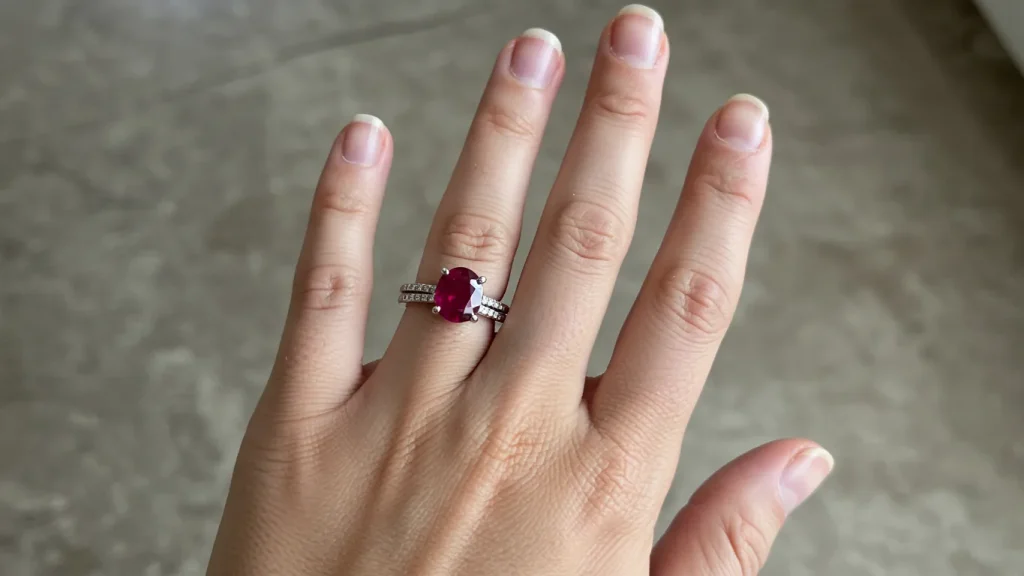
“Yes, if it’s my birthstone, then it would be ruby”
This seemingly casual line of conversation becomes the key to the song’s title. After a relationship is over, insignificant conversations can sometimes return with surprising clarity. Matsumoto uses the concrete image of a ruby to express the peculiar way memories remain with us.
“And then two years passed by”
Even after two years, whenever the narrator sees someone wearing a beige coat in the city, he instinctively looks to see whether it might be the woman he once knew. Time has moved on, but part of his heart has not. That contrast lies at the center of the song’s story.

1981 — The Year “Ruby no Yubiwa” Was Heard Across Japan
“Ruby no Yubiwa” was released on February 5, 1981.
It did not immediately enter the charts at No. 1. Instead, the single steadily climbed until it eventually spent 10 consecutive weeks at No. 1 on the Oricon weekly singles chart. Its cumulative sales reached 1.341 million copies, and it finished as the No. 1 single on Oricon’s year-end chart for 1981.
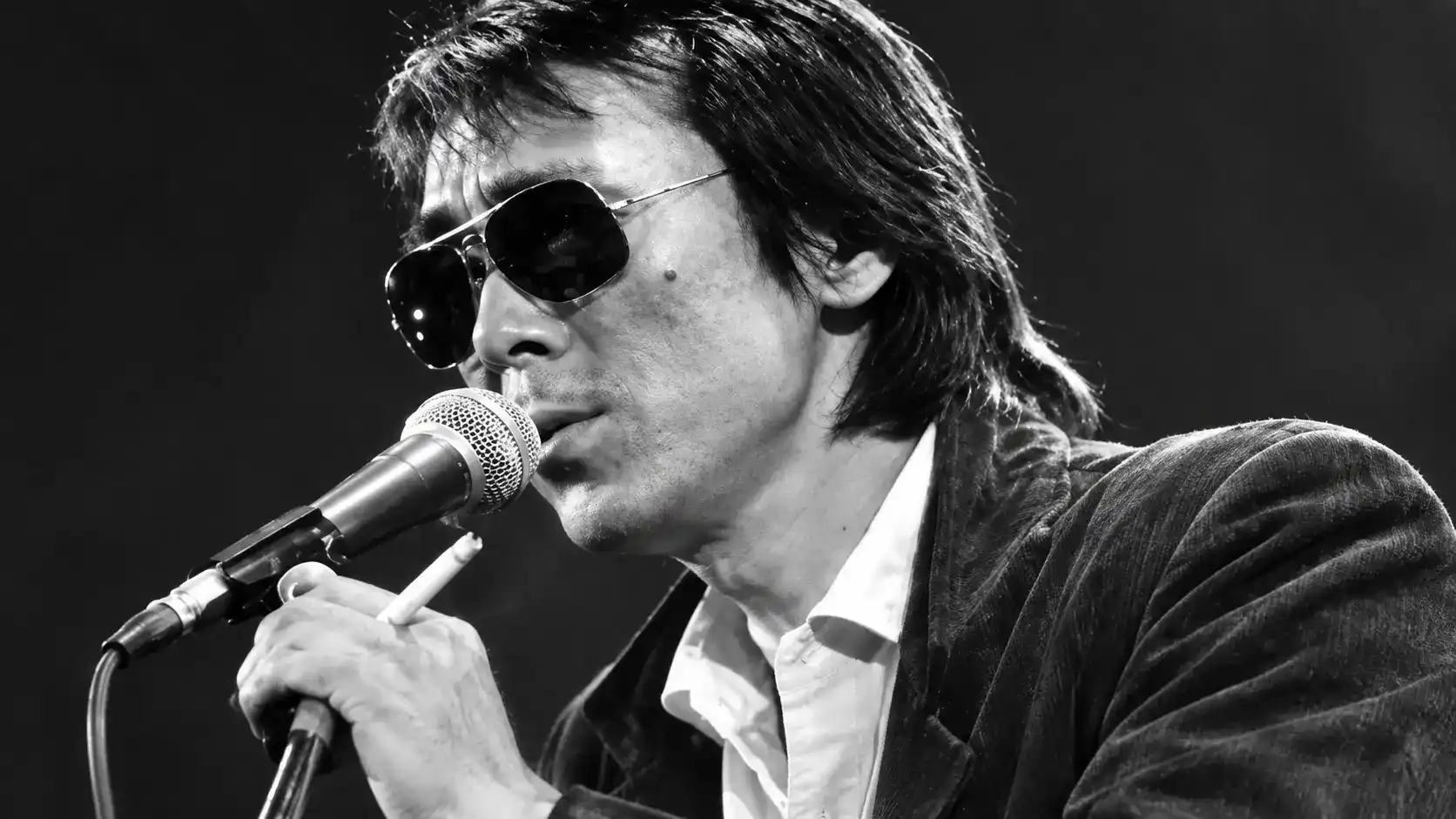
On the popular TBS television program The Best Ten, the song achieved another extraordinary record by spending 12 consecutive weeks at No. 1. For many people who watched Japanese television at the time, the image of Terao performing the song in his trademark sunglasses remains inseparable from the memory of 1981 itself.
His album Reflections, released on April 5 of the same year, became another major success. In addition to “Ruby no Yubiwa,” it included songs such as “SHADOW CITY” and “SASURAI.” The album spent 12 consecutive weeks at No. 1 on Oricon’s LP chart and reached cumulative sales of 1.65 million copies.
A Song That Dominated the Japan Record Awards
The extraordinary success of “Ruby no Yubiwa” in 1981 was not limited to record sales.
At the 23rd Japan Record Awards, “Ruby no Yubiwa” received both the Japan Record Award Grand Prize and the Gold Award. Akira Terao also received the Composition Award, Takashi Matsumoto received the Lyrics Award, and Akira Inoue received the Arrangement Award.

In other words, recognition went far beyond the singer alone. The lyrics, composition, and arrangement were all individually honored, demonstrating just how highly “Ruby no Yubiwa” was regarded as a complete musical work.
Akira Terao the Actor, Akira Terao the Musician
Akira Terao did not suddenly become a musician with the release of “Ruby no Yubiwa.”
Back in 1966, he made his recording debut as the bassist of the Group Sounds band The Savage. He later pursued acting more seriously while continuing to make music.
That background is one reason “Ruby no Yubiwa” cannot simply be dismissed as a hit song recorded by an actor. Terao composed the music himself, creating a song well suited to his vocal range and understated singing style. Akira Inoue’s arrangement then gave the recording its distinctive sound. The enormous success of 1981 was the result of years of musical experience rather than a sudden detour into pop music.
Terao went on to appear in numerous films and television dramas. He won the Japan Academy Film Prize for Outstanding Performance by an Actor in a Leading Role for both After the Rain and Half a Confession, establishing a remarkable career that has spanned both music and cinema.
Why “Ruby no Yubiwa” Still Does Not Sound Old
“Ruby no Yubiwa” was released in 1981.
Yet when I listen to it again today, it does not really sound like an obviously dated hit from another era.
Of course, you can hear the period in which it was recorded. Even so, the combination of Terao’s voice, Matsumoto’s words, and Inoue’s arrangement gives the song a strength that cannot be explained simply by the musical fashions of 1981.
Terao performed “Ruby no Yubiwa” once again on NHK’s Kohaku Uta Gassen in 2023. More than four decades after its original success, the song returned to one of Japan’s biggest annual television broadcasts on New Year’s Eve. That alone shows that “Ruby no Yubiwa” was never merely a hit tied to a single moment in time.
For Me, “Ruby no Yubiwa” Is the Song of My First Year in the Working World
As I write this article, I realize that I am remembering not only “Ruby no Yubiwa” itself, but also the person I was in 1981 when I first heard it.
I had finished my university years in Tokyo, returned to Oita, and had only just started my working life.
Of course, I had no idea what kind of life lay ahead of me. I only knew that a completely different chapter had begun.
And during those days, “Ruby no Yubiwa” seemed to be playing again and again on television and radio.
Music has the remarkable power to take us back not only to a particular time, but also to the person we were when we first heard it.
For me, “Ruby no Yubiwa” is more than one of the biggest Japanese hits of 1981. It is also a song that brings me back to the moment when my student years ended and a new stage of my life began.

音楽ファン同士の交流・リクエストはこちら / Connect & Request Songs Here