■ Learn more about HSCC here ➡ |Do You Know the Remarkable Band Called HSCC?
- 🎧 Enjoy This Article with Audio
- This edition of “My Personal Cover Selection” features Heart’s “What About Love”
- First, watch the HSCC version on YouTube
- What “What About Love” is really asking
- “What About Love” was recorded before Heart released it
- Now watch Heart’s original version
- Ann Wilson’s voice dominates the original
- What did HSCC change?
- Why the song remains relevant after four decades
- Conclusion — Another “What About Love”
🎧 Enjoy This Article with Audio
You can quickly review the key points of this article through narration.
Recommended for readers who want to understand the appeal of “What About Love” and the overall flow of the article before reading.
🎵 English Narration
This audio introduces the content of the article in English.
🎶 日本語ナレーション
This audio introduces the content of the article in Japanese.
Listening before reading will help you understand the world of “What About Love” and the key points of the article more easily.
This edition of “My Personal Cover Selection” features Heart’s “What About Love”
This time, I have chosen “What About Love,” released by Heart in 1985.
With Ann Wilson’s commanding vocals set against synthesizers, guitars, and powerful drums, the song became a crucial release that announced Heart’s return to prominence.
The performance featured here is a cover by the Australian-based collective of accomplished musicians known as The Hindley Street Country Club, or HSCC.
How do the Heart and HSCC versions make the same song sound and feel different? Let us begin with HSCC’s performance.
The voice captures you within the first 30 seconds
First, watch the opening 30 seconds of the HSCC video without trying to analyze it.
A restrained keyboard texture is joined by sharply defined drums, while the guitar gradually heightens the tension. Then, the moment Kat Jade begins the opening line, the center of the performance shifts immediately to her voice.
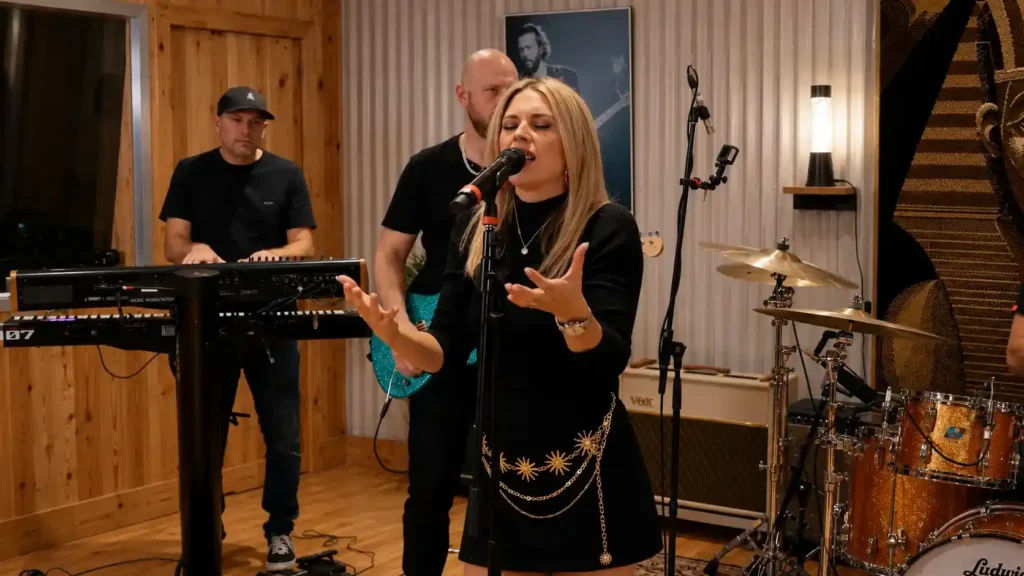
Her voice carries the urgency of someone asking for love, the frustration of being unable to reach the other person, and the vulnerability of still being unable to let that person go. Even in the restrained opening, there is a sense that the emotion could overflow at any moment.
HSCC’s videos often draw attention to the musicians’ technical ability. In this performance, however, the song itself reaches the listener before the instrumental skill becomes the main focus.
When the chorus arrives, the musicians who have been holding back suddenly move forward together. The moment when the tension of the opening turns into a broad musical surge is the first major highlight of this cover.
Interpretive Summary of the Lyrics
I have been waiting for you to open your heart.
But my feelings still cannot reach you.
You keep everything under control and continue aiming higher,
but are you sure you have not forgotten what truly matters?
By the time you realize you have lost love, it may already be too late.
First, watch the HSCC version on YouTube
Official Video Credits
“What About Love” by Heart — Cover Version
Performed by: The Hindley Street Country Club (HSCC)
Featuring Vocals: Kat Jade
Recorded Live by: Jordan Lennon
Original Artist: Heart
Published on: The HSCC Official YouTube Channel
Brief Commentary
In this live performance, HSCC reconstructs one of Heart’s signature songs around Kat Jade’s combination of power and sensitivity. From the restrained opening to the expansive chorus, the band captures the song’s rising intensity with the immediacy of a live performance.
What “What About Love” is really asking
The title “What About Love” can be understood as a direct question: “What are you going to do about love?”
However, the narrator is not calmly asking the other person to discuss love. She is confronting someone who hides their feelings and pursues success while neglecting something essential.

An appeal to someone who keeps placing love second
The narrator does not claim to understand the other person completely. She also recognizes that she cannot force someone to accept something they do not want.
Even so, she senses that something is missing from that person’s life. The song is not only about the pain of romance. It also warns someone who may lose an important human connection by placing achievement and self-control above everything else.
“What About Love” was recorded before Heart released it
Although “What About Love” is widely known as one of Heart’s signature songs, it was not written by the members of Heart.
The song was written by Brian Allen and Sheron Alton of the Canadian band Toronto, together with Jim Vallance, who is also known for his work with Bryan Adams. The three writers completed the song in 1982, and Toronto recorded it as a possible track for the album Get It On Credit.
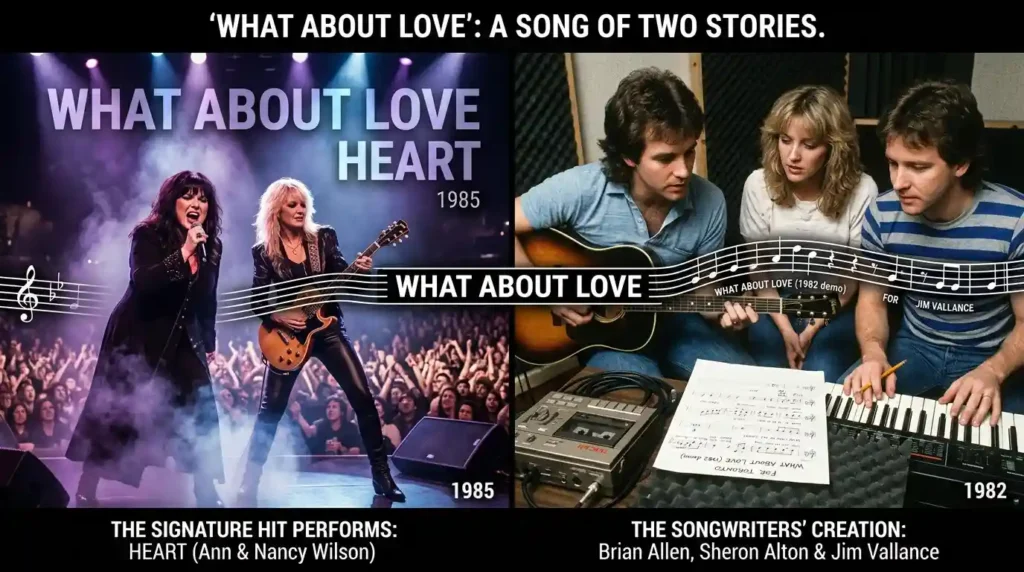
However, the song was left off the album, and Toronto’s recording remained unreleased.
How the unreleased song reached Heart
After Toronto’s record label went out of business, the band’s song catalogue passed to the music publisher ATV. Michael McCarty of ATV discovered “What About Love” and, through Don Grierson of Capitol Records, brought it to Heart’s producer, Ron Nevison.
Ann Wilson and Nancy Wilson reportedly did not like the original demo at first. Ron Nevison nevertheless encouraged them to listen beyond the recording itself and focus on the strength of the composition.
Once Heart rebuilt the song around its own sound, the composition acquired an entirely different power. It was released in 1985 as the first single from the album Heart. Toronto’s original recording did not receive an official release until 2002.
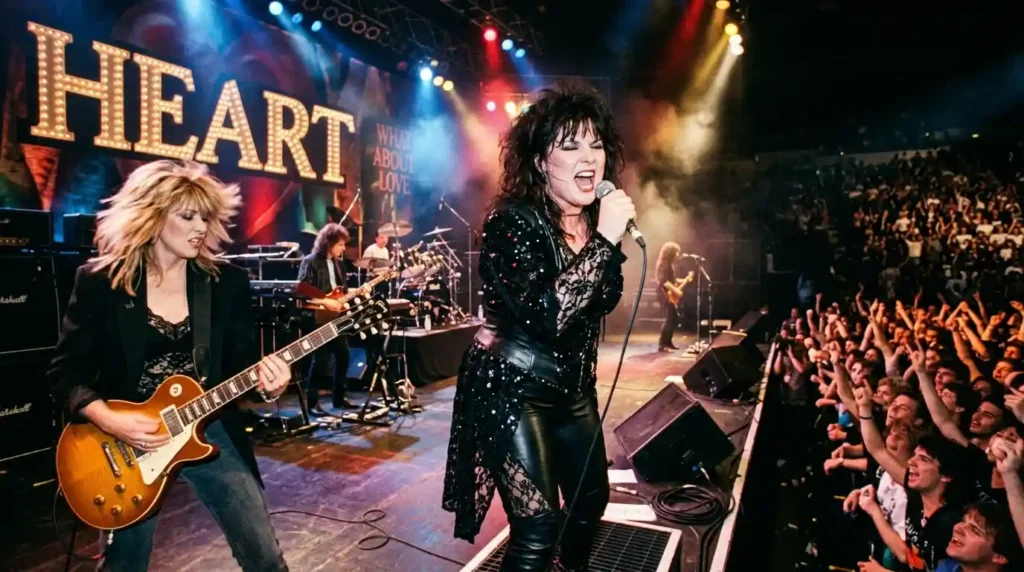
The song that opened the door to Heart’s comeback
After achieving major success in the 1970s, Heart entered a commercially difficult period during the early 1980s.
Following the band’s move to Capitol Records, Heart worked with producer Ron Nevison on the album Heart. The record retained the band’s hard-rock foundation while introducing synthesizers and thicker vocal arrangements.
As the album’s lead single, “What About Love” reached No. 10 on the Billboard Hot 100 and No. 3 on the Album Rock Tracks chart. It became Heart’s first U.S. Top 10 hit in five years, while the album Heart went on to reach No. 1 in the United States.
Now watch Heart’s original version
Video Credits
Song: What About Love
Artist: Heart
Album: Heart
Released: 1985
Written by: Brian Allen, Sheron Alton, Jim Vallance
Produced by: Ron Nevison
Brief Commentary
This signature song announced Heart’s return to prominence in 1985, driven by Ann Wilson’s commanding vocals and an expansive arrangement built around synthesizers and powerful rock instrumentation.
The chorus transforms an appeal to someone who has placed love second into one of the defining rock anthems of its era.
Ann Wilson’s voice dominates the original
The first thing that stands out in Heart’s version is the sheer force of Ann Wilson’s voice.
In the lower register, she delivers each word directly to the other person. When the chorus arrives, she releases all the power that had been held inside.
The moment a question becomes a cry
At the beginning, her voice retains the composure of someone who is still trying to communicate.
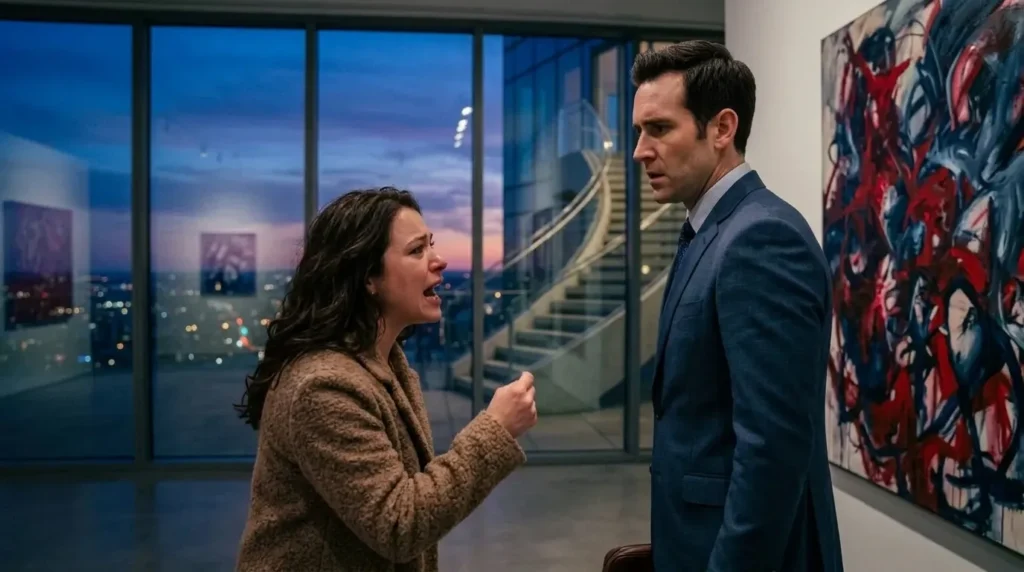
Once the chorus reaches “What about love?”, however, the words cease to sound like a simple question. Affection for the other person, anger at being unable to reach them, and fear of losing them all combine in a cry demanding that they face what love means.
A distinctly 1980s sound surrounding the voice
The drums, synthesizers, guitars, and backing vocals are arranged like a large wall of sound around Ann Wilson. In the chorus, every instrument surges in the same direction and lifts the lead vocal even higher.
Grace Slick and Mickey Thomas, who were then performing with Starship, also contributed backing vocals. Their distinctive voices add another layer of weight to the chorus.
What did HSCC change?
If Heart’s version is a large-scale rock production constructed through meticulous studio work, the center of the HSCC performance lies in the way the musicians respond to one another.
Kat Jade does not try to imitate Ann Wilson
Ann Wilson’s performance is extraordinarily powerful. Kat Jade, however, does not attempt to reproduce the same vocal attack or sheer volume.
In the lower passages, she avoids hardening her voice and seems to examine the meaning of each line as she sings. Because she does not begin by overpowering the song, the listener is drawn into the narrator’s state of mind before the chorus arrives.
Vulnerability within the strength
Kat Jade’s singing carries power, but it also contains the instability of emotion threatening to break through her control.
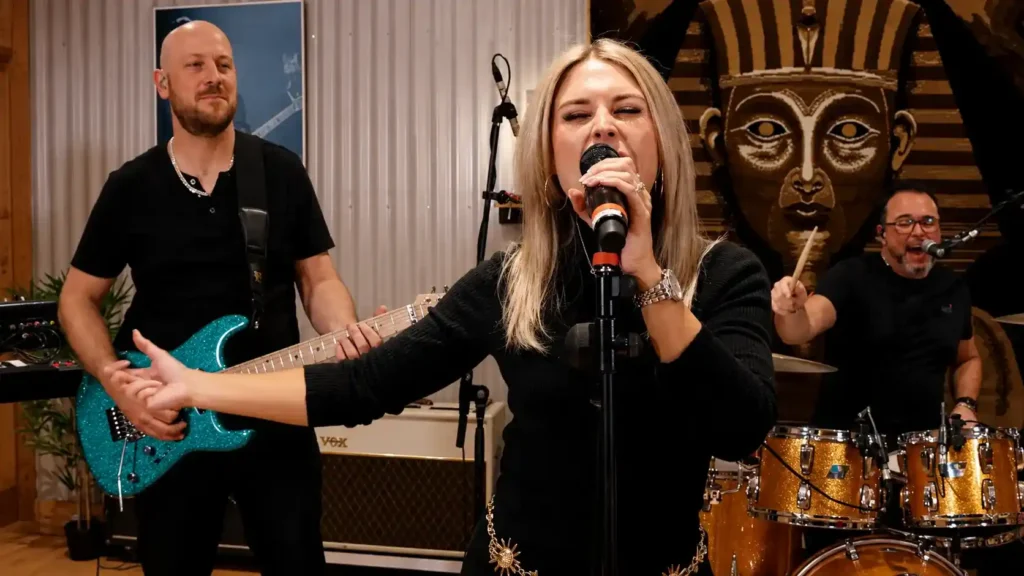
Ann Wilson sounds as though she is forcing the other person to stop and listen. Kat Jade, by contrast, sounds as though she is making the appeal while accepting that she may also be hurt. The two singers reveal different dimensions of the same song through their individual voices.
The rhythm section creates the path to the chorus
The drums and bass do not push too far forward during the opening. Instead, they maintain a steady tension behind the vocal. As the chorus approaches, the attacks become stronger and the lower frequencies gain presence, making the song feel as though it is accelerating even though the tempo has not changed.
Heart’s drums achieve enormous scale through studio production, while the HSCC version allows us to hear the outline of each strike and see the physical movement of the musicians.
The entire band lifts the song
The drummer gathers power for the next section, the guitars and keyboards respond to the vocal movement, and the backing singers enlarge the meaning of the words. Because the video allows us to observe those reactions, we can experience the song being assembled in real time.
The musicians share an understanding of where to hold back and where to release their power. That is why the performance remains precise without ever sounding cold.
Why the song remains relevant after four decades
The sounds and imagery of 1985 clearly reflect their period. Nevertheless, the human conflict at the center of “What About Love” has not become outdated.
People may long for love while also fearing the pain it can bring. They may prioritize work or achievement and turn away from their own feelings. The song asks such a person to stop before losing something that cannot easily be recovered.

Turning a song from the past into a present event
HSCC respects the song’s original structure while sounding it again through the voices, bodies, and breathing of present-day musicians. As a result, the performance does not feel like an old recording preserved behind glass.
I return to this video not only because the performance is complete, but because I can also see the song growing through the reactions exchanged among the musicians.
Conclusion — Another “What About Love”
In 1985, Heart transformed “What About Love” into one of the era’s defining rock anthems through Ann Wilson’s commanding performance and an expansive arrangement.
HSCC’s version, by contrast, draws out a different urgency through Kat Jade’s vulnerable vocal quality and the responsiveness of a live band.
If Heart’s version is a powerful cry that forces the other person to stop, HSCC’s performance is an appeal made by someone who accepts that speaking honestly may also cause pain.
This is not merely a reproduction. It is another form of “What About Love,” created when a song nearly four decades old is placed in the hands of a new singer and a new group of musicians.



音楽ファン同士の交流・リクエストはこちら / Connect & Request Songs Here