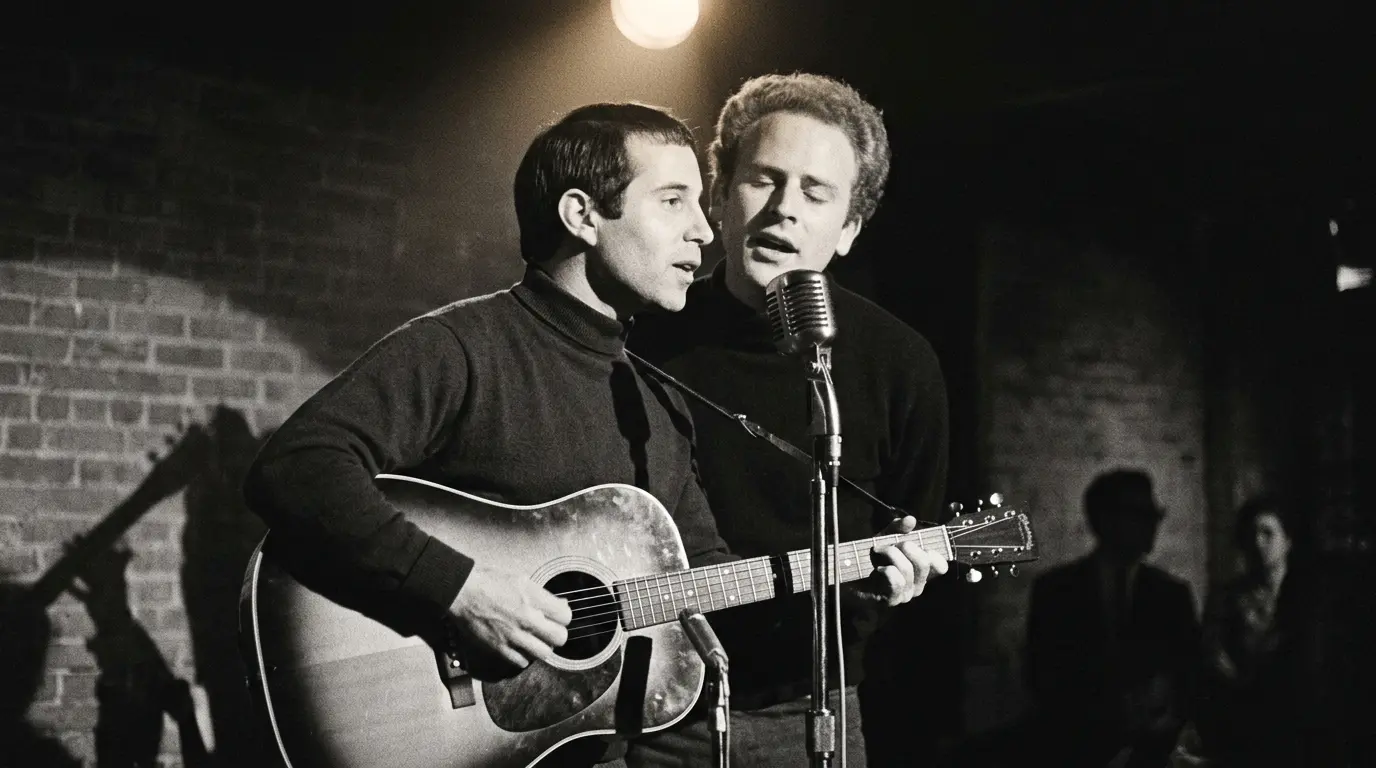
Simon & Garfunkel’s history is available here!
- 🎧 Listen to This Article
- No. 2 – “The Sound of Silence”
- 🎥 As always, let’s begin with the official YouTube videos.
- The Tension Created by a Handful of Notes
- The Forgotten Song That Brought Them Back Together
- What Does “Silence” Really Mean?
- Two Performances, Two Different Perspectives
- Why I Still Ranked It No. 2
- Next Time — The Song That Became My No. 1
🎧 Listen to This Article
Listen to a concise narration covering the main points of this article.
Recommended for anyone who would like to understand the atmosphere of “The Sound of Silence” and the overall direction of the article before reading.
🎵 English Narration
An English audio introduction to the content of this article.
🎶 Japanese Narration
A Japanese audio introduction to the content of this article.
Listening first will make it easier to understand the world of “The Sound of Silence” and the main points explored in the article.
No. 2 – “The Sound of Silence”
If there is one song that truly represents Simon & Garfunkel, many people would probably name The Sound of Silence first.
The original acoustic version first appeared on their debut album Wednesday Morning, 3 A.M., released on October 19, 1964. At first, however, the album attracted little attention. Later, producer Tom Wilson added electric guitar, bass, and drums to the original recording. Released as a single in September 1965, the new version reached No. 1 on the Billboard Hot 100 and was later included on the duo’s second album, Sounds of Silence, released on January 17, 1966.
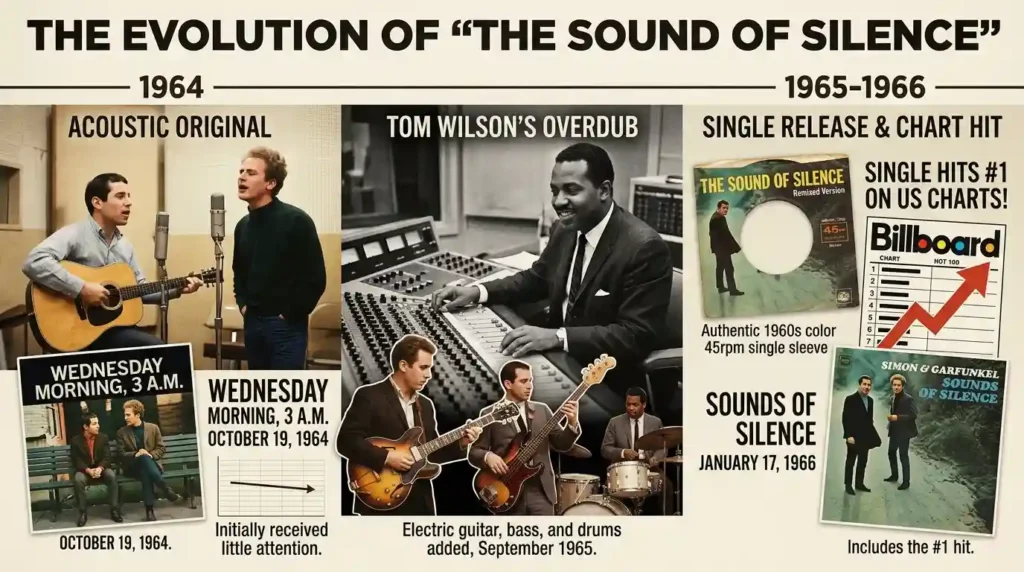
A quietly repeating guitar pattern and two voices blended with remarkable precision. Within that beautiful harmony lies a world where people speak constantly, yet fail to truly hear one another. The song reveals emotional isolation beneath its graceful surface.
Although this is undoubtedly their signature song, I placed it at No. 2 rather than No. 1. The song that best represents Simon & Garfunkel is not necessarily the song I love the most.
A Personal Interpretation
Hello darkness, my old friend,
Tonight I speak with you once more.
People exchange countless words,
Yet no one truly listens.
Unspoken feelings fall like raindrops into silence,
While only the truth remains quietly written upon the walls.
🎥 As always, let’s begin with the official YouTube videos.
Studio Recording & The Concert in Central Park
Common Credits
Song: The Sound of Silence
Written by: Paul Simon
Performed by: Simon & Garfunkel
Vocals / Guitar: Paul Simon
Vocals: Art Garfunkel
Official Release: Simon & Garfunkel Official YouTube Channel

Note: The first video's title is shown as "The Sounds of Silence." Although the plural form appeared in some early releases, the officially accepted title today is "The Sound of Silence."
① The Studio Recording That Changed Everything
① Studio Version
Simon & Garfunkel – The Sounds of Silence (Audio)
Album: Sounds of Silence
Producer: Tom Wilson
Original Recording: March 10, 1964
Electric Overdubbing: June 15, 1965
Two-Line Commentary
Tom Wilson added electric guitar, bass, and drums to the original acoustic recording.
The result blended the intimacy of folk with the drive of rock, launching Simon & Garfunkel onto the world stage.
② The Live Performance That Filled a Vast Park with Silence
② The Concert in Central Park Version
Simon & Garfunkel – The Sound of Silence
(from The Concert in Central Park)

Concert: The Concert in Central Park
Performance Date: September 19, 1981
Venue: Great Lawn, Central Park, New York City

Two-Line Commentary
Performed near the end of the encore during the famous 1981 reunion concert.
With only Paul Simon's guitar and the duo's voices at its heart, the performance transformed an enormous outdoor audience into an intimate listening space.
The Tension Created by a Handful of Notes
The song’s atmosphere is established from its opening guitar pattern. Rather than decorating the melody with elaborate phrases, the guitar moves with calm, unwavering steps, like footsteps echoing through an empty street at night.
From One Voice to Two
Paul Simon’s calm, restrained vocal is joined by Art Garfunkel’s clear, soaring voice, giving the music remarkable depth. They sing with such precision that they often sound like a single voice, yet each singer retains his own unmistakable character.
Although they sing the same words, they somehow seem to be calling from different places. The more beautifully their voices blend, the more clearly the emotional distance between people is revealed. That paradox lies at the heart of this song.
The Rhythm Never Brightens the Mood
In the electric version, guitar, bass, and drums push the music steadily forward. Yet the emotional character of the vocals never changes. The band drives outward while the voices turn inward. This opposing movement creates the unique tension that defines the recording.
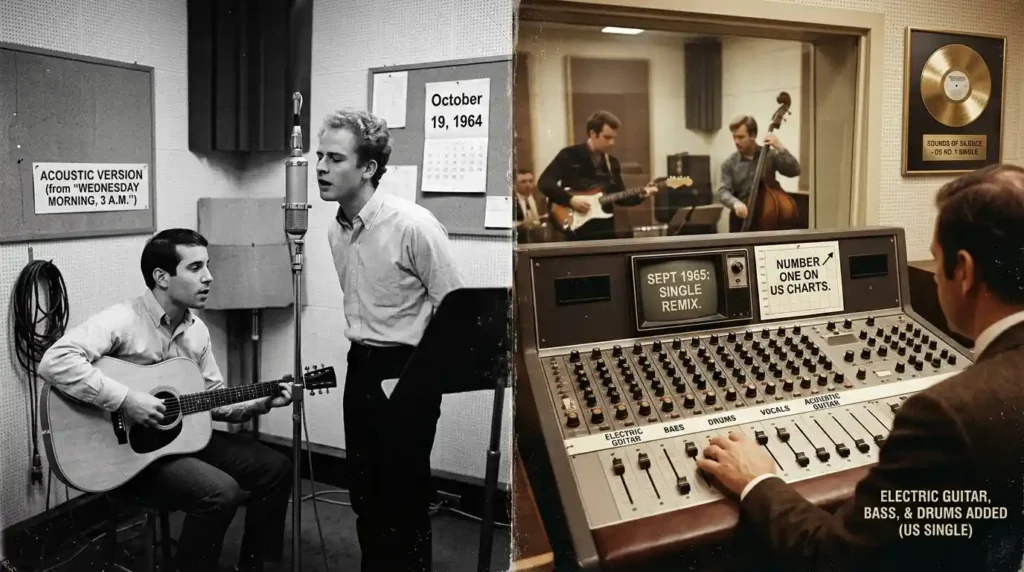
Even as the arrangement becomes richer, the sense of isolation never disappears. The recording is neither a simple acoustic folk song nor a straightforward rock performance. It is precisely this balance of contrasting elements that has made it timeless.
The Forgotten Song That Brought Them Back Together
When Wednesday Morning, 3 A.M., containing the original version of The Sound of Silence, was first released, it failed commercially. Paul Simon left for England, while Art Garfunkel began pursuing other interests.
The Recording Was Changed Without Their Knowledge
During their absence, producer Tom Wilson overdubbed the original recording with electric instruments. This was not a new version planned by Simon & Garfunkel themselves. Instead, it was an existing acoustic performance reshaped by the emerging sound of folk rock.
Although the decision was bold, the quiet spirit of the original recording remained intact. The restrained vocals and the newly added rhythmic energy created a striking contrast that gave the song an entirely new identity. Following the success of the single, Simon & Garfunkel reunited and began work on the album Sounds of Silence.
A Success That Cannot Be Explained by Chance Alone
The electric overdubbing was completed without Simon & Garfunkel’s involvement. In that sense, the song’s transformation was largely accidental. Yet the added instruments alone could never have turned it into a timeless classic.
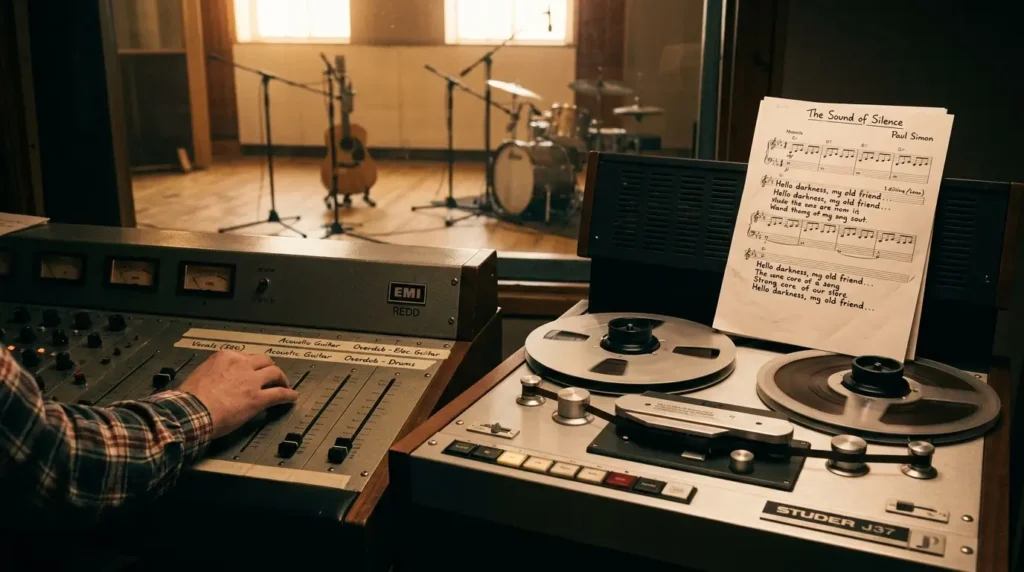
At its heart were Paul Simon’s unforgettable melody, his thoughtful lyrics, and the extraordinary harmony created by the two singers. Because that foundation was already so strong, the song was able to embrace a completely different arrangement and evolve into one of the defining recordings of its era.
What Does “Silence” Really Mean?
The “silence” in the title does not simply refer to the absence of sound. The song is filled with people, conversations, and the artificial glow of city lights. Yet despite all the noise, genuine communication never takes place.
People Keep Talking, Yet Nothing Is Truly Heard
The loneliness portrayed in this song is different from the sadness of being physically alone. It is the loneliness of standing among countless people while feeling that no one truly hears your voice. Ironically, the busier and louder the world becomes, the deeper that sense of isolation can feel.
The neon lights described in the lyrics also carry symbolic meaning. They represent the values, ambitions, and achievements that people have created for themselves. Although the city shines brightly, that light does not necessarily help people see what truly matters.
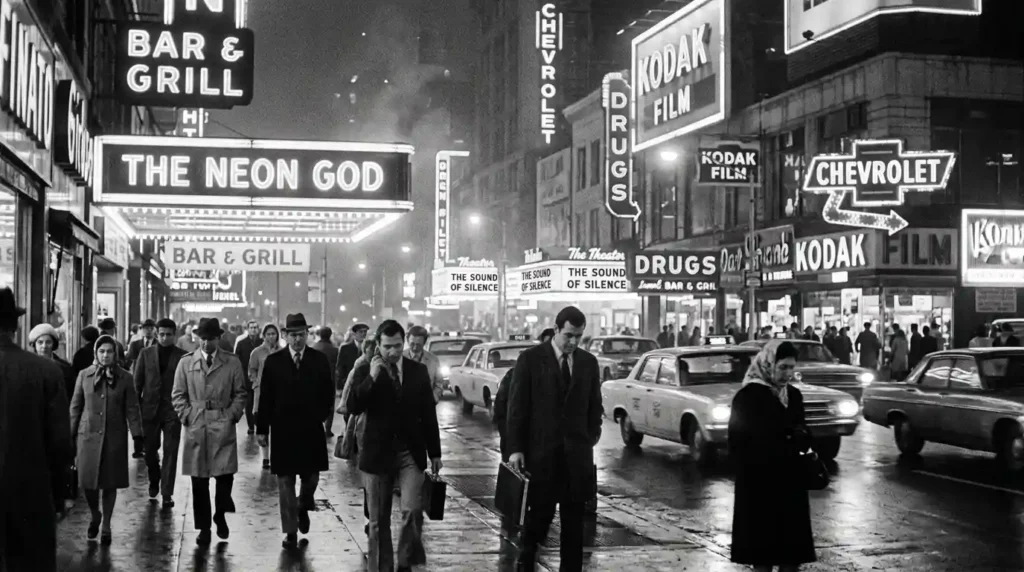
A Question That Still Echoes Today
Even in today’s world, where everyone can instantly express their thoughts online, speaking is not the same as being understood. As the amount of information continues to grow, truly meaningful voices are often buried beneath the endless flow of messages.
The Sound of Silence is not a song about escaping to a quieter place. Instead, it asks whether we are still capable of listening to one another with sincerity. That question gives the song a timeless relevance that extends far beyond the 1960s.
Two Performances, Two Different Perspectives
The Studio Version — Where Stillness Meets Momentum
In the studio recording, the contrast between the calm vocals and the powerful band arrangement is unmistakable. The rhythm continues to move forward while the narrator seems emotionally frozen, quietly observing the world around him.
This contrast creates the feeling that society keeps moving at full speed while the human heart struggles to keep pace.
The Central Park Performance — Silence Shared by Hundreds of Thousands
In the Central Park performance, Paul Simon’s guitar and the duo’s voices once again become the heart of the music. Despite the enormous outdoor setting, the performance feels remarkably personal and intimate.
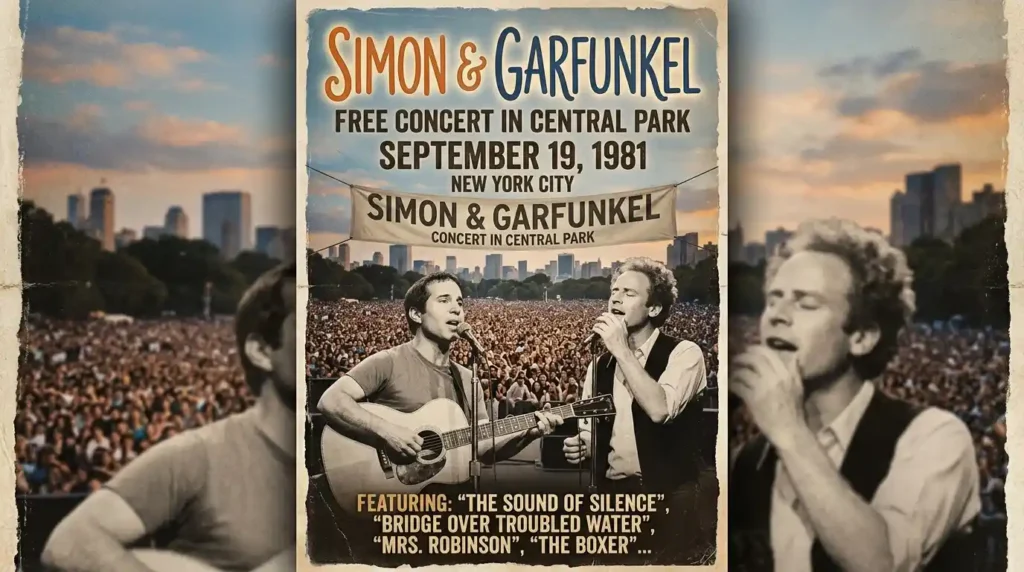
What matters here is not the size of the audience but the shared concentration of thousands of listeners focused on the same two voices. A song about silence gradually quiets an entire park. That unforgettable scene reveals another dimension of the song’s meaning.
Why I Still Ranked It No. 2
There is no question that The Sound of Silence is Simon & Garfunkel’s signature song. Whether judged by its popularity, historical significance, lyrics, musicianship, or vocal harmony, it stands as one of the greatest recordings in popular music.
However, My Personal Top 10 is not a ranking based solely on commercial success or critical acclaim. It reflects the songs that continue to move me, the ones I find myself returning to over the years, and the ones that still capture my heart from the very first notes.
The Sound of Silence is a masterpiece in every sense of the word. Each time I hear it, I cannot help but admire its flawless structure, its historical importance, and the extraordinary artistry behind it. Yet the song I chose for No. 1 reaches me in a more immediate and deeply personal way, beyond analysis or reputation.
That is why I placed this song at No. 2. Even so, nothing can diminish its place as the recording that introduced Simon & Garfunkel to the world and became the enduring symbol of their music.
Next Time — The Song That Became My No. 1
Born as a quiet acoustic folk song, transformed into a groundbreaking folk-rock recording while its creators were away, and ultimately becoming the song that reunited Simon & Garfunkel, The Sound of Silence remains one of the defining works of modern popular music. Its beautiful harmonies continue to illuminate the emotional distance between people while asking timeless questions about communication and understanding.
In the next and final article of this series, I will introduce the song that I personally rank as No. 1. It may not be their most famous recording, but it is the one that best captures everything I have always loved about Simon & Garfunkel’s music.

音楽ファン同士の交流・リクエストはこちら / Connect & Request Songs Here